Table of Contents (click to expand)
Yes, to a small degree. In a 2015 study in Psychological Science, women who smelled the sweat of men who had just watched a happy video made more “Duchenne smile” muscle movements than when they smelled fear or neutral sweat. So-called “happy sweat” seems to carry chemosignals that nudge a receiver’s mood, though the research is early and the effect is subtle.
Have you ever been around someone who seems to just exude happiness? Maybe they have a contagious laugh or a perpetual smile, but what if it was their sweat that was seemingly infecting you with their happiness?
A study published in the journal Psychological Science backs up this unusual claim.

Sweating Happiness
Studies have suggested that our body odors can reveal certain information about our health and emotions. Studies have reported that when people smell the sweat of someone who is scared, their own facial muscles react with fear, more so than when they smell sweat from someone who is having a normal experience.
So, can we feel happy by simply smelling the sweat of a happy person?
To answer this, researchers from the Netherlands and the United Kingdom recruited 12 men to watch three videos, chosen to make the participants feel fear, happiness, or a neutral reaction. After every video, they swabbed the underarm sweat of the men. The men also completed a survey of their emotional states during and after the videos.
A group of 36 women were then made to smell the various collected sweat samples. Women were chosen as the ‘sniffer’ group, as they are thought to have a greater sensitivity to smell and emotional cues from the opposite sex.
When the sniffing participants smelled sweat produced during the scary video, they displayed more facial activity in the medial frontalis muscle, a key component of fear expressions. Meanwhile, when they smelled the sweat produced during the positive video, the women displayed more facial muscle activity common to the “Duchenne” smile, a component of happiness expressions.
The evidence, the researchers suggest, depicts ‘behavioral synchronization’ between the sender and receiver. When looked at from this point of view, emotional signals in our sweat may serve an evolutionary purpose.
Since the chemosignals of fear might serve to warn others, similarly, the chemosignals of a positive emotional state might facilitate bonding between individuals.

What Are These Chemosignals?
We don’t know what all the chemosignals are that affect our behavior, but the authors of the study primarily suggest the hormone adrenaline.
The apocrine sweat glands in our armpits respond to adrenaline, a hormone produced when we experience intense stress or excitement. The body releases adrenaline during arousal of both kinds, negative (fear or stress) and positive (euphoria). When adrenaline surges, these glands ramp up their output, which is why strong emotions of any flavor can leave you sweaty.
An author of the study, Dr. Jasper de Groot, told HuffPost, “Eventually these odors could have become associated with happiness-related or fear-related information in the environment (such as facial expressions or sounds) co-present during odor release. The odors could have become signals through learning.”
How Could We Benefit From This?
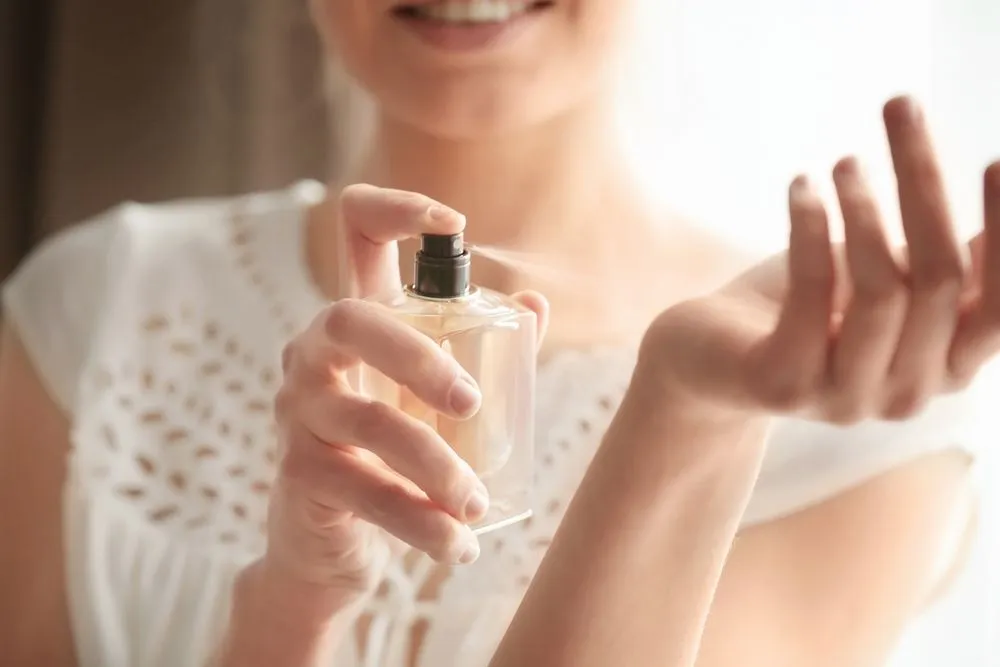
The obvious benefit relates to perfume. Don’t worry, no one will be selling sweat perfume, but if researchers can identify the molecules in the sweat that make us feel pleasant, that is something perfumers can use for all of our benefit. Interestingly, several of the study’s authors were affiliated with Unilever’s research and development department, and the work was supported by Unilever.
Less vanity related would be using sweat as a diagnostic tool. As we mentioned at the start of the article, sweat also contains molecules that can tell us about certain health conditions. For example, sweat could allow us to diagnose stress or anxiety disorders.
These are just a few use cases. The current study is just a single piece of evidence that could lead to some of the above, all of the above, or none of the above. Either way, the potential is fascinating!
Conclusion
However, before we can make any products or tools, we need to acknowledge a few caveats. This is still an emerging corner of research, and the headline finding rests largely on one small study (just 12 sweat donors and 36 ‘sniffers’). The effect was real but subtle, so it’s best treated as an intriguing lead rather than the final word.
It’s possible that the strength of the effect depends on the relationship between the smeller and the person whose sweat they are smelling. Smelling the sweat of a stranger might not have the same effect as smelling the sweat of a close friend or romantic partner.
Happiness, or any emotion, tends to be a subjective experience. What makes one person happy may not have the same effect on another person. Also, we don’t all have the same nose. Individuals have different olfactory sensitivities and past experiences with certain smells. Smells hold powerful memories, and in the brain, smells excite the hippocampus (related to memory) and amygdala (emotion) rapidly and frequently. Differentiating all those variables would be complicated to say the least.
If researchers do pinpoint what “happy sweat” is made from, perhaps sweat perfume will become the new trend!
References (click to expand)
- de Groot, J. H. B., Smeets, M. A. M., Rowson, M. J., Bulsing, P. J., Blonk, C. G., Wilkinson, J. E., & Semin, G. R. (2015, April 13). A Sniff of Happiness. Psychological Science. SAGE Publications.
- Gomes, N., Silva, F., & Semin, G. R. (2020, May 21). The lasting smell of emotions: The effects of reutilizing fear sweat samples. Behavior Research Methods. Springer Science and Business Media LLC.
- de Groot, J. H. B., Kirk, P. A., & Gottfried, J. A. (2020, April 20). Encoding fear intensity in human sweat. Philosophical Transactions of the Royal Society B: Biological Sciences. The Royal Society.
- de Groot, J. H. B., Smeets, M. A. M., Rowson, M. J., Bulsing, P. J., Blonk, C. G., Wilkinson, J. E., & Semin, G. R. (2015, April 13). A Sniff of Happiness. Psychological Science. SAGE Publications.