Table of Contents (click to expand)
Astronauts grow plants in space using a NASA chamber called ‘Veggie’, which creates a controlled artificial environment where plants flourish in microgravity. Seeds sit in ‘plant pillows’ of clay-based media that wick water to the roots, while LED lights drive photosynthesis. ISS crews have grown and eaten lettuce, zinnias, chile peppers and tomatoes.
Many of the foods we regularly eat in our daily lives come from plants and their various parts. Suffice it to say that plants are essential for our survival on the “blue planet.” But what about the few people who live – albeit for a short span of time – in space? We know that they take many food packets that cover their daily energy needs onboard a spaceship, but is it possible for them to grow plants on board the spaceship and be self-sufficient for weeks on end?
Yes, Plants Can Grow In Space!
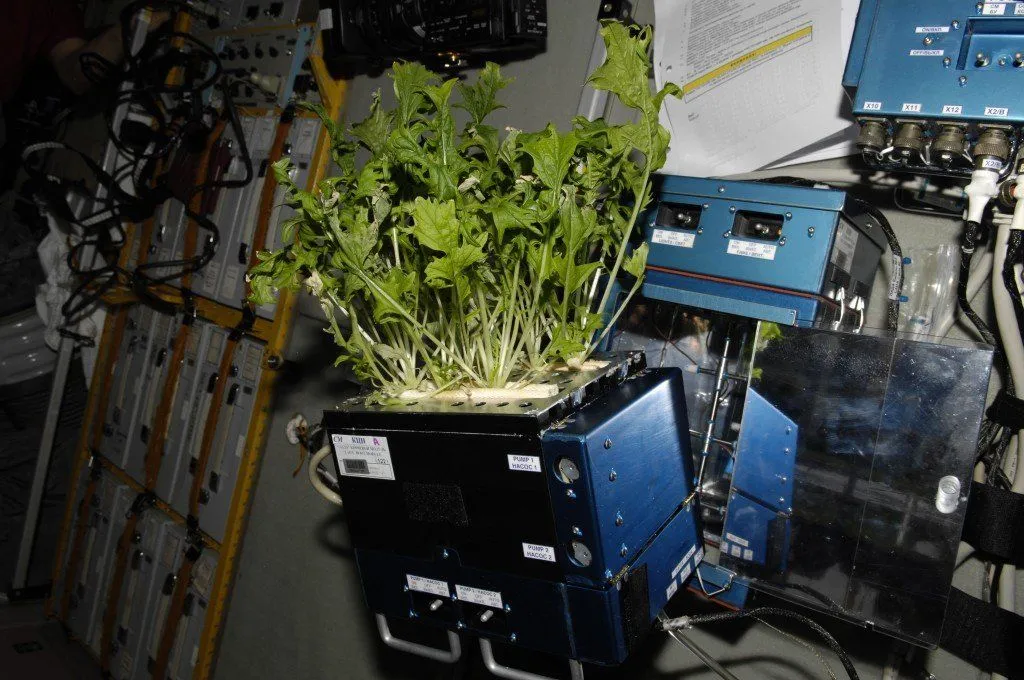
For those who don’t know this already, plants CAN and actually are grown in space. In fact, astronauts aboard the ISS ate the first space-grown salad (a red romaine lettuce variety called ‘Outredgeous’) on August 10, 2015. And yes, they liked what they ate. Better still, a 2020 study found that the space-grown lettuce was free of disease-causing microbes and just as nutritious as the Earth-grown kind, so it was safe to eat as well as tasty.
(Note: When we talk about plants growing in space, we are talking about an enclosed environment in space where humans actually live, the International Space Station, for example.)
Growing A Plant Aboard The ISS
Even in a well-controlled environment like on the ISS, growing a plant in space is not an easy task. Growing edible and nutritious plants is difficult enough here on Earth (plant enthusiasts, I’m talking to you!), so imagine how challenging it would be to grow those greens in microgravity and under highly controlled soil conditions, humidity, light, and various gases.
In a way, plants, just like humans, also get used to the environmental conditions in which they live. Traditionally, roots grow and spread downwards due to gravity (roots absorb water and several vital nutrients from the ground). Still, in space, where the effect of gravity is negligible, things change, and they do so quite drastically.
Roots grow in all directions in space. Other nutrients and water, which are essential for the growth of a plant, float all over the place! Can you imagine a plant floating in a spaceship, with its roots sticking out in every direction like the tentacles of a slimy sea creature surrounded by water and other nutrients?

Therefore, keeping this entire system intact is very important. To achieve this, NASA astronauts Rick Mastracchio and Steve Swanson installed a special container named ‘Veggie’ in the station’s Columbus module on May 7, 2014, specifically designed for “space gardening” on the ISS.
Veggie: The ‘Gardening Chamber’ Aboard The ISS
Veggie creates a suitable artificial environment in which plants can grow and flourish in zero gravity conditions. It contains ‘plant pillows’, which are essentially small bags of clay-based growth media (a baked clay similar to what is spread on baseball fields) mixed with a controlled-release fertilizer to feed the plants gradually. Inside the bags, small wicks are installed that absorb water and carry it to the roots. Seeds are glued to the wicks and aligned so that their roots grow unidirectionally (downward) and ‘push out’ of the bag. For the plants to grow properly (i.e., upward), LED lights shine above them, drawing the shoots up and providing light for photosynthesis (the process by which plants prepare their food).
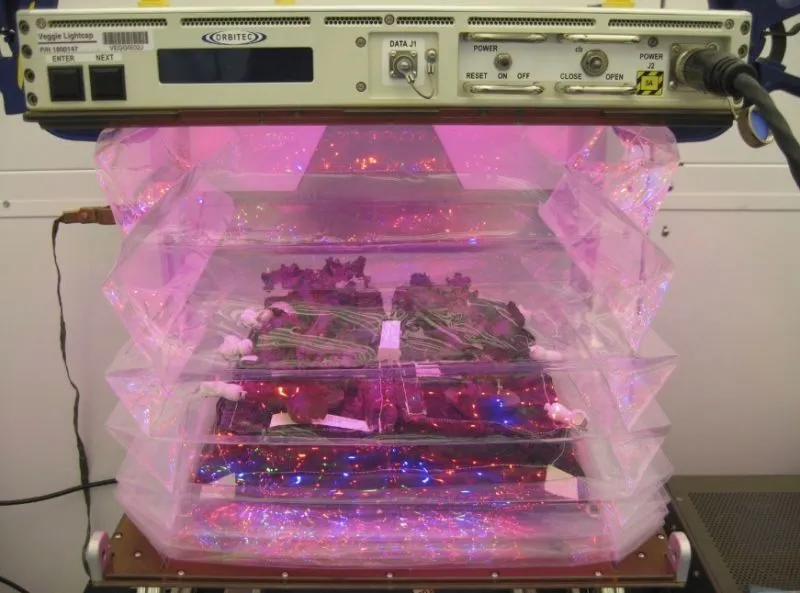
The walls of the Veggie chamber are expandable; they are compressed when the plant is small but can be expanded to make room while the plant continues to grow.
Here’s a short video released by NASA describing the “historic vegetable moment” aboard the ISS:
Cultivating a plant in space is just one part of a more complex, larger, and comprehensive effort. Astronaut farmers must ensure that the plants grown in such artificial conditions are safe to consume, have no side effects, provide more of an energy boost in relatively small quantities, and are pleasant to eat… at least a little.

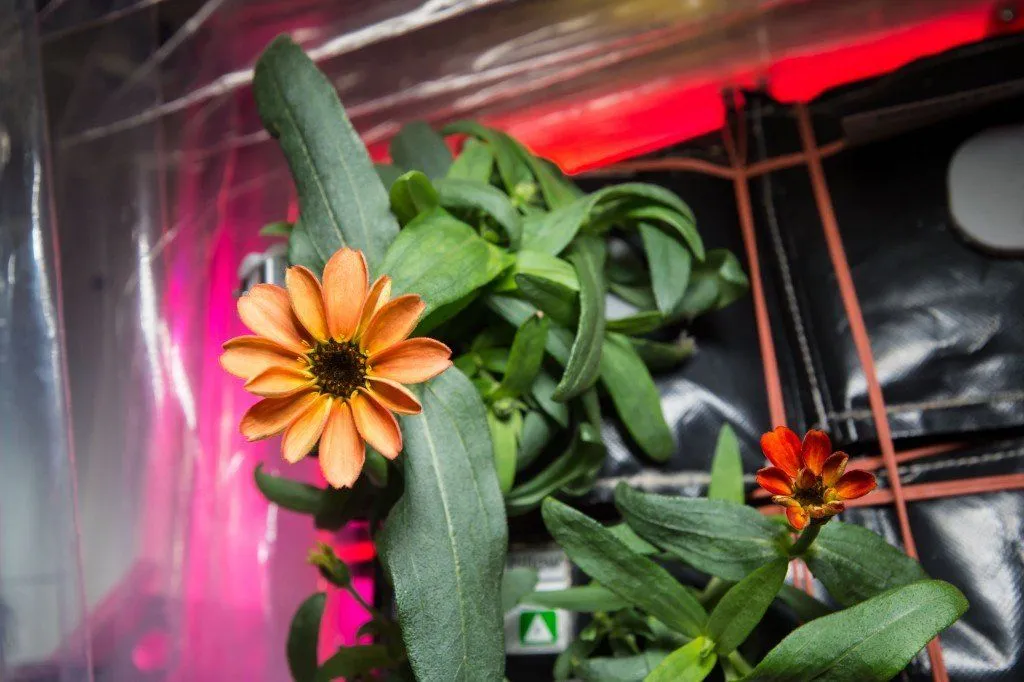
Veggie has come a long way since that first salad. In 2016, astronaut Scott Kelly coaxed a zinnia into bloom, the first flower grown in the chamber, as a stepping stone toward fruiting crops. Fruit followed soon after: between December 2022 and March 2023, the Veg-05 experiment raised ‘Red Robin’ dwarf tomatoes, the harvest that produced the now-famous tomato astronaut Frank Rubio misplaced and that turned up, shriveled, eight months later. NASA has also branched out beyond Veggie. In its larger, more automated Advanced Plant Habitat, the Plant Habitat-04 experiment grew chile peppers, and in November 2021 the crew harvested a record 26 of them and ate them on taco night, the most astronauts ever fed from a single space crop.
Space agencies worldwide are striving to develop more sophisticated methods and procedures to enable astronauts to safely grow and eat space-grown vegetables. In other words, you may not be able to grow potatoes on board the ISS as impressively as Matt Damon did in The Martian. Still, in the event of an unexpected “food glitch” aboard the ISS, you will at least have a backup – as long as you don’t mind getting your hands dirty!
References (click to expand)
- Veggie Plant Growth System Activated on International Space Station - NASA
- Microbiological and Nutritional Analysis of Lettuce Crops Grown on the International Space Station. Frontiers in Plant Science. NCBI PMC
- First Flower Grown in Space Station's Veggie Facility - NASA
- NASA's Second Pepper Harvest Sets Record on Space Station - NASA
- Plants in space - Wikipedia. Wikipedia