Table of Contents (click to expand)
- What Are Insecticides?
- Types Of Insecticides
- Pyrethroids Are Neurotoxic For Insects.
- Carbamates Inhibit Enzymes In The Nervous System.
- How Fast Does Raid Kill A Roach, And Why Does It Work On Contact?
- Why Do Cockroaches Run Out Into The Open After You Spray?
- Is Raid Spray Toxic To Humans And Pets?
- Insect Resistance: Cockroaches Fight Back
- Overusing Insecticides Isn’t Good For The Environment
Contrary to popular belief, cockroaches cannot survive a nuclear explosion; however, it is true that cockroaches are more tolerant of certain ionizing radiation than humans. Even so, they cannot survive bug spray, as it consists of powerful neurotoxic substances.
Cockroaches are quite amazing creatures. People who shrink at the sight of these little insects may not share this opinion, but if you look at the feats that cockroaches are capable of achieving, you would agree too… probably.
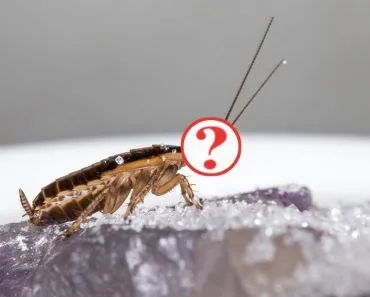
A cockroach can hold its breath for almost 40 minutes, so there’s little hope of drowning them. It can survive a few days without water, a month without food, and even a few weeks without a head!
Contrary to popular belief, cockroaches cannot survive a nuclear explosion any more than they can survive an onslaught from their deadly enemy – bug spray.
The likes of Raid, Hit, Baygon, and other popular brands are fatal to these roaches. So, how do these insecticides kill such tough and durable insects so quickly?
What Are Insecticides?
Bug sprays or insecticides are chemical compounds that inhibit certain physiological functions.
Humans have been using insecticides derived from natural sources since ancient times. Most of these strategies originally came from plant chemicals or chemicals such as sulfur or sodium chlorate. Today, we have a wide arsenal of insecticides that we can spray to eliminate our bug problems. The origin of our modern anti-pest weaponry began in the 1940s with DDT and other synthetic chemicals.
The first generation of synthetic pesticides was not created to be pesticides. DDT was first synthesized in 1874 by the chemist Othmar Zeidler, but it was not until 1939 that Dr. Paul Muller observed its pesticidal properties. This discovery and the Second World War played a major role in accelerating the discovery of synthetic pesticides.
Synthetic pesticides were much more efficient and could be used specifically against pests, giving synthetic pesticides an edge over those used in the past.
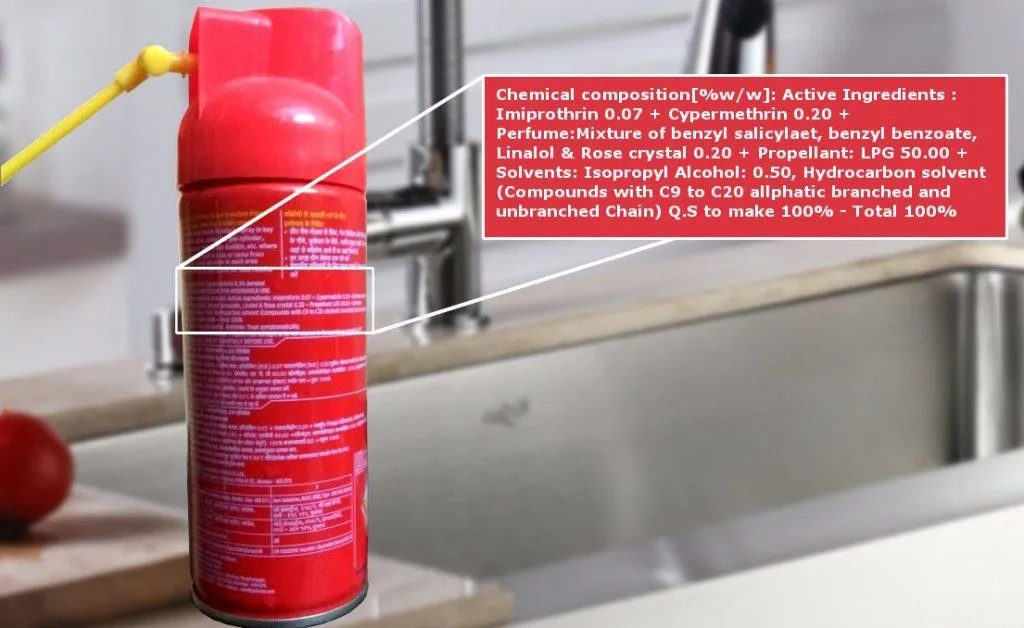
Insecticides can be lethal in various ways: some act as neurotoxins, impairing the nervous system; others target respiration and prevent the insect from utilizing oxygen; and others target the insect’s growth and reproduction.
Types Of Insecticides
Many classes of insecticides differ in their synthesis, how they affect the pest, and whether they indiscriminately affect all insects or are specific to a particular type or family.
Popular roach-killing bug sprays are a concoction of several pesticides that fall under two broad types: pyrethroids and carbamates.
Pyrethroids Are Neurotoxic For Insects.
Pyrethroids are fast-acting compounds found in most household insecticides and insect repellents. Pyrethroids are synthetic compounds but resemble a natural pesticide made from daisy flowers called pyrethrin.
Pyrethrin is extracted from the ‘Pyrethrum daisy,’ Chrysanthemum cinerariaefolium. The crushed flower has been used as an insecticide for over 2,000 years. Inhaling too much of the flower’s scent is harmful as it can cause side effects such as asthmatic breathing, sneezing, and headaches. Pyrethroids are chemically similar to pyrethrin but synthetically produced.
Pyrethroids are neurotoxic and impair the function of the neurons in a cockroach, thereby paralyzing it. The chemicals target proteins that transport sodium and potassium across the neuron membrane. Neurons can send impulses through the controlled entry and exit of these ions through the appropriate protein channels. Pyrethroids interfere with these channels and keep them open, impairing the functioning of the neuron.
Another reason why pyrethroids are a popular choice for bug sprays is that a very low dose of pyrethroids can kill cockroaches. The same concentration is relatively harmless to humans. However, they can harm sensitive individuals or aquatic organisms such as fish when used directly in water, as they dissolve very poorly.
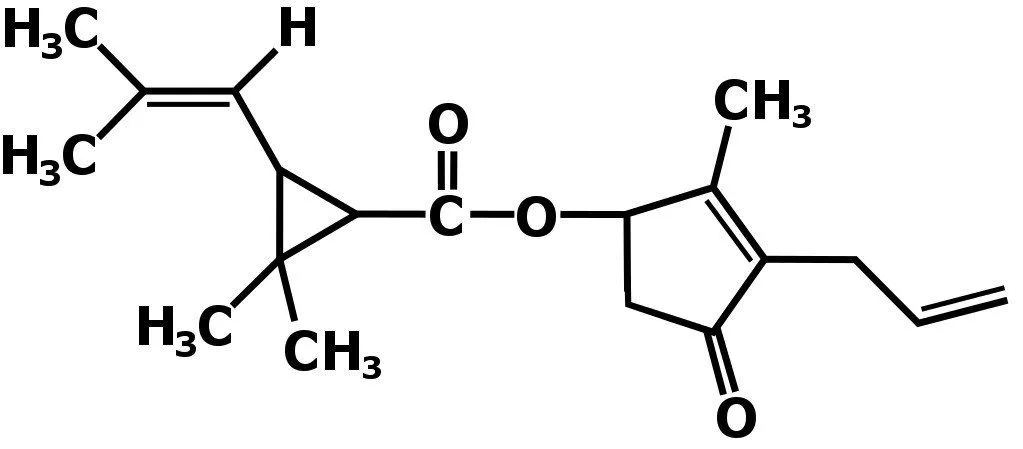
Some commonly used pyrethroids include allethrin, tetramethrin, resmethrin, cyfluthrin, permethrin, and esfenvalerate. Also known as ‘first-generation pyrethroids’, these were primarily developed in the 1940s.
Carbamates Inhibit Enzymes In The Nervous System.
The other once-common chemical pesticide component of bug spray that is now used less often is carbamate. This class of pesticide is derived from carbonic acid.
These compounds target a specific enzyme called acetylcholinesterase. This enzyme plays a role in breaking down the neurotransmitter, a chemical messenger of the nervous system called acetylcholine. Neurons release acetylcholine to communicate with other neurons and muscles, giving the latter a signal to contract.
In normal function, the body allows acetylcholine to be present in the extracellular environment for a very short period. The cholinesterase enzyme breaks down the acetylcholine molecule, thereby preventing prolonged signaling to other neurons and muscles.
Carbamates prevent acetylcholinesterases from breaking down acetylcholine. As a result, the molecule constantly stimulates other neurons, which makes the muscles contract. Not only do the muscles involved in walking and moving paralyze, but the muscles of the heart and those involved in respiration seize, too.
Unable to move, breathe, or circulate blood, the cockroach dies.
How Fast Does Raid Kill A Roach, And Why Does It Work On Contact?
Raid and similar sprays are marketed as “kills on contact,” and that label is mostly honest. The active ingredients in a typical Raid Ant & Roach can are two pyrethroids, imiprothrin and cypermethrin, carried in a petroleum-based solvent. Imiprothrin is the fast knockdown agent and cypermethrin is the slower, longer-lasting killer, which is why the can keeps working on surfaces for days after you spray.

So how quickly does a roach actually die? When you spray a cockroach directly, the pyrethroid soaks through its waxy cuticle within seconds and jams open the sodium channels in its nerves, as described above. The insect is usually knocked down (flipped on its back, legs twitching) within roughly a minute, but that twitching roach is not dead yet. Full death often takes several minutes to a few hours, depending on the dose it absorbed, the temperature, and whether the population is resistant. A roach that catches only a light mist may stagger off and recover.
This is why a sprayed roach on its back may still wave its legs for a surprisingly long time. The nervous system is in overdrive, not switched off. It also explains why pest-control pros often prefer baits for a real infestation: a contact spray kills the roaches you can see, but the colony hiding behind your cabinets stays untouched.
Why Do Cockroaches Run Out Into The Open After You Spray?
Have you ever sprayed near a skirting board and watched roaches suddenly pour out of a gap you didn’t know existed? It can look like the spray is attracting them. It isn’t. Pyrethroids act as contact irritants that excite the insect’s nervous system the moment it touches a treated surface, and that overstimulation drives the roach to flee its hiding place. Entomologists call this the “flushing” or excitation effect.
A 2024 study in Pest Management Science on field-collected German cockroaches found that pyrethroid formulations work mainly as contact irritants rather than true repellents: the roaches don’t avoid treated areas from a distance, they react once they make contact. So the insects boiling out into the open are not drawn to the chemical. They are already poisoned and running from it, which is exactly when a fresh contact spray finishes the job.
This also answers a related worry: roaches that keep coming back after spraying. A contact spray doesn’t reach the eggs (oothecae) tucked away in cracks, and surviving or resistant individuals simply repopulate. Seeing roaches again a week later usually means the hidden population was never reached, not that the spray pulled new ones in.
Is Raid Spray Toxic To Humans And Pets?
The reason a chemical that wrecks a cockroach’s nervous system is sold for your kitchen is selective toxicity. Pyrethroids bind far more tightly to insect sodium channels than to mammalian ones, and our warm bodies break the compounds down quickly, so the same dose that floors a roach barely registers in a person. According to the U.S. National Pesticide Information Center, pyrethrins and pyrethroids are low in toxicity to people and other mammals at the levels involved in normal household use.
“Low” does not mean “harmless,” though. Inhaling a heavy cloud of spray in a closed room can cause coughing, a runny nose, headache, dizziness, or nausea, and direct skin or eye contact can sting or leave a tingling, numb feeling. The sensible precautions are the obvious ones: spray surfaces rather than misting the air, ventilate the room, keep it off food and worktops, and wash your hands afterward. If someone inhales a lot or gets it in their eyes, follow the can’s first-aid instructions and call a poison control center (in the US, 1-800-222-1222).
Pets deserve extra care. Cats are notably more sensitive to pyrethroids than dogs or humans because they metabolize the compounds slowly, so keep cats out of freshly sprayed rooms until surfaces are dry and the area is aired out. Fish are also highly vulnerable, which is why you should never spray near an open aquarium.
Insect Resistance: Cockroaches Fight Back
These and thousands of other insecticides are employed today to keep our homes, gardens, and crops safe from a range of pests, and their use has improved our standard of living and increased crop yields, but there are a few downsides to the story.
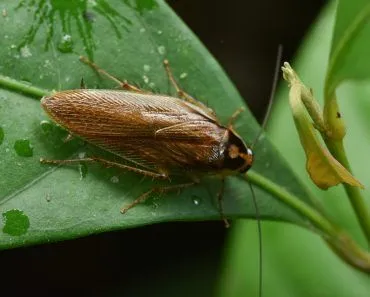
Cockroaches, being cockroaches, are outsmarting us. The German cockroach (Blattella germanica), a worldwide pest known to spread diseases and carry allergens, is the only roach developing insecticide resistance. A la Tom and Jerry, no sooner have we set up an insecticide trap than the roaches have evolved to resist it, a result of our more than liberal approach to bug sprays and how quickly the insect reproduces.
In 2019, scientists from Purdue University published some concerning results. They report that, in some instances, resistance to one insecticide also gave the roach resistance to another class of insecticide, limiting the cocktail of chemicals we can spray on these critters.
It gets worse. Researchers Ayako Wada-Katsumata, Jules Silverman and Coby Schal discovered that the German cockroach had evolved a dislike for sugar. Cockroaches love sugar. This made sugar the perfect bait. As cheese is to a rat, so too sugar is to a cockroach. But, the researchers found that roaches who survived the sugar bait did so because they had a mutation that made sugar taste bitter. If you avoid the bait, you don’t die.
Overusing Insecticides Isn’t Good For The Environment
Many of these pesticides remain in the soil and body of the animals that could inhale or consume them. If other animals feed on insects that have ingested the pesticide or drink water from places where insecticides are present, these animals often have unintended effects. This is known as the bioaccumulation of pesticides.
The prolific environmentalist Rachel Carson cautioned our world against the excessive use of pesticides. In her revolutionary book Silent Spring, she writes, “A Who’s Who of pesticides is therefore of concern to us all. If we are going to live so intimately with these chemicals, eating and drinking them, taking them into the very marrow of our bones – we had better know something about their nature and their power.”
Last Updated By: Salama Yusuf
References (click to expand)
- Soderlund, D. M. (2011, June 28). Molecular mechanisms of pyrethroid insecticide neurotoxicity: recent advances. Archives of Toxicology. Springer Science and Business Media LLC.
- Biotechnology and Biological Sciences Research Council (BBSRC) - bbsrc.ukri.org
- History of Pesticide Use.
- Insecticides | US EPA.
- Types of Pesticides | US EPA.
- Wada-Katsumata, A., Silverman, J., & Schal, C. (2013, May 24). Changes in Taste Neurons Support the Emergence of an Adaptive Behavior in Cockroaches. Science. American Association for the Advancement of Science (AAAS).
- Fardisi, M., Gondhalekar, A. D., Ashbrook, A. R., & Scharf, M. E. (2019, June 5). Rapid evolutionary responses to insecticide resistance management interventions by the German cockroach (Blattella germanica L.). Scientific Reports. Springer Science and Business Media LLC.
- Soderlund, D. M. (2011, June 28). Molecular mechanisms of pyrethroid insecticide neurotoxicity: recent advances. Archives of Toxicology. Springer Science and Business Media LLC.
- Pyrethrins General Fact Sheet. National Pesticide Information Center (NPIC), Oregon State University.
- ToxFAQs for Pyrethrins and Pyrethroids. Agency for Toxic Substances and Disease Registry (ATSDR), CDC.
- Gaire, S., et al. (2024). Behavioral responses of field-collected German cockroaches to pyrethroids and pyrethroid-formulated insecticides. Pest Management Science.
- What’s Inside SC Johnson: Raid Ant & Roach Killer 26 (ingredient listing).