GPS is one of the most everyday demonstrations of Einstein’s relativity. The atomic clocks aboard the GPS satellites tick at a different rate from the same clocks on Earth: special relativity slows them by about 7 microseconds a day because they move at ~3.87 km/s, while general relativity speeds them up by about 45 microseconds a day because they sit higher in Earth’s weaker gravity. The two effects partially cancel, leaving a net gain of roughly 38 microseconds a day. Left uncorrected that would compound into a navigation error of about 11 kilometres every day, so the satellites broadcast pre-shifted timing signals that engineers calibrate using both special and general relativity.
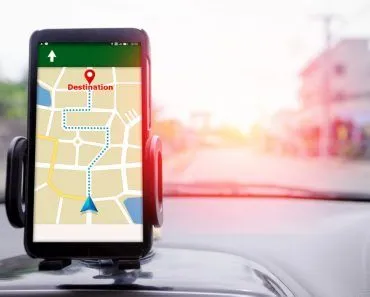
It’s easy to find our way around cities with a GPS-enabled phone or car these days. It’s also just as simple to upload a photo on social media with a location tag. However, did you know that it takes both the special and general theory of relativity to determine that you are inside a specific café, rather than just somewhere in a city?
The Special theory of relativity is the one that says light moves at a constant speed, which causes things to become shorter while time to pass slower at high speed. It was presented by Einstein in 1905 and is used to determine things like the age of stars and what they are made of.
But for something as mundane as telling people you are in a coffee shop, why would we need to use the legendary special theory of relativity?
And why would we need the general relativity theory either?
That theory corrected Newton’s law of gravity that most of us learned about in high school and gave it a modern makeover.
The general theory is used for various purposes, from determining the orbit of Mercury to the evolution of the universe and dark energy.
Doesn’t it feel like overkill to use such enormous weapons from our intellectual arsenal to determine that you are having coffee in a café?

How Does The GPS Work?
The Global Positioning System or GPS starts with your phone receiving a signal from any 4 of the 24 satellites that orbit the Earth. Why 4? Well, three of them are used to determine your position and the 4th one is used to correct the determined position. But how exactly does receiving signals from these satellites establish your location?
The time it takes for a signal emitted by the satellite to reach your phone will define your distance from that satellite. Now your position is known to be at some distance from that satellite; in fact, you could be anywhere on the surface of a sphere with the satellite at the center.
When the distance between you and the second satellite is known, your position is now known within the intersection of two spheres. Once the third satellite connects to the phone, you’ve been pinpointed. That’s how satellites can determine exactly where you are located.

How Does Special Relativity Affect GPS Location?
So far, we could have used the basic math present back at the time of Euclid to get these data points. Where Einstein’s theory of relativity enters is that the clock on the satellite doesn’t tick at exactly the same rate as a clock on Earth. In fact, the general and special theories of relativity affect clock speeds, but let’s look at the special theory to start simple, before moving on to the effects of the general theory.
Einstein’s special theory of relativity says that since the satellite is moving at about 4000 m/s, while the clocks on the Earth’s equator are moving due to planetary rotation at about 465 m/s, the satellite clocks should run slightly slower than the equator clocks.
While they don’t really run slower due to the effects of the general theory of relativity, it does have an overall effect on how time is experienced.
It’s not just the clocks changing their frequency; everything in the satellite—from the vibration of an atom to the frequency of electricity—changes due to greater velocity. If this effect is not corrected for artificially, then there would be a navigation error of 2.13 km/day.
This means that if you were to climb Mount Everest for 3 days with the help of GPS, you would reach Ronghuk Glacier on the third day, which is about 6 km from the peak!
Correcting The Errors
The errors that arise in time and distance are broadcasted by the satellite and the corrections required are calculated using special relativity by the software so that when you attempt to go to Mount Everest, you will actually reach the peak and not some glacier six kilometers away. However, that’s not the only relativistic effect that takes place when it comes to GPS.
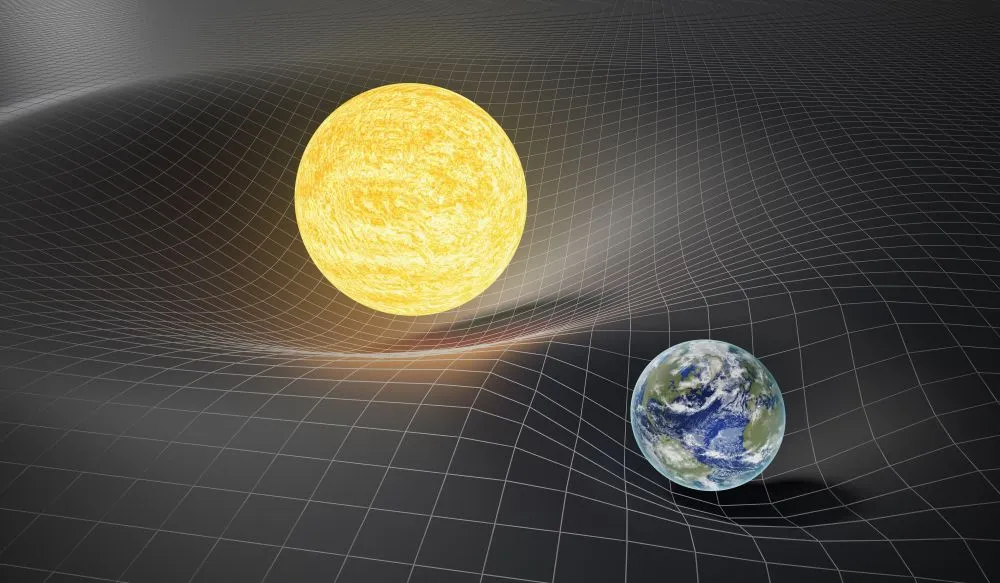
There is a second theory of relativity, called the general theory of relativity, which renovated the theory of gravity. This is the theory upon which our current understanding of the cosmos is based.
The General Theory Of Relativity Comes Into Play
Due to the effects of this general relativity, the clocks on the satellite, which are under much less gravity than the clocks on the equator, will run faster. The earlier theory of special relativity had the opposite effect, so if this increase and decrease were to be of equal magnitude, they would simply cancel each other out.
Unfortunately, the clock frequency is increased by much more than would be compensated by the decrease we discussed earlier. Again, this is not only clocks; even if a person were to go and stay at a place with far less gravity, like the moon, they would appear to live longer than their counterparts on Earth. In that case, however, the difference in gravity is not significant enough to make a noticeable difference in human age or appearance.
However, since everything would slow down, from their motion and their metabolism to their cellular and atomic processes, they wouldn’t experience more time than us. Similarly, these clocks would run slower as a result of the gravitational frequency shift, which basically means that they would tick at a different rate at a different gravity intensity.
The timing error caused by this effect is much larger than the one caused by the movement of the satellite. In fact, it would lead to a navigation error of about 13.7 km/day. This time that you’d be 40 km inside Tibet 3 days after starting for the peak of Mount Everest.
These gravitational-based errors are corrected in the same way as the earlier ones. While there are other effects at play, it’s simply astounding that we need to use the same theory to both determine the mass of a star trillions of kilometers away and find a good restaurant in a new city!
How Are The Satellite Clocks Set Right?
Here’s the part that sounds almost like a trick: engineers fix most of the relativity problem before the satellite ever leaves the ground. Rather than waiting to patch everything in software, they deliberately set each clock to run at the wrong rate on Earth so that it ticks at the right rate once it is up in orbit. This is called the factory offset.

The two relativistic effects don’t cancel, remember: gravity wins, so a GPS clock gains time overall. To undo that, the net frequency of every orbiting clock is set lower by about 4.46 parts in ten billion. The atomic standard that nominally runs at 10.23 MHz is therefore tuned down by roughly 0.0046 Hz, to 10.22999999543 MHz, before launch. Sitting on the bench it now reads slightly slow, but lift it into orbit and the relativistic speed-up brings it back into step with the clocks on the ground.
The engineers weren’t always sure of the number. Before the first GPS satellite went up in 1977, there was genuine uncertainty about how big the offset should be, and even which way it should go, so the clocks were built with tunable synthesizers that could be dialed across the whole range of possibilities. Once the satellite’s cesium clock was switched on, it was run for three weeks to measure its true rate. The shift came out to 4.425 parts in ten billion, matching Einstein’s prediction to better than 1%. The same theory that maps the orbit of Mercury had just passed a test inside a box of electronics circling the Earth.
What Other Relativistic Effects Does GPS Account For?
The slowing from motion and the speeding from gravity are the headline acts, but they aren’t the whole show. A couple of subtler relativistic effects also have to be tidied up before your position is trustworthy.
The first is the Sagnac effect. While a signal is traveling down to you, the Earth (and you with it) keeps rotating, so your receiver has shifted slightly by the time the signal arrives. In the rotating frame of the spinning planet, this shows up as the Sagnac effect, the same phenomenon that the ring-laser gyroscopes in aircraft rely on. For GPS it can build up to a few hundred nanoseconds; a signal sent the whole way around the equator picks up about 200 nanoseconds, which at the speed of light is tens of meters on the ground. Receivers correct for it using the geometry of where the satellite and user sit on the spinning Earth.
The second is the eccentricity effect. No GPS orbit is a perfect circle, and on a slightly stretched orbit the satellite’s height and speed change as it loops around. The gravitational and motional shifts then combine into a gentle wobble in the clock’s reading that repeats about every 12 hours. For an orbit just 1% out of round, that wobble reaches an amplitude of around 28 nanoseconds, enough to throw your position off by more than 8 meters if it were left alone. Each navigation message carries the satellite’s orbital details so your receiver can compute and remove this correction on the fly. It is a fitting reminder that pinning down a coffee shop really does lean on the full machinery of Einstein’s universe.