Conscience is your inner sense of right and wrong. By around age 3 children show a clear moral self, with precursors such as guilt and willing compliance visible as early as 14 to 22 months. One camp of researchers says conscience is learned by internalizing parental rules; another, led by Paul Bloom, argues rudimentary moral foundations are present from infancy, though a large 2025 multi-lab replication has cast doubt on the strongest version of that claim.
When we think about what makes humans different from other animals, the word “conscience” often emerges. This article will address the question of what conscience is, whether we are born with it or if it is a result of socialization, and how it shapes our lives by guiding the decisions that we make.
Conscience is the feeling you get when you evaluate if you’ve done something “correct” or “wrong”. It is with the help of our conscience, developed at an individual (personal) level, that we understand the moral principles we hold. This motivates us to act on them and therefore helps us assess our character and behavior. Ultimately, it helps us judge ourselves against those principles, in terms of how well we follow them.
How Is Conscience Different From Consciousness?
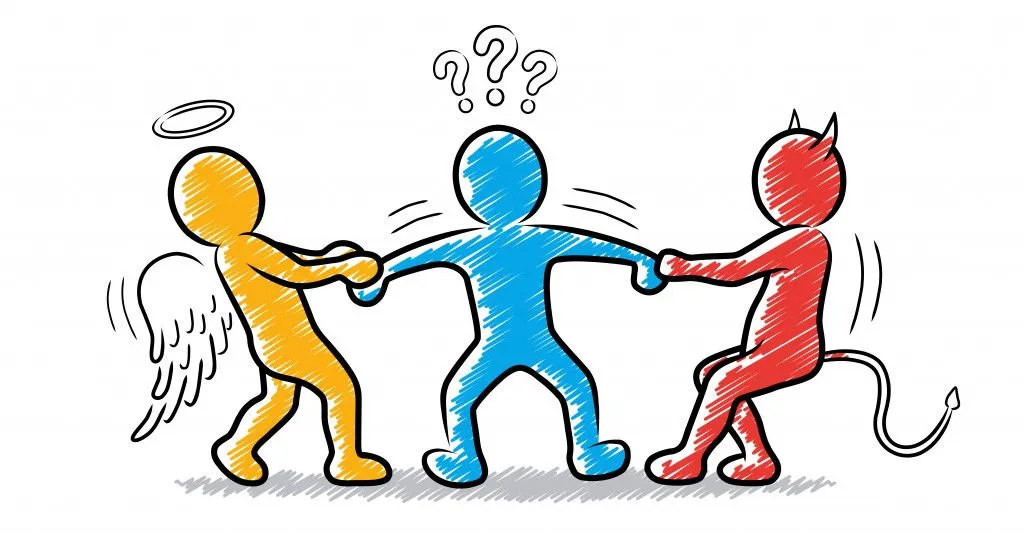
Think of your conscience as the part of your personality that functions to help you distinguish right from wrong. Accordingly, you resist certain urges and desires (i.e., eating in class) and follow the behavior that is considered correct or “right” (paying attention to what the teacher is teaching).
This makes conscience your moral inner voice. The sole purpose of its existence is to help you engage in prosocial behavior, which consists of behaviors that help you help others.
Consciousness, on the other hand, reflects how aware you are of your surroundings. A good way to understand this is to think of the human mind as an iceberg, as proposed by Freud’s psychoanalytic theory.
The part of the iceberg on the surface and visible represents your conscious awareness. This part of the mind refers to all the things you are aware of and can easily describe. For instance, right now, while reading this article, your conscious mind is helping you make connections, while also keeping you on track with what you are seeing and reading.
The second layer is your preconscious (commonly called the subconscious, although Freud himself retired that word in favor of preconscious to avoid confusion). These are things that are not in your awareness right now, but can be brought into consciousness with relatively little effort. For instance, if someone asks you what you had for dinner last night, you can easily pull that information into your conscious awareness and answer the question.
The deepest level of the iceberg is your unconscious mind. These are aspects of your being of which you are unaware; they are hidden from your conscious mind. These include your fears, violent motives, urges, and desires.
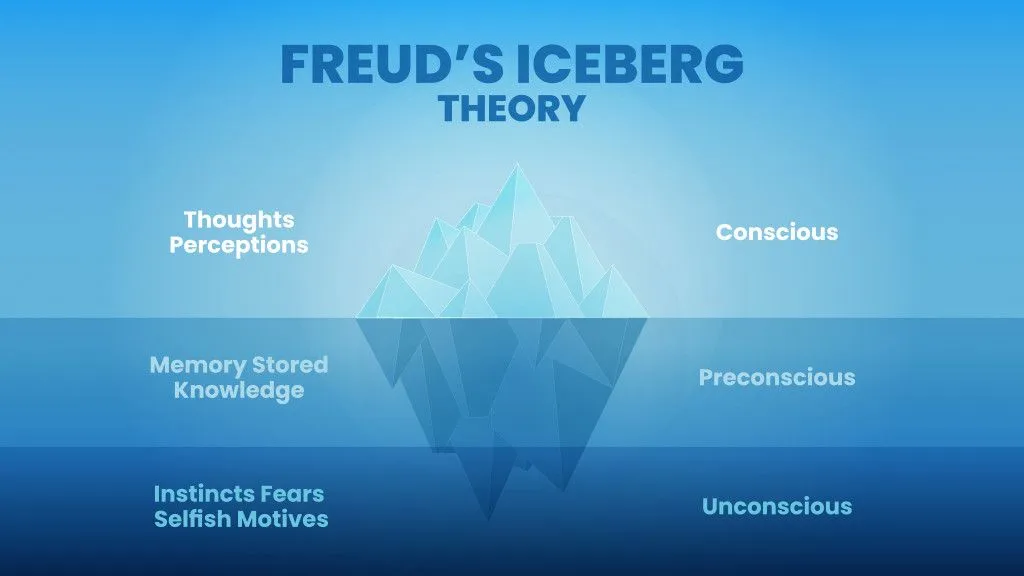
Thus, when differentiating between ‘conscience’ and ‘conscious’, remember that to be conscious means to be awake and aware, whereas conscience is your inner understanding of right from wrong.
When Does Our Conscience Emerge?
Researchers who studied early morality propose that the moral self usually emerges by the age of 3. By this age, a child begins to explore the ideas of right and wrong, and the feelings that come along with doing the right thing. They also experience guilt when they feel that they’ve done something wrong. The groundwork, however, goes back further: longitudinal work by Grazyna Kochanska at the University of Iowa shows precursors such as “committed compliance” (a toddler’s willing embrace of a caregiver’s rules) emerging as early as 14 to 22 months, and predicting later conscience and guilt.
Martin Hoffman (1994), a renowned child psychologist and researcher in the field of parenting and discipline, suggests that morality or conscience develops when a child internalizes (makes personal) the rules that their parents set when the child was growing up. These rules teach the child about the world, what’s acceptable, and how one relates to it. They form the building blocks of the child’s conscience starting in the toddler years (roughly 18 months onward).
Now, going back to Freud’s theory of psychoanalysis. Freud argues that conscience is a part of the ‘superego’. The superego develops around the ages of 3 to 5 in children and is the last part of the child’s personality to develop.
The ‘id’, which has its focus only on obtaining pleasure, is present from birth. The id wants to maximize pleasure and reduce pain. It includes all the urges and desires you may want, even though you know they may not be valid or justified!
Then, your ‘ego’ develops. This acts on the ‘reality principle’, helping you manage the demands of the id and maintain equilibrium in your behavior so you don’t end up acting selfishly in society.
Your ‘superego’ contains all the information you have received from your parents and from society about how to act and behave. The superego acts on the ‘moral principle.’ This is basically your conscience, which emerges over time to help you navigate the correct way to behave in society.
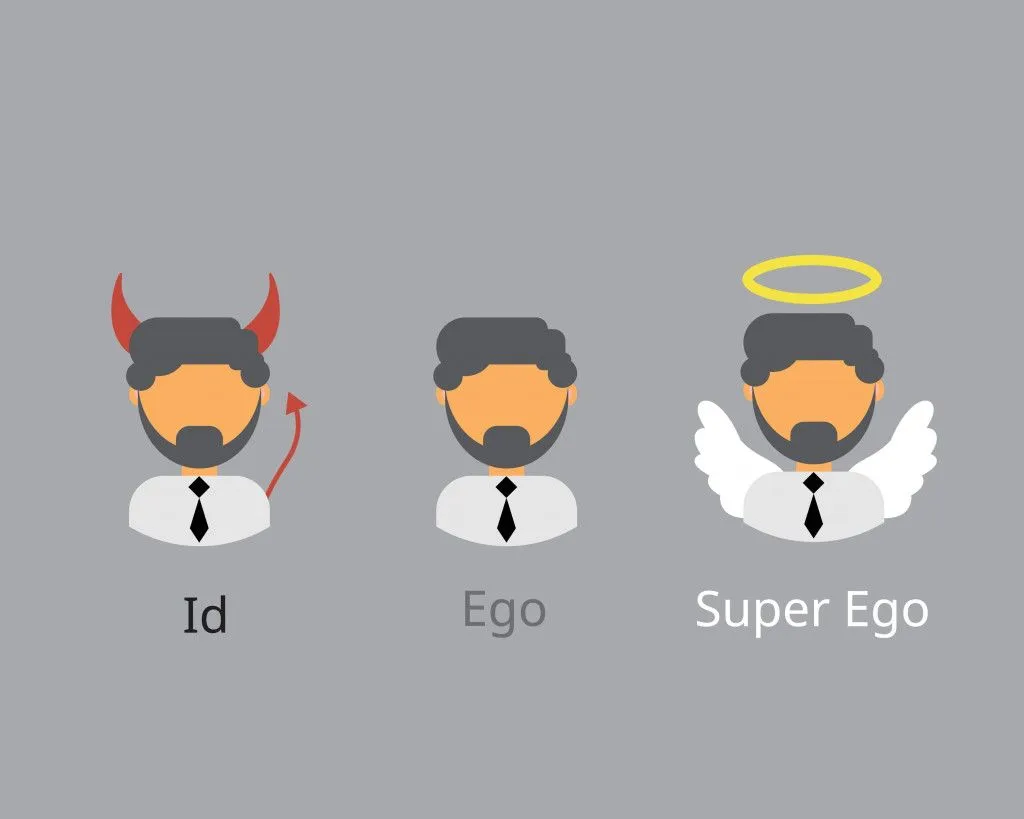
It is important to note that the id and the superego operate on the unconscious level. These are your intuitions or ‘gut feelings’, whereas the ego operates on the conscious level and mediates (balances) between the id and the superego.
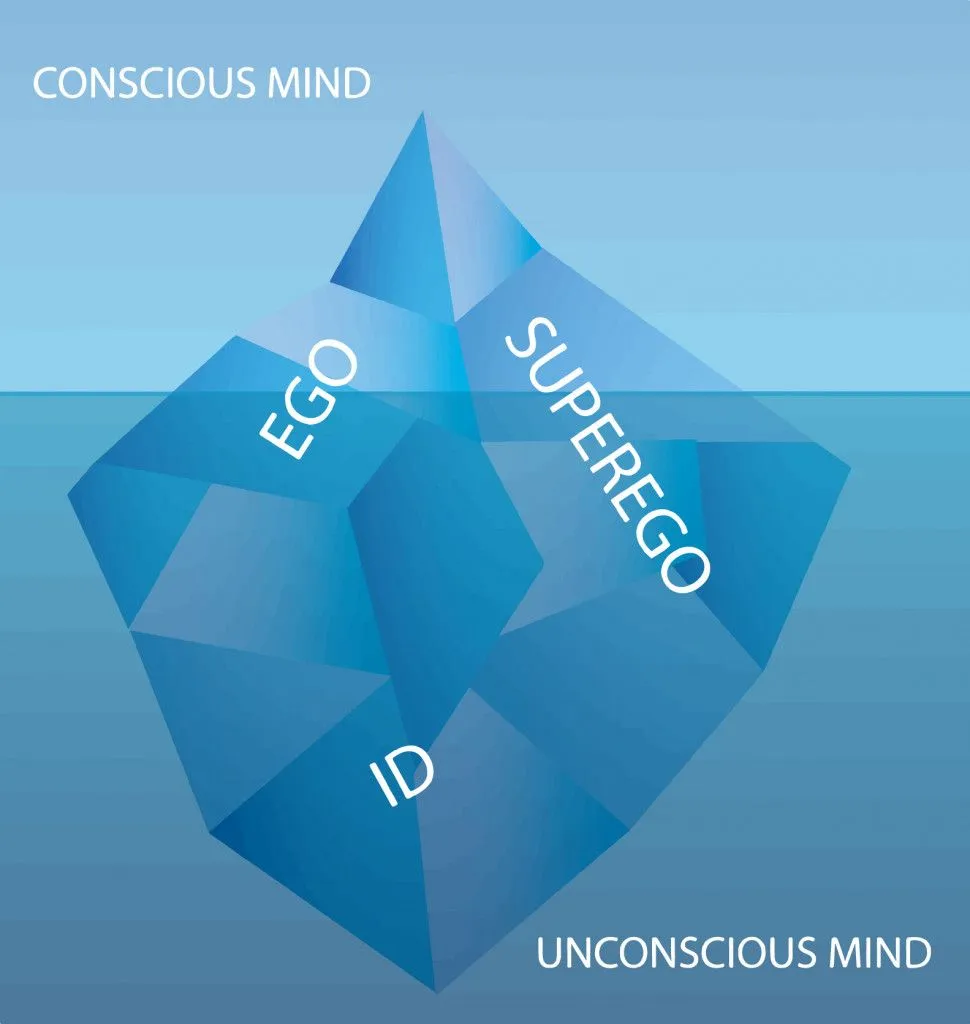
However, these theorists and researchers suggest that conscience is essentially learned through parental and cultural factors.
There are some psychologists, like Paul Bloom, who argue that morality is not entirely learned. Paul Bloom is a Canadian-American psychologist now at the University of Toronto (and Professor Emeritus at Yale), who studies how children and adults understand the social world, with a focus on morality, religion, and art.
His view is that babies are not moral blank slates. They show rudimentary moral foundations: early preferences for helpful over unhelpful characters, basic empathic responses, and primitive fairness intuitions. Adult morality, in his telling, is built on top of these foundations through experience and reasoning.
The most famous evidence comes from lab studies of pre-verbal infants. In the “helper-hinderer” experiments by Hamlin, Wynn and Bloom at Yale, babies as young as 6 months watched a puppet show in which one character helped another up a hill and a different character pushed it back down. Most infants then reached for the helper. Separate twin studies (by researchers such as Knafo and Plomin) suggest empathy and prosocial behavior are moderately heritable, though there is no single “kindness gene.”
One caveat worth knowing: in 2025, a large preregistered multi-lab replication led by Kelsey Lucca (and including Hamlin herself) tested over 1,000 infants across 37 labs and found no reliable preference for the helper. The original effect may be weaker, context-dependent, or emerge later than once thought, so the debate over how much of our conscience is “built-in” is very much alive.
Where Does Our Conscience Come From In The Brain?
There is no single “conscience spot” in the brain, but if one region sits at the center of our moral life, it is the prefrontal cortex tucked just behind your forehead, and in particular a lower-middle part of it called the ventromedial prefrontal cortex (vmPFC). We know this largely from what happens when it is damaged.

The most famous case is Phineas Gage, a railway foreman who, in 1848, survived a tamping iron being blasted straight through the front of his skull. His memory, speech and intelligence stayed intact, yet the well-mannered, reliable man his friends had known became impulsive, profane and socially reckless. The injury had spared his intellect while wrecking the frontal circuitry that helped keep his behavior in line.
Modern patients tell a similar story. When neuroscientists Steven Anderson, Antonio Damasio and colleagues at the University of Iowa studied two adults who had damaged their prefrontal cortex as young children, they found normal intelligence paired with strikingly poor social and moral reasoning, and little sign of guilt or empathy after doing something wrong. A later study led by Liane Young found that patients with vmPFC damage even judged attempted harm, such as a failed poisoning, as more acceptable than healthy volunteers did, apparently because the region that normally supplies a gut reaction to bad intentions was no longer doing its job.
The picture that emerges is that conscience is not pure logic. The vmPFC, working with the emotion-processing amygdala, attaches feelings to our choices, giving us the pang of “this is wrong” before we have reasoned it out. Damage that link, and a person can recite the rules of right and wrong yet fail to feel them, which is why researchers sometimes describe the result as “acquired sociopathy.”
Why Do We Have A Conscience In The First Place?
If conscience so often works against our immediate self-interest, nagging us to share, to tell the truth, or to help a stranger, why would evolution ever build it? The puzzle has a few complementary answers, and none of them require us to be saints.

The first answer is kin selection: helping relatives, who share copies of our genes, can pay off in evolutionary terms even when it costs the helper. The second, proposed by biologist Robert Trivers, is reciprocal altruism: in a group where individuals meet again and again, it pays to help those who help you back and to withhold help from cheaters. Emotions such as gratitude, guilt and moral outrage are, on this view, the internal bookkeeping that keeps those exchanges honest. Some researchers add a role for group selection, arguing that bands of reliable cooperators simply outcompeted more selfish groups.
You can see the raw ingredients in our closest relatives. Primatologist Frans de Waal has documented that chimpanzees who groom a companion in the morning are more likely to receive shared food from that same individual later in the day, a sign of memory and something like reciprocity. Chimpanzees also console distressed group-mates, and bonobos show marked empathy, behaviors de Waal calls the “building blocks” of morality that predate humanity.
Seen this way, your conscience, your inner moral compass, is less a divine gift than a deeply evolved solution to the problem of living together. It is the internalized voice of cooperation, the feeling that stops us treating every encounter as a chance to grab what we can, and it is a large part of what lets human societies function at all.
Conclusion
So, which perspective is true? As of now, we truly don’t know. The evidence for conscience being shaped by learning and socialization is strong, and the nativist view that we arrive with rudimentary moral foundations is intriguing, even if the headline infant studies are now being re-examined in light of the 2025 replication results. Most likely, both sides are partly right: babies arrive with predispositions toward empathy and fairness, and parents, peers and culture do the rest of the work of building a full-blown conscience.
References (click to expand)
- Bloom, P. (2012, January 10). Religion, Morality, Evolution. Annual Review of Psychology. Annual Reviews.
- EMDE, R. (1991, September). The moral self of infancy: Affective core and procedural knowledge. Developmental Review. Elsevier BV.
- Emde, R. N., & Easterbrooks, M. A. (1985). Assessing Emotional Availability in Early Development. Early Identification of Children at Risk. Springer US.
- Rieff P. (1979). Freud: The Mind of the Moralist. University of Chicago Press
- Hoffman, M. L. (1994, January). Discipline and internalization. Developmental Psychology. American Psychological Association (APA).
- Kochanska, G. (1995). Children's temperament, mothers' discipline, and security of attachment: multiple pathways to emerging internalization. Child Development.
- Hamlin, J. K., Wynn, K., & Bloom, P. (2007). Social evaluation by preverbal infants. Nature.
- Lucca, K., et al. (2025). A large-scale ManyBabies multi-lab replication of social evaluation in preverbal infants. Developmental Science.
- Anderson, S. W., Bechara, A., Damasio, H., Tranel, D., & Damasio, A. R. (1999). Impairment of social and moral behavior related to early damage in human prefrontal cortex. Nature Neuroscience.
- Young, L., Bechara, A., Tranel, D., Damasio, H., Hauser, M., & Damasio, A. (2010). Damage to ventromedial prefrontal cortex impairs judgment of harmful intent. Neuron.
- Morality and Evolutionary Biology. Stanford Encyclopedia of Philosophy.
- de Waal, F. B. M. (2008). Putting the Altruism Back into Altruism: The Evolution of Empathy. Annual Review of Psychology.