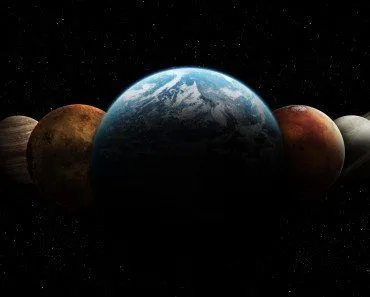
With more than 6,200 exoplanets now confirmed, astronomers sort them into catalogs by size, temperature, and orbit. Categorizing planets lets scientists compare worlds, give them consistent names, rule out ones that cannot sustain life, and prioritize the Earth-like worlds in a star's habitable zone for the search for life.
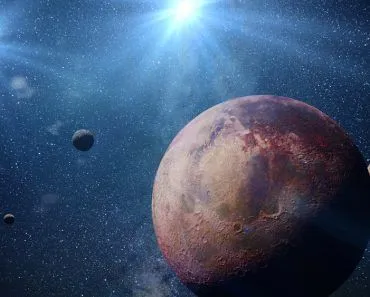
Imagine you’re an astronaut traveling through space on a mission to explore distant planets. As you gaze out the window of your spacecraft, you encounter an array of celestial bodies hanging in space. The planets beyond our solar system are called exoplanets.
These planets come in all shapes, sizes, and compositions. In recent years, they have become a focal point of exploration and scientific curiosity. Astronomers have now confirmed more than 6,200 of them (according to the NASA Exoplanet Archive), with thousands more candidates waiting in line. As an astronaut on this exploratory mission, you’re tasked with categorizing these cosmic objects, but why is it so crucial? In this article, we shall explore the necessary steps involved in categorizing these celestial bodies.
Now, picture yourself peering into the depths of space with advanced telescopes. You spot a point of light orbiting a distant star, a newfound world. Categorizing this planet helps us understand our cosmic neighbors, much like how learning about your neighbors on Earth can foster a sense of community where you live.
The Diversity Of Exoplanets
Exoplanets show staggering diversity. Some are like spheres of fire, while others are frozen to the core. An exoplanet called Kepler-16b has two suns setting on the same horizon, while another one named KELT-9b has a dayside hotter than the surface of many stars. With a daytime temperature near 4,300 °C (7,800 °F), it is the hottest exoplanet ever discovered, and the heat is so intense that it tears molecules in its atmosphere apart.
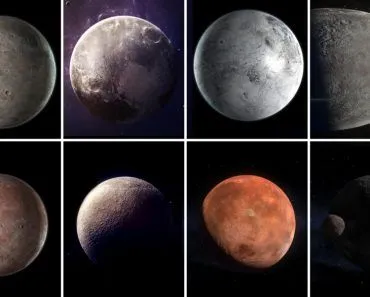
Categorization allows scientists to compare and contrast different planets. By grouping them based on similarities, we can identify patterns and differences. This comparative approach helps in understanding how these worlds form, evolve, and interact with their host stars, much like how biologists study different species to understand evolution.
Giving Names To These Wanderers
Naming and labeling are inherent to human nature. When scientists discover a new exoplanet, they need to give it a name, just as you’d name a pet. However, with the growing number of exoplanets, this can become a cosmically large naming challenge. Categorization instead provides a logical framework for naming and organizing these newfound celestial bodies.
Exoplanets are named through a combination of scientific designations and proper names. Initially, they receive scientific designations, which typically include the star catalog (e.g., “HD” for the “Henry Draper Catalogue”) and a unique order number (e.g., “12345”) for both the star and the planet, with the lowercase letter “b” indicating the first planet found around that star.
In recent years, the International Astronomical Union (IAU) has introduced proper names for exoplanets through its NameExoWorlds contests, which are open to the public worldwide, in order to make these distant worlds more memorable and meaningful.
Comparing Planets
Comparative planetology is a fundamental aspect of categorizing exoplanets. The analytical approach of grouping them based on their structure is essential in providing valuable insights into the formation and evolution of the planet.
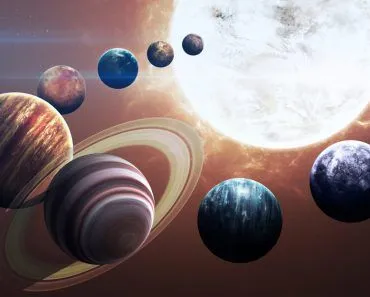
For instance, comparing a scorching, rocky exoplanet with a frozen gas giant helps scientists discern the role of distance from a star in shaping a planet’s climate and composition. It also sheds light on how different planetary systems interact with their host stars, enabling us to draw parallels to the unique relationship between Earth and the Sun.
Identifying The Worlds Where Humans Can Survive
One of the most thrilling quests in exoplanet research is finding planets that might support life. Categorization is instrumental in identifying potentially habitable planets. Scientists search for exoplanets in the “habitable zone,” where conditions may be just right for liquid water and, possibly, life. Categorizing these planets helps us prioritize our search for extraterrestrial life.
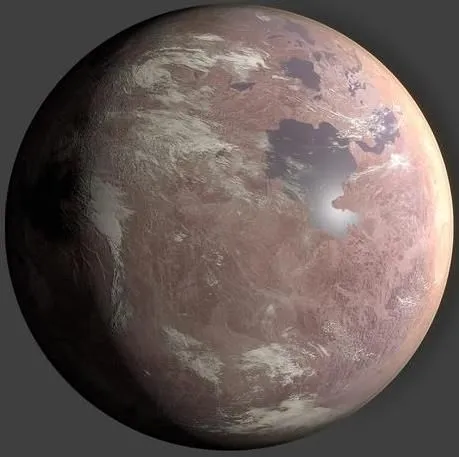
One of the primary categories that researchers scrutinize is a star’s “habitable zone” or “Goldilocks zone.” This zone is the region around a star where conditions are neither too hot nor too cold for liquid water to exist on the planet’s surface. Liquid water is a fundamental ingredient for life as we know it, and it plays a vital role in various biochemical processes. Planets that fall within this habitable zone are considered prime targets.
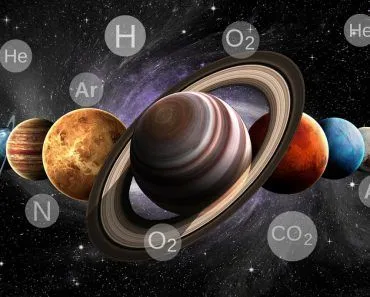
Additionally, the presence of certain gases in an exoplanet’s atmosphere can indicate habitability. Oxygen, for example, is a key indicator, as it is a byproduct of many biological processes. Methane and carbon dioxide can also provide insights into the planet’s climate and geology.
Categorizing planets enables scientists to focus on those with the highest probability of hosting life and allocate investigative resources more efficiently.
The Catalogs That Track Habitable Worlds
This kind of habitability sorting isn’t just an idea; it’s a working shortlist that researchers keep up to date. The Habitable Worlds Catalog, maintained by the Planetary Habitability Laboratory at the University of Puerto Rico at Arecibo, pulls the most promising candidates out of the 6,200-plus confirmed exoplanets. As of its 2024 update, it listed roughly 70 potentially habitable worlds, split into a conservative sample of around 29 (more likely to be rocky planets that could hold surface liquid water) and an optimistic sample of about 41 (which may include water worlds or mini-Neptunes). Think of it as a curated playlist pulled from a library of thousands.
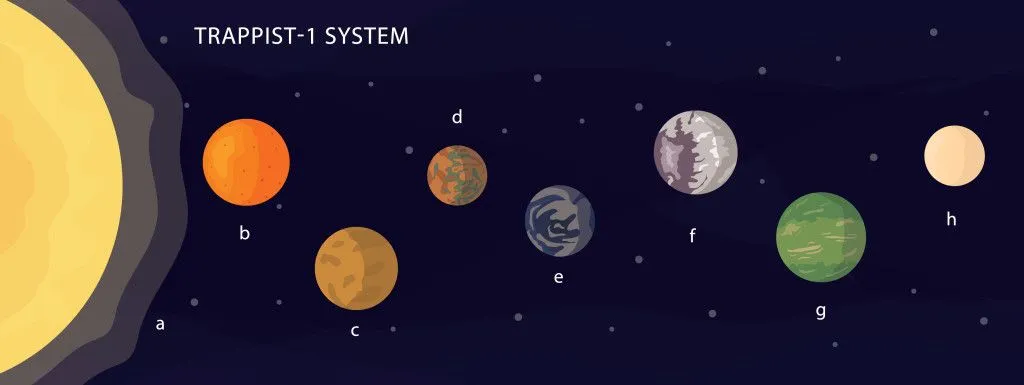
Once a planet makes the shortlist, telescopes go to work reading its atmosphere. NASA’s James Webb Space Telescope (JWST) can split the starlight that filters through an exoplanet’s air during a transit and look for the chemical fingerprints of different gases. It has been training that ability on the seven Earth-sized planets of the TRAPPIST-1 system, and early results suggest the innermost worlds there have little to no thick atmosphere, which is exactly the kind of make-or-break detail that categorization is meant to flag.
The next big leap is purpose-built. NASA’s planned Habitable Worlds Observatory, a flagship telescope still in early development, is being designed to directly image about 25 potentially habitable, Earth-like planets and scan their atmospheres for signs of life. Catalogs like these are what tell such a mission where to point first.
What If The Planet Is Habitable At Present But Will Become Violent In The Future?
Categorizing planets not only helps us understand their current conditions, but also enables us to make educated predictions about their future behavior. While some planets may currently be habitable, studying their categorization can provide insights into potential changes that might make them uninhabitable in the future.
For example, consider a planet in the habitable zone around its host star, where conditions are currently suitable for life. Through categorization, scientists might detect warning signs of potential shifts in the planet’s environment. This could include the analysis of atmospheric components, changes in surface temperature, or geological activity.
Identifying that a planet has a dynamic, tectonically active surface might indicate an increased risk of seismic activity or volcanic eruptions in the future. Similarly, alterations in the composition of its atmosphere, such as increasing levels of greenhouse gases, could hint at a looming climate change crisis.
Categorizing highlights the dynamic nature of celestial bodies and the importance of continuous monitoring and categorization to stay ahead of any drastic changes that might affect a planet’s habitability in the future.
Engaging The Public
Categorization isn’t solely for scientists; it’s also a way to engage the public’s imagination. When we have a clear system for organizing exoplanets, it becomes easier for everyone to get excited about these discoveries. It’s like sorting through a vast collection of rare gems, making the sparkling treasures of the cosmos more accessible.
In fact, through NASA-supported citizen science projects like the International Astronomical Search Collaboration, students as young as high school age have made real discoveries of asteroids and comets, the same kind of careful sorting and identification that drives exoplanet research.
In the end, categorizing discovered planets is more than a scientific endeavor; it’s a journey of exploration, curiosity, and understanding. It’s about making sense of the vast tapestry of the universe and finding our place within it. So, the next time you hear about a new exoplanet discovery, remember that it’s not just another distant world, but a piece of the cosmic puzzle we’re all striving to solve.
References (click to expand)
- Classifying Objects: Its Purpose and Role in Science and ....
- Exoplanets.
- How do exoplanets get their names?.
- Exoplanet and Candidate Statistics. NASA Exoplanet Archive.
- The Habitable Worlds Catalog. Planetary Habitability Laboratory, University of Puerto Rico at Arecibo.
- KELT-9 b. NASA Science.
- Habitable Worlds Observatory. NASA Science.
- International Astronomical Search Collaboration. NASA Science.