Table of Contents (click to expand)
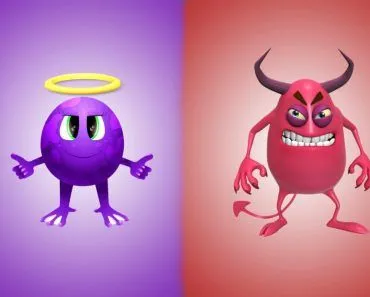
A superbug is a bacterium that has become resistant to several antibiotics at once. Superbugs develop when chance genetic mutations, or resistance genes swapped between bacteria, let a few cells survive a drug. Overusing antibiotics in people and livestock kills off the vulnerable bacteria and lets these survivors multiply, so resistance spreads. MRSA is a familiar example.
Bacteria are everywhere, from your phone screen to the scalding deep-sea hydrothermal vents on the ocean floor. We house some “good ones” in and on our bodies, which help keep our gut and skin healthy, but many bacteria can make you sick.
Since Alexander Fleming discovered penicillin in 1928, antibiotics have been a super solution to bacterial infections. Antibiotics kill bacteria, but no individual germ “learns” to fight back. Instead, a random genetic mutation may leave one cell that the drug can’t touch. That survivor multiplies and passes the resistance on to its offspring, and through natural selection the resistant strain takes over. Crucially, bacteria can also pick up ready-made resistance genes from completely unrelated bacteria, which speeds the whole process up.
According to the CDC’s Antibiotic Resistance Threats Report, each year around 2.8 million antibiotic-resistant infections occur in the United States alone, leading to more than 35,000 deaths.
How Do Bacteria Become Resistant?
So how does an ordinary microbe turn into a superbug? It happens in two main ways. The first is a spontaneous mutation. Bacteria copy their DNA every time they divide, and they divide fast, sometimes every 20 minutes. Copying mistakes are inevitable, and once in a while a mutation tweaks the very part of the cell that an antibiotic targets. The drug can no longer latch on, and that one lucky cell survives while its neighbors die.
The second route is faster and, frankly, sneakier: bacteria can simply borrow resistance from each other, even across different species. Microbiologists call this horizontal gene transfer, and it is now the main driver of the resistance crisis.
The Three Ways Bacteria Swap Genes
- Conjugation: two bacteria connect through a tiny bridge and pass a loop of DNA called a plasmid from one to the other. This is the biggest contributor to spreading resistance.
- Transformation: a bacterium scoops up loose fragments of DNA, often released by dead cells, from its surroundings and stitches them into its own genome.
- Transduction: a virus that infects bacteria (a bacteriophage) accidentally ferries resistance genes from one cell to the next.
Whatever the source of the gene, the resistance itself usually works through a handful of clever tricks. Some bacteria pump the antibiotic straight back out using molecular machines called efflux pumps. Others produce enzymes that chop the drug into useless pieces; the most famous of these are the beta-lactamases, which slice open penicillin and its relatives. Still others quietly reshape the protein the antibiotic was built to attack, so the drug no longer fits.
It is worth drawing one distinction here. True resistance is heritable: the bacterium can grow and multiply even while the drug is present, and it passes that ability to its descendants. That is different from tolerance, where bacteria merely slow down and wait out a course of treatment without ever becoming genetically immune. Superbugs are a resistance problem, and that is exactly why they are so hard to shake.
Where Do We Use Antibiotics And How Does It Affect Us?
Antibiotics have revolutionized the public health sector. Their use meant that people needn’t die from diseases such as cholera, typhoid, pneumonia or syphilis. For instance, in the US, since the surge of antibiotics, non-communicable diseases replaced communicable diseases as the leading cause of death, and the average life expectancy at birth has increased to 78.8 years.
Today, antibiotics are an indispensable part of our medical system, but we’re also overusing them.
Overconsumption By Humans
Research shows that microbial resistance to drugs is higher in countries with higher antibiotic usage and an overprescription problem.
Antibiotic use grew by 46% between 2000 and 2018, according to one study. Within those years, developing nations saw the biggest jump in antibiotic use, specifically, a 76% increase in low- and middle-income nations. South Asia experienced the biggest spike in antibiotic usage levels… increasing by 116%!
A number of multidrug resistant (MDR) and even extremely drug-resistant (XDR) bacterial pathogens or superbugs have emerged over the past 20 years as a result of the overuse and careless application of clinically prescribed antibiotics.
Antibiotics And Livestock
Antibiotics are also used to keep livestock free of disease.
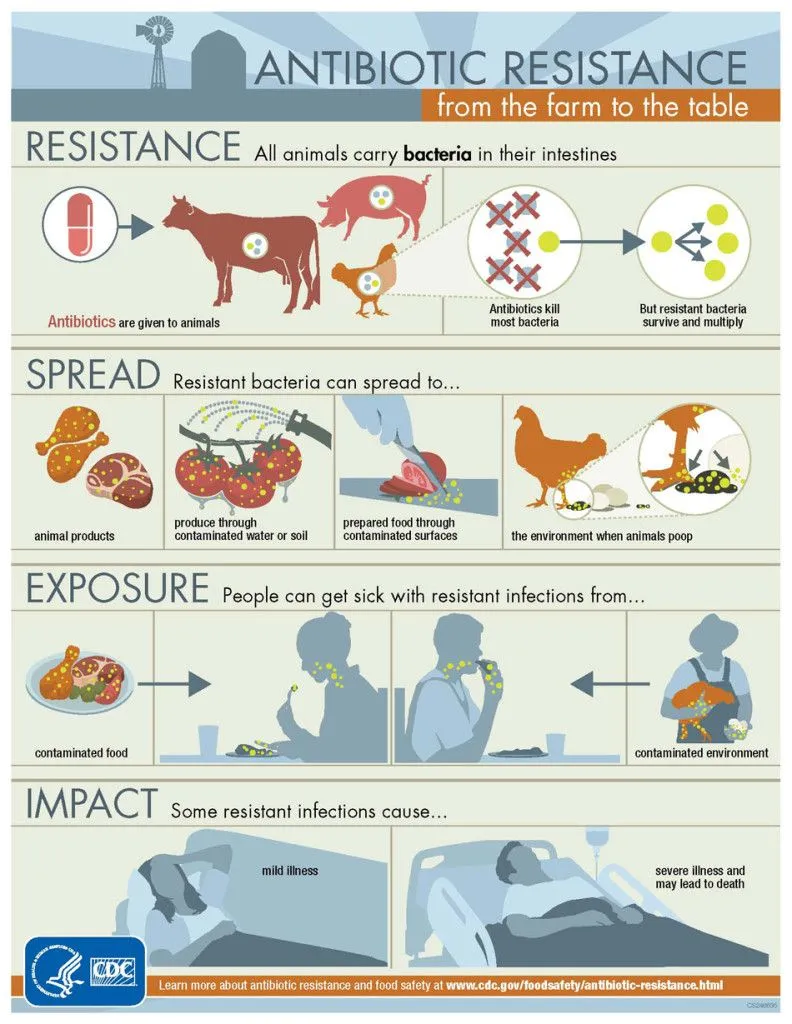
We’re consuming three times more meat than we used to consume 50 years ago. This is in part due to a larger population, as well as higher incomes. Antibiotics decrease the incidence of illness, but they’re also used to increase the growth of the animals.
Reports highlight that 50-80% of all antibiotics sold in developed countries go to livestock. This is seen as beneficial for those rearing the animals.
Bacteria in livestock can develop resistance and enter the environment either through the waste of the animal or in the flesh of the animal. We eventually eat the animal, or food that might have the bacteria on its surface, and we may encounter such a resistant strain. In this way, bacteria from animals can make the jump to humans, and lead to disease if such exposure becomes frequent.
The Hospital Superbug MRSA
The first major case of antibiotic resistance that came to the notice of the public was the hospital superbug, MRSA.
Before antibiotics arrived in the early 1940s, a great many hospital infections, including pneumonia, were caused by Staphylococcus aureus, a bug many of us carry harmlessly on our skin and in our noses.
These bacteria were initially wiped out by penicillin, but penicillin-resistant strains of S. aureus showed up almost immediately, within a few years of the drug coming into wide use in the 1940s. To get ahead of them, a semi-synthetic penicillin called methicillin was introduced in 1959. It barely bought any time: methicillin-resistant S. aureus was identified in Britain in 1960 and reported in The British Medical Journal in 1961. The strain spread rapidly and was being found around the world by the 1980s.
Methicillin-resistant Staphylococcus aureus (MRSA) became known as the “hospital superbug”. MRSA causes skin infections and other serious complications that can lead to pneumonia, bloodstream infections, and even death.
Detrimental Effects On Gut Microbiome
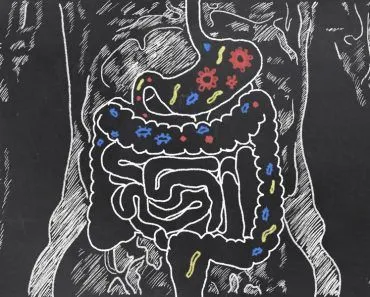
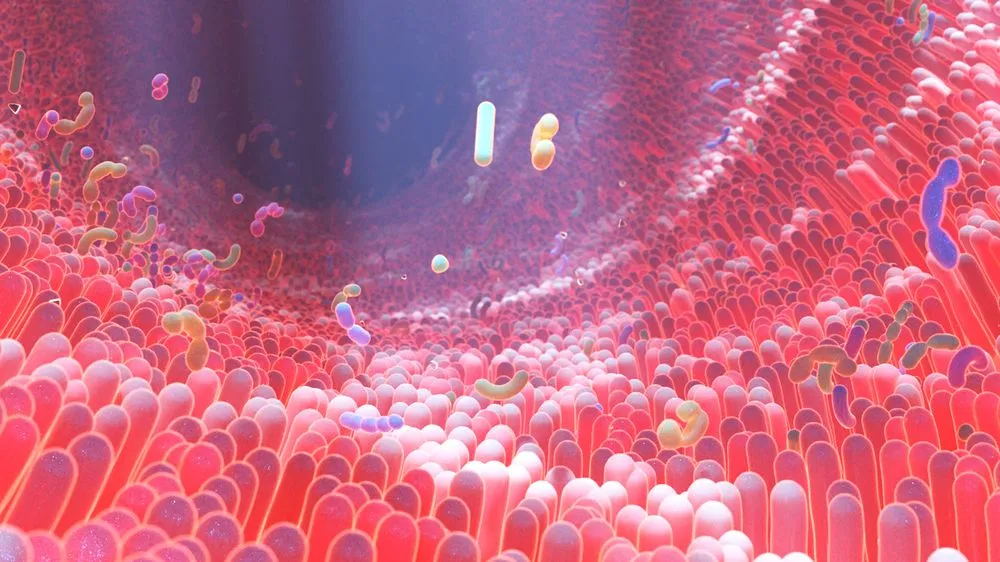
Your body is home to roughly 38 trillion bacteria, about the same number as your own 30 trillion human cells, and a huge share of them live in your gut. The human body’s physiological functions, vitamin production, and immune system are all influenced by this gut microbiome.
Our gut microbiome gets modified when we overconsume broad spectrum antibiotics.
Reduced microbial diversity, modifications to the functional characteristics of the microbiota, and increased susceptibility to pathogenic infection are all antibiotic-induced changes in microbial composition that can have a negative effect on host health. The detrimental effects on human health of rashly taking antibiotics include systemic infections, chronic diarrhea and inflammation.
Conclusion
According to a landmark study published in The Lancet, bacterial antimicrobial resistance was directly responsible for about 1.27 million deaths worldwide in 2019, and was a contributing factor in roughly 4.95 million more. The World Health Organization now ranks antimicrobial resistance among the top global public-health threats, and in 2024 it published an updated list of the bacterial pathogens of greatest concern, with carbapenem-resistant Klebsiella pneumoniae and Acinetobacter baumannii near the top. Researchers expect the toll to keep climbing in the coming years.
To tackle this, scientists are looking for solutions. One solution might be bacteriophages, viruses that attack and kill bacteria. Phage treatment would employ bacteriophages that target specific bacteria, such as those linked to infectious diseases.
Most bacteriophages are specific to their targets. While the same does not hold true for antibiotics, many of them target a broad spectrum of bacteria. Doctors and scientists are teaming up and using phage therapy as a last resort for patients who have acquired a multidrug-resistant infection.
Another solution is the “One Health Approach“, which is becoming more popular in the United States and throughout the world as a successful strategy to combat health issues like AMR.
The participating organizations focus on the human, animal, and environmental health sectors and are also accountable for determining the most important areas for action, the best techniques for observing AMR and containing infections, and the laws and regulations that should control the use of antibiotics.
References (click to expand)
- Loc-Carrillo, C., & Abedon, S. T. (2011, March). Pros and cons of phage therapy. Bacteriophage. Informa UK Limited.
- Washer, P., & Joffe, H. (2006, October). The “hospital superbug”: Social representations of MRSA. Social Science & Medicine. Elsevier BV.
- Viana, A. T., Caetano, T., Covas, C., Santos, T., & Mendo, S. (2018, October). Environmental superbugs: The case study of Pedobacter spp. Environmental Pollution. Elsevier BV.
- Browne, A. J., Chipeta, M. G., Haines-Woodhouse, G., Kumaran, E. P. A., Hamadani, B. H. K., Zaraa, S., … Dolecek, C. (2021, December). Global antibiotic consumption and usage in humans, 2000–18: a spatial modelling study. The Lancet Planetary Health. Elsevier BV.
- Antimicrobial Resistance Collaborators (2022). Global burden of bacterial antimicrobial resistance in 2019: a systematic analysis. The Lancet. Elsevier BV.
- Antimicrobial Resistance Facts and Stats. Centers for Disease Control and Prevention (CDC).
- Antimicrobial resistance (Fact sheet). World Health Organization (WHO).
- WHO bacterial priority pathogens list, 2024. World Health Organization (WHO).
- Bello-López, J. M., et al. (2019). Horizontal Gene Transfer and Its Association with Antibiotic Resistance in the Genus Aeromonas spp. Microorganisms. MDPI.
- Methicillin-Resistant Staphylococcus aureus. StatPearls. NCBI Bookshelf.