Table of Contents (click to expand)
The thyroid is a butterfly-shaped endocrine gland sitting at the front of the neck, just below the voice box (larynx) and wrapped around the trachea. Its two lobes secrete the hormones thyroxine (T4), triiodothyronine (T3), and calcitonin, which together regulate metabolism, growth, body temperature, heart rate, and blood calcium.
Our body works with the assistance of helper organs called glands. Glands are basically organs that secrete certain chemical substances that in turn stimulate the cells of our body to function in a particular way. One such gland is the thyroid gland. The thyroid gland, in fact, is our master helper. It influences almost every cell/ tissue of our body, which is why it’s important for us to learn a bit about it.
Position And Structure Of The Thyroid Gland
The thyroid gland, also known as glandula thyreoidea in medical lingo, is a small endocrine gland situated in the front of the neck. It is bi-lobed and the two lobes lie on either side of our windpipe (trachea). You can clearly see its butterfly-like appearance in the image below
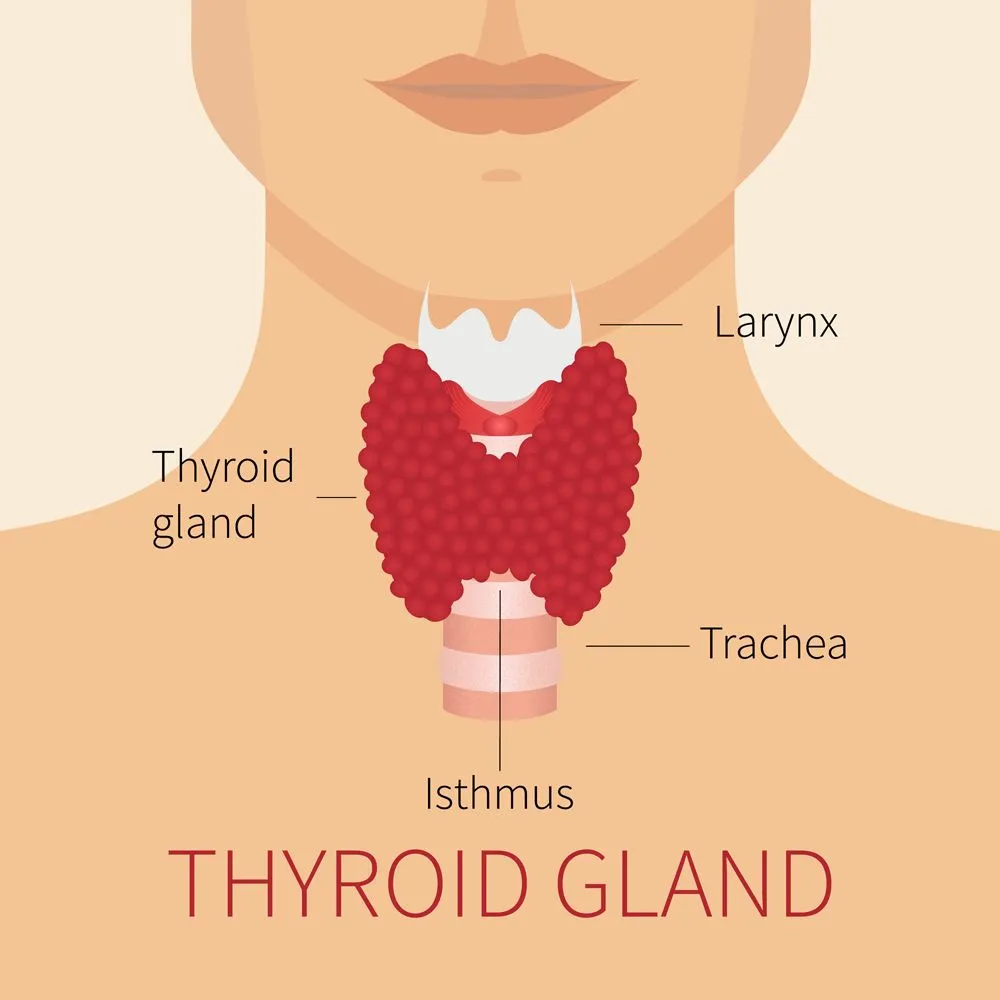
The two lobes of the thyroid gland are connected to each other by a strip of thyroid tissue called the isthmus. In healthy adults, the gland typically weighs about 15-25 grams (roughly 0.5-0.9 oz), and is usually slightly larger in women than in men. The thyroid sits just below our voice box (larynx) and is covered by an outer and inner capsule. The outer capsule attaches the gland to the larynx and secures its position.
The space between the outer and inner capsules is occupied by loose connective tissue that enables the gland to change its position as and when we swallow. Going deeper into the thyroid gland, histologically, the gland consists of a number of follicles lined by follicular cells. These follicular cells release a colloidal substance called thyroglobulin, which sits in the follicular cavity of each follicle.
The other type of cells seen in the thyroid gland are the parafollicular cells, which are interspersed between the follicles of the gland.
Thyroid Hormones
Cells of the thyroid gland produce three hormones
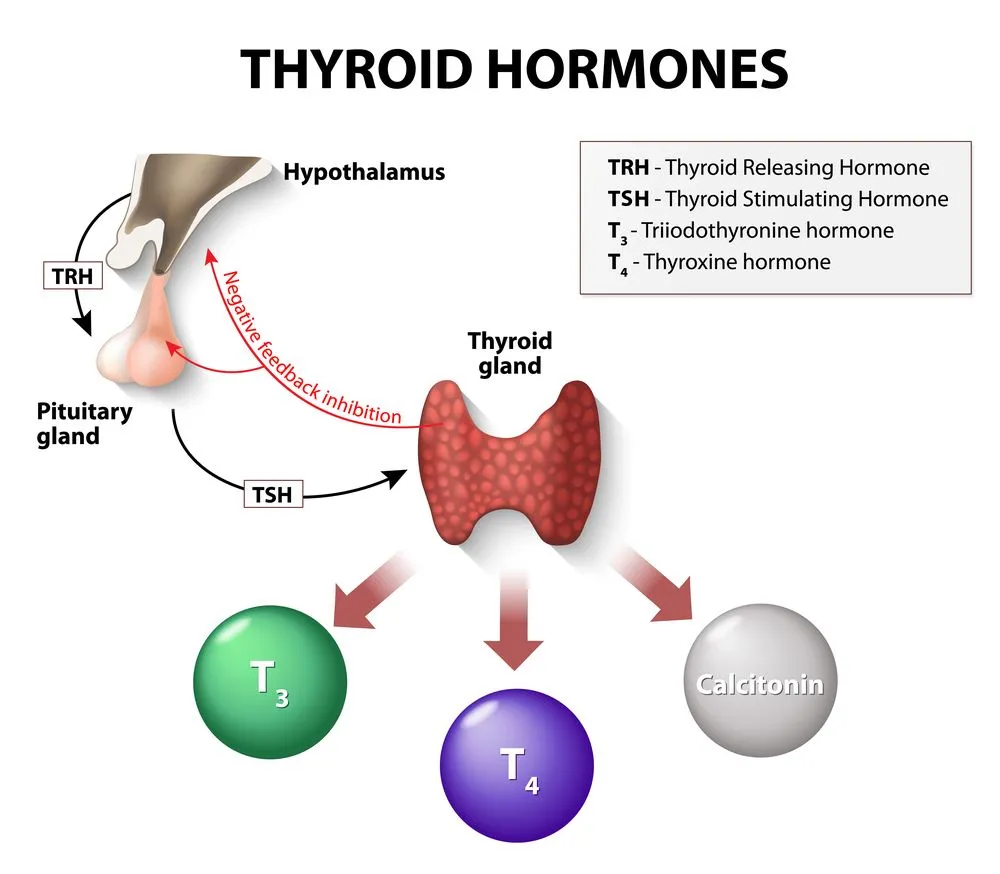
- Tetraiodothyronine (T4) or thyroxine
- Triiodothyronine (T3)
- Calcitonin
T4 and T3 hormones are secreted by the follicular cells, while calcitonin is secreted by the parafollicular cells. The vast majority of what the thyroid pumps out is T4, with T3 making up only about 10% of the total. The catch is that T3 is by far the more biologically active form, and most of the T3 the body actually uses is produced later in peripheral tissues (especially the liver and kidneys), where enzymes called deiodinases trim one iodine off T4 to turn it into T3.
Both T4 and T3 are built around iodine atoms attached to tyrosine residues (T4 carries four iodines, T3 carries three). Since our body cannot manufacture iodine, we have to take it in through our diet, mostly via iodized salt, seafood, and dairy, to keep our thyroid hormones flowing and balanced.
If there is any kind of deficiency of thyroid hormones, a whole host of things in your body will go wrong, but the effects of the hormone slump take a surprisingly long time to surface, often weeks to a few months after the thyroid hormone factory starts slowing down.
The symptoms of this deficiency take this long to show up for a good reason. The thyroid is unusual among endocrine glands in that it stockpiles its hormones in the colloid as iodinated thyroglobulin. That reserve is large enough to keep circulating levels topped up for roughly 2-3 months, so even when production has dropped, you may feel fine for quite a while before anything seems off.
Functions Of The Thyroid Gland
For the purpose of convenience, we shall now assume that by mentioning functions of the thyroid gland, we mean functions of the “thyroid hormones”. Calcitonin is concerned with calcium metabolism and since T4 and T3 have virtually the same effect on tissues, we will collectively refer to them as thyroid hormones.
Thyroid hormones play a crucial role in regulating the body’s metabolism, which is basically the ability of the body to break down food and convert it into energy. Nearly all the cells in our body are affected by thyroid hormones. Brain and nerve development, the functioning of the hair and skin, heart, reproductive system, intestines, and digestive system are all influenced by the proper functioning of the thyroid gland. Before we go any further, let’s elaborate on the functions of this gland:
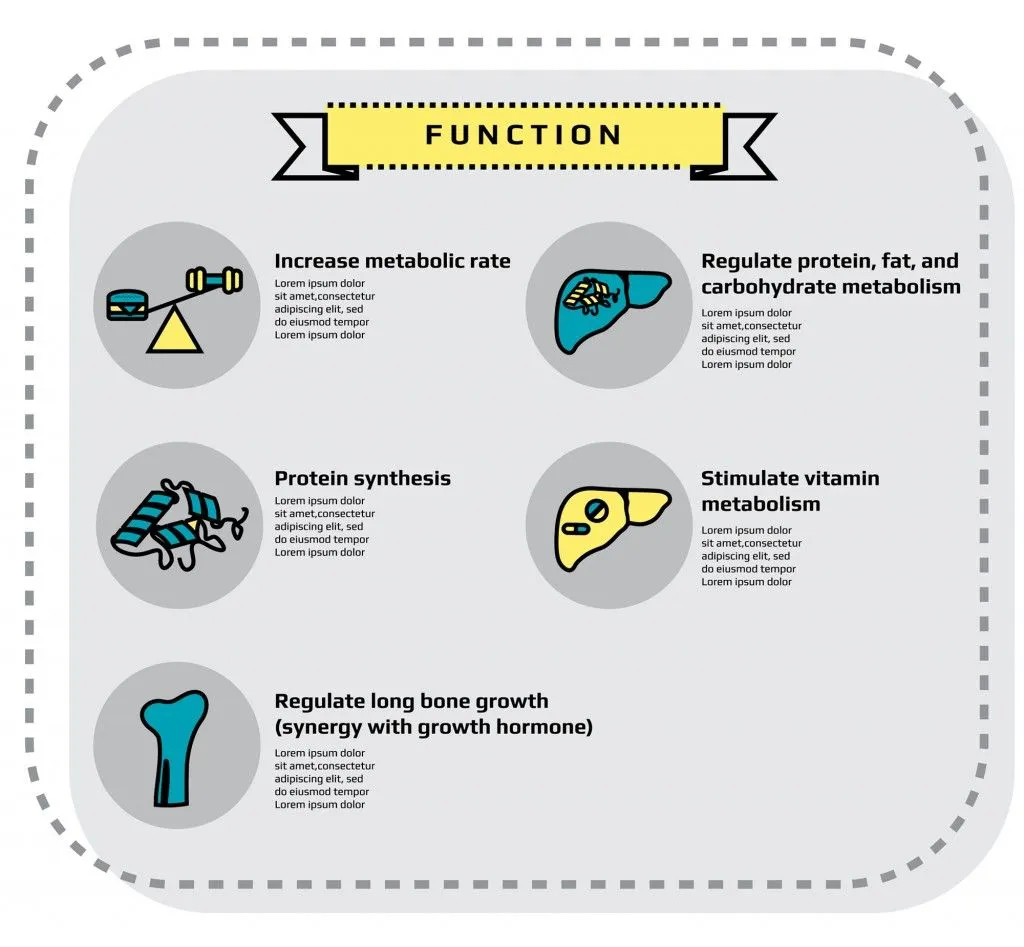
- An increase in basal metabolic rate (BMR): Thyroid hormones increase oxygen consumption in most tissues and so push up the body’s BMR. A handful of tissues (notably the adult brain, the testes, and the spleen) show little to no increase in oxygen uptake in response to thyroid hormone. The rise in BMR translates into more heat being produced, a phenomenon called thyroid hormone-induced thermogenesis.
- Promotes growth: Thyroid hormones promote growth by increasing the synthesis of proteins in cells.
- Regulates body weight: Thyroxine (T4) helps maintain body weight by mobilizing fat from adipose tissue and curbing fat storage. If you experience unexplained weight gain, there’s a chance a blood test could reveal a deficiency of thyroxine.
- Reduces cholesterol: Thyroxine lowers plasma cholesterol and triglyceride levels. It does this in part by boosting LDL receptors in the liver (which pull more cholesterol out of the blood) and by stepping up the conversion of cholesterol into bile acids, which are then dumped into the intestines and excreted.
- Fetal development: Thyroid hormones play an important role in pregnancy and fetal brain development. Severe, untreated thyroid hormone deficiency at birth (a condition now called congenital hypothyroidism, historically referred to as cretinism) is one of the most common preventable causes of intellectual disability in children. This is why most countries now screen every newborn for thyroid function in the first days of life.
- Effects on the various systems of our body: Thyroxine acts on the heart, muscles, digestive tract, respiratory system, and central nervous system. It increases the heart rate and the force of each contraction, and also raises the metabolic rate. This in turn increases the demand for oxygen, which can only be met by a higher rate of respiration. Thyroxine is essential for the normal functioning of our brain and CNS. This is why when hyperthyroidism is suspected, patients commonly report nervousness and anxiety, as too much thyroxine overstimulates the CNS.
Conclusion
Who would have thought that a tiny butterfly-shaped gland docked in our neck could actually affect so many of our cells, tissues, and organs? But it really does!! So, it’s best to help it serve us better by consuming a satisfactory level of iodine from our dietary intake (in case you forgot, thyroid hormones contain iodine as their core material). So, for a happy body, keep your thyroid happy!