On August 6, 1915, German forces released a mix of chlorine and bromine gas on the Russian garrison at Osowiec Fortress. The few survivors of the 13th Company of the 226th Zemlyansky Regiment — coughing blood and wrapped in bloody rags — fixed bayonets and charged. The Germans, horrified by what looked like dead men attacking, broke and ran. The episode is remembered as the “Attack of the Dead Men.”
World War I stands as a harrowing chapter in human history, marked by its unprecedented brutality and the emergence of new and devastating methods of warfare. Amidst the chaos and carnage of this global conflict, stories of courage and resilience emerged, providing essential glimpses of the indomitable human spirit.
Among these tales, the “Attack of the Dead Men” stands as a poignant testament to the unyielding determination of Russian soldiers who, in the face of certain death and brutal pain, mounted a counterattack against the superior German forces.
Taking place on August 6th, 1915, during the Battle of Osowiec Fortress (in present-day northeastern Poland), this event reminds those who know the story of the insurmountable odds that adversity often drives us to conquer. The defenders belonged to the 226th Zemlyansky Infantry Regiment, and the counterattack itself was led by Sub-Lieutenant Vladimir Karpovich Kotlinsky, who was mortally wounded in the charge.
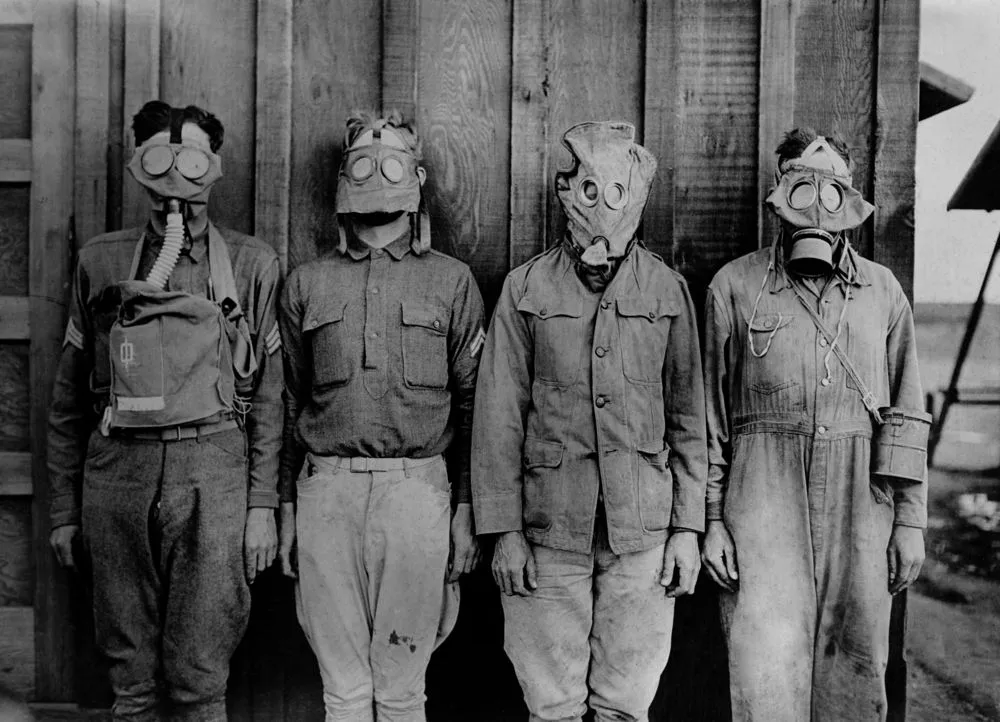
The Germans had waited roughly ten days for favourable winds before opening their gas batteries, sending a thick cloud of chlorine and bromine rolling over the Russian trenches. The soldiers’ ability to adapt and improvise under these dire circumstances showcased their resourcefulness. Lacking proper gas masks, they employed pieces of clothing soaked in water and even urine to filter out as much of the gas as they could — a desperate stopgap, since chlorine still reacts with the moisture in the lungs to form hydrochloric acid.
The Battle Of Osowiec Fortress
The Battle of Osowiec Fortress served as the backdrop for an extraordinary event where Russian soldiers, condemned to death by gassing, chose to fight back.
Situated near the Polish town of Bialystok, the fortress posed a significant obstacle to German military ambitions in the region. With earlier assaults thwarted by the fortress’s solid defense strategies and fortified structures, the Germans faced the challenge of overcoming an impregnable stronghold to consolidate their power. Traditional artillery bombardment had failed to yield the desired results, prompting the German forces to resort to a sinister tactic – chemical warfare.

The Attack
In a calculated attempt to breach the defenses of the fortress, the Germans unleashed a deadly cloud of chlorine gas upon Osowiec Fortress.
The effects were immediate and devastating, inflicting widespread death and destruction within the fortress walls. The gas attack was unlike any previous encounter for the Russian defenders, who found themselves ill-equipped to combat its lethal effects. The gas permeated every corner of the fortress, transforming its once-defiant defenders into desperate victims of an invisible and unforgiving enemy.
The Counterattack
Amidst the chaos and horror of chlorine, a remarkable display of human determination unfolded. The Russian soldiers, their gas masks proving largely ineffective, responded through a surge of resistance.
These soldiers, clad in bloodstained rags, gasping for air and coughing up blood (symptoms of the gassing), defended their fortress and homeland to the bitter end.
Several factors allowed the Russian soldiers to rise from the brink of death and mount a counterattack. First and foremost, their psychological resilience played a pivotal role. Fueled by a deep-seated patriotism, an unwavering commitment to their mission, and an understanding of the futility of giving up, these soldiers refused to succumb to despair. Their knowledge of the fortress’s strategic significance and their duty to protect their homeland propelled them to defy the fatal odds stacked against them.
The soldiers’ ability to adapt and improvise under dire circumstances showcased their resourcefulness. Lacking proper gas masks, they employed pieces of clothing soaked in water and even urine to mitigate the effects of the gas.
The nature of trench warfare, which characterized much of World War I, also contributed to the soldiers’ resilience. Accustomed to fighting from well-fortified trenches, they possessed a level of expertise in utilizing defensive positions to their advantage. The fortifications provided some measure of protection against the gas attack, allowing them to endure its initial onslaught.
Attack Of The Dead Men
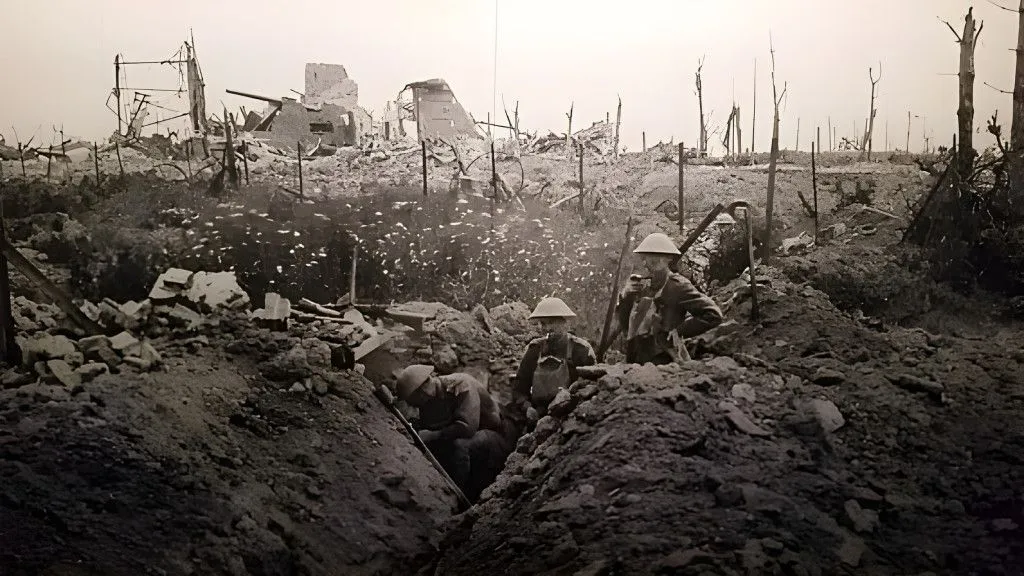
The climax of this remarkable tale came in the form of the “Attack of the Dead Men.” Despite their compromised physical state, an estimated 60 to 100 surviving Russians from the forward 13th Company launched a counterattack. Draped in blood-soaked cloths and exhibiting the appearance of doomed spectral figures — an image so unsettling that modern retellings often describe them as “zombies” — these “dead men” fixed bayonets, charged towards the German forces and fired their weapons.
The German forces, caught off guard by the unexpected assault and horrified by the sight of the “dead men,” were driven into a panic. The panic rippled through their ranks, resulting in disarray and chaos. The effectiveness of the counterattack actually halted the German advance, allowing the Russian defenders to regain control of the fortress.
The Aftermath
The aftermath of the “Attack of the Dead Men” had profound implications for the course of the war and the fate of Osowiec Fortress. The attack did not lead to the permanent retention of the fortress by the Russians. The German forces eventually captured Osowiec Fortress, but only after significant struggles and at a considerable cost.
The Russian defenders managed to repel the German forces and maintain control of the fortress for a brief period. However, the broader military campaigns in the region played a significant role in shaping the eventual fate of Osowiec Fortress. The battlefront was characterized by constant movement, as both sides sought to gain tactical advantages and push their opponents back.
In the weeks that followed, the broader Eastern Front began to collapse as part of the Great Retreat. Rather than allow Osowiec to be taken in another assault, the Russian command ordered the garrison to evacuate and demolish what remained of the fortress. By around August 18, 1915 — only twelve days after the Attack of the Dead Men — Russian engineers had blown up the magazines and key defensive works, and the advancing German forces walked into a smouldering ruin rather than a captured stronghold.
How Long Did Osowiec Fortress Hold Out?
The Attack of the Dead Men was the dramatic finale of a defense that had already lasted the better part of a year. Osowiec was not a single battle but a prolonged siege. The Russian Empire built the fortress between 1882 and 1892 on the marshy banks of the Biebrza River, roughly 50 km (about 31 miles) from the border with German East Prussia. The position guarded the one stretch of dry ground where the surrounding wetlands could be crossed, and the Bialystok-to-Konigsberg railway ran straight through it. To push deeper into the region, the Germans had to seize this chokepoint, and they tried three times.

The first assault came in September 1914, when the German 8th Army threw roughly 40 infantry battalions at the Russian field defenses. The garrison not only held but counterattacked, forcing the German heavy guns to pull back out of range. A second offensive opened in February 1915 with a sustained bombardment from heavy siege artillery, yet the defenders again refused to break, and the fighting settled into grinding positional warfare. The decisive third assault began in early July 1915 under the direction of Field Marshal Paul von Hindenburg, combining around 14 infantry battalions, a sapper battalion, two dozen or more heavy siege guns, and dedicated gas batteries.
Through it all, command of the fortress rested from January 1915 with Lieutenant General Nikolai Brzhozovsky, a veteran of the Russo-Japanese War. Although the garrison had reportedly been asked to hold out for only a couple of days, the defense of Osowiec stretched across roughly eleven months, from that first probe in 1914 until the evacuation in August 1915. That stubbornness turned a small marshland fort into one of the Eastern Front's most celebrated holdouts. When conventional bombardment and infantry assaults both failed to force a surrender, the Germans turned decisively to chemical warfare.
Did Any Of The Dead Men Survive?
The gas did most of its killing before a single bayonet was fixed. The forward trenches were held by something like 900 men of the 226th Zemlyansky Regiment, and the chlorine-bromine cloud tore through them. The 9th, 10th, and 11th Companies were almost completely wiped out, and of the 12th Company only around 40 men were left alive. By the time the cloud thinned, only about 100 defenders of the forward garrison were still on their feet, and nearly all of them were severely poisoned. It was this remnant, drawn mainly from the 13th Company and numbering perhaps 60 to 100 men, that rose to make the legendary charge.

The counterattack was led by Sub-Lieutenant Vladimir Kotlinsky, who drove the German infantry back along the railway line. He was mortally wounded during the advance and died that same evening. On his own instruction, command passed to a young engineer officer, Second Lieutenant Wladyslaw Strzeminski, who rallied the sappers and helped retake the lost trenches. Strzeminski lived, but the gas and his wounds left him crippled: he eventually lost part of a leg and an arm, along with the sight in one eye. Decorated with the Order of St. George, he went on to become one of Poland's most influential avant-garde artists, and historians have read the shattered, fragmented quality of his later abstract work as an echo of what he endured in those trenches.
For the ordinary survivors, survival was a relative word. Chlorine reacts with the moisture lining the lungs to form hydrochloric acid, and that kind of damage does not simply heal. Many of the men who walked away from the Attack of the Dead Men carried scarred, ruined lungs for the rest of their lives.
How Is The Attack Of The Dead Men Remembered Today?
For most of the twentieth century the episode survived mainly in Russian and Polish military histories, a grim footnote to a war full of them. That changed in the 2010s, when the story spread far beyond specialist circles and the surviving defenders picked up their enduring nickname of "zombie" soldiers, men who looked like corpses yet kept fighting.

Today a memorial at the Osowiec site honors the garrison that held the marshland fort. The story reached a global audience in 2019, when the Swedish heavy metal band Sabaton, well known for writing songs about historical battles, released a track titled "The Attack of the Dead Men" on their album The Great War. The grim label has stuck for a simple reason: the survivors, their faces blistered and their lungs destroyed by gas, genuinely did look like the dead returning to the fight, which is exactly what so unnerved the German troops who fled before them.
Conclusion
The legacy of the “Attack of the Dead Men” endures as a testament to courage, resilience, and the triumph of the human spirit in the face of adversity. This haunting event serves as a stark reminder of the horrors of chemical warfare and the lengths to which loyal soldiers will go to protect their homeland. The sacrifices made by the Russian defenders underline their unshakable commitment to their duty and homeland, inspiring admiration and respect across the generations.
Their actions echo through the corridors of time, urging us to draw strength from their example and to stand firm, even in the face of impossible odds.
References (click to expand)
- Luba, I., & Wawer, E. P. (2020, July 27). The Horror of the Trenches and the “New Perfection”: Władysław Strzemiński and the Great War. War and Art. Brill | Schöningh.
- Buttar P. (2015). Germany Ascendant: The Eastern Front 1915. Bloomsbury Publishing
- The “An assault of the dead. The legend of the Osowiec ....
- AА Cherkasov. Dead Men Attack» (Osovets, 1915): Archive Sources ....
- Osowiec Fortress. Wikipedia.
- Władysław Strzemiński. Wikipedia.
- Attack of the Dead Men (1915). Sabaton Official Website.