The irresistible-force paradox asks: what happens when an unstoppable force meets an immovable object? The honest answer is nothing, because both cannot exist in the same universe. By definition, an unstoppable force can never be stopped, and an immovable object can never be moved. Put them together and one of them must contradict its own definition. They can never meet; the paradox is a thought experiment, not a real physical situation.
Philosophy has been the premise of nearly every idea and approach of mathematicians and physicists throughout history, and will likely remain true, long into the future. Whenever you push your mind to ponder on the far side of reality, there is some conception of the darkness and emptiness within the universe.

There are instances in life where you want to shut down your senses and dive deep to critically analyze a situation at hand; this might seem to be of less importance in other situations, yet this moment of mental juggling makes you feel Omniscient. Paradoxes might seem like vaguely inaccurate and apparently self-contradictory statements, but their underlying meaning is revealed only through careful scrutiny. The purpose of paradoxes is to arrest one’s attention and provoke fresh ideas through counter-intuitive thinking.
The following paradox is one of the most famous and most frequently quoted!
What Is The Irresistible Force Paradox?
This paradox, greatly acclaimed as the unstoppable force paradox, is regarded as an “omnipotence paradox”. It dares to challenge the pre-eminent, namely, “What happens when an unstoppable force meets an immovable object?”
However, before you jump into brooding over this idea, bending your mind into all sorts of gymnastics, let’s take a look at a simpler form of this incongruity.
Origins
This paradox has its roots in a story from a philosophical book, Han Feizi, written in the 3rd century BC.
A man was trying to sell a shield and a spear. He claimed that his spear could pierce any shield and that his shield could defend against any spear and come out unscathed. One fine day, someone asked him that what would happen if he were to strike his all-piercing spear on his impenetrable shield. The seller was dumbfounded.
Another instance of this paradox is evident in an ancient example, the story of a Teumessian fox, who can never be caught, and a hound Laelaps, who never misses its quarry. Realizing this impossible contradiction, the Greek thunder god, Zeus, turned both creatures into static stars.
What Happens When An Unstoppable Force Meets An Immovable Object?
As this question engulfs your mind (if you’re truly ready to give this paradox some thought), you will come to a perplexing cessation. This paradox is truly larger than the universe, being consistent with the physical laws, yet not quite as creative. Without teasing you further with all sorts of philosophical re-definitions, let’s analyze the two entities at hand, the unstoppable force and an immovable object.
An unstoppable force seems like an imperious force, presumably more forceful than earthquakes and hurricanes (that alter the geology of our massive planet), regardless of the mass or size of the object that in its path. The energy of the force will not depreciate by any amount throughout the course of its transmission to other objects. Thus, an unstoppable force, in order to become unstoppable, needs to possess an infinite amount of energy.
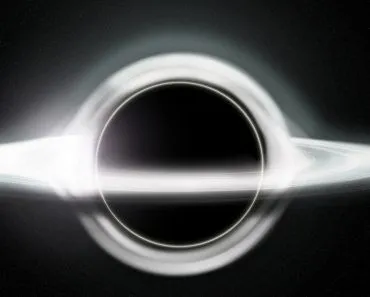
On the contrary, an immovable object is the non-submissive entity of nature, which remains unfazed by force of any magnitude, whether that means being crushed under a falling asteroid or being sucked in a black hole. We can regard this as the perfect energy absorber and an ideal non-transmitting body.
The thought of both meeting each other is unsettling, to say the least. Who will win? Will nature choose sides? Which one would give in?

Irresistible Force Paradox Solution
Any force is unstoppable; it is the energy that the force carries that is merely transferred to the other object. Even if a force does not technically ‘move’ an object, it will surely raise its temperature. Although that is the physical reality, it is clearly not in the spirit of this question.
The question demands that you break your brain to overcome the paradox.
Consider an unstoppable force. In order for such a thing to exist, so that it can move absolutely anything, it requires an infinite amount of energy.
Now, consider an immovable object. The only property that can make it unmovable would be an infinite mass, in order for it to have infinite inertia (inertia is the resistance of a physical object with mass to any change in its velocity). It does not matter how much energy you apply; it would be impossible for you to overcome the inertia of infinite mass.
However, perhaps you suggest that our immovable object will collapse upon itself to form the greatest black hole ever. It won’t. To create a black hole, it would need to compress into a minuscule volume, which is contrary to the notion of being immovable. Instead, it will simply sit there.
Now, if you applied the two together, what would happen?
Absolutely nothing. As stated earlier, the only way for a force to be unstoppable would be for it to have infinite energy. Quite similarly, the only way for an object to be immovable would require an infinite amount of mass.
Taking a glimpse into the physical laws, you know that mass and energy are the same things in different forms. They are interchangeable. Think of mass as condensed energy. If there were an unstoppable force in existence, it would require every last bit of energy of this universe, including all the energy from the radiation, as well as the whole mass of the universe. This would leave nothing for you to assemble your immovable object.
Quite similarly, if you start with the immovable object, it would encompass all the mass of this universe, including all the energy from radiation, after it is converted to mass, leaving nothing to compose the unstoppable force. Hence, it’s evident that such an object and such a force cannot exist simultaneously. Obviously, we also wouldn’t be in the picture to propose this paradox in the first place.
Here’s a very good video explaining the paradox in more detail:
Where Does The Paradox Show Up In Pop Culture?
The riddle rarely stays locked inside a philosophy textbook. It surfaces wherever two evenly matched rivals square off. The most quoted example is The Dark Knight (2008): hanging upside down in a police interrogation room, the Joker tells Batman, "This is what happens when an unstoppable force meets an immovable object." He casts Batman's incorruptible refusal to kill as the immovable object and his own refusal to ever stop as the unstoppable force, which is exactly why their feud can never truly end.
The spear-and-shield tale that opened this article did something even more lasting: it handed Mandarin Chinese its everyday word for "contradiction," máodùn (矛盾), which literally welds together the characters for spear (矛) and shield (盾). Every time a Chinese speaker calls an argument self-contradictory, they are quietly invoking Han Feizi's flustered market seller.
Comic-book fans keep the argument alive too, debating endlessly whether Thor's hammer (an unstoppable swing) could ever dent Captain America's vibranium shield (a near-immovable barrier). Sports commentators reach for the same line whenever an elite offense runs into an elite defense. The phrase endures because, on the page or the screen, the clash is allowed to resolve. In the real universe, as we are about to see, it cannot even begin.
Is Anything In The Real World Truly Unstoppable Or Immovable?
Short answer: no, and that is precisely why the paradox stays a thought experiment. Nothing we know of is genuinely unstoppable. Einstein's special relativity tells us that the faster you push an object that has mass, the more energy every extra sliver of speed demands, and that energy bill races toward infinity as you approach the speed of light. So nothing with mass ever quite reaches it.
The most extreme push humans have ever engineered makes the point. Inside CERN's Large Hadron Collider, protons are accelerated to 99.9999991% of the speed of light, looping the 27 km ring about 11,245 times every second. Yet they never touch 100%, because closing that final hair's breadth would take infinite energy. Even the hardest shove physics can deliver still falls short of "unstoppable."
"Immovable" is just as slippery. The closest real matter comes is the crushed core of a neutron star. According to NASA, gravity squeezes the entire mass of our Sun into a ball only about 20 km (12.5 mi) across, so dense that a single sugar cube of the stuff would weigh roughly a billion tons on Earth. What stops it collapsing further is neutron degeneracy pressure, a quantum rule that forbids any two neutrons from occupying the same state.

And yet even a neutron star is not truly immovable. Pile on a little more mass and it surrenders, caving in to form a black hole. That is the pattern everywhere you look: matter resists force, but nothing in nature refuses it absolutely. It is why the everyday versions of the showdown, a speeding truck against a concrete bollard or a tsunami against a seawall, always resolve. One side gives, because neither side is infinite. The paradox needs an infinity that the real world simply never hands out.
Conclusion
This philosophical paradox is as old as humanity, yet philosophers still reflect on this imperial truth.
The question has been so masterfully oriented that both the unstoppable force and the immovable object are analogous to each other. In truth, the existence of one denies the existence of the other. An unstoppable force cannot be unstoppable in the same universe where an immovable object exists, as it would no longer be unstoppable.
The paradox encompasses the utility and substantial intellectuality of humanity, which we rarely pause to examine these days. It feels good to stretch the brain a bit, right?
References (click to expand)
- Irresistible force paradox - ipfs.io
- What is inertia?. Northwestern University
- Infinite Mass-energy? | Physics Van | UIUC. The University of Illinois Urbana-Champaign
- Time travel is possible – but only if you have an object with .... Phys.org
- Does actual infinity exist in physics, particularly in quantum theory? | ResearchGate - www.researchgate.net
- Could Exotic Matter Provide an Infinite Source of Energy?. Phys.org
- Contradiction and the Stubborn Bystander. China Story Yearbook, Australian National University
- The Dark Knight (2008) - Quotes. IMDb
- The Large Hadron Collider. CERN
- Inside the Large Hadron Collider. Symmetry Magazine (Fermilab/SLAC)
- Neutron Stars. NASA Imagine the Universe
- Relativistic Quantities. Physics LibreTexts