Table of Contents (click to expand)
- What Is Time?
- How To Travel Through Time
- What Is The Grandfather Paradox?
- What Is Quantum Superposition?
- The Solution: Many-Worlds Theory
- Understanding The Intricacies Of The MWI Theory
- How Does The Solution Offered By The MWI Alter The Problem Of The Grandfather Paradox?
- Could Nature Simply Forbid The Time Machine?
- Verdict: Is This The Absolute Solution?
The grandfather paradox asks how a time traveler could go back and kill their grandfather, since that would erase their own birth. The leading physics answer is the Many-Worlds Interpretation: the moment you change the past, history branches into a separate parallel timeline, so the grandfather you kill is never the one in your own past.
In some corner of the world, a teenage girl is crying herself to sleep after reading ‘The Diary of a Young Girl’, an autobiographical book written by Anne Frank, a historical icon who died in a concentration camp during World War II.
Now, imagine that same teenage girl waking up tomorrow and living in a world where WWII never occurred. Thus, there is no book that she read last night, and therefore no reason to be sad!
This could become reality if someone with a time machine travelled back in time and killed Adolf Hitler before his atrocities began. At least, this is what many movies have suggested.
Time travel is clearly a fascinating concept, and it has captured the imagination of scientists, physicists, philosophers, and fiction writers for centuries. However, would science and nature allow it? And if the answer is yes, would it really be that easy to change the course of history?
What Is Time?
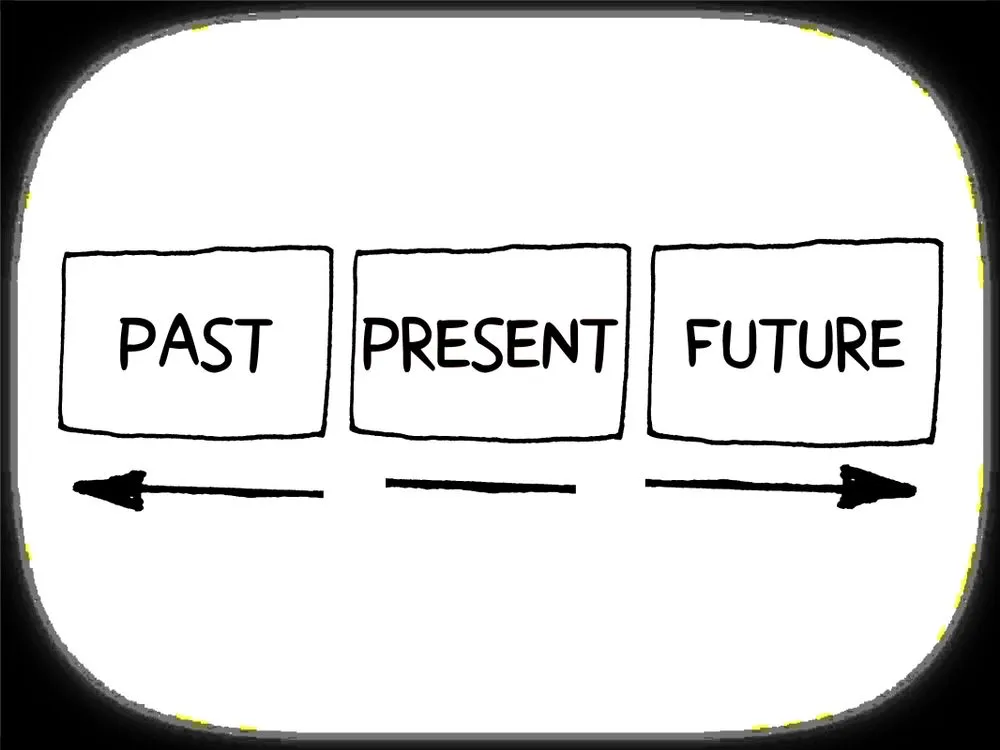
Traditionally, time has been understood as a line with a double arrow, with no defined start or end point. Along the length of the arrow, the present occupies the middle, while the other two opposite sides represent the past and future. This establishes time as a constant concept and states that we can only move forward in time.
A different, but widely accepted theory of time came from legendary physicist Albert Einstein. According to his ‘Theory of Special Relativity’, time can slow down or speed up, depending on the speed at which we move relative to something constant.
How To Travel Through Time
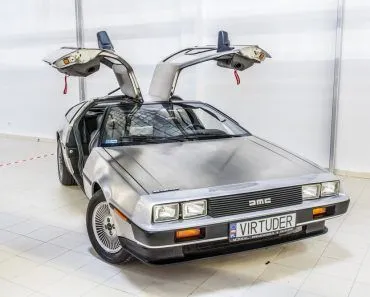
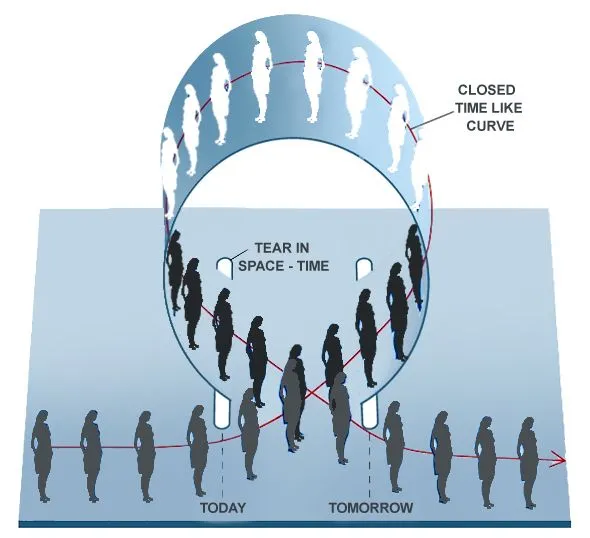
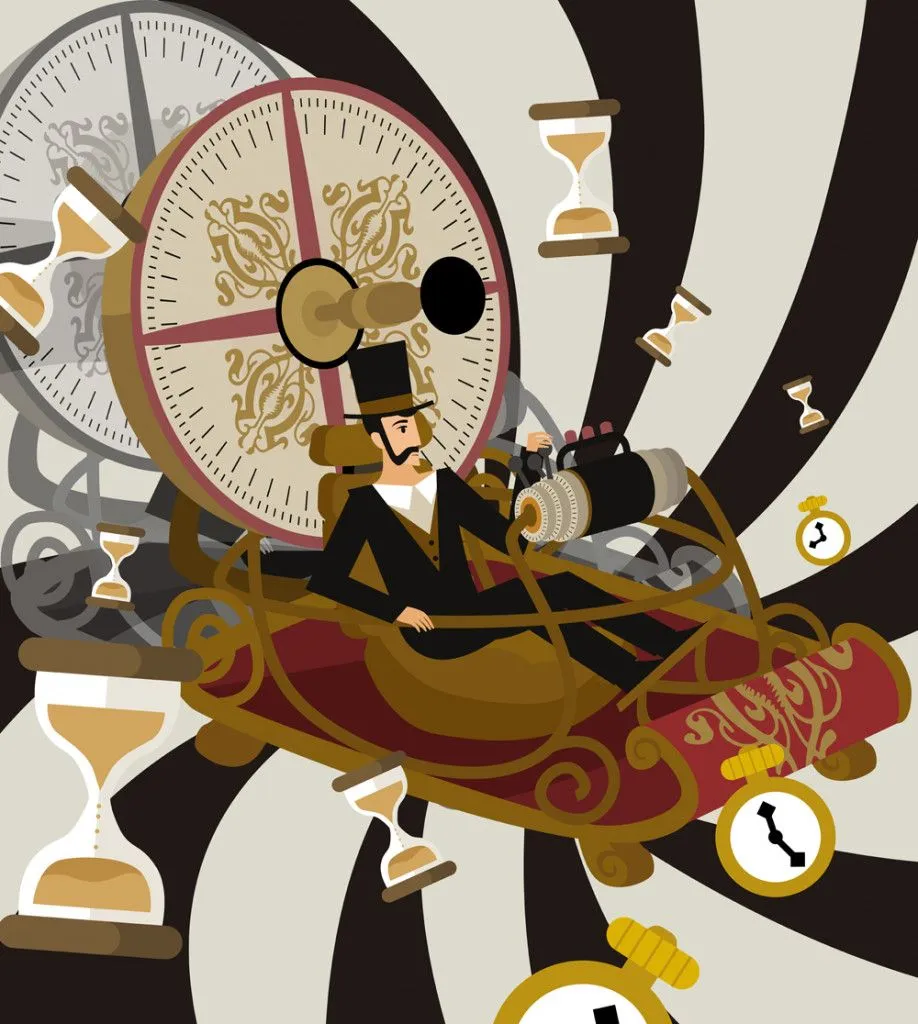
Time travel obviously requires a time machine of some sort. Traveling forward in time is comparatively accessible, and in a sense we already do it. Thanks to time dilation, the closer you move to the speed of light (you can never quite reach it, since nothing with mass can), the slower your clock ticks relative to everyone you left behind. Travel fast enough for long enough and you could step out years, even centuries, ahead of the world you started in. For a ticket to the past, however, one would have to bend time and space such that it formed a loop, known as a “closed time-like curve” (CTC). Theoretically, a CTC would act as a station where you could board the train (time machine) and follow the track back to your past.
However, this theoretical passage through time to the past would lead to a well-established problem known as the Grandfather Paradox.
What Is The Grandfather Paradox?
A paradox presents a premise where the deemed solution is contradictory. That may be a bit hard to understand, so let’s break it down…
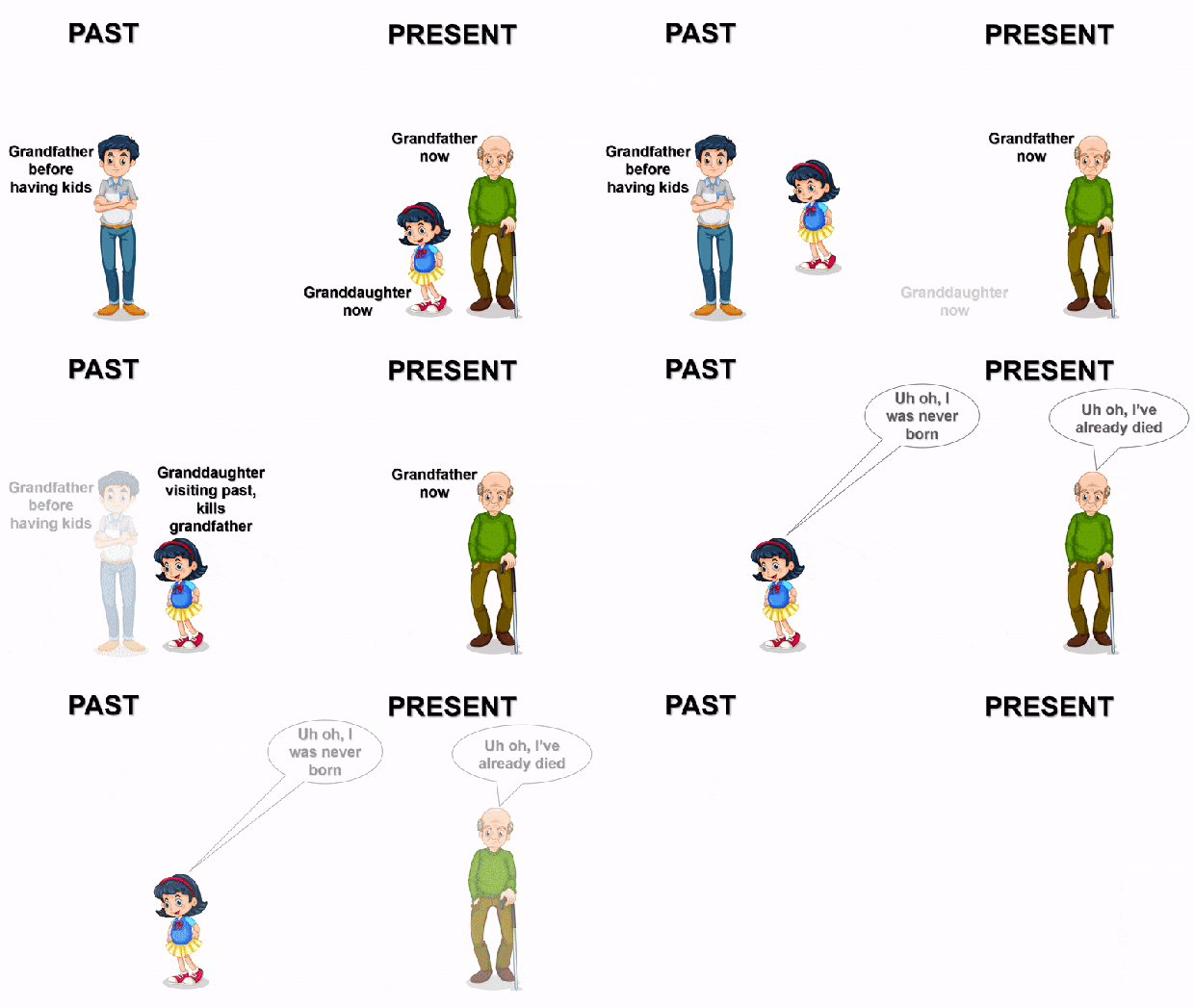
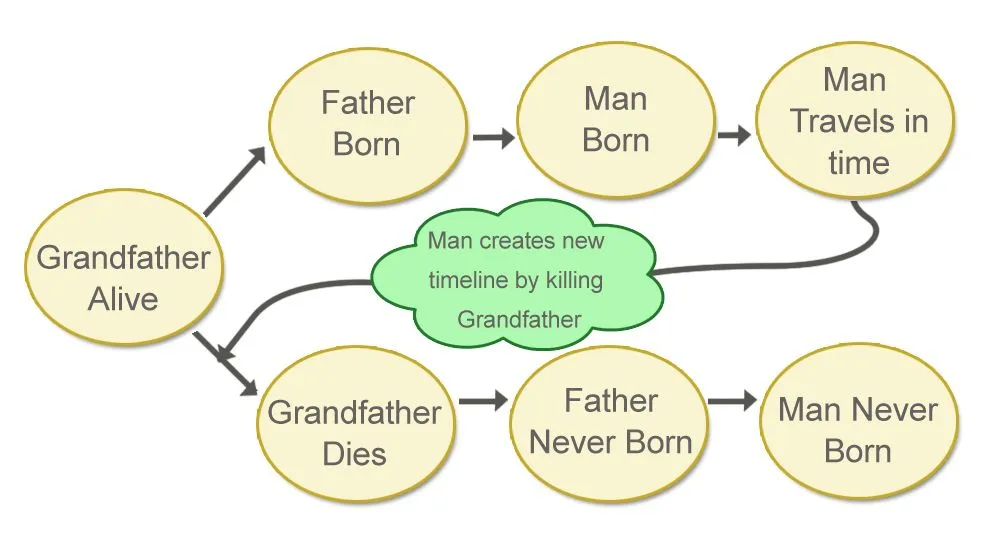
If we were to travel to the past, we would end up modifying it, right? That’s the whole point (i.e., killing Hitler). However, that is the hurdle of the Grandfather Paradox. As the name suggests, this plot revolves around the question: “What if you go back in time and kill your grandfather when he was a little boy?” This raises a question on the existence of the time traveler! How could the time traveler end up killing someone in the past, if that act would prevent the assassin from ever being born? Absurd, yes… but it still makes sense. That’s the Grandfather Paradox.
This has been the central idea around which the Terminator movies, Back to the Future, and most recently, Tenet, have all been made.
A problem may have many tiers, but a solution can shatter its foundation, thus bringing the whole thing crashing down. Fortunately, quantum physics (the study of subatomic particles) offers a way around this paradox. The key idea is superposition, the notion that a quantum system can hold several possible outcomes at once.
What Is Quantum Superposition?
Suppose you’re in the mood for an impromptu ‘The Big Bang Theory’ binge watching session. You have two folders named A and B on your laptop, but you can’t decide which one contains the downloaded episodes. Without opening the folders, there is an equal probability that it could be in either one of them. Until you check, the episodes are, in a loose sense, in both folders at once. This is the spirit of quantum superposition, where a system holds multiple possible states simultaneously until it is observed. It is the idea captured by the famous Schrodinger’s Cat thought experiment, where a cat in a sealed box counts as both alive and dead until someone looks. (Worth flagging one common mix-up: superposition is about a single system holding many outcomes, whereas entanglement is a separate effect, a link between two or more particles so that measuring one instantly tells you about the other. The solution we’re building toward rests on superposition.)

Another way is by tossing a coin. When the coin is in the air, the heads and tails sides both exist in parallel on the present timeline and are said to be superimposed. The landing of the coin implements a wave function collapse, which establishes one possibility as the reality, while all other possibilities cease to exist.
The Solution: Many-Worlds Theory
Let’s envision the following scenario together. You have taken a train (time machine), from the station (CTC) so as to travel to a stop named ‘How I met my Grandfather’ (time traveling in the past). However, as your train moves, you encounter a track crossing. This takes your train on a parallel rail line, which in turn takes you to a place that is an exact replica of your desired destination. Not only this, but there are many such carbon copies of the place you want to visit. There is only one condition on this traveling spree… you will never be able to repeat your visit to any of the replicas; you always end up in a new one.
The Many-Worlds Interpretation or MWI suggests a similar solution to combat the Grandfather Paradox.
Understanding The Intricacies Of The MWI Theory
The vortex of this paradox has intrigued great minds for generations. It wasn’t until 1957 that this perennial musing on the issue reached a clearing from which a solution seemed reachable. That year, in his Princeton doctoral dissertation, American physicist Hugh Everett III came up with the Many-Worlds Interpretation, which proved to be a bridge over the hurdle of the Grandfather Paradox. It implies that there exists many different simultaneous worlds, and just because we can only see one outcome doesn’t mean that the others do not exist.

Initially, he used a situation in the lifespan of an amoeba to explain his theory. Explaining that the two daughter amoebas that come from a parent amoeba will have a similar history, until their point of separation. Once split from each other, they have their own memories and experiences, thus widening the differences between them. Even so, both of them exist simultaneously, not alternatively.
Tracing this trajectory, physicist David Deutsch built the most influential theoretical solution to the paradox. In a 1991 paper, he worked out how a quantum particle would behave on a closed time-like curve and showed that a self-consistent answer always exists, with the most popular reading of his math being a multiverse of branching timelines rather than a single one tied in knots.
It suggests that there are multiple parallel dimensions of time and space that exist simultaneously. The multiverse was defined by him as the superposition of universes. They will separate and differ in their course once an observation is made. Just because an observer cannot witness or be in another world does not cancel out the existence of parallel entities. It’s like being a flat Earther: I can’t see or feel it, so I won’t believe in it.
How Does The Solution Offered By The MWI Alter The Problem Of The Grandfather Paradox?
Finally, we can align the MWI theory with the situation outlined by the Grandfather Paradox. First of all, the time traveler visiting the past will land in some replica of history. As soon as the time traveler steps out of the time machine in that past timeline, the phenomenon of wave function collapse occurs.
Initially, the two coexisting histories were identical, but enactment of the grandfather paradox will separate them with different presents. In one of them, the grandfather will be killed by someone who came from a time machine. While, in the other dimension, no one arrives and so the grandfather lives and goes on to have children and grandchildren, one of whom travels via time machine and becomes a killer.
Could Nature Simply Forbid The Time Machine?
There is a blunter way out of the paradox than splitting the universe in two: perhaps you can never build the time machine in the first place. No closed time-like curve means no ride to the past, which means no awkward meeting with a young grandfather. The problem dissolves because the trip is never allowed to happen.

The late physicist Stephen Hawking made exactly this case in a 1992 paper in Physical Review D bluntly titled “Chronology protection conjecture”. He argued that whenever spacetime is on the verge of curling into a closed time-like curve, quantum effects rush in to sabotage it. Vacuum fluctuations (the restless jitter of empty space) pile up near the boundary where the loop would first appear, and the energy density there races toward infinity, tearing the fledgling time machine apart at the very moment the loop would switch on.
If that back-reaction really is unavoidable, the Grandfather Paradox never gets its chance, because the laws of physics quietly veto the journey. Hawking summed it up with a characteristic wink, suggesting that “there is a Chronology Protection Agency which prevents the appearance of closed timelike curves and so makes the universe safe for historians.”
The catch is right there in the name: it is a conjecture, not a proven theorem. Settling it for certain would need a full theory of quantum gravity, which physics does not yet have. So chronology protection sits on the table alongside the many-worlds route and the self-consistency principle as one more candidate answer, rather than the last word on the matter.
Verdict: Is This The Absolute Solution?
The Many-Worlds route is not the only proposed escape hatch, and the puzzle is far from closed. A rival idea, the Novikov self-consistency principle, sidesteps the paradox within a single timeline by simply forbidding any action that would contradict the past, so your attempt to shoot your grandfather is guaranteed to misfire somehow. More recently, in 2020, University of Queensland physicists Germain Tobar and Fabio Costa published calculations in Classical and Quantum Gravity arguing that even in a single timeline, space-time can adjust itself to dodge contradictions, hinting that paradox-free time travel may be mathematically consistent after all.
What’s important to understand is that, in theory, such problems exist and such solutions work. A time may come when these interpretations are put to the test in the “real world”, but that may still be a ways off. There will always be speculation about the practical applications of time travel, as stated in the words of Everett from his unedited dissertation, “We must renounce all hope of finding anything like the correct theory… simply because the totality of experience is never accessible to us.”
References (click to expand)
- B Skow. Notes on The Grandfather Paradox. web.mit.edu
- Science: Time travel without the paradoxes | New Scientist. New Scientist
- Time Travel Simulation Resolves “Grandfather Paradox”. Scientific American
- (2013) Time Travel - Stanford Encyclopedia of Philosophy. Stanford University
- (2002) Many-Worlds Interpretation of Quantum Mechanics. The Stanford Encyclopedia of Philosophy
- (2018) A Practical Understanding: Time Traveling Paradoxes. Eastern Michigan University
- Kent, A. (2011, July). The Many Worlds of Hugh Everett III: Multiple Universes, Mutual Assured Destruction, and the Meltdown of a Nuclear FamilyThe Many Worlds of Hugh Everett III: Multiple Universes, Mutual Assured Destruction, and the Meltdown of a Nuclear FamilyPeterByrne 368 pp. Oxford U. P., New York, 2010. Price: $45.00(hardcover) ISBN 978-0-19955-227-9. American Journal of Physics. American Association of Physics Teachers (AAPT).
- Byrne P. (2012). The Many Worlds of Hugh Everett III: Multiple Universes, Mutual Assured Destruction, and the Meltdown of a Nuclear Family. OUP Oxford
- Tobar, G. & Costa, F. (2020). Reversible dynamics with closed time-like curves and freedom of choice. Classical and Quantum Gravity. IOP Publishing.
- Hawking, S. W. (1992). Chronology protection conjecture. Physical Review D. American Physical Society.