Table of Contents (click to expand)
Silk comes from the cocoon of the silkworm, the larva of the moth Bombyx mori. The larva spins a single thread of protein around itself to form a cocoon. To get silk, the cocoons are boiled and the threads are carefully unwound and twisted together, then washed, dyed, and woven into fabric.
Smooth as butter, comfortable like cotton, yet strong as steel. This is a dream fabric for many, and yes, you’ve probably already guessed what it is… silk!
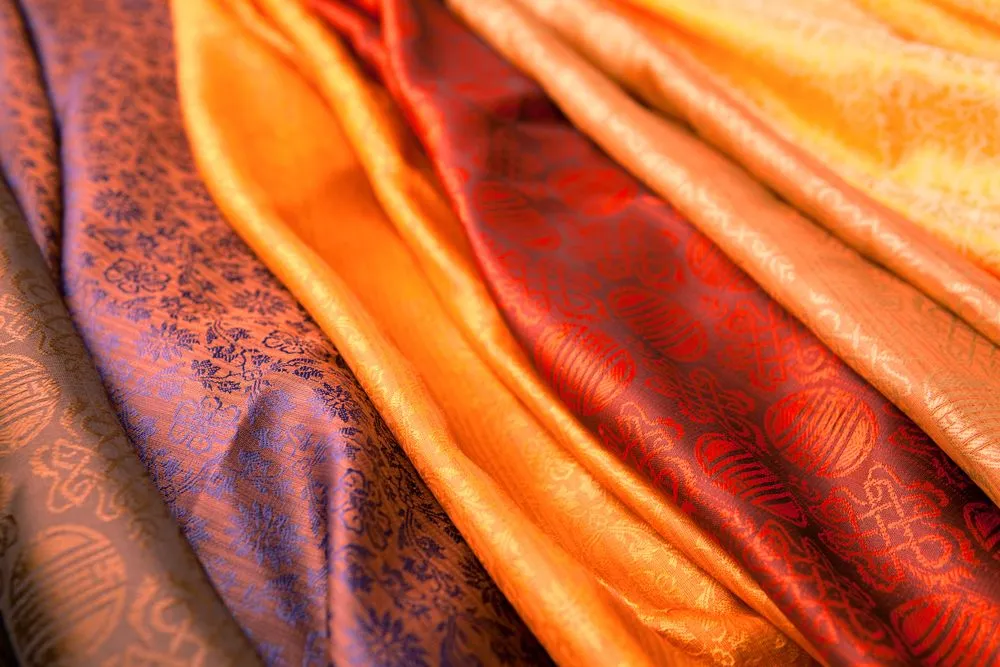
If you have ever browsed a fabric store or a market stall selling fine clothing, you have likely come across silk. It has a distinct texture, a soft feel, and a shiny luster. These features make silk one of the most coveted fabrics in the world.
Guess where this fabric comes from? Not from plants or mammals, but from insects!
Yes, those tiny critters we so often treat with disdain are the creators of this lush material. It is indeed hard to believe that such an exquisite form of fabric comes from an insect. Thankfully, this insect isn’t as freaky as a cockroach or potentially painful like a stinging bee. It comes from an innocuous moth.
More specifically, most of the silk we see comes from a special species of moth, the Bombyx mori, whose role in this historic process dates back thousands of years.
History Of Silk: Chinese Origin
Silk is one of the oldest fabrics known to humankind. It was discovered in ancient China. As per the Chinese legend, it was discovered some 5000 years ago by Empress Xi Ling-shi, wife of legendary Emperor Huangdi. Folklore of her silk discovery is as interesting as that of Newton and gravity!
So, the story goes like this. One day, the empress was sitting in a garden under the mulberry tree. She was sipping tea intermittently while sharpening her sword. A cocoon fell under her cup of steaming tea without her noticing. Just when she was about to sip the tea, she saw shiny thread rolling out from the dropped cocoon in the tea. The Empress was enamored by this eccentric cocoon that had fallen into her tea.
She started scouring the trees and plants around to discover where the cocoon had come from. Her search led her to find more cocoons of silkworms (Bombyx mori). She was impressed by the other cocoons hanging on the mulberry tree and figured out that the thread was made by the silkworms wrapped inside the cocoon. Its soft thread-like cocoon gave the empress a smart idea: to weave fabric from it!
She began studying these silkworms and wrote down her observations. After her diligent studies, she managed to crack the lifecycle of these moths and came to understand how cocoons could be used to produce silk, the soft, smooth fabric. So, what exactly did she learn about silkworms?
The Lifecycle Of The Silkworm
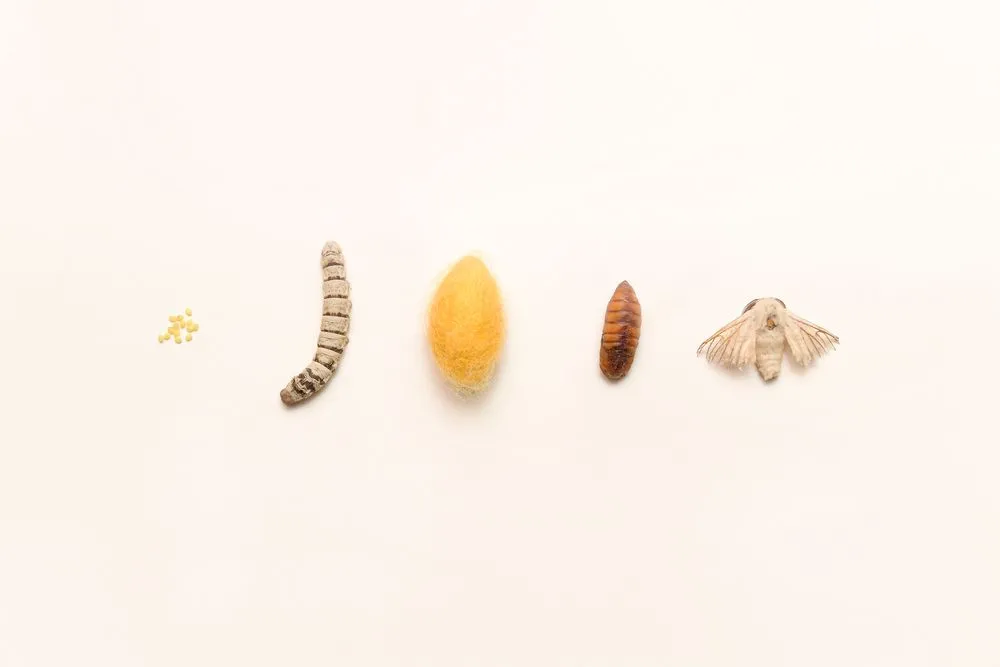
Well, silkworms, just like other moths, go through a beautiful life cycle, starting as a minuscule insect tinier than an ant and ending up as a winged moth (not a butterfly, though the two are easy to confuse). However, this transformation is not direct, and there are a couple of stages involved in the lifecycle.
It starts with an adult female moth laying eggs. Silk moths can lay anywhere between 300-500 eggs at one time. Now, when these eggs hatch, tiny caterpillars come out and immediately start searching for food. These baby worms are technically called larvae. These larvae typically feed on mulberry tree leaves, and they are prolific feeders. Larvae keep chomping on leaves and grow nearly 10,000 times larger within a few weeks.
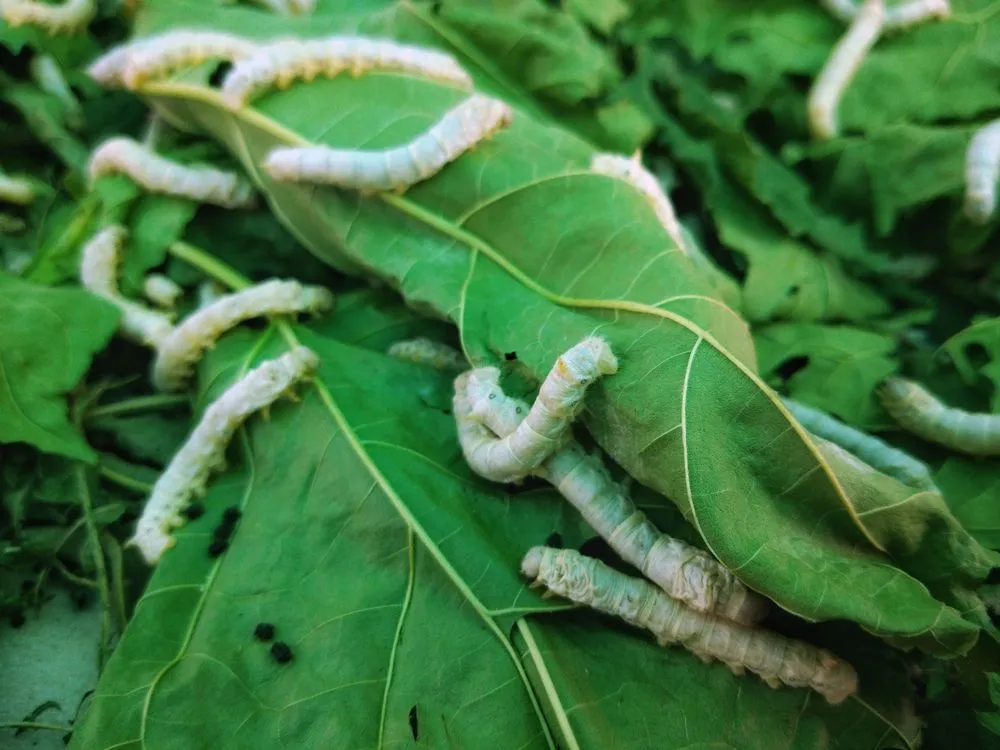
Source Of Silk
Once they are content with their feeding, they go into a resting phase. To understand this resting phase, consider how humans rest/sleep. For resting, all we need is a nice cozy cover in the form of a blanket. Silkworms behave in a similar way to us.
To enter the resting phase, these larvae start to make a natural cover around them. They have a special spinneret in their mouth that secretes slimy thread-like structures made of protein. They swirl their head in all directions, secreting the thread to wrap themselves up nicely. Upon exposure to air, this slimy cover hardens, forming a thick coat of fiber. This is called a cocoon, and is the source of coveted silk.
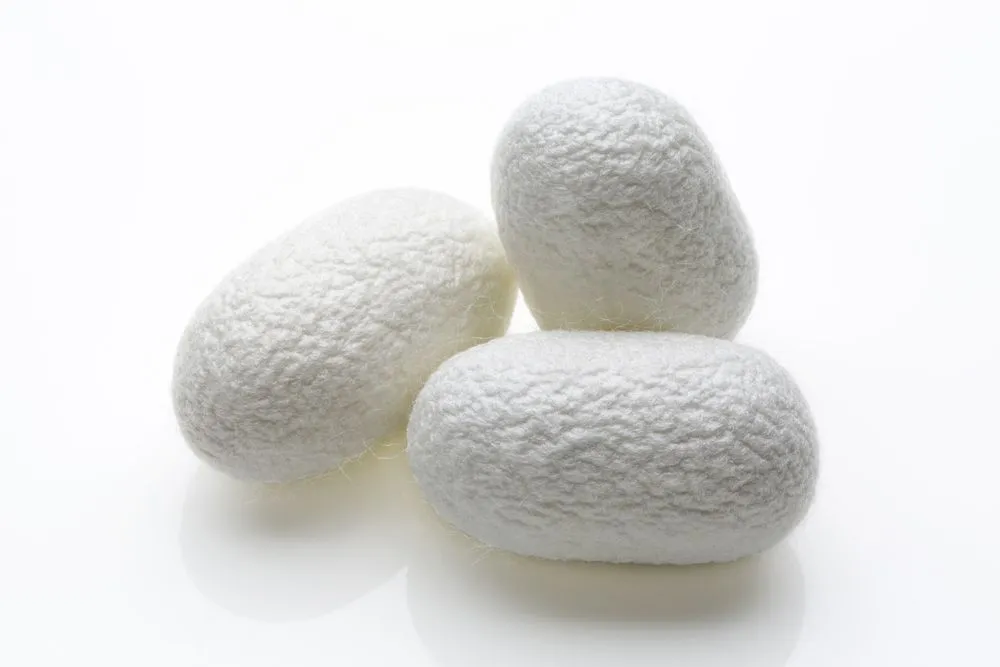
At this stage, the larva is transformed into a pupa. The pupa is sessile, i.e., it does not move. While pupating, the pupa starts developing organs that adult moths have inside the cocoon shell. After pupating for a few weeks, an adult moth comes out of this cocoon.
These moths breed and the female moths start laying eggs, and the cycle repeats.
Now, some of you might have assumed that we must be using cocoons to get silk once the adult moth leaves the cocoon shell. Unfortunately, that’s not the case. If we wait that long, the moth would break the cocoon as it emerges, leaving a tangle of short fibers that cannot be reeled into a continuous thread for fabric. So, we stifle cocoons in steam to get the silk while they are still pupating. There is a whole industry dedicated to extracting silk from cocoons, a practice called sericulture.
What Is Sericulture?
Sericulture, the practice of breeding and cultivating silkworms to procure silk, is carried out on a large scale, with China and India accounting for the bulk of the world's raw silk. Cultivated Bombyx mori are typically reared in warm conditions, and the eggs hatch within about 10 to 14 days. After they hatch, the larvae are fed mulberry leaves several times each day.
All these efforts continue until the time they pupate, i.e., encapsulate themselves in a cocoon. Once silkworms do this, they are placed in a container where they’re boiled for a few minutes to stifle the pupae inside, before they transform into a moth. Yes, this is cruel, but it’s how we get silk.
The boiling of cocoons makes it easier for the wound thread to unravel by softening sericin, a naturally secreted gummy protein that glues the cocoon's silk filaments together. To harvest silk, threads from several cocoons (commonly anywhere from a handful up to a few dozen, depending on the desired thickness) are combined into a single thicker thread by passing them through a tiny eyelet onto a hand-operated reel. The operator slowly and carefully turns the reel, unwinding the cocoon thread.
It takes roughly two to three thousand cocoons to get a pound (about 0.45 kg) of silk. Unravelling of the cocoon is a time and labor-intensive process. This is the reason why silk is so expensive and is often found in luxurious items.
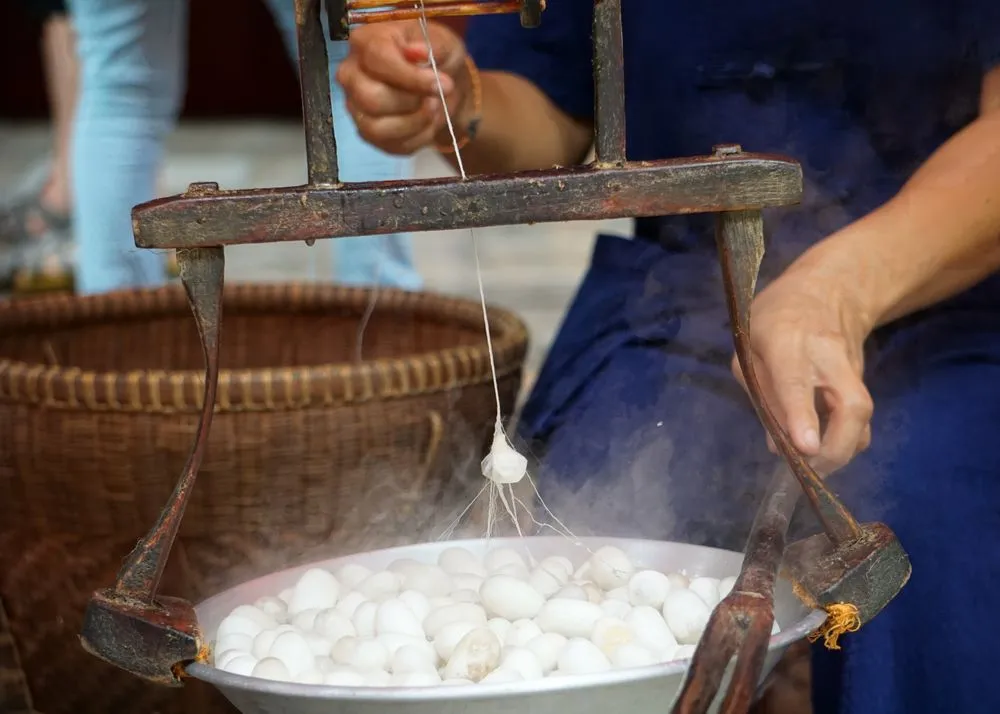
The next step is to clean this thread by washing it in warm water and clearing off any remaining sericin. The threads are then dyed to give them the desired color. After dyeing, the silk thread is allowed to dry. Once dried, silk is fed into large rollers and weavers, which produce the final piece of silk apparel. This Vox video shows how silk is extracted from silkworms:
A Final Word
Silk is famous for its durability. Weight for weight, it is remarkably strong, with a tensile strength that rivals some steel wires. It is one of the strongest natural fibers known, second only to spider silk. And what’s even more amazing is that it comes from an innocuous moth not known for its sturdiness. That’s the beauty of nature… it just keeps surprising us!