Table of Contents (click to expand)
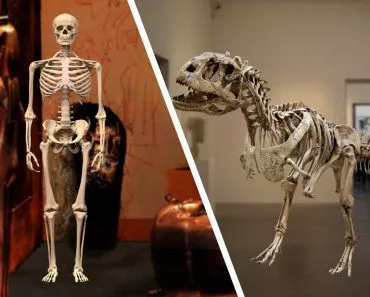
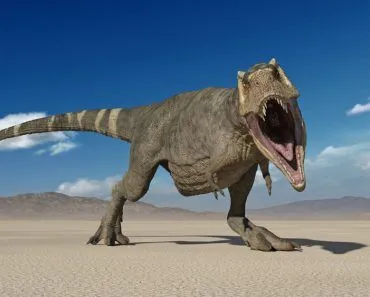
No one knows for sure why T. rex had such short arms. Kevin Padian's 2022 hypothesis is that they shrank to avoid being bitten off during group feeding frenzies on a shared carcass. Other leading ideas: they aided balance for the huge head, helped with mating grips, or held struggling prey. The fossil record can't yet pick a winner.
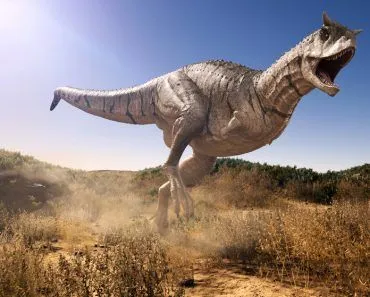
The beloved and fierce Tyrannosaurus rex has many attributes that make it famous. One could talk about its massive size or its genus name, translating to King Lizard. In the end, however, we all come back to the same thing: those tiny little arms.
Sure, they were vicious hunting machines boasting both brains and brawn, but why did they have such little arms? To help the memory of this massive carnivore, let’s give it a big hand (pun intended) and try to understand why it had such small arms.
Known Facts About T. rex
We know a lot about this magnificent dinosaur thanks to the work of Barnum Brown. He discovered the fossils in Montana in 1902, but it was Henry Fairfield Osborn who gave the name Tyrannosaurus rex, which translates to “tyrant lizard king”.
Even the word ‘dinosaur’ comes from the Greek word deinos (which means terrible) and sauros (which means lizard).
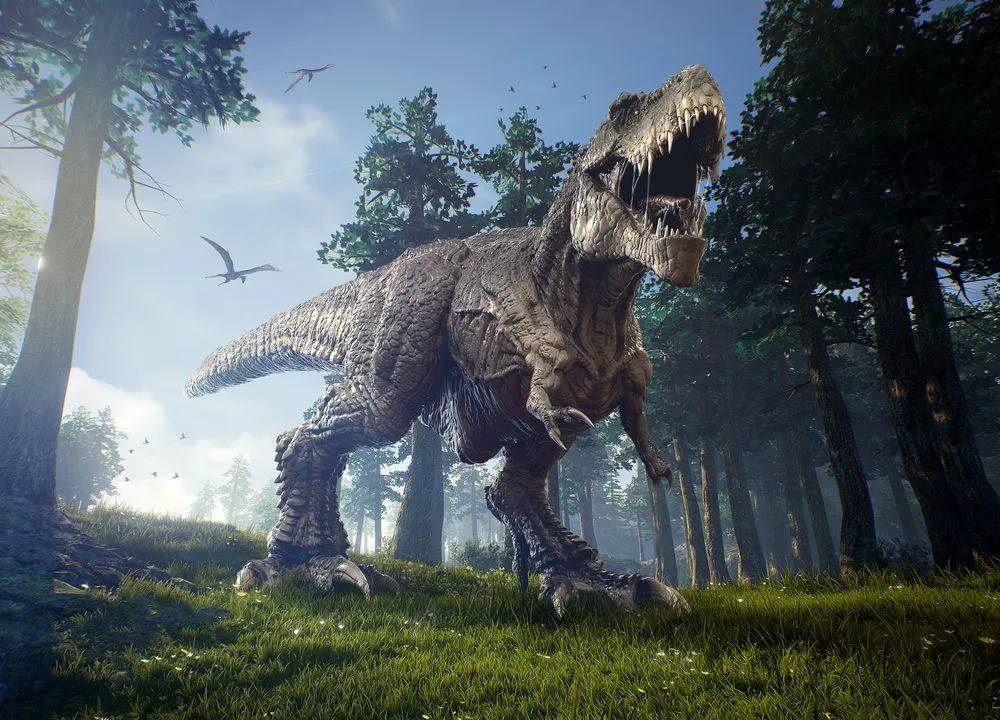
T. rex is known for its massive stature. Big adults stretched about 12 meters (40 ft) from snout to tail, stood roughly 3.7 to 4 meters (12–13 ft) tall at the hips, and tipped the scales somewhere between 5,400 and 8,000 kg (12,000–17,600 lb). However, they weren’t always the biggest and the worst dinos around. Their ancestor Moros intrepidus, stood a laughable 1.2 meters (about 4 ft) at the hip and weighed roughly 78 kg (172 lb). This is what T. rex would call a morning snack.
So how did a dinosaur shorter than a person become the star of Jurassic Park?
The most likely ancestor of T. rex, Moros intrepidus, is thought to have migrated from Asia into North America by crossing the Bering land bridge before rising seas drowned it. Through migration and evolution, T. rex was able to conquer the continent.
Despite their humble beginnings, the huge T. rex reigned over the world about 66 million years ago. They belong to a group of carnivores called theropods, which also included similar beast-footed dinosaurs like the genus Tarbosaurus.
Looking at T. rex, it seems like a no-brainer to assume that these must have been some of the fiercest predators during that time. But scientists wondered if they could be scavengers. Jack Horner, an American paleontologist, argued that the small eyes and tiny arms of T. rex must have hindered their ability to hunt for food.
(Fun fact: Jack Horner was also one of the advisors for the first five movies of Jurassic Park)
Refuting Horner’s supposition would require hard proof, and that is exactly what David Burnham and his colleagues found. Discovering the tooth of T.rex in a duckbill dinosaur was the nail in the coffin (or the meteor in the Chicxulub crater). Especially because this duckbill escaped, and the wound healed over the embedded tooth. The scientists claim in their article that this should serve as irrefutable proof of their predatory nature.
Although it seems like that particular T. rex wasn’t very good at hunting, considering the duckbill escaped its clutches, it does seem like they lived a hard and fast lifestyle. The rule of the jungle (kill or be killed) definitely applied to these tyrants.
So why in the world would they have evolved to have such small arms?
Proposed Reasons For Their Tiny Arms
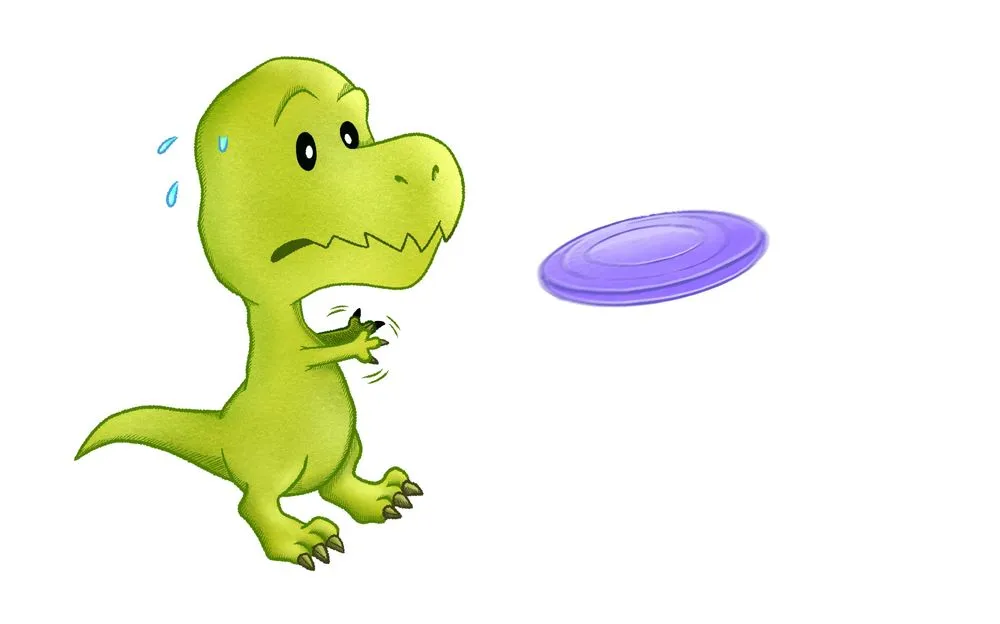
Despite their large jaws and humongous body, it seems almost comical to have such ill-fitted, roughly 1-meter (3 ft) long arms. Several scientists have their own theories (some supported) about why this might be the case.
For Holding Down Their Prey
This one doesn’t make much sense, considering how small their forelimbs are compared to the rest of their body. If they come across prey (some almost as big as T. rex itself), their body weight and strong jaws would be more useful to them than their limbs. Hence, evolutionarily selecting short limbs based on this hypothesis alone seems a bit ridiculous.
For Mating
This one was proposed by Henry Osborn himself. He said that these limbs are akin to sharks using their claspers to hold on to their females in water during mating. Other scientists believe this to be unlikely.
Considering how big T. rex was, their arms couldn’t exert a force much greater than 200 kg, and the two hands sat only about 68 cm apart. That makes pinning a 6,000–8,000 kg female look physically hopeless. Also, many scientists have found almost no difference in arm sizes between the males and females, indicating how they probably didn’t provide any selective advantage to the males for copulating.
For Protecting Their Arms During A Feeding Frenzy
According to Kevin Padian, T. rex evolved to have shorter forelimbs to escape from having their arms bitten off during collective feeding.
The esteemed UC Berkeley professor told Berkeley News, “What if several adult tyrannosaurs converged on a carcass? You have a bunch of massive skulls, with incredibly powerful jaws and teeth, ripping and chomping down flesh and bone right next to you. What if your friend there thinks you’re getting a little too close? They might warn you away by severing your arm,”
This is only a hypothesis that is extremely hard to prove.
For Balance
You might be surprised to learn that T. rex teeth weren’t finely pointed at all. The crowns were thick, banana-shaped and surprisingly rounded at the tip, built to puncture and crush, not slice. The cutting work was done by the serrated edges running down each side, which gripped flesh as the head pulled back. Terrifying? Absolutely. Just not in the steak-knife way you might picture.
This action, of course, requires a lot of strength and muscle power, which means that their head and neck had to be humongous. A paleontologist, Scott Persons, pointed out to journalist Zaria Gorvett (for the BBC) that if they had big arms, it would make them fall forward. Their tiny arms might just be a simple physics solution.
T. rex is not the only dinosaur with short limbs. In 2022, there was news about scientists discovering another big-bodied, tiny-armed dinosaur named Meraxes gigas. While these dinosaurs are not directly related to each other, one of the investigators argues that their arm size must serve a purpose that is yet to be confirmed or known. Their limbs show evidence of strong muscles, indicating some type of usefulness.
Conclusion
We still don’t fully understand why T. rex had such diminutive arms, but several hypotheses try to answer the question. Hopefully, future discoveries will shed more light on the question. However, what is certain is that these massive beasts started from humble beginnings and ended up ruling a continent. Even with its cute little arms, that’s plenty of reason to give their memory respect and be thankful that Jurassic Park isn’t a reality. Yet.
References (click to expand)
- 7 Questions About Tyrannosaurus rex: Illustrated Answers. The American Museum of Natural History
- Dinosaur Naming Conventions. The American Museum of Natural History
- Turns Out The Fearsome T. Rex Evolved From a Ridiculously .... ScienceAlert
- The Tyrannosauridae. The University of California Museum of Paleontology
- Science on Screen: Interview with Jack Horner, Jurassic World. scienceandfilm.org
- DePalma, R. A., II, Burnham, D. A., Martin, L. D., Rothschild, B. M., & Larson, P. L. (2013, July 15). Physical evidence of predatory behavior in Tyrannosaurus rex. Proceedings of the National Academy of Sciences. Proceedings of the National Academy of Sciences.
- The 120-year search for the purpose of T. rex's arms - BBC. BBC Online
- (2022) Why tyrannosaurid forelimbs were so short: An integrative .... Acta Palaeontologica Polonica
- T. rex's short arms may have lowered risk of bites during .... The University of California, Berkeley