The principal value of ii is e-π/2 ≈ 0.2079, a real number. The derivation uses Euler’s formula to rewrite i as eiπ/2, then applies the natural logarithm. Because the complex exponential is multi-valued, ii actually has infinitely many possible values (one for each integer n), and every one of them is real.
The imaginary unit i represents the square root of -1, such that i2 = −1. Imaginary numbers live in a world of their own; the numbers are counted on an entirely different plane or axis that is solely devised for them. However, imaginary numbers have acquired a somewhat nefarious reputation, considering that their discovery has compounded the difficulty of problems that math was already replete with. I mean, as if the numbers we already had weren’t enough?
Our problem, however, combines not just one, but two of the many haunting aspects of mathematics. If i itself is so difficult to comprehend, what could ii be? You might be surprised to know that unlike i, the value of ii is a real number! How is that possible?
What Exactly Is The Imaginary Unit i?
Before we wrestle with ii, let me make sure we agree on what i by itself means. The imaginary unit i is defined by a single property: i2 = −1. In other words, i is a number whose square is negative one, which is why it is usually written as i = √−1. No ordinary (real) number can do this, because squaring any real number, positive or negative, always lands you on something positive or zero. So i is not a quantity you can measure off with a ruler; it is a new kind of number that mathematicians introduced precisely so that equations like x2 = −1 would have an answer at all.

So what does i actually “equal”? On its own, i does not collapse into a neat decimal the way √2 ≈ 1.414 does. Its entire job is to sit on its own axis. A general complex number is written as a + bi, where a is the real part and b is the imaginary part. Plot it on the complex plane and the real part runs along the horizontal axis while the imaginary part runs up the vertical one, so i = 0 + 1i simply marks the point one unit straight up from the origin. There is one subtlety worth flagging too: both i and −i square to −1, so −1 really has two square roots, and by convention we call the “upward” one i. With that settled, and with Euler’s number e waiting in the wings, we have everything we need to take on ii.
A Quick Refresher On Logarithms
First, we must revise one of the most common, but least understood, mathematical operations: logarithms. Let me remind you how they work: If a = bc, then logb a = c. For instance, given that 10 = 101, log10 10 = 1. Here, b is called the base of the logarithmic operation.

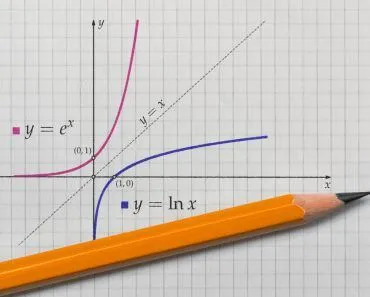
To solve the problem at hand, the base of our operation is e, or Euler’s number, with a value of 2.71828… If x = ey, then loge x = y. The logarithm with the base e is known as a “natural logarithm”. It is imperative to understand that the exponential and logarithmic functions are inverse functions. This is very important for our calculation.
loge ex = x ∴ log ab = b log a
eloge x = x
Writing i In Exponential Form
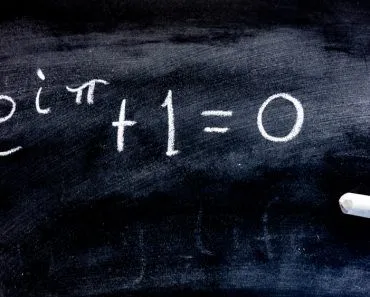
The second thing to recall is that i can be written as a complex number 0 + i, which can also be written as cos(π/2) + i sin(π/2). However, according to Euler’s formula, eix = cos x + i sin x. Therefore, cos(π/2) + i sin(π/2) is equal to eiπ/2.i = eiπ/2
Solving For ii, Step By Step
Now, let’s say ii = A. Applying logarithm on both sides of the equation, we get:
ii = A
loge ii = loge A
i loge i = loge A
i loge eiπ/2 = loge A
Remember that logarithmic and exponential functions are inverse functions, such that loge ex = x. Thus, from the above expression, one can discern:
i · i(π/2) = loge Ai2(π/2) = loge A
−π/2 = loge A
Applying the exponential on both sides of the equation:
e−π/2 = eloge A
Again, we encounter the inverse functions together. They neutralize to give the outcome:
e−π/2 = A
or
ii = e−π/2
or
ii ≈ 0.20788
Why The Answer Isn’t Unique
So an imaginary number raised to an imaginary number turns out to be real. There is one subtlety, though. In complex analysis, the exponential with respect to i is multi-valued: the answer we found above is the principal value, just one of infinitely many. That’s because i isn’t uniquely eiπ/2; it’s equal to ei(π/2 + 2πn) for any integer n (so π/2, 5π/2, 9π/2, -3π/2, and so on all sit at the same point on the unit circle). Plugging each of those angles into the derivation gives ii = e-(π/2 + 2πn), producing the family of values e-π/2, e-5π/2, e3π/2, e-9π/2, and so on, each one real.
What Are The Powers Of i? (i, i2, i3, i4)
If ii feels exotic, the ordinary whole-number powers of i are refreshingly down to earth, and they hide a neat pattern worth knowing. Start from the definition and just keep multiplying by i:
i1 = i
i2 = −1
i3 = i2 · i = −1 · i = −i
i4 = i3 · i = −i · i = −i2 = −(−1) = 1
Notice what happens at i4: we are back to 1, exactly where we started. So i5 = i4 · i = i again, and the whole sequence repeats. The powers of i cycle endlessly through just four values, i, −1, −i, 1, every four steps. There is a tidy geometric reason for it: multiplying any number by i rotates it 90 degrees (a quarter turn) counterclockwise on the complex plane. Four quarter turns make a full 360-degree circle, which lands you right back where you began.

This cycle gives you a shortcut for taming monstrous powers. Because the pattern repeats every four steps, you only need the remainder after dividing the exponent by 4. Take i35: since 35 = 4 × 8 + 3, you can write i35 = (i4)8 · i3 = 18 · i3 = i3 = −i. The rule is simply: a remainder of 0 gives 1, a remainder of 1 gives i, a remainder of 2 gives −1, and a remainder of 3 gives −i. So whether someone asks for i to the third, i to the fourth, or i2026, the answer is always one of those same four numbers. And this is exactly why ii being real is less spooky than it sounds: once you treat i as a rotation rather than a mysterious quantity, multiplying and raising it to powers stops feeling like magic and starts behaving like geometry.
References (click to expand)
- i to the i is a Real Number -- Math Fun Facts - www.math.hmc.edu
- What is i to the power of i? - Daniel Liu | Brilliant - brilliant.org
- Question Corner -- What is i to the Power of i?. The University of Toronto Department of Mathematics
- Complex Numbers. College Algebra (OpenStax). Mathematics LibreTexts
- Algebra - Complex Numbers. Paul's Online Notes, Lamar University
- Imaginary Unit -- from Wolfram MathWorld