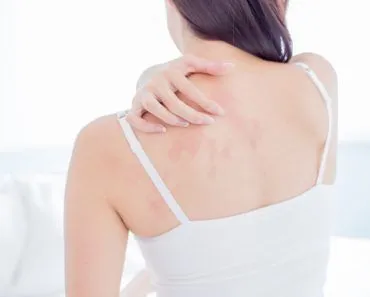
The gate control theory of pain posits that pain signals are modulated by a gating system in the central nervous system, and that the perception of pain by the brain can be influenced by descending nerve impulses from the brain or by ascending signals from peripheral nerves. The practice of ‘rubbing something better’ works by flooding the spinal cord with competing touch and vibration signals carried by fast A-beta fibers, which recruit inhibitory interneurons that close the gate on the slower pain signals before they reach the brain.
Growing up, we get injured or hurt ourselves in so many ways. Playing soccer, riding a bike, or simply sticking our fingers in the hinges of the door just for the heck of it (I’ve seen kids do it, really!)… there are just so many ways in which a child can get hurt. Even as grownups, however, it’s incredibly easy to get hurt in one way or another while doing something as mundane as stapling a bunch of documents together.
The thing is that when you get hurt – and it’s not a serious injury – then you may have observed that you instinctively start to rub the affected area or start shaking it vigorously. More often than not, engaging in this seemingly mindless activity does help alleviate the pain in some ways. Have you ever wondered what’s going on there? Why does rubbing over a painful area in the body help reduce discomfort?

Gate Control Theory Of Pain
This is a theory regarding how the brain perceives pain from a particular point. According to this theory, non-painful inputs from a particular part of the body close the “gates” to a painful input, which invokes the feeling of a dulled pain from the affected part.
Before 1965, the dominant framework was the Specificity Theory of pain. Its roots go back to Descartes’ 1664 mechanical model of nerve transmission, but the formal theory was developed in the 19th century by Johannes Müller (in his law of specific nerve energies, 1830s–1840s) and Max von Frey (1894–1896), who proposed that distinct cutaneous receptors and dedicated nerve pathways carry specific sensations, including pain. According to this view, the experience of pain was directly and linearly related to the injury: pain impulses travelled in a hard-wired channel from the affected region straight to the brain.
In simple words, this meant that the experience of pain from an injury was thought to be proportional to the physical damage that the body tissue underwent.
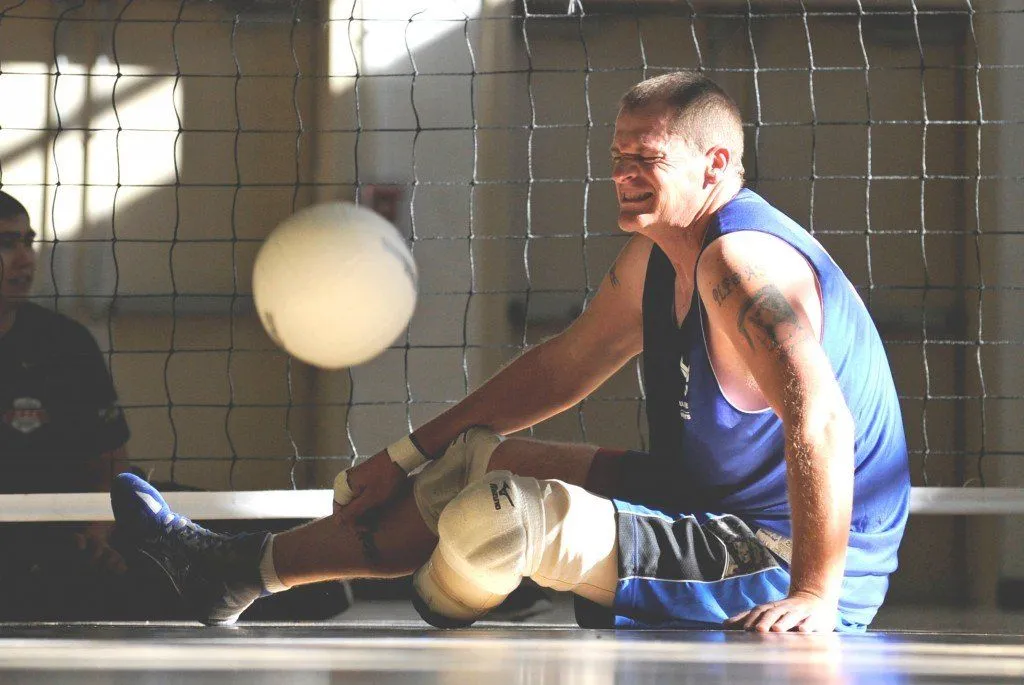
This proposition is not incorrect, but it doesn’t factor in the psychological factors that clearly play an important role in the experience of pain,
Melzack And Wall’s Gate Take On Pain Perception
In the year 1965, Ronald Melzack and Patrick Wall proposed the Gate Control Theory of pain, which introduced the world to a whole new perspective on pain perception. Their theory offered a physiological explanation of how human psychology impacted pain perception.
First, let’s take a quick look at the technical definition. According to the Gate Control Theory of pain, the pain signal is transmitted from the peripheral nervous system to the central nervous system. The pain signal is modulated in the central nervous system (in the dorsal horn of the spinal cord) by a gating system, and then transmitted to the brain, which finally ‘perceives’ it.
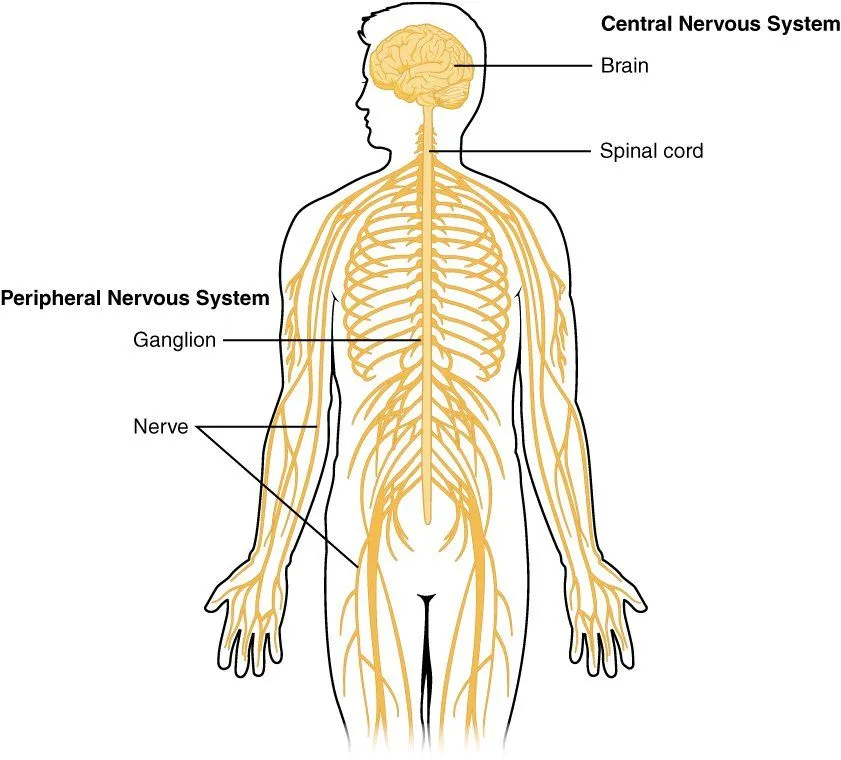
That’s why this theory proposes that the perception of pain by the brain can be influenced (i.e., increased or decreased) if the gating system is impacted.
The aforementioned gating system can be impacted in two main ways; the first relates to descending nerve impulses from the brain that mess with the ascending pain impulses from the affected area. These descending impulses may include cognitive, emotional or psychological factors, such as beliefs, memories, cultural attitudes, or memories of a prior experience in a similar situation.
For example, think of how some people tend to think about positive experiences in their lives to derive courage and endurance while dealing with physical pain.

The other way of influencing the perception of pain is to receive ascending signals from peripheral nerves, which represent competing sensory information and mess with the way your brain perceives pain. The practice of ‘rubbing something better’ falls in this category.
How ‘Rubbing It Better’ Works
Rubbing or shaking an injured area triggers Melzack and Wall's Gate Control Theory of pain: fast A-beta fibers from touch and vibration close the spinal gate on slower pain signals from C fibers, so less pain reaches the brain.
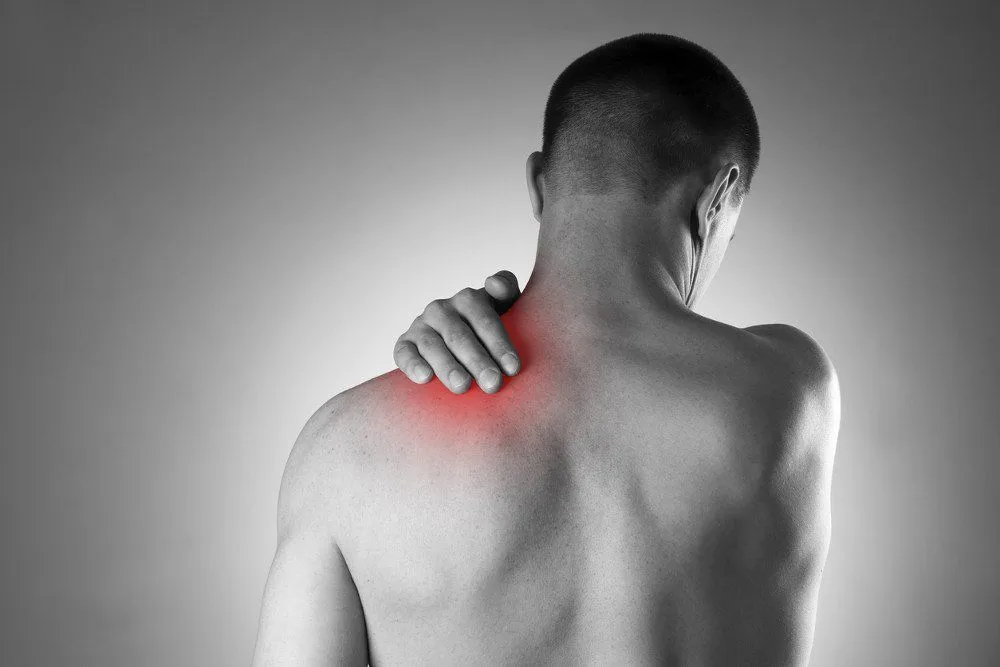
When multiple signals coming from the same part of the body try to reach the brain, the gating mechanism in lamina II (the substantia gelatinosa) of the dorsal horn favors some inputs over others. Touch, vibration, and pressure travel along large, heavily myelinated A-beta fibers at roughly 16 to 100 metres per second, while dull aching pain creeps along unmyelinated C fibers at under 2 m/s. The fast A-beta signals reach the spinal cord first and recruit inhibitory interneurons that close the gate on the slower pain signals before they reach the brain.
Another way of saying it would be that rubbing/shaking an affected body part causes other receptors to fire and, in a bid to be perceived, they overload the brain. By doing that, they prevent pain signals from being appropriately perceived by the brain. That’s the reason why the age-old method of “rubbing it better” always seems to work, at least to a certain extent.
Beyond Rubbing: TENS, Descending Pain Control, and Counter-Irritation
The Gate Control Theory has held up remarkably well in the 60 years since Melzack and Wall published it, and it directly inspired one of the most common non-drug pain treatments in physiotherapy clinics: TENS (transcutaneous electrical nerve stimulation). A TENS unit fires gentle electrical pulses through skin electrodes at frequencies tuned to selectively recruit A-beta fibers, closing the spinal gate without any actual touching. It is, in effect, an automated way of ‘rubbing it better.’
The original theory has also been refined. Melzack and Wall hinted that the brain could send descending signals down to the dorsal horn. Modern neuroscience has filled in that circuit: the periaqueductal gray (PAG) in the midbrain projects to the rostral ventromedial medulla (RVM), which in turn projects to the dorsal horn and damps down pain transmission using endogenous opioids, serotonin, and noradrenaline. That is one reason placebos, distraction, and even a calm voice from a clinician can measurably reduce pain.
Finally, the principle of ‘pain inhibits pain’ has its own name: diffuse noxious inhibitory controls (DNIC) in animals, or conditioned pain modulation (CPM) in humans. A noxious stimulus at one site, such as a cold-pressor task, reduces pain perception elsewhere on the body. It is the same gating system at work, just turned up beyond a friendly rub.
References (click to expand)
- Melzack, R., & Wall, P. D. (1965). Pain Mechanisms: A New Theory. Science, 150(3699), 971–979.
- Pain Theory. StatPearls. NCBI Bookshelf.
- Neuroanatomy, Substantia Gelatinosa. StatPearls. NCBI Bookshelf.
- Neuroanatomy, Touch Receptor (A-beta fibers). StatPearls. NCBI Bookshelf.
- Moayedi, M., & Davis, K. D. (2013). Theories of pain: from specificity to gate control. Journal of Neurophysiology.
- Mendell, L. M. (2014). Constructing and Deconstructing the Gate Theory of Pain (50th-anniversary review). PMC4676495.
- The Role of Descending Modulation in Manual Therapy (PAG – RVM circuits). PMC4695672.
- Chapter 8: Pain Modulation and Mechanisms. The Texas Medical Center.
- Kammers, M. P. M., de Vignemont, F., & Haggard, P. (2010). Cooling the Thermal Grill Illusion through Self-Touch. Current Biology.