Scratching your back feels so good because the pressure activates pain-sensing nerve fibers that quiet the itch signal in the spinal cord (a process called gate control), and the wave of relief switches on the brain’s reward circuit (the ventral tegmental area and substantia nigra), much like eating tasty food or hearing your favorite song. The back also happens to be one of the most pleasurable places on the body to scratch.
We have all spent days staring at the computer screen with stiff backs, holding awkward positions without realizing it. Unconsciously, we move our fingers across our backs in motions similar to those of scratching. In no time at all, we’re scratching our backs, our eyes closed, experiencing what can only be called a ‘temporary paradise’. This makes us feel so relieved that it is a legitimate struggle to get back to the spreadsheet on the screen.
Have you ever realized how this tiny little scratching action, even devoid of an itch, causes you to feel much better than you did 60 seconds ago before you unknowingly started scratching your back?
Why Do We Scratch?
Scratching is nothing more than a reflex to get these irritants off our skin.
Tiny particles are floating around us as well as insects and smaller animals that irritate the skin. This activates certain sensory neurons called pruriceptors in the skin, which result in an itch.
Scratching is also a mind game and contagious, much like yawning. Studies have shown that people tend to scratch themselves when they see others doing it. You might even feel an itch and the urge to scratch it as you read this article.

What Happens When We Scratch Our Skin?
There are several ways our brain senses and responds to an itch.
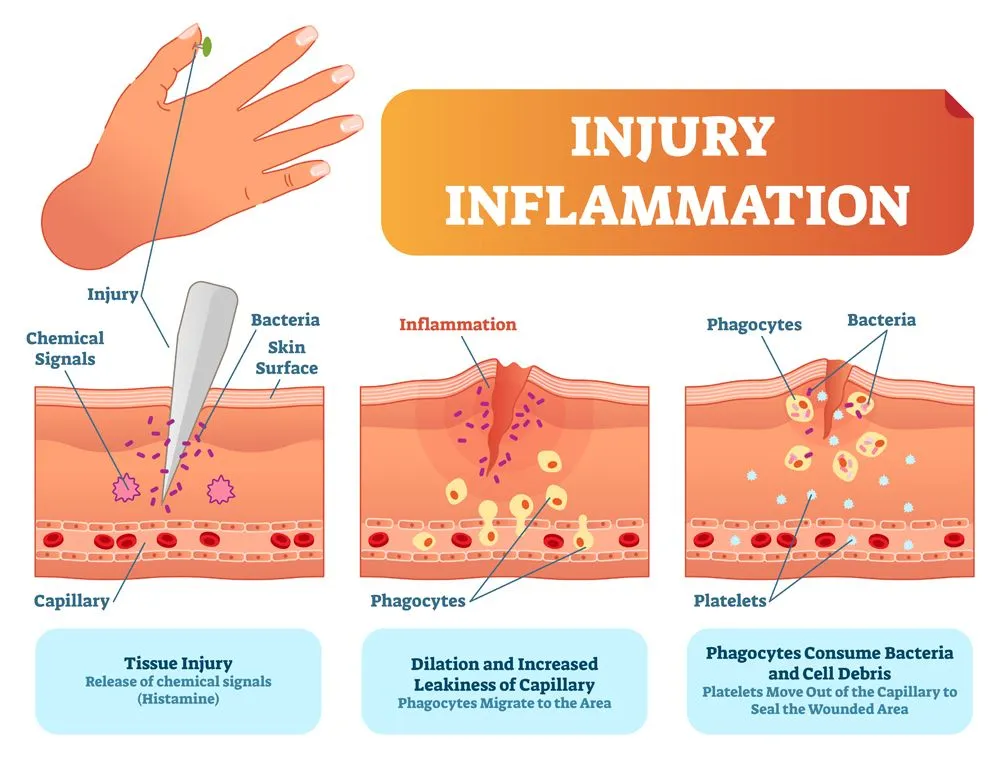
Whenever irritation or uneasiness occurs on the skin, mast cells are recruited to that area. Mast cells are immune cells that release histamine, which is involved in triggering inflammatory responses. The action of histamine causes the dilation of blood vessels, which in turn causes increased blood flow at the site of action.
All these changes are sensed and taken up by the nociceptors or pruriceptors. These impulses are transmitted to the spinal cord. The spinothalamic tract carries these impulses to the brain, which is how the brain learns about the itch. It then commands the motor neurons to produce the scratching action to calm the annoying little itch.
Here is the clever part. When you drag a fingernail across your skin, you activate pain-sensing fibers right next door to the itch-sensing ones. The pain signal travels to the spinal cord and arrives at the very same group of neurons the itch signal was using. The pain effectively jams the line, the way a louder voice drowns out a quieter one in a noisy room.
Scientists call this gate control. Tiny inhibitory neurons sitting in the spinal cord act as gatekeepers, and a fresh pain signal swings the gate shut on the itch (Ross et al., 2010). So scratching does not “cancel” the irritation in some mysterious way; it just hands the spinal cord a competing signal that it would rather pass along. The itch goes quiet, and the relief feels almost instant.
Activation Of The Reward System
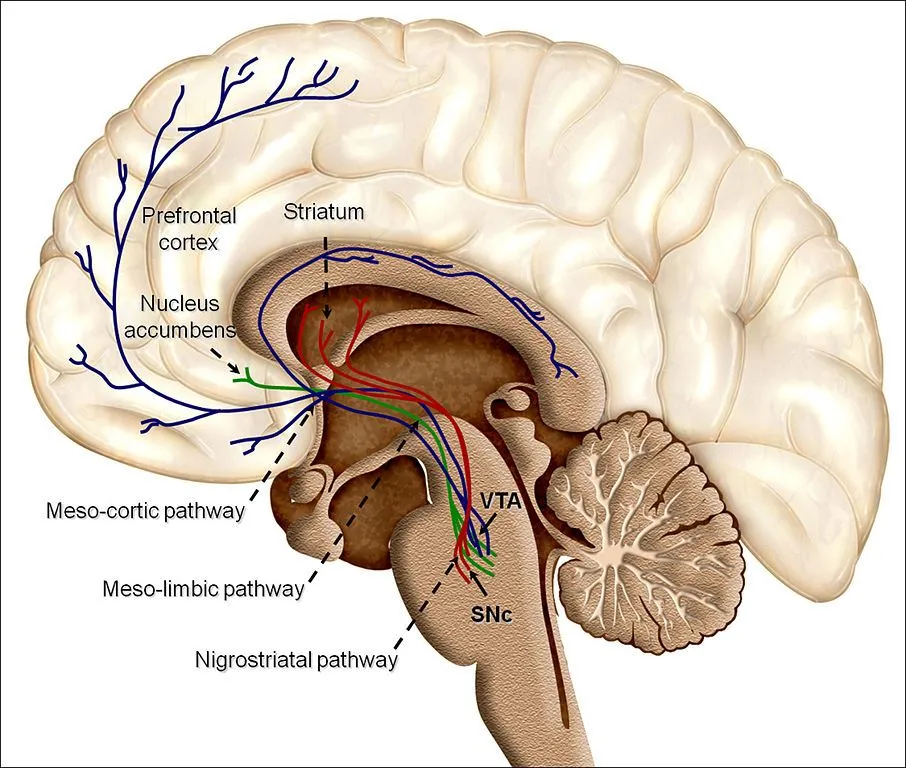
Quieting the itch is just the trailer to a much longer movie. Recent studies have shown that scratching also activates the reward system, the same brain pathway that lights up for positive stimuli like eating tasty food or listening to your favorite music. That is why scratching does not just feel like relief; it feels actively good.
It has been observed that scratching not only diminishes an itch but also makes it rewarding and addictive. The Itch-scratch cycle is a complex process involving sensory, motor, and emotional components.
Studies carried out on human subjects showed that scratching activated the ventral tegmental area (VTA), substantia nigra (SN), raphe nucleus, and periaqueductal gray (PAG). The ventral tegmental area (VTA) and substantia nigra (SN) are the main components of the reward system. PAG is an anatomical and functional structure between the forebrain and the lower brainstem that plays an important role in pain modulation.
The raphe nucleus is a cluster of neurons in the brainstem that releases serotonin. Here is a small twist worth knowing: that serotonin does not flow straight to your “feel-good” centers the way pop science often suggests. Newer research shows it actually loops back down to the spinal cord, where it can amplify the original itch signal (Zhao et al., 2014). That is part of why a long scratching session sometimes leaves you itchier than when you started. The pleasure you feel comes from the reward areas (the VTA and substantia nigra) lighting up, which strongly correlate with how good a scratch is rated to feel.
Why The Back, Specifically?
So far we have talked about scratching in general. But the question in the title singles out the back. Is there something special about that one stretch of skin?
It turns out, yes. In a 2012 study, researchers at Wake Forest School of Medicine asked volunteers to compare scratching at three places on the body: the forearm, the ankle, and the back. Each volunteer got the same controlled itch and rated how pleasurable scratching it felt on a 0-to-10 scale (Bin Saif et al., 2012).
The forearm came in last, at about 3.7 out of 10. The back and ankle tied for the top, both at roughly 4.6 to 4.9. The same study also found something interesting: scratching on the back was the most effective at actually shutting the itch down, while pleasure on the ankle lingered longest even after the itch had faded.
Why these two spots? Two reasons stand out. First, the back is hard to reach with your own hands, so an itch there usually goes unscratched a little longer than one on your arm. By the time someone (or a back-scratcher) finally lands a good scratch, you have accumulated extra relief to enjoy. Second, the skin on the back and ankle has a different mix of nerve endings than smoother, easier-to-reach spots like the forearm, which seems to make scratching there especially rewarding.
It is also why back-scratchers are a familiar gadget, and you have probably never seen anyone selling a forearm-scratcher.
The Magical Effect Of Scratching Your Back
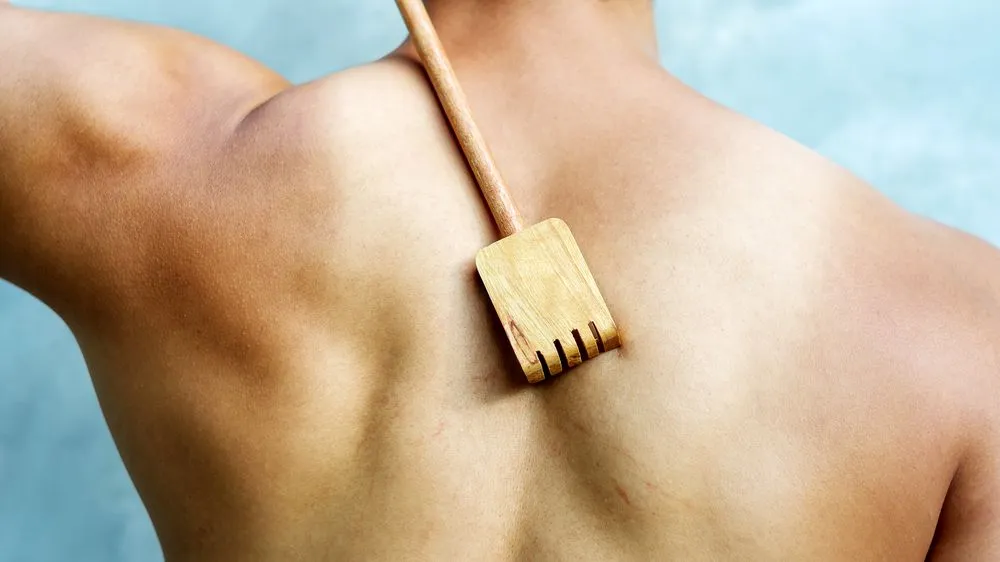
At some point, we have all come across adverts for back scratchers. It will often depict people seeking immediate relief by using these remedies. As comforting as the thought may seem, the science behind instant back relief is interesting.
A modern, sedentary lifestyle does not exactly help. After hours hunched over a screen, the back collects a low-grade sense of stiffness and discomfort, even when there is no itch in sight to explain it.
Now line up everything we have covered. The mechanical pressure on your skin gives the spinal cord a competing signal that quiets any lingering itch. The brain’s reward circuit lights up, releasing the same little burst of satisfaction it would for a good meal or a favorite song. And because the back is one of the two most pleasurable places on the body to scratch, the effect lands harder there than almost anywhere else.
So a quick back scratch acts a bit like a “mini-massage”: not because it is moving blood around your muscles in any dramatic way, but because it briefly hijacks your nervous system’s attention and trades a vague background discomfort for a small, well-defined wave of pleasure.
So, the next time you are tired but still tied to your desk, you know exactly what to do.
Why Does It Feel Even Better When Someone Else Scratches Your Back?
You have probably noticed that a back scratch from someone else lands in a completely different league from one you give yourself. There is real biology behind that, and it comes down to two things: surprise and the kind of touch involved.
Start with surprise. Every time you move, your brain quietly predicts what that movement is about to feel like, using a copy of the motor command (an “efference copy”) run through an internal forward model in the cerebellum. Because the prediction arrives a split second ahead of the real sensation, your brain cancels out part of it. This is the very reason you cannot tickle yourself: a self-produced touch gets dampened before you consciously feel it (Blakemore et al., 2000). When someone else does the scratching, your brain has no motor command to predict from, so nothing gets cancelled and the sensation arrives at full strength.
Then there is the type of touch. Tucked among the nerve endings in your skin is a special class of slow fibers called C-tactile afferents. They fire most enthusiastically for gentle, stroking touch moving at roughly 1 to 10 centimeters per second, the unhurried pace of a caress, and that same speed is the one people rate as the most pleasant (Pawling et al., 2017). A partner or friend dragging their fingernails across your back hits that sweet spot far more easily than your own cramped, over-the-shoulder reach ever could. Add the social warmth of being looked after, and the reward circuit we met earlier has even more reason to light up.
Put it together and the result is almost unfair: an unpredictable touch your brain cannot pre-cancel, delivered at the exact speed your pleasure-tuned nerves love, on one of the hardest-to-reach and most rewarding patches of skin you own. No wonder “Can you scratch my back?” is one of the more satisfying favors a person can be granted.

When Scratching Goes Too Far
There is one footnote to all this good news. A casual back scratch at the desk is harmless and probably a small mood boost. The same mechanism, run on a loop, is not.
When skin is already irritated (think eczema, bug bites, dry winter skin), scratching damages the surface, which releases chemicals that trigger more itching, which leads to more scratching. Dermatologists call this the itch-scratch cycle. Repeated scratching of the same patch can eventually thicken the skin into leathery, darkened plaques, a condition called lichenification (sometimes diagnosed as “lichen simplex chronicus”).
The takeaway is simple. Treat scratching like any other small pleasure: enjoy it, do not turn it into a job. If an itch will not let up after a few days, or if the same spot keeps coming back, that is the body’s polite hint to talk to a dermatologist instead of going harder with your fingernails.
References (click to expand)
- (2014) Brain Processing of Itch and Scratching - NCBI. The National Center for Biotechnology Information
- Papoiu, A. D. P., Nattkemper, L. A., Sanders, K. M., Kraft, R. A., Chan, Y.-H., Coghill, R. C., & Yosipovitch, G. (2013, December 6). Brain’s Reward Circuits Mediate Itch Relief. A Functional MRI Study of Active Scratching. (L. Chao, Ed.), PLoS ONE. Public Library of Science (PLoS).
- Potenzieri, C., & Undem, B. J. (2011, June 6). Basic mechanisms of itch. Clinical & Experimental Allergy. Wiley.
- Han, L., & Dong, X. (2014, May 6). Itch Mechanisms and Circuits. Annual Review of Biophysics. Annual Reviews.
- bin Saif, G. A., et al. (2012). The pleasurability of scratching an itch: a psychophysical and topographical assessment. British Journal of Dermatology.
- Ross, S. E., et al. (2010). Loss of Inhibitory Interneurons in the Dorsal Spinal Cord and Elevated Itch in Bhlhb5 Mutant Mice. Neuron.
- Zhao, Z.-Q., et al. (2014). Descending Control of Itch Transmission by the Serotonergic System via 5-HT1A-Facilitated GRP-GRPR Signaling. Neuron.
- Charifa, A., Badri, T., & Harris, B. W. Lichen Simplex Chronicus. StatPearls. NCBI Bookshelf.
- Blakemore, S.-J., Wolpert, D., & Frith, C. (2000). Why can’t you tickle yourself? Neuroreport.
- Pawling, R., Cannon, P. R., McGlone, F. P., & Walker, S. C. (2017). C-tactile afferent stimulating touch carries a positive affective value. PLoS ONE.