Table of Contents (click to expand)
For people with brain injury, yes. A US military (DARPA) funded "memory prosthesis" that stimulates the hippocampus with a person's own neural codes lifted recall by roughly 35 to 37 percent in early human trials. For healthy adults the case is far weaker: brain-training games improve the game itself, but show little proven benefit for everyday memory.
Have you ever walked upstairs or into another room, and by the time you reached your destination, you had forgotten what you needed? Have you ever walked around a parking lot for twenty minutes searching for your car? Have you accidentally called someone the wrong name – after “meeting them” for the fifth time?
Memory is an important and powerful part of our lives, and the idea of losing your memory or having a “bad” memory can be a major roadblock in life. Whether you’re simply forgetful, suffering from a cognitive disorder, or simply experiencing the deterioration of memory that comes with age, having a poor memory can be a painful and embarrassing problem.
Wouldn’t it be awesome if all the tech-savvy innovators out there could come up with some flashy new technology that can improve memory?
Well, I’ve got some good news for you – the memory tech revolution is already underway, and the first human results are in!
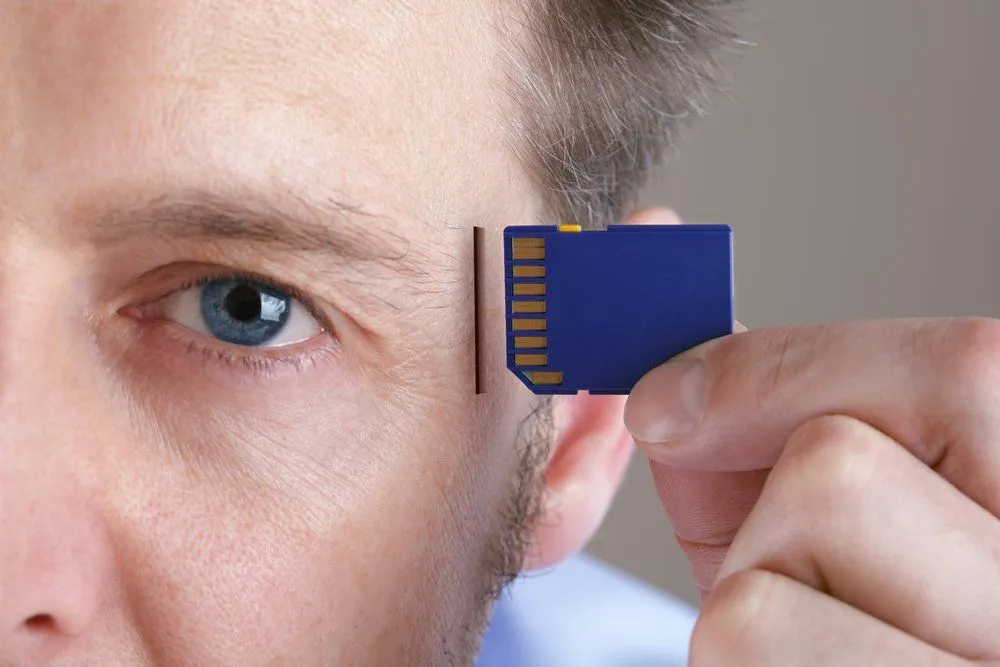
A Terrible Thing To Waste
Indeed, a mind withering away and losing the ability to remember is a terrible thing, and there are plenty of techniques people have employed over the years to protect and improve their memory. Crossword puzzles, brain teasers, and commercial “brain-training” apps have been recommended for years to keep us “sharp,” but the evidence is thinner than the marketing suggests. In 2014 a group of roughly 70 cognitive scientists, convened by the Stanford Center on Longevity and the Berlin Max Planck Institute, signed a consensus statement concluding that brain games do not reliably improve general cognition in everyday life. You tend to get better at the game itself, not at remembering where you parked. Diet gets cited too (antioxidants, leafy greens, fish oil), though those effects are modest, and herbal remedies are everywhere. In this modern age, though, something with a bit more flair was inevitable.

Technology and memory have a strange relationship, namely because many people today argue that technology like smart phones and tablet are actually disengaging the brain and causing our memory functions to suffer. For example, our GPS programs on ever smartphone have made it less important to know your way around a city, while Google answers every question before you can even fire up the old neurons to try and remember it naturally.
That being said, technology has also led to the development of brain games and wider accessibility to information about memory loss and methods to improve it. This strange paradox of being both a problem and solution is yet another fascinating aspect of technology!
Getting Inside Your Head
Recently, a type of technology has been developed to improve memory, although it is primarily designed for those who have suffered major head trauma and are experiencing memory issues for that reason. In other words, if you constantly forget your wallet in your “other pants”, this treatment probably won’t apply to you. However, for soldiers who have experienced serious head trauma, or for others who have suffered from brain damage, this new solution could be the answer to their prayers.
Much of this work has been bankrolled by the US military, specifically DARPA’s Restoring Active Memory program, which set out to build implantable devices that could help service members recover from memory loss after a brain injury. The approach is a kind of “neuroprosthetic”: electrodes record the brain’s own electrical activity and then play a version of it back. The pioneering science came from the late Theodore Berger and Dong Song at the University of Southern California, who built a mathematical model of how the hippocampus turns short-term memories into long-term ones. A team led by Robert Hampson at Wake Forest School of Medicine then tested it in people. In a 2018 study published in the Journal of Neural Engineering, stimulating epilepsy patients with their own “correct” hippocampal codes improved recall by up to roughly 35 to 37 percent over their baseline. In other words, the electrodes can bridge the gaps in a damaged memory and nudge fragile short-term memories into sticking around.
While the research has so far been driven by the military, the same idea could one day help people coping with strokes, premature aging, Alzheimer’s, dementia, and other cognitive disorders. There is still limited treatment for many conditions that affect the brain, so a working memory prosthesis could be a hugely important option for millions of people. It is worth being clear about what is and isn’t on the table, though. High-profile brain-computer interfaces like Neuralink, which since 2024 has been implanted in people with paralysis, let users move a cursor or type by thought. They are not memory implants, and no commercial device today can hand a healthy person a sharper memory.
What’s The Catch?
Obviously, this sort of procedure (implanting electrodes directly into the brain) does come with some inherent risks, as any operation on the brain can be dangerous. Also, by connecting in such invasive ways to certain core areas of the brain, and adding manmade electrical elements to mimic the work of evolution, there is always the chance that something can go wrong.
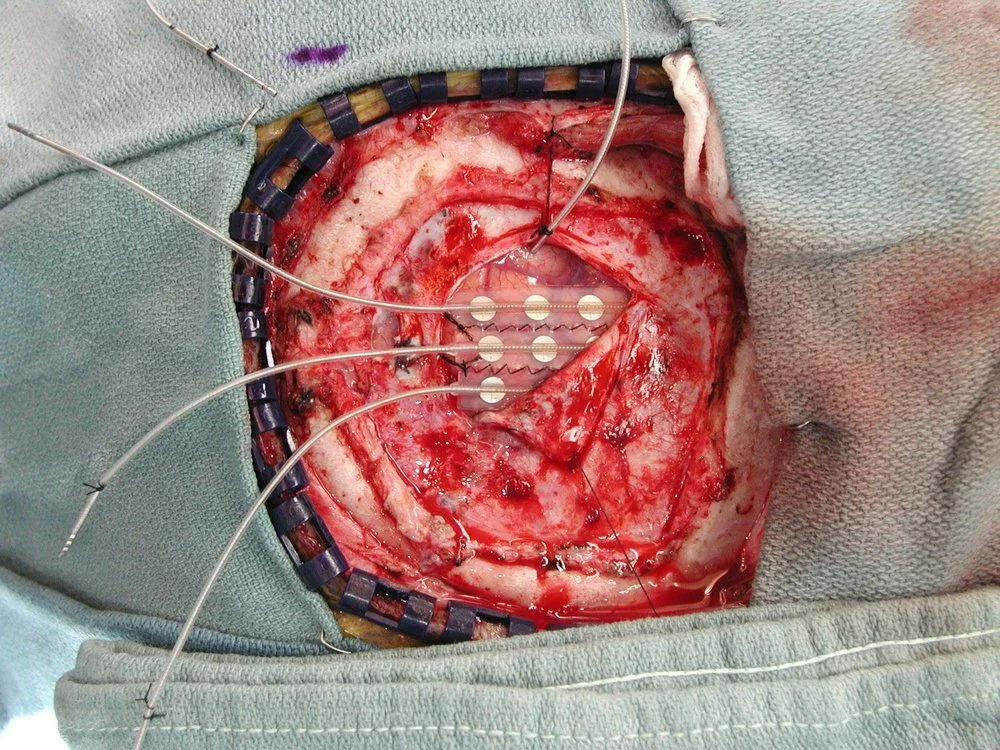
However, similar electrodes are already in routine use for people with severe epilepsy and Parkinson’s disease, and by studying those results and improving on known techniques, researchers are getting closer to a viable memory device. Tests and research will likely continue in this field for many years, but with growing concern over long-term brain damage from certain activities (in 2022 the US National Institutes of Health formally acknowledged a causal link between repeated head impacts in contact sports like American football and the degenerative brain disease CTE), this is becoming a more important field. The potential advancements could have a wide reach, and benefit a growing, deserving population of patients.
So, to answer the original question, can technology improve our memory? For people rebuilding a memory after brain injury, the early answer is a cautious yes. And while this technology is still experimental and years away from your local clinic, we’re moving in the right direction. Until it becomes “mainstream,” just try not to put your keys down in weird places, and keep your brain busy the old-fashioned way!

References (click to expand)
- Progress in Quest to Develop a Human Memory Prosthesis. DARPA.
- Hampson, R. E., et al. (2018). Developing a hippocampal neural prosthetic to facilitate human memory encoding and recall. Journal of Neural Engineering. NCBI / PMC.
- Hampson, R. E., et al. (2024). Developing a hippocampal neural prosthetic to facilitate human memory encoding and recall of stimulus features and categories. Frontiers in Computational Neuroscience.
- A Consensus on the Brain Training Industry from the Scientific Community. Stanford Center on Longevity & Max Planck Institute for Human Development.
- Spiers, H. J., & Bendor, D. (2014, June). Enhance, delete, incept: Manipulating hippocampus-dependent memories. Brain Research Bulletin. Elsevier BV.
- Charness, N., Best, R., & Souders, D. (2012, June 28). Memory function and supportive technology. Gerontechnology. International Society for Gerontechnology (ISG).