There is no single best temperature, but lukewarm water, around 37-41℃ (98-105℉), suits most people and is gentlest on skin. Cold water can boost circulation, calm the nerves, and soothe itchy skin, while hot water can ease nausea and help you sleep. Just avoid extremes: scalding water burns, and a long cold shower can chill you toward hypothermia.
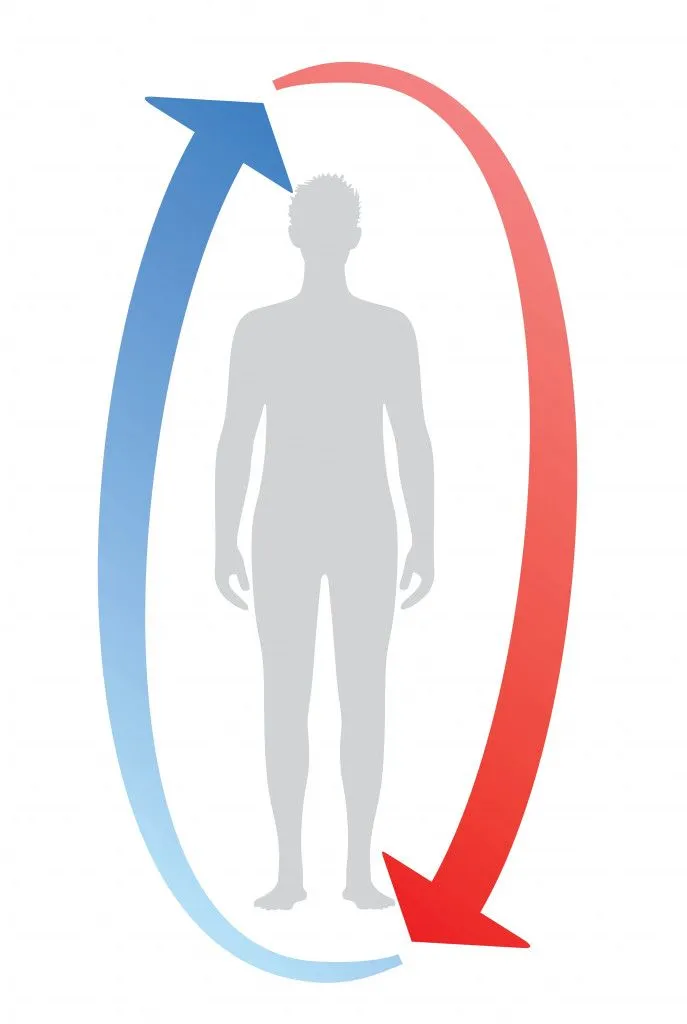
Both hot and cold showers alter the thermal equilibrium of the body, known as homeostasis. Humans are warm-blooded, which means that our bodies are only comfortable in a narrow range around 37℃ (98℉). Anything more than this is a fever, and anything less brings us closer to hypothermia. The body tries very hard to make sure our temperature does not change very much.
What Can Cold Showers Do?
Although it may feel like the bane of your existence, a cold shower can actually have massive health benefits. Don’t believe me? Just ask the Egyptian, Indian and Chinese cultures, where water was used as therapy for illnesses. Hydrotherapy is the use of water either internally or externally to try to relieve various symptoms.

Cold water has long been used in hydrotherapy, and recent research suggests that it can have massive effects on the circulatory system. Temperatures of 32, 24 and 14℃ lowers heart rate and blood pressure, but increases metabolic rate.
When the surface of the skin is very cold, the body stops sending blood there to prevent the body from losing too much heat. This increases circulation in deeper tissues. To prevent blood from traveling too close to the surface, heart rate and blood pressure must consequently reduce. In order to maintain internal temperature, the body burns more energy, thus raising the metabolic rate.
Sudden cold can also shock the nervous system. The same temperature range of 32, 24 and 14℃ lowered nerve conductivity. This means electrical impulses in the nerves traveled more slowly. Slowing the nerves can actually have a soothing effect, meaning that a cold bath can be very beneficial for people with anxiety, or for anyone who wants to calm down a bit!
Experiments prior to the study above in 2014 also suggested that very cold water can reduce immune function. However, any effect that had would be temporary. As soon as the body returns to its normal temperature, the immune system would be just as active. Recent experiments suggest that there is no suppression of the immune system at all when exposed to cold water!
Anecdotal evidence suggests that cold water can aid in muscle recovery. However, the results from scientific experiments have been conflicting, and there is no official verdict yet. One study found that cold water reduces blood flow, but not muscle temperature, after exercise. What this means remains unclear.
One thing that dermatologists and scientists agree on is the benefit of cold water for your skin.
Our skin is covered by a thin layer of oil called sebum. We have sebum all over our bodies, but when sebum accumulates, it can cause pimples and congestion. Without sebum, our skin would be dry, and we would lose a lot of water through the skin. Hot water can strip the sebum off the skin, thus irritating it. Those with conditions such as eczema or skin allergies should avoid hot water in most cases. Cold water can also reduce the feeling of itchiness associated with eczema and rashes.
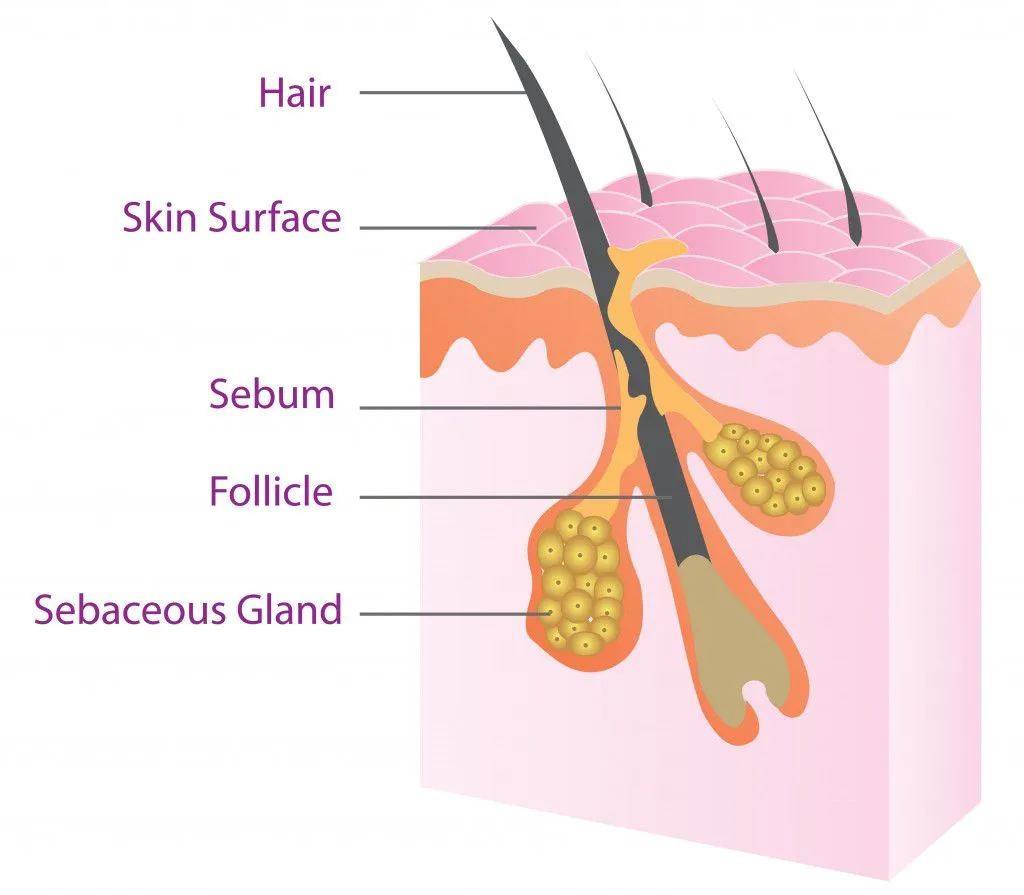
Cold water can have an effect on blood flow, nerve conductance, and the skin, but how does it stack up against hot water?
What Can Hot Showers Do?
First and foremost, a dangerously hot shower is bad for you on a number of levels. A study conducted in the United Kingdom found that across 8 years, fifty-seven patients were admitted who had sustained burns that required hospitalization. Of these fifty-seven, nine patients died. Superficial burns caused by too-hot showers and subsequent infections are indeed a major risk of very hot showers.
On the other hand, hot showers can help control bacteria. Bacterial diversity (the number of types of bacteria) and the bacterial population (the total number of bacteria) was significantly lower in hot water taps than cold water taps. This means that hot water has a sterilizing effect, killing the bacteria present in the taps. This study looked at drinking water, so it’s unclear if this has any real consequences when it comes to showering.
Hot water can also help people in very specific situations or people with certain conditions. Cyclic vomiting syndrome is a disorder where nausea and vomiting are experienced periodically. People experiencing cyclic vomiting syndrome reported that hot water showers helped relieve their symptoms. The same trick shows up in cannabinoid hyperemesis syndrome, where long-term cannabis users get bouts of severe nausea and compulsively take hot showers for relief. Why does heat quiet the queasiness? The leading explanation involves TRPV1, the same nerve receptor that senses both heat and the burn of chili peppers. A hot shower floods these heat sensors with a strong, competing signal that appears to dampen the nausea pathway, a bit like rubbing a sore spot to take your mind off the pain. Hot showers also greatly reduce pain and anxiety during childbirth. It can even improve blood flow in people with chronic heart conditions.
Even outside of these very specific situations, hot water does have its benefits. Hot water relaxes us, even if it doesn’t have the same effect on our nervous systems as cold water. A warm shower an hour or two before bed nudges your core temperature down afterward, which can improve sleep. It also feels lovely on tired muscles. Be careful if acne is your concern, though. Despite the popular belief that hot water opens your pores and rinses them out, our pores do not open and close like windows. Dermatologists warn that water that is too hot strips away protective sebum, drying the skin and prompting it to pump out even more oil, which can make breakouts worse. Lukewarm is the safer bet here too.
What Temperature Counts As A Hot, Warm, Or Cold Shower?
So far we have thrown the words hot and cold around without ever pinning them to a number. Where does warm end and scalding begin? There is no official rulebook, but decades of skin and burn research hand us some fairly reliable brackets.

For everyday washing, dermatologists point to lukewarm-to-warm water as the sweet spot. Cleveland Clinic dermatologist Dr. Shilpi Khetarpal puts the ideal shower at around 100℉ (about 38℃), which is roughly the temperature of your own body. Anywhere from about 37 to 41℃ (98 to 105℉) feels comfortable and leaves your skin’s protective oils intact. Nudge much above that and the water begins to strip away sebum, drying and irritating the skin.
A cold shower, by contrast, is anything that makes you gasp. The hydrotherapy experiments mentioned earlier tested the body’s response at 32, 24 and 14℃ (90, 75 and 57℉), a spread that runs from merely cool to properly cold.
Hot is where you have to be careful, because skin burns faster than most people expect. At 60℃ (140℉), water can cause a full-thickness burn in about five seconds, which is why burn centers suggest keeping your water heater no higher than 49 to 52℃ (120 to 125℉). A comfortable shower should always sit well below that ceiling.
Should You Take A Hot Or Cold Shower When You Have A Fever?
One of the most common questions people have is what to do in the shower when a fever hits. The instinct is to blast yourself with cold water to cool the fever down, but that instinct quietly works against you.

Cold water and ice chill the skin, and that triggers shivering, which is simply your body cranking out more heat. The U.S. National Library of Medicine warns that cold baths, ice and alcohol rubs “often make the situation worse by causing shivering, which raises the core body temperature.” A steaming hot shower is not the answer either, as it can leave you dizzy and dehydrated when your body is already losing extra fluid to the fever.
The middle path wins. A lukewarm shower or sponge bath, using water that feels neither hot nor cold, cools you gently without setting off the shivers. If you are also taking fever-reducing medicine, the lukewarm bath works best alongside it; on its own, your temperature may simply bounce back up. Keep it brief, sip water before and after, and step out if you start to feel faint. And if a fever climbs very high or refuses to break after a few days, that is your cue to call a doctor rather than reach for the shower dial.
So, Hot Or Cold?
Unfortunately, the answer for whether to take a hot or a cold shower isn’t clear, as it depends entirely on who you are. It turns out that everyone’s preferences are valid, at least scientifically.

If your problem is heart failure or cyclic vomiting syndrome, a hot water shower is the right choice. For eczema or acne-prone skin, avoid hot water whenever possible.
Whatever your choices are, the important takeaway is to never veer to the extreme. Very very hot water can burn skin to the point of needing a hospital visit, while a very long and very cold shower can shock your body into hypothermia. Although our bodies are excellent at maintaining thermal equilibrium, pushing them too far outside the equilibrium range can be dangerous.
For most of us, most of the time, lukewarm water (roughly 37-41℃, or 98-105℉) is the sweet spot, comfortable, kind to your skin, and nowhere near the scalding zone. Anything nearby should be just fine!
References (click to expand)
- Mooventhan, A., & Nivethitha, L. (2014). Scientific evidence-based effects of hydrotherapy on various systems of the body. North American Journal of Medical Sciences. Medknow.
- CASTELLANI, J. W., M. BRENNER, I. K., & RHIND, S. G. (2002, December). Cold exposure: human immune responses and intracellular cytokine expression. Medicine & Science in Sports & Exercise. Ovid Technologies (Wolters Kluwer Health).
- Mawhinney, C., Jones, H., Low, D. A., Green, D. J., Howatson, G., & Gregson, W. (2017, January 19). Influence of cold-water immersion on limb blood flow after resistance exercise. European Journal of Sport Science. Informa UK Limited.
- Brenaut, E., Garlantezec, R., Talour, K., & Misery, L. (2013). Itch Characteristics in Five Dermatoses: Non-atopic Eczema, Atopic Dermatitis, Urticaria, Psoriasis and Scabies. Acta Dermato Venereologica. Medical Journals Sweden AB.
- Cerovac, S., & Roberts, A. H. N. (2000, May). Burns sustained by hot bath and shower water. Burns. Elsevier BV.
- Zhang, C., Qin, K., Struewing, I., Buse, H., Santo Domingo, J., Lytle, D., & Lu, J. (2021, April 23). The Bacterial Community Diversity of Bathroom Hot Tap Water Was Significantly Lower Than That of Cold Tap and Shower Water. Frontiers in Microbiology. Frontiers Media SA.
- Venkatesan, T., Sengupta, J., Lodhi, A., Schroeder, A., Adams, K., Hogan, W. J., … Storr, M. (2014, May 4). An Internet survey of marijuana and hot shower use in adults with cyclic vomiting syndrome (CVS). Experimental Brain Research. Springer Science and Business Media LLC.
- Taşkın, A., & Ergin, A. (2021, June 22). Effect of hot shower application on pain anxiety and comfort in the first stage of labor: A randomized controlled study. Health Care for Women International. Informa UK Limited.
- MG Core. In Brief: Your Guide To Healthy Sleep - NHLBI. The National Heart, Lung, and Blood Institute
- Cannabinoid Hyperemesis Syndrome. StatPearls. NCBI Bookshelf. National Library of Medicine.
- A Comprehensive Review: The Bidirectional Role of Sebum in Skin Health. International Journal of Molecular Sciences. PMC, NCBI.
- Fever. MedlinePlus Medical Encyclopedia. U.S. National Library of Medicine.
- Temp Check: Are Your Showers Too Hot? Cleveland Clinic Newsroom.
- Burn Safety Facts. Bothin Burn Center, UCSF Health.