A moisturizer works to replenish the water content of the skin either by trapping moisture in the topmost layer of the skin or replenishing its water content to some degree.
The Three Layers Of The Skin
Human skin, which is the largest organ in the body and covers humans from head to toe, consists of three layers, namely the epidermis, dermis and hypodermis.
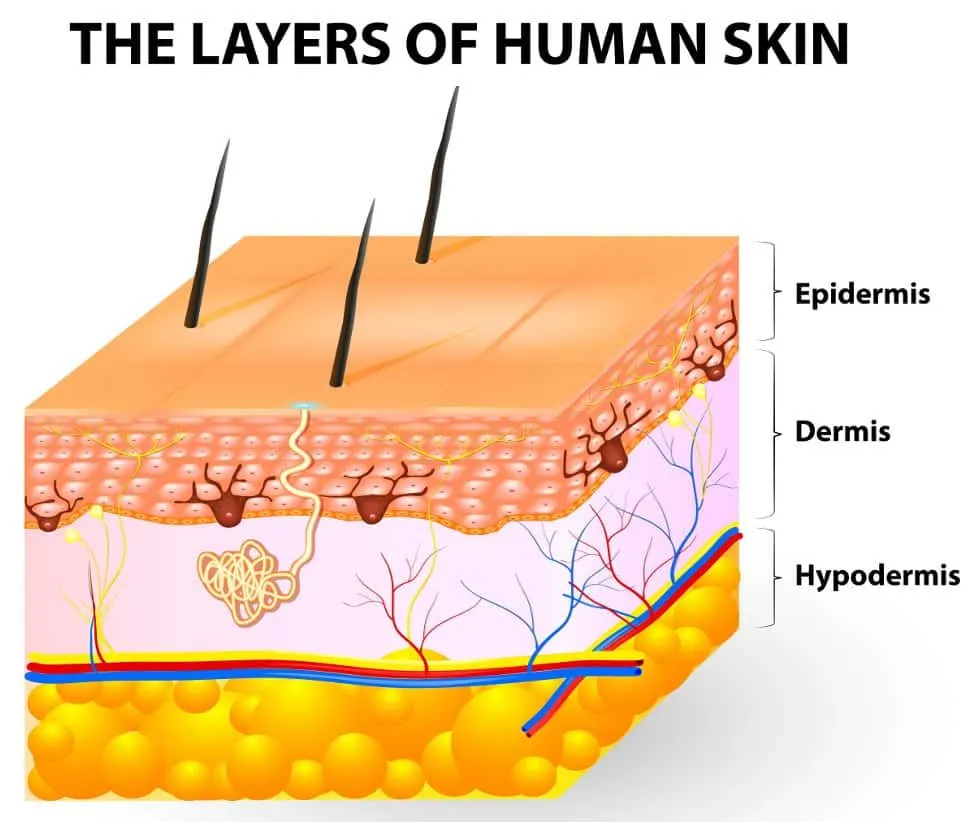
The hypodermis consists of a layer of fat, and also contains nerves and blood vessels. Above this layer, the dermis consists of nerves, blood vessels, hair shafts, sweat and sebaceous glands. It is the sebaceous glands that produce sebum, an oily, waxy substance that gives the skin its oily feel and texture. Problems with the secretion of sebum lead to acne and other skin-related problems.

The Importance Of Keeping The Skin Hydrated
When it’s warm outside or the ambient temperature is a bit on the higher side, the skin begins to dry out. Furthermore, prolonged exposure to certain environmental elements and irritants, such as harsh cleansing products, also upsets the skin’s natural balance of water by removing its lipids. Such drying out of the skin is, in purely biological terms, known as trans-epidermal water loss or TEWL. More specifically, it is the loss of water from inside the body to its surroundings through the process of diffusion or evaporation.
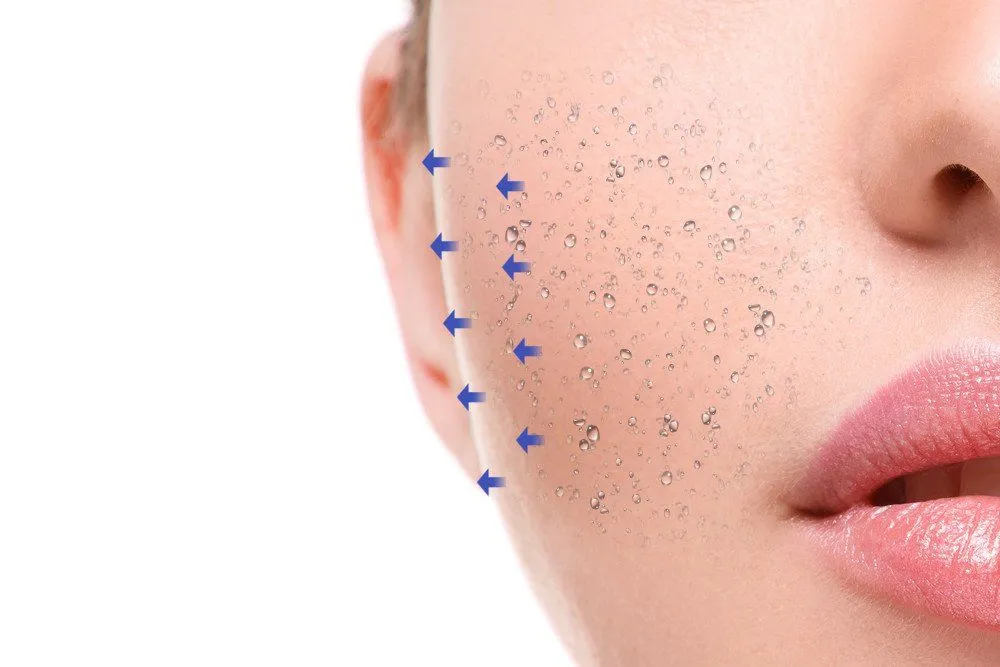
TEWL is significantly impacted by temperature, metabolism and variations in sweat gland activity.
Dry, dehydrated skin loses its ability to stretch and consequently cracks and peels, which further accelerates the process of dehydration of the skin.
What Does A Moisturizer Do?
Most moisturizers (in fact, almost all cosmetic products in general) work exclusively on the cells in the epidermis section (the topmost layer). The idea is to prevent the moisture from leaving the skin’ surface and/or replenish its water supply, and that is precisely what moisturizers do. They essentially provide a little bit of water that penetrates the cell membranes to rehydrate and plump up the outermost layers of dead skin cells.

To that end, moisturizers invariably have a significant amount of water in them. Also, they contain some sort of wax, grease or oil that traps the water on the skin so that it doesn’t evaporate immediately.
Types Of Moisturizers
Moisturizers can be broadly classified into three categories:
Occlusives
Occlusives form a barrier on the surface of the skin that water molecules cannot penetrate. In this way, they basically lock in the water molecules that are already present inside the skin, which makes them very effective in keeping the skin hydrated for a while.
Emollients
Emollients fill the spaces between cells in the skin to make it feel smoother. Although emollients and occlusives have some common components (stearate and castor oil), they work quite differently.
While occlusives simply form a barrier on the outermost layer, emollients actually penetrate slightly into the stratum corneum and fill the gaps between dead skin cells that are missing fatty layers of lipids. Common emollients include plant-derived oils (jojoba, almond, shea butter), fatty alcohols like cetyl alcohol, and squalane.
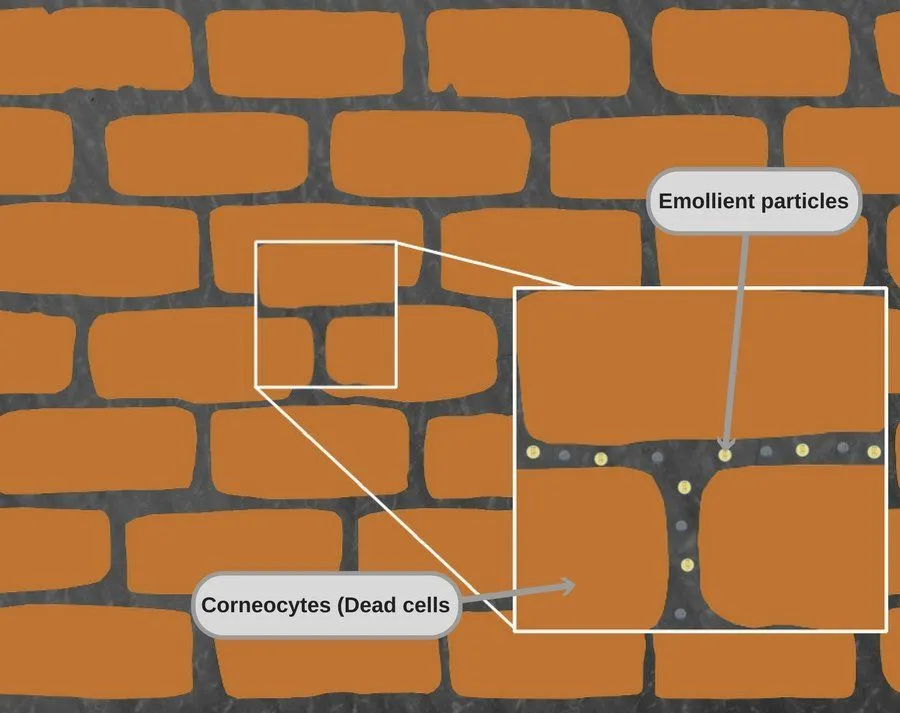
Emollients’ mode of action is different from traditional moisturizers, which is why they have become quite popular in recent years.
Humectants
Humectants help draw water to the skin to keep it hydrated. When applied to the skin, humectant molecules attract water (from the air when it is humid, or from deeper skin layers when it isn't), so they are usually paired with an occlusive that prevents the water they pull up from evaporating straight back into the air. The famous names here are glycerin, hyaluronic acid, urea, propylene glycol, and the alpha-hydroxy acids (lactic, glycolic).
They also help young, moist cells stick to the surface, keeping the skin from becoming flaky. Certain humectants (notably urea and niacinamide) have also been shown to support the skin's own production of ceramides, the lipids that form the natural water-retaining barrier between cells in the outermost layer.
In a nutshell, no matter how expensive of a moisturizer you use, all commercial moisturizers basically work on the same principle. However, they may have additional features, like their distant ‘best before’ dates (thanks to the addition of some preservatives), a pleasant fragrance, an attractive cover or a popular brand ambassador. Even so, none of these additional, costly properties have anything to do with the basic purpose of keeping the skin hydrated.
Where Does Lotion Go When You Rub It In?
Have you ever wondered where the lotion actually goes once it "sinks in" and your skin stops feeling slick? The honest answer is that most of it does not go very far at all. It settles into the stratum corneum, the thin, outermost sheet of the epidermis made of flattened, dead skin cells. This layer is often pictured as a brick wall: the dead cells (corneocytes) are the bricks, and a matrix of lipids (ceramides, cholesterol and fatty acids) is the mortar holding them together.

That brick wall is the whole point. The stratum corneum is the skin's rate-limiting barrier, the single biggest obstacle anything has to get past to move deeper into the body. It evolved to keep water in and the outside world out, so it is very good at blocking molecules from passing through. When you rub in lotion, the humectants plump up those dead cells, the oils and waxes fill the gaps in the mortar, and an occlusive film slows moisture from evaporating. All of that happens within the top few hundredths of a millimeter of skin.
It is worth separating two ideas that sound similar. Penetration means an ingredient works its way down into the living epidermis; absorption means it reaches the bloodstream. Everyday moisturizers are designed to do neither in any meaningful amount. The small, common ingredients largely stay parked in that outer barrier and are gradually shed as your skin naturally turns over. Only a few specially engineered, small, fat-loving molecules (think of a nicotine or hormone patch built for the job) are designed to cross the stratum corneum and reach the blood. A scoop of body lotion is not one of them, which is exactly why it makes your skin feel soft without making you feel anything else.
When Should You Put On Lotion? The Damp-Skin Rule
Here is the single most useful trick for getting more out of any moisturizer, and it costs nothing: put it on while your skin is still damp. After a shower, bath or even just washing your hands, a thin film of water is sitting on the surface and starting to evaporate. The American Academy of Dermatology recommends applying moisturizer at exactly this moment, while the skin is still damp, so the product can trap that water before it escapes.
The reason ties back to the three ingredient types above. The humectants pull in and hold the surface water, while the emollients and occlusives seal it under a thin film, so you lock in moisture you already have rather than relying on the air to provide it. Wait until your skin is bone dry and you have lost that free head start. The routine is simple: keep the shower short and lukewarm, gently pat (do not rub) the skin with a towel, and apply the moisturizer within a couple of minutes.
One more detail dermatologists stress: for genuinely dry skin, thicker is better. Ointments and creams hold more occlusive oil than thin, watery lotions, so they slow water loss more effectively. It is the same reason a waxy lip balm beats a runny lotion on your lips, where the skin is especially thin and lacks the usual protective barrier.
References (click to expand)
- The Chemistry Behind Moisturizers. The University of Southern California
- Dry skin - Symptoms and causes - Mayo Clinic. The Mayo Clinic
- Gioia, F., & Celleno, L. (2002, August). The dynamics of transepidermal water loss (TEWL) from hydrated skin. Skin Research and Technology. Wiley.
- Winter dry skin | University of Iowa Hospitals & Clinics. University of Iowa Hospitals and Clinics
- The Importance of Moisturizing - Healthy Tips - UT Medical Center - www.utmedicalcenter.org
- Haque, T., & Talukder, M. M. U. (2018). Chemical Enhancer: A Simplistic Way to Modulate Barrier Function of the Stratum Corneum. Advanced Pharmaceutical Bulletin. PMC.
- Dermatologists' top tips for relieving dry skin. American Academy of Dermatology.