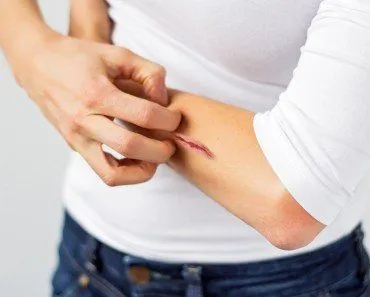
Cauterization, the practice of burning a wound with extreme heat, is a quick way to seal a wound and stop bleeding. This is risky, however, as it further damages tissues and significantly increases the risk of infection.
There’s a scene in the 1995 epic war movie Braveheart where the father of William Wallace’s best friend (a character played by the Scottish actor James Cosmo) is hit by an enemy arrow. After the quick skirmish concludes, the man’s well-wishers, including his son, gather around him to ‘treat’ his arrow wound.

To treat the wound, they stick the red-hot tip of a spear against the wound on the man’s body. The man shrieks in pain, but then, a few seconds later, he seems alright, as if the wound is no longer troubling him!
If you think about it, there are plenty of action movies where they show people sticking hot things, usually knives, blades, daggers, etc., into wounds as a form of first aid. In modern movies, you may have also seen people extracting bullets lodged in their bodies by using something hot and metallic.
The question is, of course, why do people do that? Why do they stick red-hot metal in or around an already injured part of the body? Is there any scientific explanation behind this seemingly bizarre practice? Is it supposed to do some good and help the person already in pain from the injury, or is it simply one of those things that movies get away with on the pretext of being fictional?

Yes, There’s An Explanation!
As it turns out, sticking a red-hot metallic object inside or near a wound on human flesh is not entirely devoid of logic, despite it seeming counterintuitive to us average moviegoers in the modern world. There is indeed a reason (or two) why popular culture relies on this kind of crude first aid when a character doesn’t have instant access to appropriate medical care.
There are two probable reasons why movies show this kind of rudimentary first aid with wounds, so let’s take a look at them!
Sterilization
A sterile object or surface is completely devoid of living viruses and microorganisms. The process that makes an object sterile is called sterilization. Once an object is sterilized, it shouldn’t have any living microbes on it, which decreases the risk of infection.
Heat is one of the easiest ways to do this. Heating an object to incredibly high temperatures, those above 100°C, will kill most microbes. The higher the temperature, the better the odds that any microbes on it would be killed. When metals are red-hot, they typically reach temperatures around 500 to 700°C. Many microbes will be killed at temperatures higher than 60°C. Some dormant microbes, like bacterial spores, might require higher temperatures, but most can’t survive temperatures higher than 100°C.
Getting rid of the bacteria reduces the chances of a wound getting infected. Before doctors and medical practitioners knew about microbes and their disease-causing potential, they would frequently reuse surgical instruments, such as knives and needles, without washing them. In fact, they wouldn’t even bother to wash their hands before performing surgery!
If you’re ever stuck in the wild and don’t have any disinfectant like alcohol to kill bacteria, heat from a fire or hot boiling water might be your best bet.
Today, we use chemicals or UV radiation to sterilize surfaces and instruments. There are also special machines called autoclaves that kill microbes using steam.
Cauterization
However, there is another reason that Braveheart and other action flicks show red-hot blades pressing against open wounds to stop them from bleeding. An open wound, especially in cases of gunshots, knife stabs, or amputations, causes a lot of blood loss. The body’s inbuilt system to stop that blood loss (blood clotting) cannot seal up large ruptures in major arteries and veins. A combination of such a large area to clot and the high blood pressure in these vessels makes it impossible for blood clotting to occur before it’s too late.
Burning an open wound is a shortcut to stop the bleeding and seal up that patch. When heat, at a temperature above 100°C, is applied to the wound, proteins present in the cells will denature and aggregate together.
The structure of proteins is what makes them soluble in water. Heat changes their structure because of changes in the chemical bonds. This makes the protein insoluble, a process called denaturation (think of an egg going from transparent to white when it cooks).
Denatured, insoluble proteins will aggregate together, effectively sealing the wound. This is called cauterization. It’s derived from the Late Latin word cauterizare, which means ‘to burn or brand with a hot iron.’ It has been a medical practice since antiquity, documented in the ancient Egyptian Edwin Smith Papyrus and the Hippocratic Corpus, and remained widely used through medieval times.
While this strategy is effective in stopping blood loss, it isn’t great for the wound or the patient. First, by applying red-hot metal to the wound, one creates severe burns to the flesh. This is another injury in addition to the previous one, like trying to put out a fire with more fire.
Second, burns are extremely susceptible to infections. Even though heat kills off the bacteria on the blade that cauterizes the wound and might kill some of the bacteria on the burnt skin, it does not mean that the burn site will remain sterile. Bacteria and fungi from spores in the air or adhered through skin contact might deposit on the burn wound. Furthermore, the immune system is often unable to fight these pathogens due to the nature of the burn itself.
Burn wounds weaken the immune system’s ability to fight bacteria. The skin is one of the body’s first barriers from infection, but the open wound, which is also now burned, will be more susceptible. There is also a dysregulation of the process of the immune system due to the complex interplay of molecules related to inflammation.
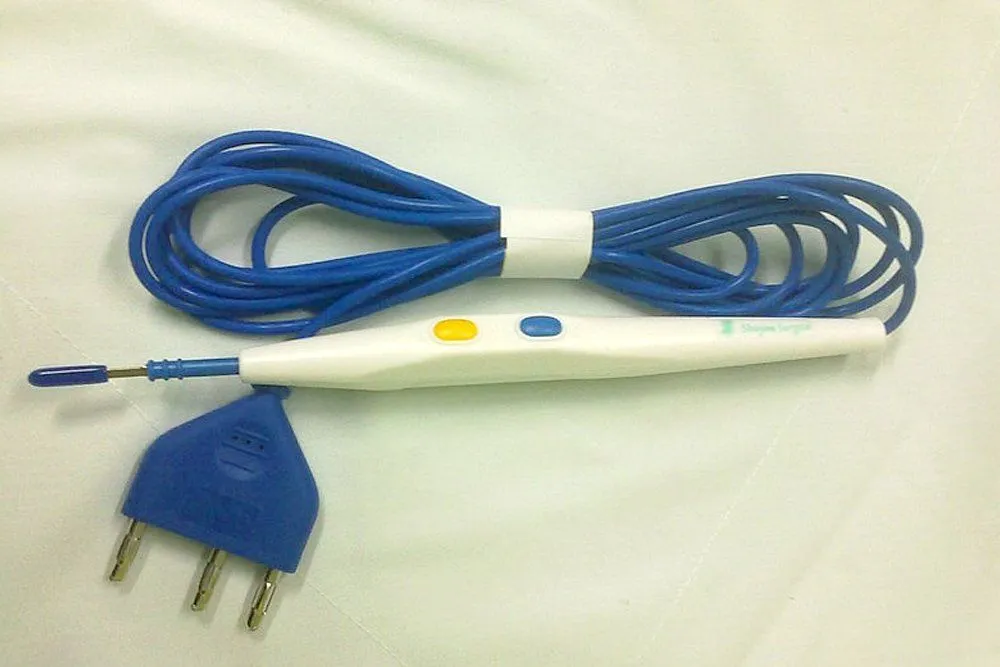
The purposeful burning of a small part of a wound helps temporarily seal the wound, which is good news for the injured individual. Surgeons still use electrical cauters to cauterize the cuts and incisions they make while performing surgical operations on patients.
Thus, using a red-hot blade (as seen in movies) is obviously not the best way to deal with a wound. It would be better to wrap it in cloth and apply pressure to stop the bleeding and then wait for proper medical attention, but that doesn’t look as cool as sticking a red-hot dagger on a wound after an epic battle!
Does Burning A Wound Actually Stop The Bleeding?
Up to a point, yes, and that is exactly why the trick keeps showing up on screen. Sealing tissue with heat has a proper name: it’s called cauterization (or simply cautery), from the Latin cauterizare, ‘to burn with a hot iron.’ Heat denatures the proteins in the wound, the tissue contracts and chars, and small bleeders close off. Physicians have leaned on this since antiquity. It’s described in the ancient Egyptian Edwin Smith Papyrus and the Hippocratic Corpus, and a heated lance or cautery knife pressed to a wound was a standard tool of war surgery for centuries.

Here’s the catch the movies skip over. Heat is only good at sealing tiny vessels. In a modern operating room, the electrically powered version of this (electrocautery) is used to coagulate small, oozing capillaries during surgery, not to plug a severed artery. A spurting major vessel pumps blood out faster and at higher pressure than a charred surface can ever seal. So while a hot blade might stop a shallow cut from weeping, it would do almost nothing for the kind of gushing arrow or gunshot wound a movie hero shrugs off seconds later.
If you ever face genuinely heavy bleeding, the actually-recommended first aid is far less cinematic. Per guidance from the U.S. Stop the Bleed program, you press hard on the wound with a clean cloth or your hands and hold that pressure for at least five minutes. For a limb that won’t stop bleeding despite pressure, a tourniquet placed above the wound can be life-saving. Burning the injury isn’t on the list, because the cure does real harm of its own.

Why Do People Pour Alcohol On Wounds In Movies?
The hot blade has a close cousin in the movie first-aid kit: the bottle of liquor splashed over a cut, usually while the hero grits their teeth. The logic is the same as with the blade. Alcohol kills microbes, so pouring it on a wound feels like it should disinfect it. There’s a kernel of truth here, because alcohol really is a genuine disinfectant. According to the CDC, ethyl and isopropyl alcohol kill bacteria by denaturing their proteins, the very same trick heat uses.

But the cowboy whiskey of the movies makes a poor antiseptic. The CDC notes that alcohol’s germ-killing power is best in the 60–90% range and drops off sharply once it’s diluted below 50%. Most spirits sit around 40% alcohol by volume, well under that threshold, so a slug of whiskey poured on a wound isn’t reliably killing much. Worse, alcohol doesn’t spare your own cells either. Laboratory studies of human skin cells show that ethanol reduces the viability of keratinocytes (the cells that rebuild the skin surface), so dousing an open wound can actually slow healing while it stings. That burning sensation isn’t the alcohol ‘working,’ it’s your living tissue being damaged. Modern wound-care advice is far gentler: rinse a wound with clean water or saline, not spirits.
Does Cauterizing A Wound Leave A Scar?
Almost always, yes. Cauterization works by deliberately burning tissue, and a burn is exactly the kind of injury that heals with a scar. The heat destroys cells well beyond the original cut, and the body patches that destroyed zone with tough, fibrous scar tissue rather than rebuilding the original skin. The more tissue you char, the bigger and more obvious the mark tends to be, which is why a crude red-hot blade leaves a worse scar than a surgeon’s precise electrocautery touch.
Scarring, though, is the least of the problems. As covered above, a cautery burn is a fresh wound layered on top of the old one, and burns are notoriously prone to infection. The heat may sterilize the surface for a moment, but it can’t keep airborne and skin-borne bacteria from settling on the raw burn afterward, and the burn itself hampers the immune response meant to fight them off. So a movie character who cauterizes a gash and bounces back in the next scene is, realistically, looking at a permanent scar at best and a serious infection at worst. It makes for great cinema, but it’s a long way from good medicine.
References (click to expand)
- Disinfection and Sterilization Guideline. CDC
- Other Sterilization Methods. CDC
- Lachiewicz, A. M., Hauck, C. G., Weber, D. J., Cairns, B. A., & van Duin, D. (2017, October 8). Bacterial Infections After Burn Injuries: Impact of Multidrug Resistance. Clinical Infectious Diseases. Oxford University Press (OUP).
- Chemical Disinfectants (Alcohol). Infection Control. CDC.
- Stop the Bleed. Uniformed Services University of the Health Sciences.
- Cytotoxicity and Wound Closure Evaluation in Skin Cell Lines after Treatment with Common Antiseptics for Clinical Use. NCBI / PMC.
- Electrosurgery. StatPearls. NCBI Bookshelf.