The Pantheon of Rome was rebuilt by Emperor Hadrian around AD 118-128 as a temple "to every god," on the site of an earlier one raised by Marcus Agrippa. It is made of Roman concrete, and its 43.3 m (142 ft) dome is still the largest unreinforced concrete dome in the world. There are no beams or columns holding it up, and an open hole at the top (the oculus) is its only window.
What impresses us the most? Well, the list is rather long… surprise parties, diamond jewelry, and Rolex watches, just to name a few. What about buildings? Particularly their design and the way they are built? Have you ever stood in a spectacular building and soaked it all in, wondering how something so stunning could ever be constructed?
Some of the world’s most famous monuments have been standing strong for the past 4,000 years! Perhaps the most famous and impressive structure in history is the Pantheon of Rome, which was built nearly 2,000 years ago. Whether you’ve visited Rome or not, the Pantheon holds many fascinating secrets that we want to share.
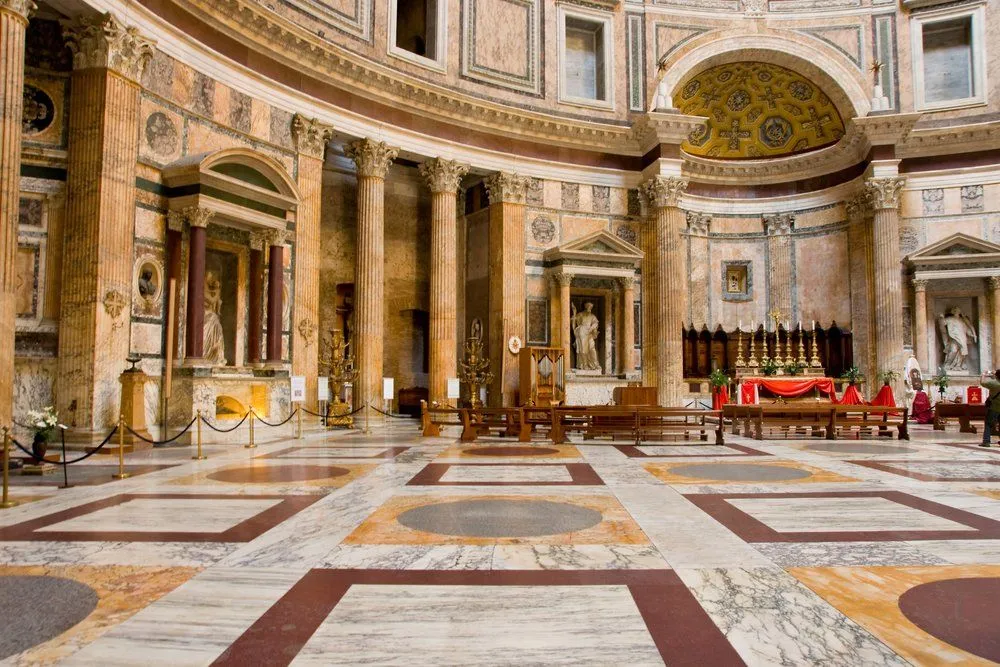
The Pantheon you can visit today was rebuilt by Emperor Hadrian around AD 118-128, on the spot where Marcus Agrippa had put up an earlier temple roughly 150 years before. Agrippa’s building burned down, but Hadrian kept his name carved across the front, which is why the giant inscription still reads “M·AGRIPPA·L·F·COS·TERTIVM·FECIT” (“Marcus Agrippa, son of Lucius, three times consul, built this”). The result is a mesmerizing structure that attracts hundreds of thousands of visitors each and every year.
The Pantheon has a domed roof, but unlike most other buildings with beams or support columns, there is no visible support structure for the huge dome! As soon as you enter the double doors, you see nothing but a vast empty space with walls adorned with statues, as well as graves of past emperors and famous artists of the time.
Why Does The Pantheon Have A Hole In Its Roof?
The word “Pantheon” actually means “To every God”, which may have something to do with the hole in the ceiling.
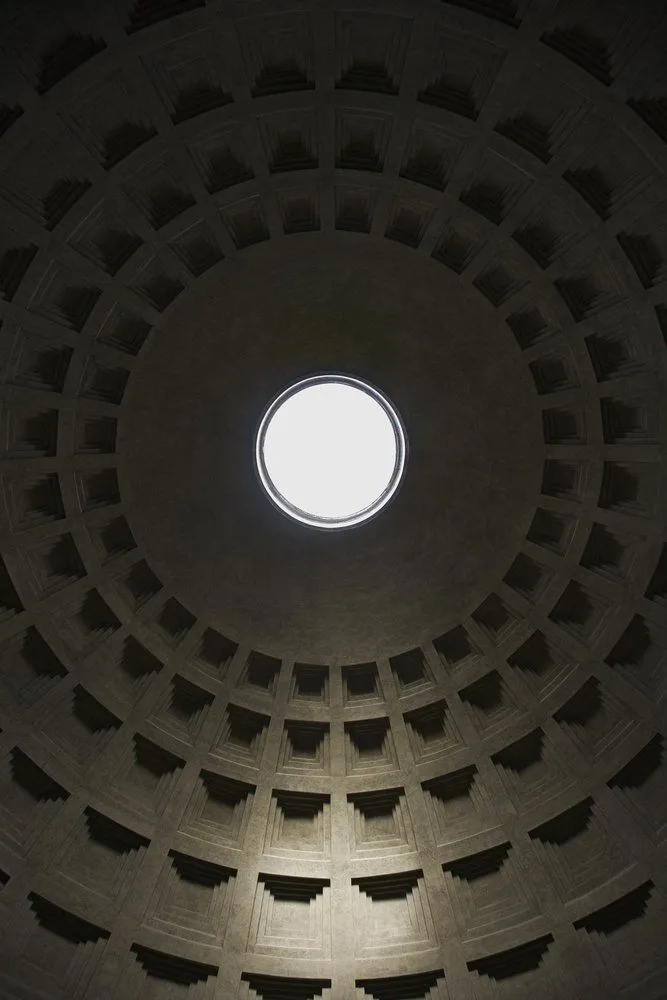
The dome has a large circular gap in the center called the “oculus,” about 8.2 m (27 ft) across. It isn’t covered by glass and is the only source of natural light in the Pantheon. What’s the purpose of this hole? Well, the Romans believed that this opening made them closer to the gods. The oculus acted as a bridge between heaven and earth, so to speak. It also lightens the heaviest, most stressed part of the dome (the crown), which helped the whole roof stay up.
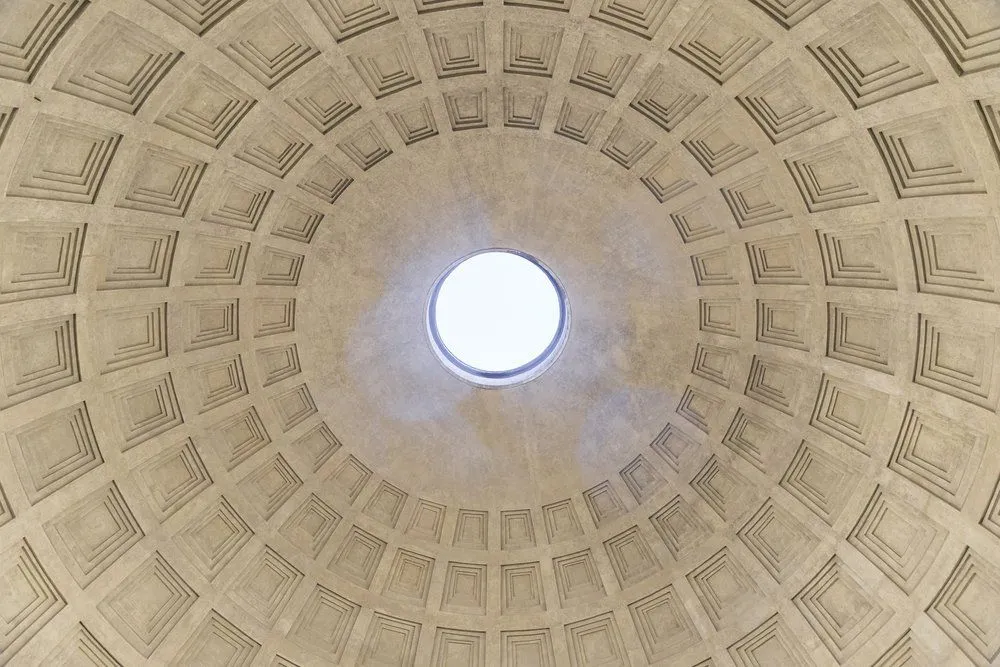
Also, new research suggests that the oculus acts as a sundial. When light enters the hole, it casts a sharp circle of light on the floor and on the walls, which moves as the sun moves. Amazing!
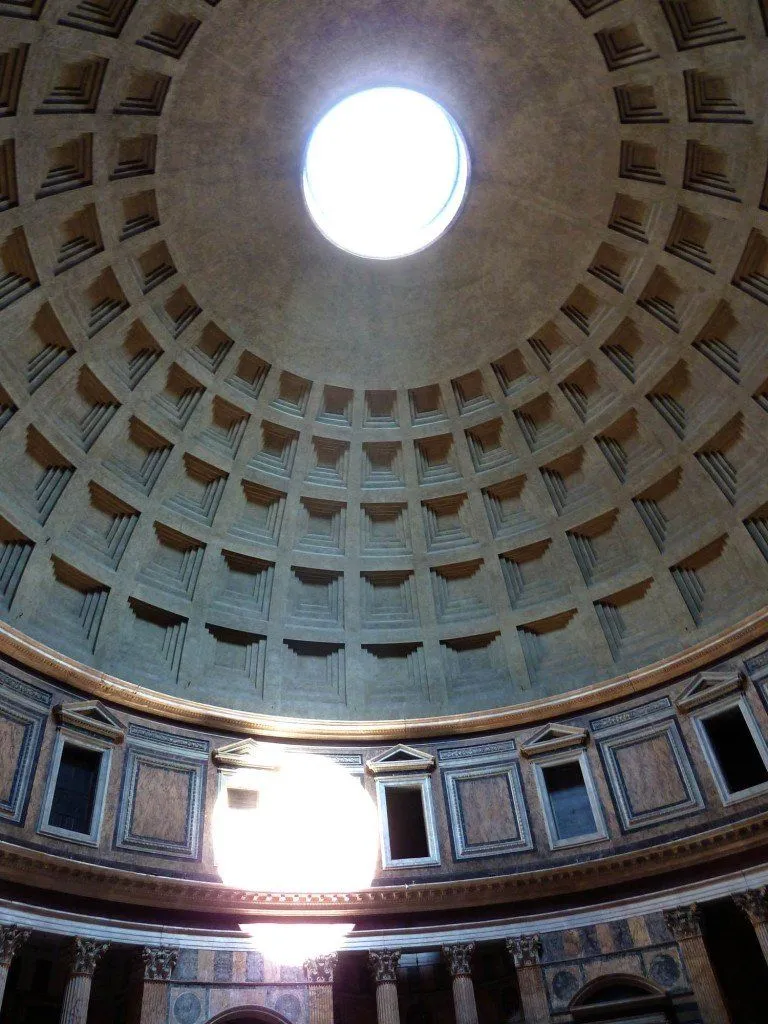
There are some special days where the Pantheon and the oculus put on quite a special show. On April 21st, for example, the noon sun shines straight through the oculus and lands on the doorway, lighting up the entrance for a few minutes. Thousands of years ago, as their Emperor walked into that golden light on April 21st, those Romans watching him may have felt as if the gods were shining down on him from heaven.
As it so happens, April 21st was celebrated as the founding day of Rome, so this sort of well-timed design bonus helped to solidify the Emperor’s power and divine grace.
How Did The Romans Build A Dome Without Reinforcement?
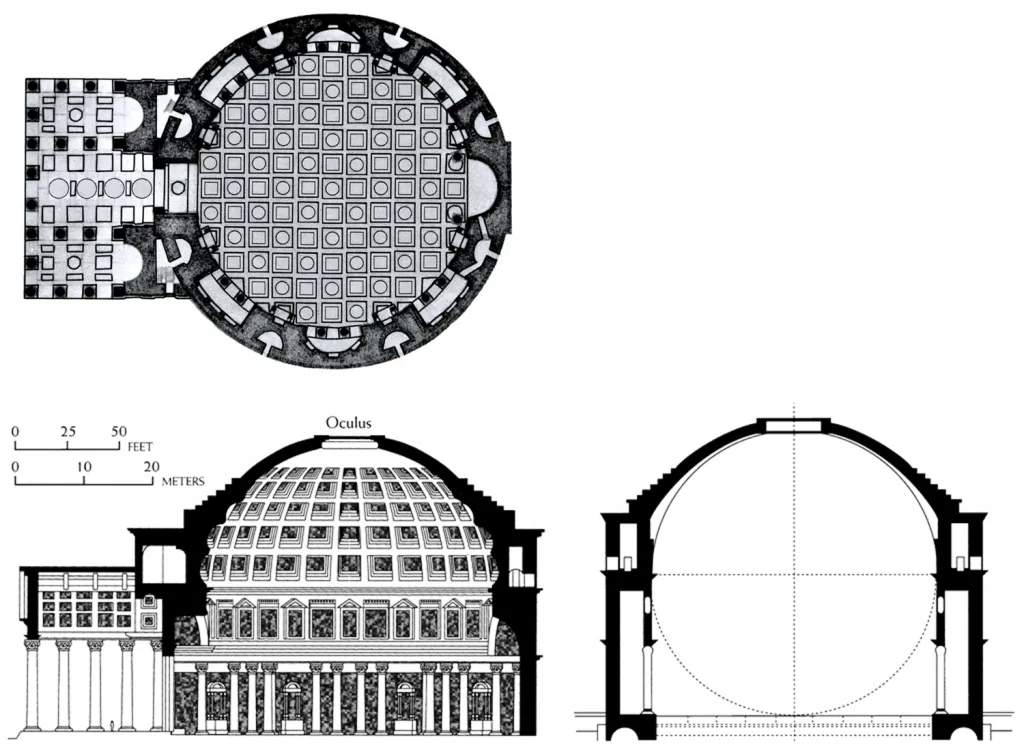
Unlike most ancient structures, the cylindrical hall or drum is designed in such a way that the center of the drum is at an equal distance from both the ceiling and the walls. In fact, the dome spans 43.3 m (142 ft) across, exactly the same as the height from the floor up to the oculus, so a perfect sphere would fit snugly inside. The Roman engineers were truly ingenious, particularly since the complex calculations that needed to be made for the Pantheon to stay standing couldn’t be performed by a calculator or tested on some computer simulation program!
So how does an unreinforced concrete dome this big avoid crushing itself? The Romans played a clever trick with weight. The walls and lower dome are packed with heavy stone like travertine and brick, but as the dome climbs toward the oculus they swapped in lighter and lighter aggregate, ending with feather-light tufa and volcanic pumice near the top. The dome also gets thinner as it rises, from about 6.4 m (21 ft) thick at the base to roughly 1.2 m (4 ft) at the rim of the oculus. Less weight up high means less force trying to push the dome outward, so it can hold its shape without a single steel bar.
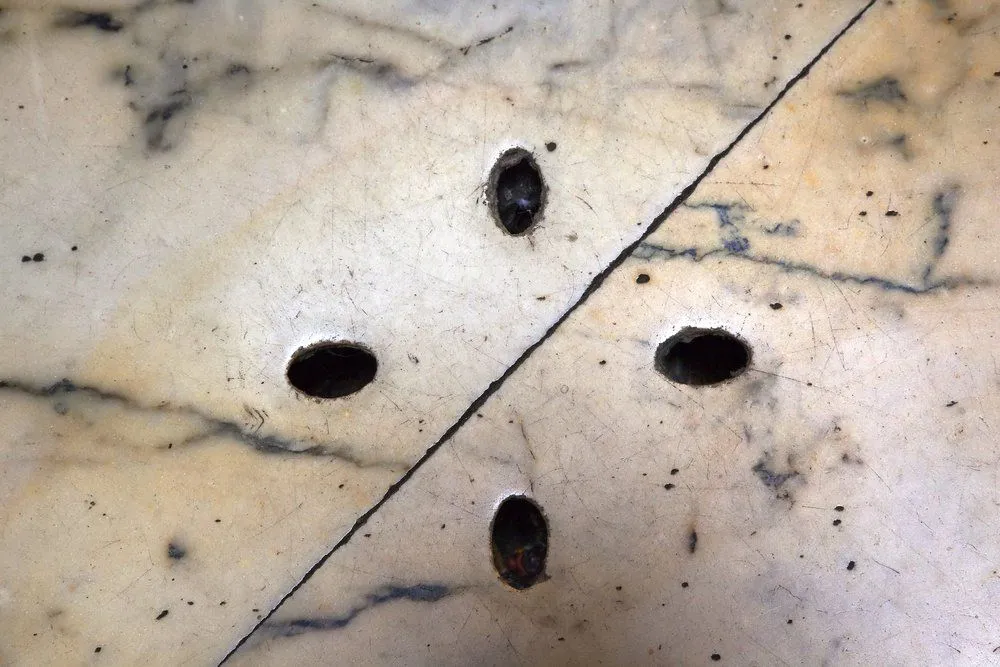
What happens if it rains? Won’t water flood the drum? Not to worry. The floor of the Pantheon is slightly slanted, and there are also holes drilled into the floor and walls that help to drain the drum after any heavy rainfall through the oculus.
Doesn’t it feel like the top of the dome isn’t in actual contact with the drum? The coffers on the wall create that effect. It almost feels like the dome could rotate!
What Made Roman Concrete So Durable?
Modern cement cures fast and hits great strength early on, then slowly cracks and crumbles over the decades. Roman concrete is almost the opposite. It set slowly and was not especially strong at first, yet it has kept going for nearly 2,000 years where modern concrete would have long since failed. The recipe was simple: the Romans mixed volcanic ash (a material called pozzolana) with lime and water, plus chunks of stone for the aggregate.
So what is its secret? Scientific analysis of Roman mortar has turned up crystals of a mineral called strätlingite, which help block tiny cracks from spreading through the structure. Then, in 2023, a team led by MIT found an even better answer. The little white lumps of lime scattered through the concrete, long dismissed as sloppy mixing, are actually a built-in repair kit. The Romans made the concrete by "hot mixing" quicklime straight into the wet pozzolana, which baked in these reactive lime clasts. When a crack later forms and rainwater seeps in, the water dissolves nearby lime, and it recrystallizes as fresh calcium carbonate that fills the gap. In other words, Roman concrete can heal itself.
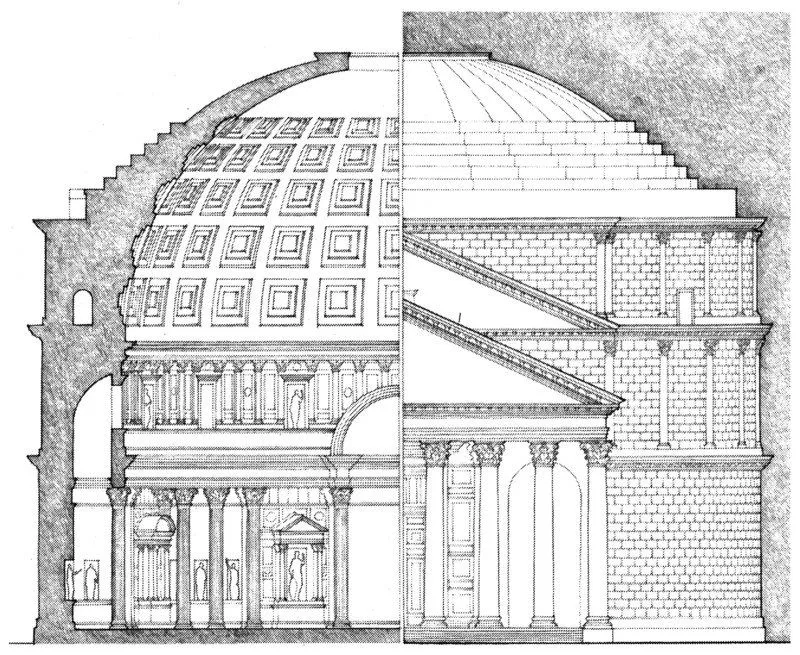
Want to know another secret? The dome of the Pantheon looks perfect from the inside, yet looks flattened from the outside! Once again, this isn’t magic, just brilliant Roman engineering, as the picture shows below.
How Has The Pantheon Inspired Modern Architecture?
Many structures throughout history have been built based on the inspirational design of the Pantheon, including St. Peter’s Basilica in Rome, Andrea Palladio’s Villa La Rotonda near Vicenza, the Panthéon in Paris, the rotunda of the National Gallery of Art in Washington, DC, and even the dome and rotunda Thomas Jefferson designed for the University of Virginia. Jefferson admired the Pantheon so much that he leaned on it for several of his own buildings.
The Pantheon is the best preserved monument of the Roman Empire, and its beautiful cap is the largest unreinforced concrete dome in the world!
Now that you know all of this fantastic history, it’s the perfect time to go on a little Roman holiday and witness the wonders of the Pantheon for yourself. Get going!
References (click to expand)
- Pantheon | Definition, History, & Facts. Encyclopaedia Britannica
- Riddle solved: Why was Roman concrete so durable? MIT News
- Hot mixing: Mechanistic insights into the durability of ancient Roman concrete. Science Advances
- Pantheon - World History Encyclopedia. World History Encyclopedia
- Pantheon, Rome - Wikipedia. Wikipedia