Table of Contents (click to expand)
Queuing theory is the mathematical study of waiting lines. Danish engineer Agner Krarup Erlang founded it in 1909 while sizing the phone network in Copenhagen. It predicts how long a line will be and how long you will wait, and it is used to design everything from call centers and hospitals to grocery checkouts.
Waiting in lines is one of the most resented activities we voluntarily participate in throughout our daily lives. By one widely cited estimate, Americans collectively spend a staggering 37 billion hours per year waiting in lines! Part of the reason why online shopping is so appealing is that it removes the slow drain on our time and patience that we suffer while standing in line.
This article is for the impatient, the relentless, the people cursing their luck, incessantly tapping their feet, denouncing their faith in the gods of fortune and justice for they only came to buy a toothbrush. Moreover, as the lines adjacent to them fly by, a pall of regret slides over: “In all the lines in the world, I had to choose this one.”
Don’t worry, we’ve got you. The following tips are guidelines lent by experts to help you choose a faster line the next time you go grocery shopping.
Queuing Theory
Queuing theory is the branch of mathematics that works out what happens in waiting lines. It sits at the crossroads of operations research, applied probability and, more recently, behavioral economics, and it is used to design and analyze any system where things arrive, wait, and get served.
And you can quite easily spot the resemblance between customers arriving at a counter and signals arriving at a device.
The theory was set in motion in 1909, when Agner Krarup Erlang, a young engineer at the Copenhagen Telephone Company, was trying to figure out how many phone lines the city’s switchboard actually needed. In his paper The Theory of Probabilities and Telephone Conversations, he showed that calls arriving at random follow a Poisson distribution, which let him calculate how many circuits were needed to keep callers from getting a busy signal. That single insight is the seed of the entire field.
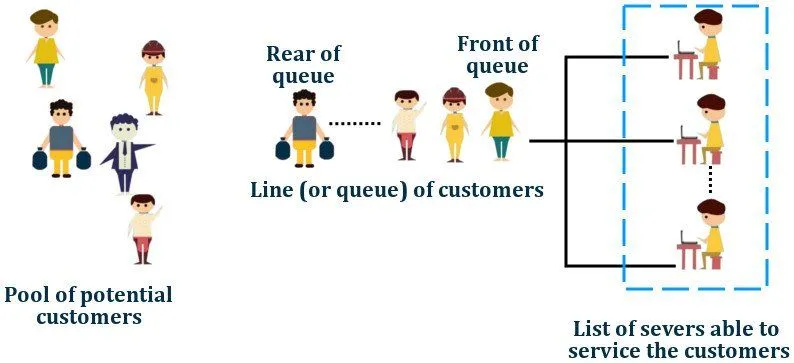 The theory earned its share of attention in pop science once we realized how directly its findings apply to everyday life. It showed the potential to ease, and in some cases altogether remove, one of the most universal small frustrations there is.
The ‘wait’ depends on the people served before you, the number of servers or counters in operation, and the amount of time required to serve each individual customer. The design of lines is also a huge factor. Whether there are parallel lines leading to different counters or a single line dividing into multiple counters can provide an approximate indication of the pace at which the line will move. Or, it could function on a first come-first serve basis or priority basis, such as in hospitals. All of these variables must be considered.
Queuing theorists wrapped all of this up in a few tidy results. The most famous is Little’s Law, proved by MIT professor John Little in 1961:
L = λ × W
Here L is the average number of people in the system, λ (lambda) is the average arrival rate (how many people join per minute), and W is the average time each person spends in the system. The law is almost suspiciously simple, yet it holds for nearly any stable queue, no matter how arrivals or service times are distributed. Say a coffee shop serves 2 customers a minute (λ = 2) and each customer is in and out in 5 minutes (W = 5). On average there will be L = 2 × 5 = 10 people in the shop at any moment. Speed up service so W drops to 3 minutes, and the crowd shrinks to 6.
To describe a particular line, theorists also use Kendall’s notation, written A/S/c, which the British statistician David Kendall introduced in 1953. A captures how arrivals are spaced out, S captures how long service takes, and c is the number of servers. A single grocery checkout with random arrivals and random scan times is an M/M/1 queue; open five tills fed by one snaking line and you have an M/M/5. Those labels are the shorthand engineers use to model everything from hospital beds to web servers.
Waiting can often get ugly. The idea of someone cutting your line and being served before you is undoubtedly abhorrent and infuriating. People tend to perceive such seemingly insignificant acts to be at extreme discord with their social morals. Messing around with their patience is deemed highly unscrupulous, they feel manipulated and judge the management to be bad.
A large queue can discourage customers and force them to not shop in the first place. A shorter line not only keeps them at peace, but also allows a shop to take money from customers as swiftly as possible. Companies now employ queuing experts to assist them in solving these unavoidable problems.
The act of pleasing customers is ridiculous, to the extent that some shops host live shows featuring pianists or guitarists to keep customers entertained. Other cheap options – and the most prevalent ones – are the installment of televisions.
The Tips To Find The Fastest Line
1. Go Left
Research suggests that most people are right-handed and tend to swerve right when challenged with choosing a line. In this way, a glut of people tend to aggregate to the right, so you should veer to the left to find a shorter line.

However, this doesn’t guarantee respite. Despite the longer length of the line on the right, it could move faster if it’s being served faster than the shorter line on the left. However, it seems that we tend to find psychological comfort in resorting to shorter lines.
A study has found that in a choice between faster, longer lines and shorter, slower lines, people tend to choose the latter almost every time!
2. Get In Line With Shoppers Who Have Full Carts
This sounds highly counterproductive, but queuing experts reason that cashiers become more dexterous and quicker in their parsing when they are facing a large number of products, as they want to get rid of them as quickly as possible.
3. Study The Customers And Their Carts
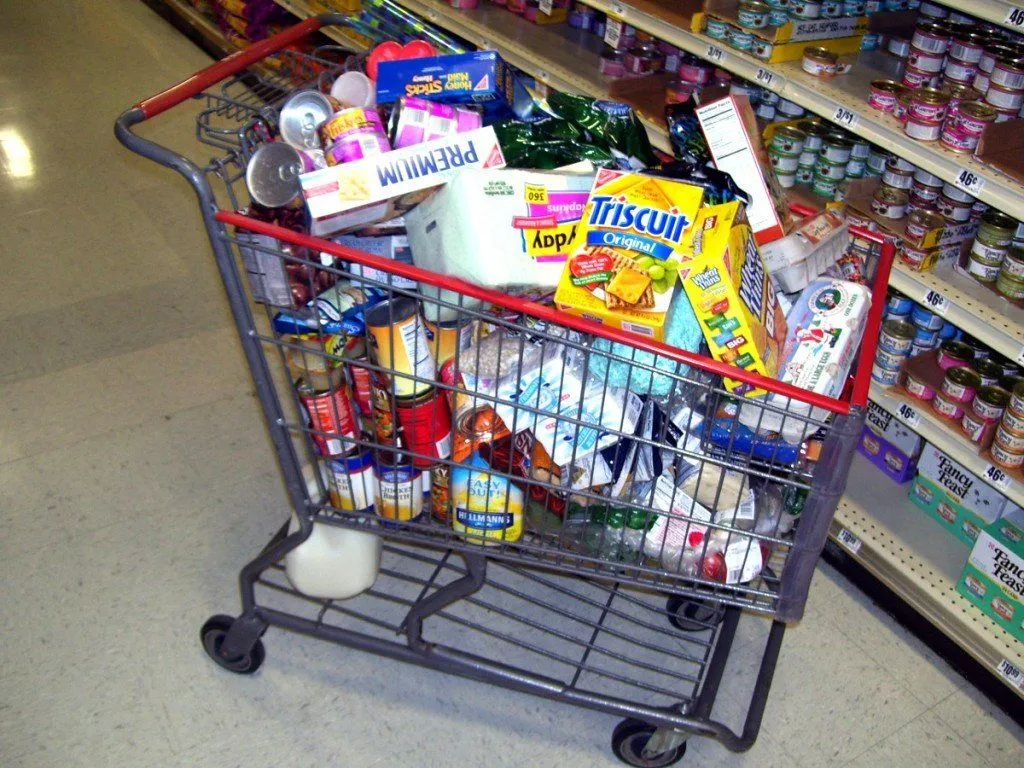
According to psychologist A.J. Marsden of Beacon College, the movement of a line doesn’t depend only on the number of people ahead of you, but also on their age and what they’re buying. For instance, older shoppers can take a little longer at checkout, sometimes fumbling with bags or with newer card and contactless payment systems.
Also, what they are buying is equally important. Two packets of the same brand of chips will take a shorter time to pass than two totally different items, particularly vegetables, as they typically cannot be scanned. Self-service checkout is also highly recommended to check out faster, at the expense of human contact.
4. Serpentine Lines
Research has continually shown that the line variant that is the most efficient and fair is a serpentine line. Like the name suggests, people are asked to stand in one long single precarious line. However, there are multiple counters and servers.
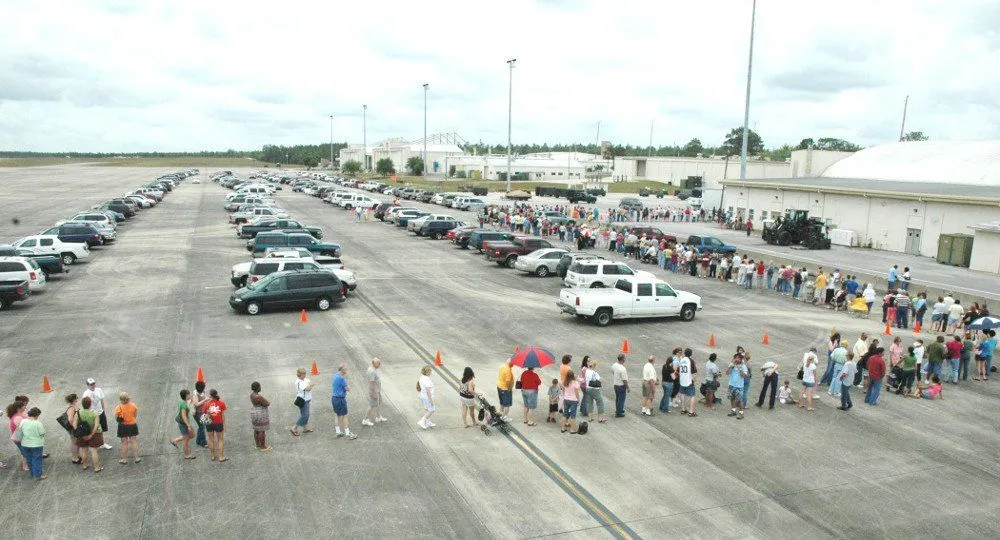
The person at the front goes to the first counter, the second to the second and so on, depending on the number of counters. The design leaves no room for indecision or contemplation, yet people still prefer shorter parallel lines, due to the already mentioned psychological relief.
Also, a serpentine line requires larger stores that can contain larger, winding lines.
5. Avoid Obstructions
Experts suggest that waiting time is perceived to be stretched when the view between us and the cashier is obstructed by any object, such as a pillar or shelves.
Again, unreasonable psychological comfort is at work here. Researchers reason that witnessing the cashier do his or her work and thinning the line soothes our frustration. An obstruction denies this feedback and adds to our agitation.
It’s All In Your Head!
Other miscellaneous tips are to remove hangers from clothes or present your products with the bar code facing the cashier to save time. Or, there’s the good ol’ ‘let’s-split’ strategy, where each family member or friend is assigned to different lines.
However, the point I want to stress here is that the apprehension surrounding waiting, to a small extent, is all in your head. Studies have found that, on average, people overestimate how long they waited in a given line by as much as 36%.
Technological advancements have supplemented this by warping our sense of patience and elapsed time. As the Swedish economist Staffan Linder argued in The Harried Leisure Class, the more affluent a society becomes, the more valuable its time feels, and the less patience it has to spare. Think about it, when was the last time you waited while a Facebook video buffered and didn’t lose your nerves? Or rolled your eyes when you found out that the video your friend tagged you in lasts two minutes and ten seconds.
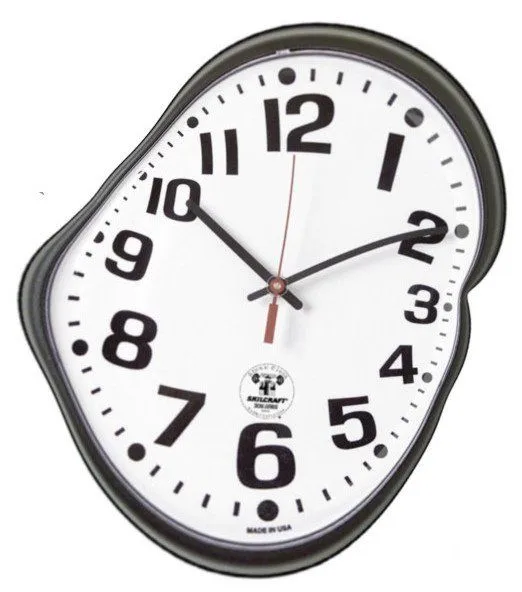
Compare this to the era of flip phones, now a certain relic, when tapping the ‘globe’ icon and patiently waiting for the browser to load took fifteen minutes itself!
Ironically, distraction is a handy tool when it comes to mollifying the waiting process. Distraction has been shown to accelerate the flow of time, or has at least proven to make it less conspicuous. Idleness or painstaking boredom evaporates when we are distracted, either by taking the road less traveled and talking to people or reading a book. Or, well, you could simply, scroll.
References (click to expand)
- Queuing theory. Encyclopaedia Britannica
- History of Queueing Theory. University of Windsor
- Notes on Little’s Law (L = λW). Columbia University
- Humans Are Not Machines: The Behavioral Impact of Queueing Design on Service Time. Syracuse University
- Queuing Theory. North Carolina A&T State University
- Queueing theory. Wikipedia