Table of Contents (click to expand)
The backfire effect is the idea that correcting a false belief can sometimes strengthen it instead of weakening it. It was first reported by Nyhan and Reifler in 2010, but large follow-up studies have struggled to reproduce it, so researchers now consider it rare. It is closely related to, but not the same as, confirmation bias.
Backfire Effect
The backfire effect is an idea from psychology. It describes a situation where being shown facts that contradict an opinion, instead of changing that opinion, ends up strengthening it. The term was coined by political scientists Brendan Nyhan and Jason Reifler in a 2010 study, in which correcting a political misperception sometimes made people cling to it harder. It is worth flagging up front that later research has shown this is far rarer than that original study suggested, and we will come back to that. For now, picture how the effect is supposed to work.
When you were pushed into this world, you were bombarded with more than 8 billion people, an estimated 8.7 million other species, 510.1 million square kilometers of surface to roam, quite a few years ahead of you, the history of a million years behind you, and a whole lot more to take in. So you did the most sensible thing you could think of at the time… You cried and yelled!
However, as the years went by, you realized that there were other ways to deal with information overload.

You started building the world in your head. You observed things and people around you, you tried to understand them, and you put them all together in your head according to your perception of it all. Now, everything new that you learn must comply with this model in your head. Otherwise, your brain will go to great lengths to defend itself against being overwhelmed.
What Is The Backfire Effect?
The backfire effect describes a striking failure mode of the human mind. When it kicks in, being confronted with information and facts that contradict something you believe doesn’t change your view; it does the opposite. You walk away believing your original opinion even more vigorously, despite having just seen hard proof against it. The word “backfire” captures the irony: the correction misfires and reinforces the very belief it was meant to dismantle. As we’ll see, though, this dramatic reversal turns out to be the exception rather than the rule.
For example, remember that classmate you formed an opinion about too fast? And even though everything they did suggested otherwise, you didn’t want to believe you were wrong about them, so you convinced yourself that you weren’t wrong. You found reasons, dwelt on minor things, and ignored the facts that contradicted your opinion. All of this struggle just so your opinion didn’t have to change. The huge amount of thought you gave it only strengthened your original opinion about your classmate.
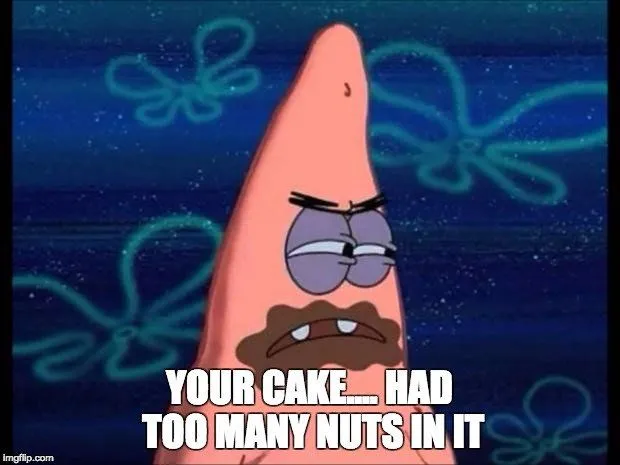
In this process, you leaned on something called confirmation bias. Just as the name suggests, favoring the facts that fit your opinion and brushing aside those that don’t, so you only ever ‘confirm your bias’, is what is known as confirmation bias. It is worth being clear that the two are not the same thing. Confirmation bias is the everyday, well-documented habit of filtering evidence to favor what we already think. The backfire effect is a much stronger and far less common claim: that a correction can actively push a belief in the wrong direction. Confirmation bias is the soil the backfire effect was thought to grow in, but the two ideas stand on very different amounts of evidence.
Assuming you hadn’t told anyone else about what you thought of this classmate, there is no question of being judged or labelled ‘wrong’… so why did you do it? Why did you make all this effort to defend an opinion that no one knew about except you?
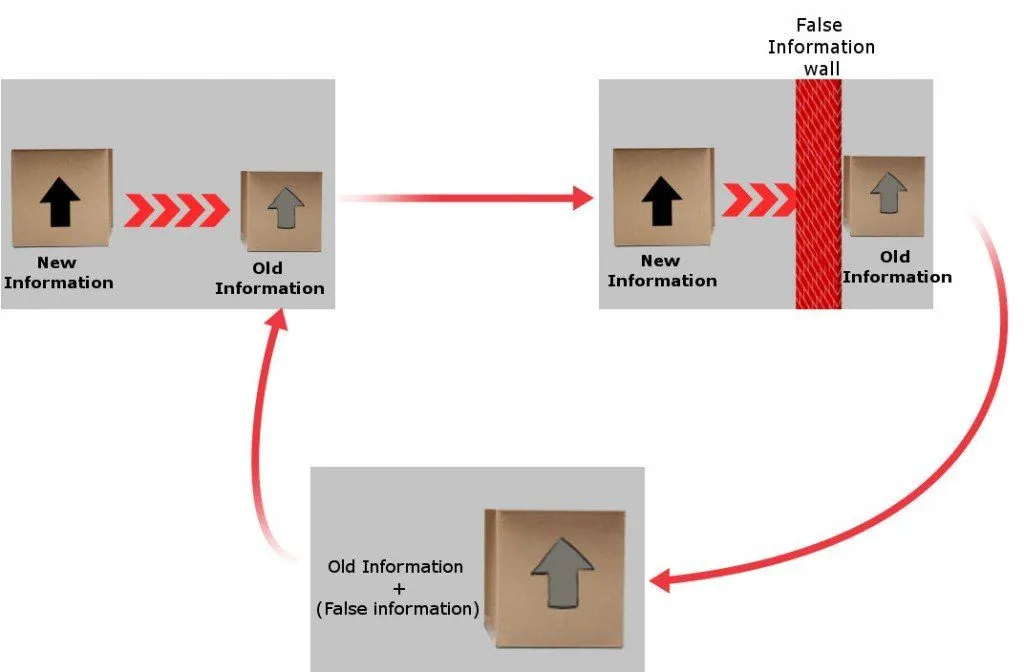
It’s helpful to picture all your beliefs and perceptions as the construction plans of a building. It is a building that you constructed through a great deal of effort. Any new contradicting information is a potential threat to your building, and that is a threat you cannot afford, because you’d have to build that section all over again. Instead, you build defenses around it. These defenses are made of weak reasoning supplied to you by confirmation bias. Each time there is a new threat, you have to make more elaborate defense structures. Not only do these defense structures keep out the threats, but also increase the value of your work each time. And with each time, your confirmation bias (which feeds on the value), gets stronger and the reasoning supplied by it is weaker. At the end of it, you would end up having a very weak structure with a huge personal value, due to all the effort it took you to construct.
When the first threat came your building’s way, what if you wanted to defend it, but didn’t have any material, because you didn’t want to rely on confirmation bias? You’d be forced to watch as your building was destroyed, forcing you to build another one all over again. It could be done with strong material this time, however, as it’s not supplied to you through confirmation bias. You’d have to do this every time, but in the long run, it would probably take the same effort as building defense structure after defense structure. Besides, you’d probably get far fewer threats, seeing as your building would be so strong.
Scientific ideas are routinely attacked when they first appear, and that pushback is part of how they get tested. Einstein’s theory of relativity, which broke sharply from Newtonian physics, drew years of resistance, and some critics never came around. The most famous example is a 1931 pamphlet titled One Hundred Authors Against Einstein. Einstein’s reported reply has become legendary: if he were really wrong, it would not take a hundred authors to show it, just one would be enough. (Nikola Tesla, incidentally, dismissed relativity too, though his public attacks came in the 1930s, long after the theory was first published.) People who are deeply invested in their existing view often dig in rather than update, and a few of Einstein’s critics ran experiments and published papers trying to prove him wrong. Fortunately, strong evidence tends to win out over a stubborn bias eventually. Here we are, more than a century later, still mining his theories and finding there is always room for radical changes in thinking.

Does The Backfire Effect Really Happen?
Here is the twist the original story did not have. When Nyhan and Reifler described the backfire effect in 2010, the finding was striking enough that it spread far beyond psychology, into journalism, marketing, and everyday advice about how to argue. The trouble is that it has been remarkably hard to reproduce.
In 2019, political scientists Thomas Wood and Ethan Porter ran five experiments with more than 10,000 participants across 52 contested issues, the exact kind of polarizing topics where backfire was supposed to appear. They found that corrections overwhelmingly nudged people toward the accurate information, regardless of political leaning, and they could not reliably trigger a single backfire. A wave of later studies through the early 2020s reached the same conclusion: direct replications of earlier "backfire" results repeatedly failed, and reviews of the literature concluded that corrections, on the whole, do not strengthen the false belief they target.
So the modern, evidence-based picture is more reassuring than the original headline. The backfire effect is real in the narrow sense that it can occasionally show up, usually when a correction hits a belief tied closely to someone’s identity or worldview, but it is rare and far from automatic. For most people on most topics, being shown good evidence makes them more accurate, not less. That matters: it means fact-checking and honest correction are worth doing, because they usually work.
How Can We Use The Backfire Effect For Our Benefit?
Even if a full-blown backfire is rare, the milder reflex behind it, defending a belief instead of weighing the evidence against it, is something we all do. We can’t switch that reflex off entirely, but we can get better at noticing it. Catching yourself straining your logic only to preserve a belief is the first step to keeping your mind open, and an open mind lets you change course and learn much faster.
Whole industries lean on this family of biases. Advertisements often work by echoing what you already believe, so the message slides past your defenses and ties itself to the product. Where you live, the time of day you see the ad, your culture, your politics, all of it is used to guess your existing leanings and play to them rather than challenge them.
Arguments can be approached in better ways when you are aware of all this. Keep your own mind open first. And while the evidence says that simply stating the facts usually does not backfire, dumping a pile of contradicting facts on someone rarely changes their mind either. Often a more effective move is to ask questions that lead them to examine what they believe, rather than trying to win by sheer weight of facts.

The Internet revolution has provided the ability to argue with people across the globe, even if you’ve never met them. Heated arguments you might have witnessed (or participated in) on the Internet between two people going back and forth about a political opinion or a very emotional issue will usually end in very raised tempers and no conclusions. This is because each side is really just strengthening the other side’s original opinion.
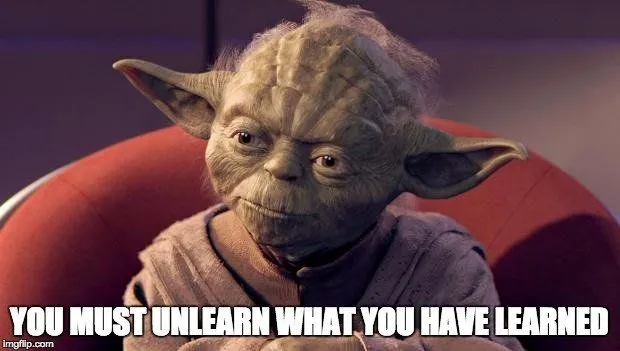
In my opinion, it is worth knowing about the backfire effect, partly for what it warns us about and partly for what the newer research reassures us of. The honest takeaway is hopeful: facts mostly do land, and we grow fastest when we treat our ideas about the world as flexible rather than being too certain our own beliefs are superior. In the very wise words of Master Yoda…
References (click to expand)
- When Corrections Fail: The Persistence of Political Misperceptions - Nyhan & Reifler, Political Behavior (2010).
- The Elusive Backfire Effect: Mass Attitudes’ Steadfast Factual Adherence - Wood & Porter, Political Behavior (2019).
- Examining the Replicability of Backfire Effects After Standalone Corrections - Cognitive Research: Principles and Implications (2023). NCBI/PMC.
- More Accurate, But No Less Polarized - Nyhan et al. (Dartmouth).