Yes, our understanding of history can change, even when the underlying facts do not. As new evidence surfaces and changing times bring fresh perspectives, the same set of facts can yield different interpretations. This ongoing reinterpretation, called historical revisionism, makes history a dynamic process rather than a stagnant one.
Many of us have the tendency to consider history to be a standard and stagnant set of facts etched in the past, and that because there is evidence for the same, and that because it was so, it will always be so.
However, history, as it turns out, is not unequivocally and internally consistent. History is like that one friend who always changes their story, and while there may be some kernel of truth in what they say, it is buried deep inside and must be unearthed with time and effort.
So, which came first?
History as we know it today or the idea that there’s a linear progression of events through time that is accessible and capable of being revealed to us?
We can certainly see how history has changed over time, but how does that materialize in its study?
What Is Historical Revisionism?
Historical revisionism is the phenomenon that seeks to define the constant interaction between historical facts and how they are interpreted by the historians of a certain age. (It should not be confused with negationism, the deliberate, often politically driven denial or distortion of well-established events, which historians treat as a separate and illegitimate practice.) In simple terms, the people who study history and interpret it are often using a half-picture presented by the material that has survived the ravages of time to construct what could have been the full picture with their limited knowledge and imagination.
It acknowledges the fact that history is not mere facts, but rather a process where the present tries to decipher the past. Within this process, there are sub-levels of integration and disintegration of perceived events and the various factors that may have caused them or played a part in their occurrence. It even allows for contradictory interpretations of the same incidents due to ambiguity in available documentary or archaeological evidence.
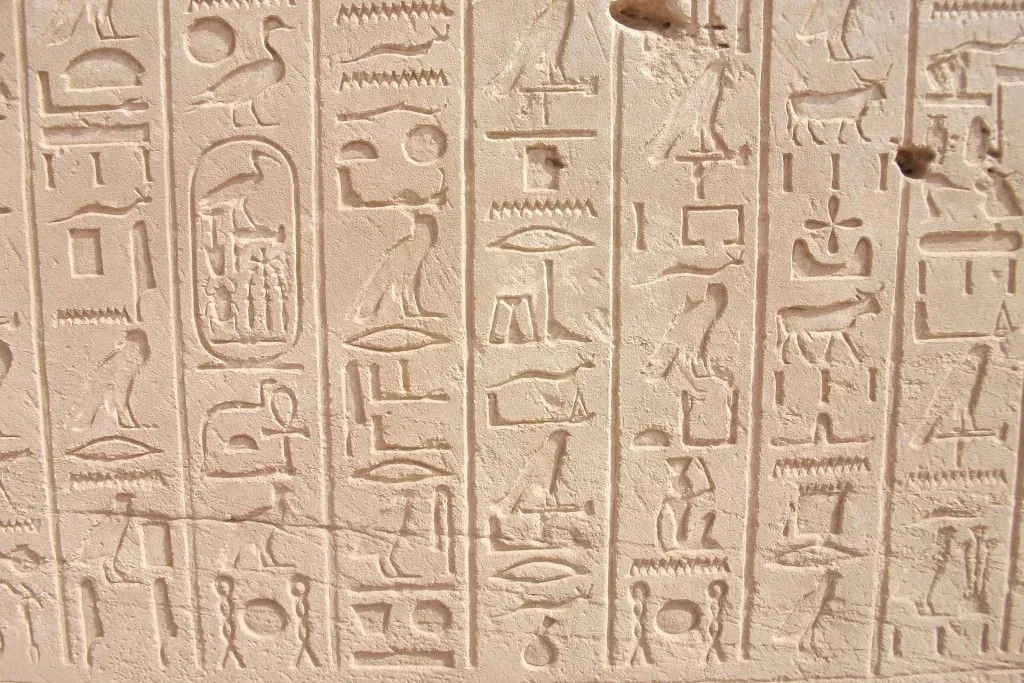
For example, until the finding of the Rosetta Stone (a stele found in 1799 that carries the same decree in three scripts, Egyptian hieroglyphic, Egyptian Demotic, and Ancient Greek), Egyptian hieroglyphics were largely undeciphered and therefore, overlooked. Because scholars could already read the Greek, the parallel text gave them a key to the long-silent hieroglyphs, which Jean-François Champollion finally cracked in 1822. The sudden access to documentary evidence from the Egyptians themselves allowed for the nature of Ancient Egypt to be studied.
The Internet age may have claimed the phrase ‘revisionist history’ to shame those who manipulate certain aspects and events in history to serve their own agenda, but its origins are intellectual inquiry into the human condition of those who did not live in the same social, political, cultural, economic and technological setups as we do.
However, it is not just the Internet that uses it as a charge against people. Mao Zedong famously branded Nikita Khrushchev a revisionist for his de-Stalinization campaign of the late 1950s and early 1960s, a charge that helped fuel the Sino-Soviet split; Stalin, in turn, much like the regime in George Orwell’s magnum opus 1984, was guilty of scrubbing Soviet encyclopedias and textbooks of politicians who had fallen out of favor.
Why Is Revisionist History Needed?
Just because the past has already taken place does not mean that it is definite. We may have some limited sources to peek into the lives of those who lived before us (some texts survived; however, they usually did not document the daily lives of ordinary citizens, and failed to give the contextual knowledge necessary to reconstruct past societies, which would have been obvious to those who lived in them, but not to us), but these are by no means sufficient. It is therefore important that with every discovery of any new piece of evidence, the existing beliefs be reevaluated, so as to make logical and informed sense of the past.
Since historians are also limited by their own perceptions of what has been, given the social, cultural, political and economic inclinations and ideologies they subscribe to that may intentionally or unintentionally subject their ideas to some bias, a diversified study of the past allows for potentially greater understanding of the various facets of which it consists.
So, while a historian in America during the Cold War would have perceived the Russian Revolution, and before that, the historical significance of Marx and Engels’ rise in a particular light, specifically one that could attribute the rising frustrations of the workers to the subsequent revolution, a historian in current times would probably give the revolution more credit, while simultaneously being able to comment on the disappointment associated with the Communist experiment.
Why Is Revisionism Relevant?
It is often the version of history that is preferred by those presently and previously in power that is handed down to us. Certain facts are left undocumented, omitted, not brought to the front stage or revised to suit the narratives of the people dictating them (it is not in vain that they say that “history is written by the victors”). Even changing the names of places is an attempt to revise the origins of its settlers and their history. Because of revisionism, the true history of many events has been forgotten. When we forget history, however, we risk repeating earlier mistakes.
There is also a certain omnipotence surrounding revisionism. We see all over the world how narratives are built and destroyed. Historical revisionism allows us to be aware of the fact that knowledge of the past is being manipulated in order to shape opinions and obtain considerations that may be politically significant and unapparent (the denial of genocides by those who are considered to be the perpetrators of those genocides, for example, allows us to see how history is revised to absolve a guilty party of culpability).
So Who Actually Writes History, The Winners Or The Losers?
You have probably heard the line that history is written by the victors. It is usually pinned on Winston Churchill, though there is no documented record of him ever saying it, and the true source has never been established. The sentiment still captures something real. The people who win wars and hold power tend to control the archives, the monuments and the schoolbooks, so their account of events is the one most likely to be copied out, taught and remembered.

Yet the winners do not always get the last word. The American Civil War is the classic counter-example. The Confederacy lost on the battlefield, but in the decades after 1865 former Confederates built a comforting myth known as the Lost Cause, which recast secession as a noble stand and quietly pushed slavery out of the story. Through memorial groups, monuments and, above all, textbooks, the defeated side shaped how much of the country remembered the war for generations. Historians today regard the Lost Cause as exactly that, a myth, yet it shows that a losing side with enough determination can rewrite the record too.
So who really writes history? Less and less is it the generals. Modern history is assembled by professional historians working from archives, physical evidence and the testimony of ordinary people whose voices were once left out, and correcting the winners' tidy version is a large part of what revisionism is for.
How Does Our Picture Of The Past Actually Get Rewritten?
If the raw facts of the past are fixed, how does our picture of them keep shifting? Three forces usually do the work.
The first is new evidence. A buried settlement is excavated, a sealed archive is opened, or a stone like the Rosetta Stone turns up, and suddenly a whole civilization can speak for itself. Every fresh document or artifact hands historians more of the picture to reason from.

The second is new tools, and here science has been the great disruptor. In 1949 the chemist Willard Libby published a way to date once-living material by measuring its carbon-14, work that earned him the 1960 Nobel Prize in Chemistry. Before this radiocarbon revolution, archaeologists mostly arranged their finds relative to one another and estimated ages by eye. Radiocarbon gave them real numbers, and the numbers sometimes overturned settled timelines. Libby's own dating, for instance, indicated that the last North American ice age ended roughly 10,000 years ago rather than the 25,000 years geologists had assumed. Nature keeps other clocks too, such as the annual growth rings a tree lays down, giving scientists more ways to fix an age.
The third is new questions. As we saw earlier, each generation interrogates the same evidence with different concerns, so a record that once looked complete gets read again and found wanting. Put together, these three forces mean the past is never truly finished. It is a story we keep re-reading with sharper eyes.
A Final Word
The conclusions that can be derived from open-ended information are often painted by the person making them, which is why even though historical revisionism is a tool for achieving academic understanding, it may also be driven by ulterior motives. Revisionism encourages a new way of looking at the past and helps us gain a more accurate understanding of how events occurred and why they happened, but it can be a double-edged sword of which we all must be aware.
References (click to expand)
- ONLINE FEATURE ARTICLE: Historical Revisionism: Concept and Practice - www.researchgate.net
- Shapira, A. (2001, June). The strategies of historical revisionism. Journal of Israeli History. Informa UK Limited.
- Gray, R. (1994). Class, politics and historical ‘revisionism’. Social History, 19(2), 209-220.
- Howe, S. (2000). The Politics of Historical 'Revisionism': Comparing Ireland and Israel/Palestine. Past & Present, 168, 227-253. JSTOR.
- Moradiellos, E. (2008, December 1). Critical historical revision and political revisionism. International Journal of Iberian Studies. Intellect.
- The History of 'History is Written by the Victors' - History News Network
- The Lost Cause: Definition and Origins - American Battlefield Trust
- The Lost Cause - Encyclopedia Virginia
- Willard Frank Libby - UC Berkeley College of Chemistry
- Discovery of Radiocarbon Dating - American Chemical Society National Historic Chemical Landmark