Table of Contents (click to expand)
Dancing mania saw crowds in medieval Europe dance uncontrollably for days, as in Aachen in 1374 and Strasbourg in 1518. The precise cause is unknown, but most historians now favor stress-induced mass psychogenic illness, rooted in social and religious anxiety, over the older idea of ergot poisoning.
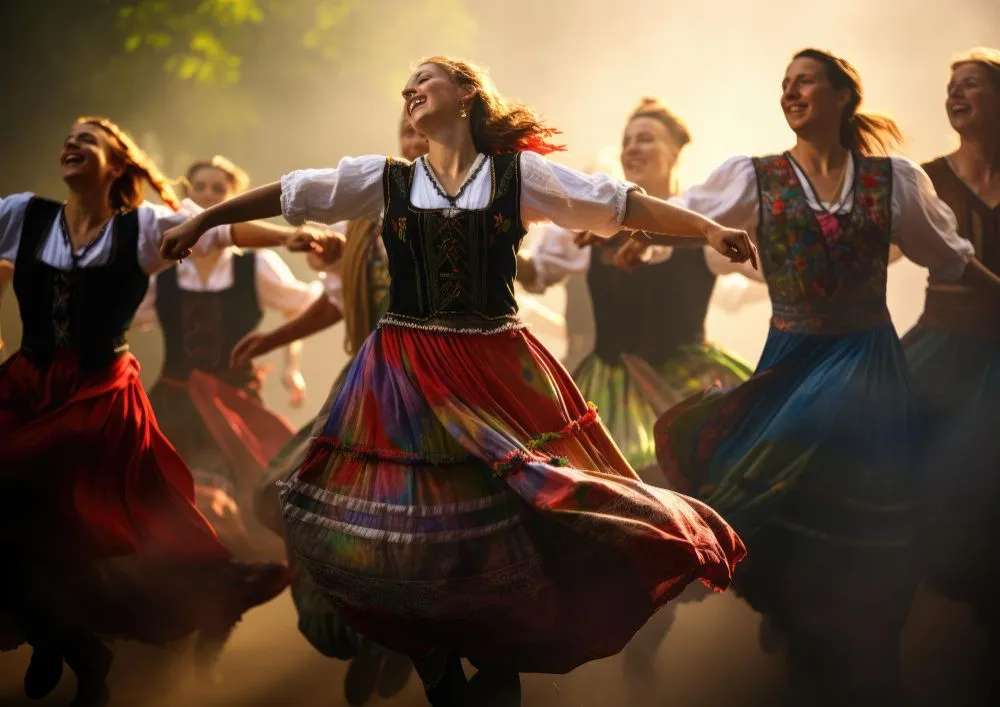
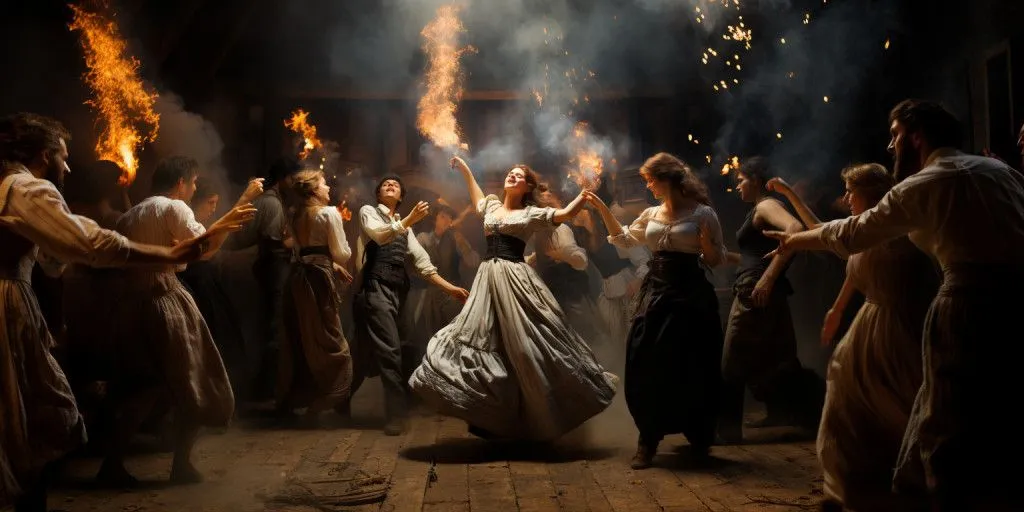
Amid the flickering torchlight of a medieval village square, a scene of dance hysteria unfolds, captivating the senses and defying rationality. The night air is thick with tension, and a palpable sense of otherworldly fervor pervades the gathering. A diverse group of villagers has congregated, their faces etched with a mix of awe, fear, and exhilaration.
Men, women, and children are all swept up in a mesmerizing dance. They wear tattered and mud-splattered clothes. Some clutch rosary beads, while others raise their hands towards the heavens, as though seeking divine intervention.
The phenomenon of “dancing mania” or the “dancing plague” (also called choreomania, St. John’s Dance, and historically St. Vitus’ Dance) that swept across Europe during the Middle Ages, particularly during the 14th to 17th centuries, remains a subject of historical fascination and debate. These episodes of mass hysteria, where individuals would compulsively dance for hours or days without apparent control, continue to captivate the imagination.
Two outbreaks stand out above the rest. One of the first major episodes erupted in Aachen, in the Holy Roman Empire (modern-day Germany), in 1374, before spreading along the Rhine to towns across what is now Germany, Belgium, and the Netherlands. The most famous of all struck Strasbourg in the summer of 1518, when a woman remembered as Frau Troffea began dancing in the street and could not stop. Within a month, as many as 400 people had joined her, and contemporary chronicles claimed that some danced until they collapsed and even died of exhaustion before the outbreak faded after about two months.
While there isn’t a single definitive explanation for these occurrences, several factors likely contributed to these episodes, deeply rooted in the social, religious, environmental and psychological landscape of the time.
Social And Religious Stress
The Middle Ages were a tumultuous period characterized by significant social and religious stress. Plagues, famines, and wars were widespread, causing immense suffering and uncertainty. People, grappling with the harsh realities of their era, often turned to religion for solace. In this context, dancing could be viewed as a form of worship or penance.
During times of crisis, communal rituals, including dance, offered a means of coping with the profound anxieties of the era. Dancing became a way to seek solace, forgiveness, and connection with the divine. It was a physical manifestation of collective grief and a desperate plea for divine intervention.
Gender, class, and age may have also played a role in the dynamics of this dancing mania. Some outbreaks were predominantly among young women, while others involved people from various demographics. The specific demographic composition of the affected populations could have influenced the dynamics and interpretation of dancing mania. It’s essential to consider how societal norms and expectations shaped the experiences of those involved, as well as those who observed and recorded this phenomenon.
Some outbreaks of dancing mania were intimately linked to religious fervor. In the medieval mindset, intense physical experiences were often seen as a means of seeking divine favor or purging one’s sins. Participants may have genuinely believed that their frenzied dancing was a way to achieve spiritual purification and find redemption.
Dancing fervently was believed to be a form of devotion that could expel evil spirits and invite divine intervention. Conversely, it could be a sign of demonic possession or evil, eliciting a mass frenzy that may have exacerbated the conditions.
Mass Hysteria
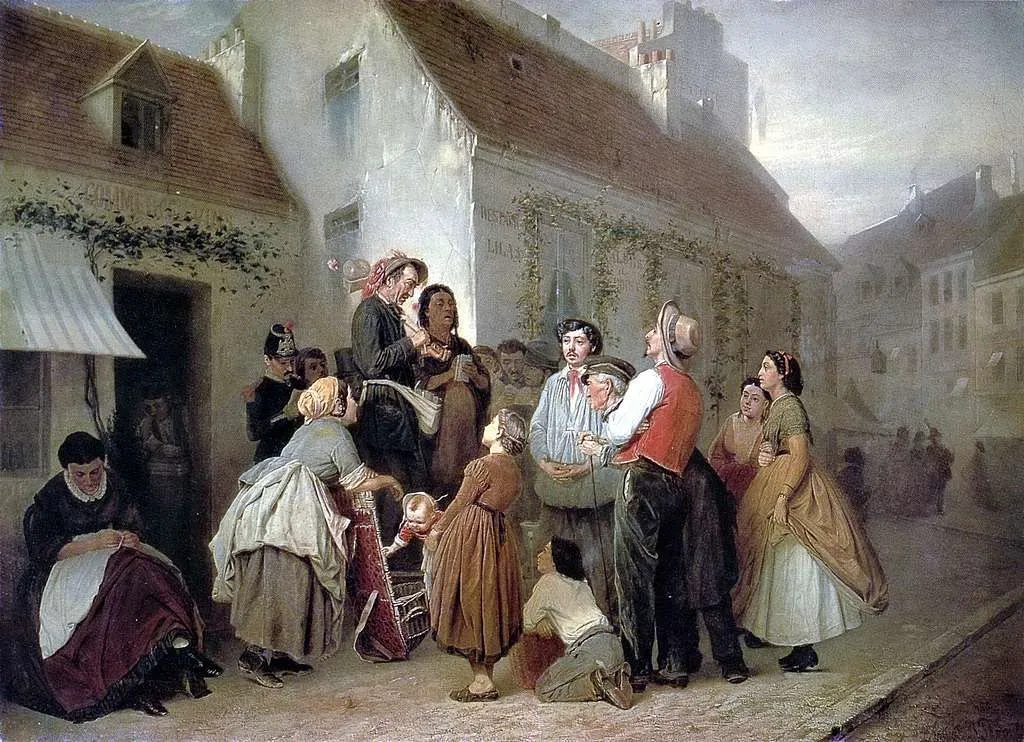
Dance was an integral part of medieval culture. Many festivals, celebrations, and religious ceremonies involved dancing. It’s possible that in certain circumstances, an enthusiastic and communal dancing experience escalated beyond control. The social acceptance and normalization of dance provided a backdrop against which dancing mania could unfold.
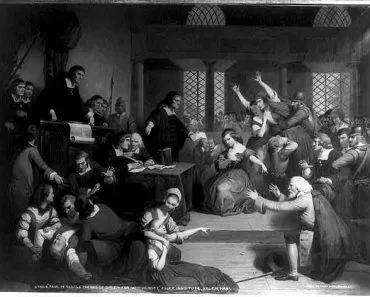
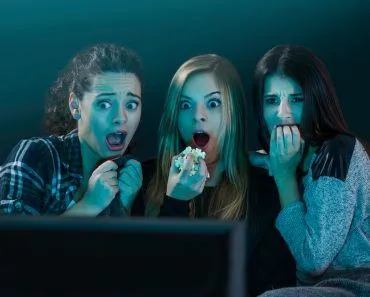
Once the dancing began, it often spread like wildfire, captivating entire communities. The power of suggestion and collective hysteria played a significant role. Mass psychogenic illness, where a group of people experiences physical symptoms due to psychological factors, might explain some instances of dancing mania. Witnessing others dancing uncontrollably could have triggered a psychological response in susceptible individuals, leading them to join in the frenzy. In this way, mass hysteria perpetuated the phenomenon, creating a self-sustaining cycle.
This is the explanation most historians now favor. The medical historian John Waller, who studied the 1518 outbreak in detail in his book A Time to Dance, a Time to Die, argues that famine, disease, and grinding hardship had pushed the people of Strasbourg into a state of acute distress. Many of them believed that St. Vitus could punish sinners by forcing them to dance, and that fearful conviction, Waller suggests, was enough to tip vulnerable individuals into a trance-like state of involuntary movement, which then rippled through the crowd as a stress-induced mass psychogenic illness.
The act of dancing became a collective expression of discontent or a brief reprieve from the harsh realities of their existence.
Ergot Poisoning
One intriguing theory suggests that contaminated rye bread may have contributed to outbreaks of dancing mania. Rye grain can become infected with the fungus Claviceps purpurea, which produces ergot alkaloids. Consumption of these alkaloids can lead to hallucinations, convulsions, and a sensation of burning, an affliction once known as St. Anthony’s fire. Ergot poisoning, the theory goes, might have caused people to dance uncontrollably. Most historians, however, now regard this explanation as unconvincing. Severe ergotism restricts blood flow to the limbs and can cause gangrene, which would make sustained, coordinated dancing for days on end all but impossible. It is also unlikely that so many people would have reacted to the same toxin in exactly the same way, and not every region swept up in the mania even relied on rye.
Nevertheless, while mass hysteria and cultural factors likely played a significant role, there might have been instances where underlying medical conditions, such as epilepsy or encephalitis, contributed to some individuals’ erratic behavior, which then influenced the group. The interplay between psychological and physiological factors further complicates our understanding of dancing mania.
Conclusion
In essence, dancing mania was a complex phenomenon with multifaceted causes deeply intertwined with the socio-religious fabric of medieval Europe. The specific factors at play likely varied from one outbreak to another, making it challenging to pinpoint a single cause. Furthermore, our understanding of these events is limited by the historical records available, which were often influenced by the biases and interpretations of the clergy and authorities.
Moreover, dancing mania offers a unique window into the psychological responses of communities facing extreme stress and uncertainty. It highlights the power of collective behavior and the role of cultural, religious, and social factors in shaping human responses to crises. While the dancing mania of the Middle Ages may never be fully explained, it continues to serve as a compelling historical and psychological enigma, inviting further exploration and interpretation.
This phenomenon underscores the human capacity to express and cope with distress through communal rituals and provides insight into the complex interplay of social, psychological, and cultural factors during times of adversity. Dancing mania remains a testament to the enduring mysteries of history and the bizarre nuances of the human condition.
References (click to expand)
- Dickason, K. (2021, January 21). Dance in the Late Middle Ages. Ringleaders of Redemption. Oxford University Press.
- Gotman, K. (2017). Translatio. Oxford Scholarship Online. Oxford University Press.
- Bartholomew, R. E. (2000). Rethinking the Dancing Mania. Skeptical Inquirer.
- Bartholomew, R. (1998, May). Dancing with Myths: The Misogynist Construction of Dancing Mania. Feminism & Psychology. SAGE Publications.
- Bartholomew, R. E. (1994, May). Tarantism, dancing mania and demonopathy: the anthro-political aspects of ‘mass psychogenic illness’. Psychological Medicine. Cambridge University Press (CUP).
- Dancing plague of 1518. Encyclopaedia Britannica.