The Salem Witch Trials happened because of an explosive mix of mass hysteria, rigid Puritan religion, local feuding, and false accusations. Between 1692 and 1693, 19 people were hanged and one was pressed to death as alleged witches. Fear, scapegoating, and the court's acceptance of "spectral evidence" turned neighborly suspicion into deadly trials.
The infamous Salem Witch Trials started in 1692 in the Salem Village (now Danvers) of Massachusetts. They were manifestations of mass hysteria that induced false accusations and zealotry, leading to the unfair trials and sentencing of the accused as practitioners of witchcraft.
How Did The Trials Start?
There was considerable feuding involved in the start of these sham trials. Salem Village had two prominent families on opposing sides—the Putnams, Puritan landowners heavily involved in local politics, and the Porters, moderates with connections to the mercantile Salem Town. They somewhat saw each other as political and religious rivals.
The feud came to a head when a group of mostly young girls started exhibiting erratic behavior, including fits, convulsions, and screaming. The villagers believed that the girls were under the influence of witchcraft, and an investigation began. Among those doing the accusing were Thomas Putnam and his daughter Ann, who signed many of the early complaints. The Porters, by contrast, were skeptical and tried to push back against the proceedings, but many of the people they were allied with ended up accused.

Who Were The Accused?
Most of the people who were accused and convicted were women. This is possibly because New England was settled by Puritans, who believed that women were inherently sinful and easily influenced by the artifices of the Devil (harking back to the original sin of the Bible). Since the Puritan faith mandated that people fend off the Devil on a daily basis, this could have prompted them to report on anything out of the ordinary, assuming it to be the work of the Devil.
Thus, those who didn’t conform to Puritanical notions of behavior, especially women, (for example, fighting with neighbors or not being married or having children) might find themselves accused of witchcraft. Independent women (at least by 1692 standards) and those who had strong opinions were particularly vulnerable.
Another qualification was the wealth one possessed. Many of the people who were accused were also poor, and seen as burdensome for those who had to tolerate them in the society, as well as susceptible to underhandedness, in this case, the supernatural kind.

Those from marginalized communities, including enslaved and Indigenous people living around Salem, were also easy targets for suspicion. Tituba, an enslaved woman in the household of Reverend Samuel Parris, was the first to be accused. Court records describe her as an "Indian" servant, and most modern historians believe she was a South American Indigenous (likely Arawak) woman who had been brought to Salem by way of Barbados. The familiar image of Tituba as an African practitioner of "voodoo" is largely a later invention (popularized by works like Arthur Miller's The Crucible) rather than an accurate account of who she was.
Why Did The Hysteria Begin?
There have been multiple attempts to explain the hysteria. One points to the ‘Little Ice Age’, a stretch of unusually cold climate that ran roughly from 1300 to 1850 CE. Economist Emily Oster found that the most intense periods of European witch-hunting lined up with the coldest, economically hardest years. Food shortages, frigid temperatures and general deprivation across the colonies and Europe may have driven people to fall back on superstition to explain their suffering.
This may have led to scapegoating, blaming someone for one’s woes so as to avoid the more plausible, but less appeasing reason. Since witches had powers over natural phenomena, like the weather or crop growth, for example, they were ideal scapegoats.
A more Salem-specific theory uses the Salem Village agrarian economy’s juxtaposition with the mercantilism of Salem Town to explain why superstition took over the village. Anxieties of poorer neighbors may have made them turn to beliefs in witches and warlocks to placate themselves.
How Were The Trials Held?
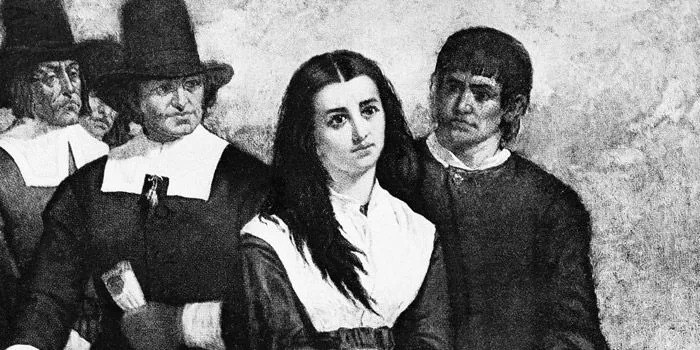
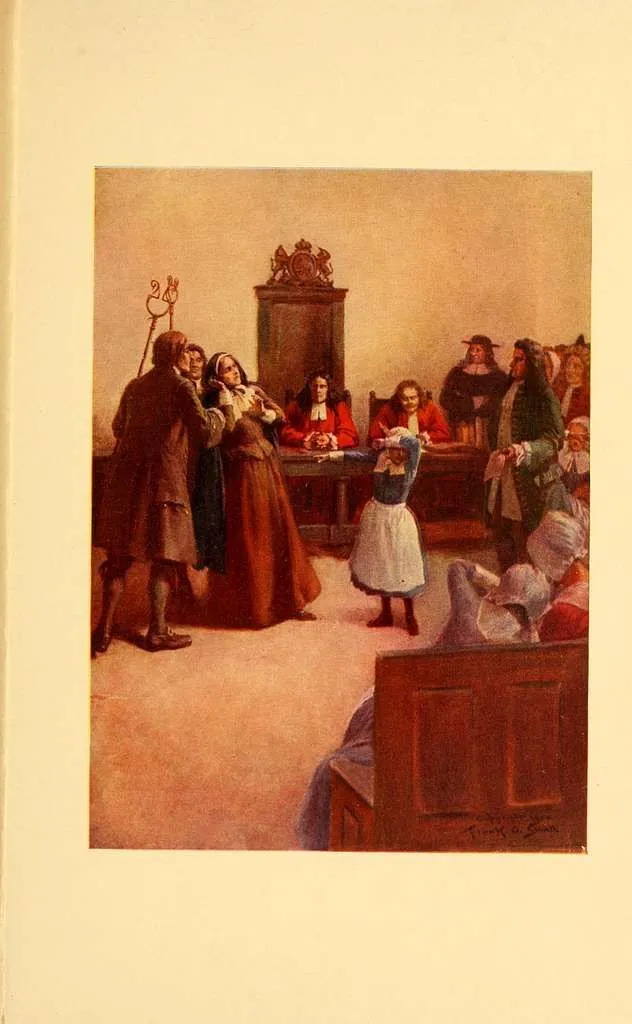
The trials were presided over by William Stoughton, the colony’s lieutenant governor, along with seven judges. They were more often than not biased against the accused, who were forced to defend themselves without any counsel. Their oral testimony was countered by ‘spectral evidence,’ where the victims’ visions of attacks and the evil acts of the accused would sway the judgement in the former’s favor.
Those who did not accept their guilt were subjected to the harshest treatment by the law. Often, the accused confessed and then testified against and incriminated others, in order to get away with the charges and find leniency, based on the Puritanical belief that confessors would be punished directly by God.
What Was The Aftermath Of The Trials?
The Salem Witch Trials left the community and people of Salem deeply scarred. Those who had been accused found it hard to return to normal day-to-day life and assimilate in a society of neighbors and friends who had so easily doubted their faith and character.
As a whole, people found it hard to return to a system where the rule of law had been so blatantly exploited, and due process had been so conveniently overlooked. The trust in law that keeps it functionally legitimate in society was betrayed. It would take a long time for that trust and stability to be restored.
A Final Word
The trials only came to an end when the Governor of colonial Massachusetts (whose own wife had been accused) intervened, concluding the very literal “witch hunt”. The accused were either released or pardoned. Public apologies by the judges and accusers were of little help to those who had already suffered, let alone those who had been killed.
By the time the trials wound down in May 1693, 19 people (fourteen women and five men) had been hanged for their alleged dabbling with the Devil. A twentieth, an elderly farmer named Giles Corey, was pressed to death under heavy stones after he refused to enter a plea, the only such execution in American history. At least five more accused died in the squalid jails while awaiting trial. Even two dogs were killed during the panic, suspected of being bewitched.
References (click to expand)
- E. Oster (2004). Witchcraft, Weather and Economic Growth in Renaissance Europe. Journal of Economic Perspectives / JSTOR
- Salem Witch Trials | The First Amendment Encyclopedia. Middle Tennessee State University
- AK Leventhal. Finding the True Cause of the Salem Witchcraft Trials. Western Michigan University
- DC Brown. (1993) The Forfeitures at Salem, 1692 - JSTOR. JSTOR