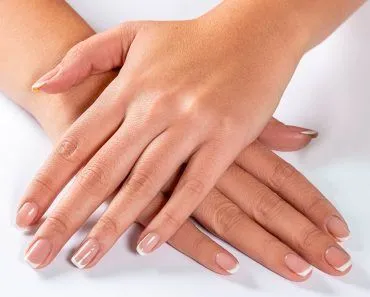
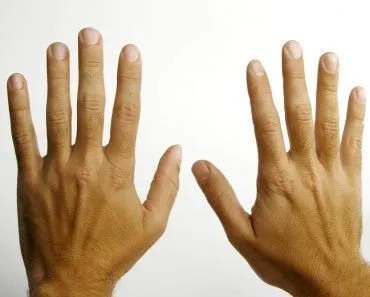
Human fingernails are flattened claws inherited from our primate ancestors, made of the protein keratin. They cap our broad, sensitive fingertips, and the combination gives us precision grip strong enough to pinch a needle or wield a stone tool. Toenails work the same way, protecting the tops of our toes, helping our balance, and once helped our ancestors grip branches with their feet.
We appreciate a lion’s sharp claws, or how an eagle’s talons can clutch and pierce through its prey, but we rarely admire our own nails. They sit on the backs of our hands, inconspicuous, unless we adorn them with nail art or need to trim them. Human nails don’t appear to have much of a purpose, unless it is to relieve an itch or when you need to peel something off. However, they do have a purpose you might not have considered. Human nails are part of the reason for our hand’s dexterity.
The Evolutionary Origins Of Nails
Humans are distinct from other animals in many ways (cognitive capacity, hairlessness, and our opposable thumb), but having nails isn’t one of them. Our ancestors, primates, also have finger and toenails that look like ours. In fact, mammals, birds and reptiles have similar features at the ends of their appendages, such as claws and talons.
These nails or claws or talons are made of a protein called keratin. This is the same protein that makes up your hair, the horns on cows and sheep, and the hooves of horses, zebras, bulls, and other ungulates.
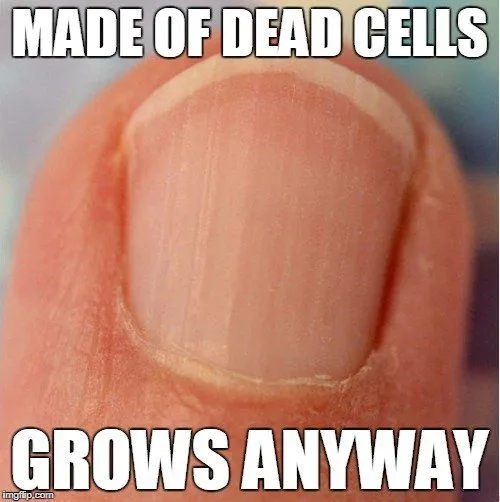
Cells in the matrix called keratinocytes produce the protein keratin that goes on to form the nail. The actual nail is therefore composed of layers of dead, compacted cells, along with keratin, which makes it strong and rigid, as well as flexible. As the nail grows and pokes out from your skin, the cells it contains actually die, which is why trimming your nails doesn’t hurt. The same is true for hair.
These keratin extensions evolved sometime between 400 million and 300 million years ago, when four-legged water animals, tetrapods, were venturing onto land. I say ‘sometime’ because fossils between those years are rare. This dark shroud over the time between 360 and 335 million years ago is called Romer’s gap, after the palaeontologist Alfred Romer.
The transition from water tetrapods to land tetrapods is a little fuzzy for this reason, which makes the evolutionary origins of claws, talons, and our own nails a bit fuzzy too. Most of the early evidence for claws comes from track marks left behind by our four-legged ancestors or from a clawed frog, the African bush frog that has claws, which is unusual for frogs and amphibians.
However claws emerged, they proved extremely handy (pun intended). It allowed creatures to grasp better, everything from penetrating the bark and branches of trees, clutching food, and digging. The claws, along with the structure of the limbs, gave terrestrial animals an advantage to climbing trees and diversifying to many other niches.
Our own human nails evolved from claws. Many tree-climbing animals, like squirrels, have claws to clutch tree bark. Similarly, ancient primates that lived approximately 50 million years ago also had claws, new research has found. Teilhardina brandti, the oldest known primate, also had claws, called grooming claws. These grooming claws were used to get rid of parasites that live in the hair and skin, hence the name.
How Do Fingernails Help Us?
Our claws, it seems, transitioned to nails for several reasons.
One was to get a better grip on branches, especially smaller and thinner ones. With smaller and flatter nails, it becomes easier to grip these branches, whereas long and sharp claws can get in the way of getting a good grip.
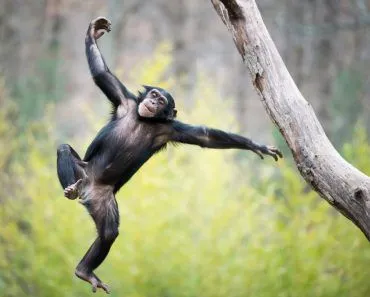
Animals like apes, monkeys, lemurs and others spend a decent part of their day climbing trees, hanging from branches and grabbing things. To do all of that, they need broad fingertips so that their grip stays strong. Fingernails primarily cover the top surface of their fingers and offer some protection. Also, these nails can help the animals scratch and dig for things.
In the high forest canopy where our ancient primate ancestors lived, having wide finger bones and expansive finger pads was useful in gripping the narrow branches of trees. Nails enhance that grip even more, by providing a rigid surface to press against. Having fingernails enabled those primates to splay out their pads to create even more contact with the trees.
Nails also enhanced sensitivity by providing an extra surface that could discern changes in pressure even more granularly. This made it easier for primates to climb and hop among the trees.
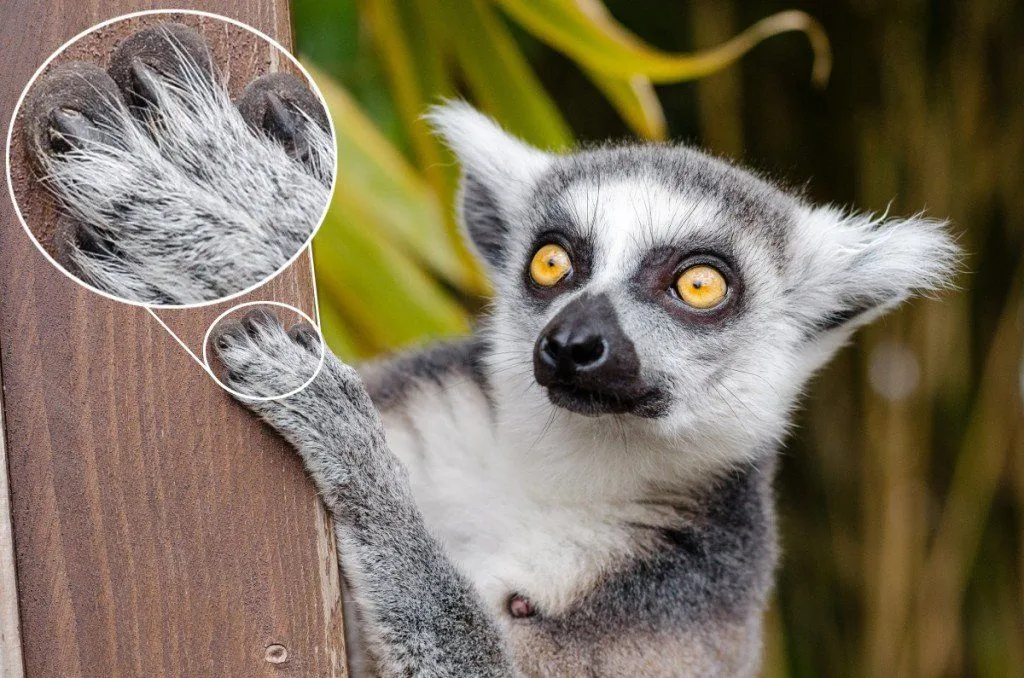
Fingernails primarily serve as a cover for the top surface of our fingers and offer some degree of protection. Fingernails and toenails on our limbs are quite similar to the claws found in arboreal animals. Primates, including humans, have broad fingertips, and nails help them support those fingers.
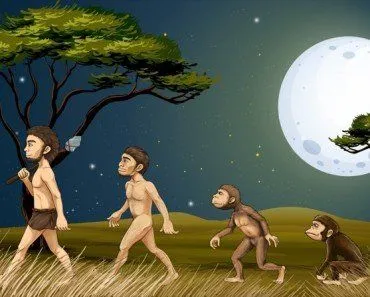
These nails also allowed early humans to begin wielding tools. The earliest stone tools, Oldowan-style flakes used by early Homo (and possibly late australopithecines), show up around 2.5 million years ago, with even older Lomekwian tools from Kenya dated to ~3.3 million years ago. Anatomically modern Homo sapiens only appeared around 300,000 years ago, by which time hand and nail morphology had already been shaped by millions of years of tool use. In response to this tool use, our hands have fingernails that are even broader than their predecessors. This is because striking stone tools together requires a very firm, strong grip, something that only broad fingertips can provide.
The fingernail increases the sensitivity of the finger by acting as a counter force when the pulp of the finger touches an object. The hard outer covering of fingernails make our grip around the object much more firm and precise. This is why we can easily pick up even tiny things like screws, needles, peanuts, etc.
Fingernails allow us to peel fruits like banana, oranges, and lemons with ease. Furthermore, it helps in certain cutting or scraping actions, and acts as an extended precision grip for the finger.
What About Toe Nails?
The tops of our toes are susceptible to injuries. The nail layer on the toe serves as a protective cap for the toe to prevent injuries and infections. The hard covering of toenails protects and fortifies the dense network of blood vessels, muscles, and flesh beneath them. Toenails also exert counter pressure on our toes that help us with balance while walking and improves our spatial awareness. People who have lost toenails have reported having problems with their gait.
For our fellow apes, bonobos and other primates, toes and the nails on them help to grip things. Humans, with our biped gait, have lost the ability that apes still have, gripping and grabbing things with their feet. Similarly to fingernails, toenails perform the same supportive function for gripping!
Nails Vs. Claws: Did Humans Ever Have Claws?
Here is a surprise: a nail is really just a claw that got flattened out. A claw curves downward and is squeezed in from the sides, tapering to a point, while a nail is a broad, flat plate that sits only on the upper surface of the fingertip. Same raw material, very different shape.

So did our own ancestors have claws? They did. The earliest primates inherited ordinary claws from their clawed mammal ancestors, and a trace of that past still survives. Lemurs, lorises and other primates that sit close to the ancestral body plan keep a single elongated grooming claw (also called a toilet claw) on the second toe, which they use to scratch and comb through their fur. Our own branch of the primate family simply traded almost all of those claws for nails.
Why nails instead of claws? Researchers have floated two explanations. The older fine-branch idea holds that wide, padded fingertips backed by flat nails grip slender twigs better than curved claws, which tend to get in the way on thin branches. Anthropologists Soligo and Müller argued that body size mattered even more: as early primates grew larger and heavier, claws lost much of their usefulness for clinging, so flat nails gradually took over on every digit. Either way, by the time Homo sapiens arrived, the claw was ancient history. We do not lack claws because we lost ours recently. We descend from a long line of primates that had already swapped them for nails.
Which Animals Have Nails Instead Of Claws?
Flat nails are almost a primate signature. Monkeys, apes, lemurs and humans have them, whereas most other mammals stick with claws (think cats, dogs and bears), birds carry talons, and horses, cattle and deer walk on hooves. All of these are made of the same keratin. Evolution has simply shaped that keratin into points, sheaths or broad plates depending on the job.

The exceptions are wonderfully telling. Lemurs, lorises and galagos wear nails on nearly every digit but hold onto that one grooming claw on the second toe. Marmosets and tamarins, the tiny monkeys of Central and South America, went in the opposite direction. They re-evolved sharp, claw-like nails called tegulae (in contrast to the flat ungulae of other primates) so they can dig into and scramble up wide tree trunks to feed on sap and gum.
So if you have ever wondered whether lemurs have fingernails, the answer is yes, mostly nails plus that handy grooming claw. And lizards or other reptiles? Those are true claws, not nails. The flat fingernail you are looking at right now is, in the animal kingdom, a fairly exclusive primate club.
What Are Nails Made Of, And What Are Their Parts?
As we saw, nails are built from keratin, the same tough protein found in hair and hooves. The visible part, the nail plate, is made of flat, dead, keratin-packed cells stacked in layers, which is what makes it both hard and slightly flexible.

The nail is more than that single plate, though. Underneath it lies the nail bed, the skin that gives the nail its pink tinge thanks to the blood vessels running through it. Hidden beneath the skin at the base sits the matrix, the living factory that actually manufactures the nail. Everything the matrix pushes out is already dead, which is exactly why a trim never hurts. The pale half-moon near the base of your thumb, the lunula, is simply the part of that matrix you can see through the plate. It looks white because the young nail cells there still hold their nuclei. Finally, the cuticle (or eponychium) forms a seal at the base that keeps dirt and microbes out of the matrix.
It is a surprisingly intricate piece of anatomy for something we mostly notice when it needs cutting, and it helps explain why the skin under our nails is so sensitive.
References (click to expand)
- What are fingernails made of? | Ask Dr. Universe. Washington State University
- (2013) Getting a grip on tetrapod grasping: form, function, and evolution. anthonyherrel.fr
- Soligo, C., & Müller, A. E. (1999, January). Nails and claws in primate evolution. Journal of Human Evolution. Elsevier BV.
- Farren, L., Shayler, S., & Ennos, A. R. (2004, February 15). The fracture properties and mechanical design of human fingernails. Journal of Experimental Biology. The Company of Biologists.
- Maiolino, S., et al. (2012). Evidence for a Grooming Claw in a North American Adapiform Primate. PLoS ONE.
- Pygmy Marmoset Factsheet. Wisconsin National Primate Research Center.
- Anatomy, Shoulder and Upper Limb, Nails. StatPearls. NCBI Bookshelf.