There are many theories as to why human fingers are not all the same length, but it is most likely a combination of factors. One theory suggests that a better grip was needed to make better tools, so those who adapted themselves to such a grip survived. Another theory reckons that our hands evolved to accurately throw and hold things. Another theory suggests that the shape of our hand is dictated by the most primary weapon we can wield, the fist.
The appendage at the end of every human being’s arm is unique. It’s also probably the only one to boast different names depending on which context it is used for. For instance, if used to hold something, it’s called a hand. However, if it’s used in a more offensive pursuit, like hitting someone, it’s called a fist!
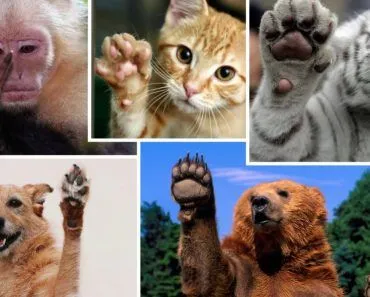
In fact, the human hand is substantially different from the hands of other primates; it has relatively small fingers, and an even smaller palm, but a significantly stronger thumb. The most important feature of our hands is the ability of the thumb to comfortably oppose (come into square contact at the tips) each finger of the same hand. While we cannot completely figure out all the factors that led to the evolution of our hands with this type of varied finger size, many scientists surmise that it was to attain this perfect opposability. Many researchers have pointed out advantages in certain scenarios that have led to the fingers being of varied length, as a means to adapt to imminent needs and survive.
A Deep Look Into The History Of Hands
If you want to clearly understand why our fingers are of not all the same length, it is wise to consider the evolutionary history of our hands and fingers, as the past so often has answers and explanations for our present.
It’s not entirely clear when the modern form of the human hand first appeared. Initially, primatologists believed that this would have happened around 800,000 years ago. However, after the recent discovery of a third metacarpal with a styloid (lump at the base) dating back to 1.42 million years ago, primatologists and scientists have accepted the idea that the modern hand could actually have evolved more than a million years ago!
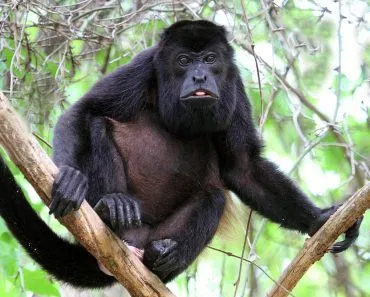
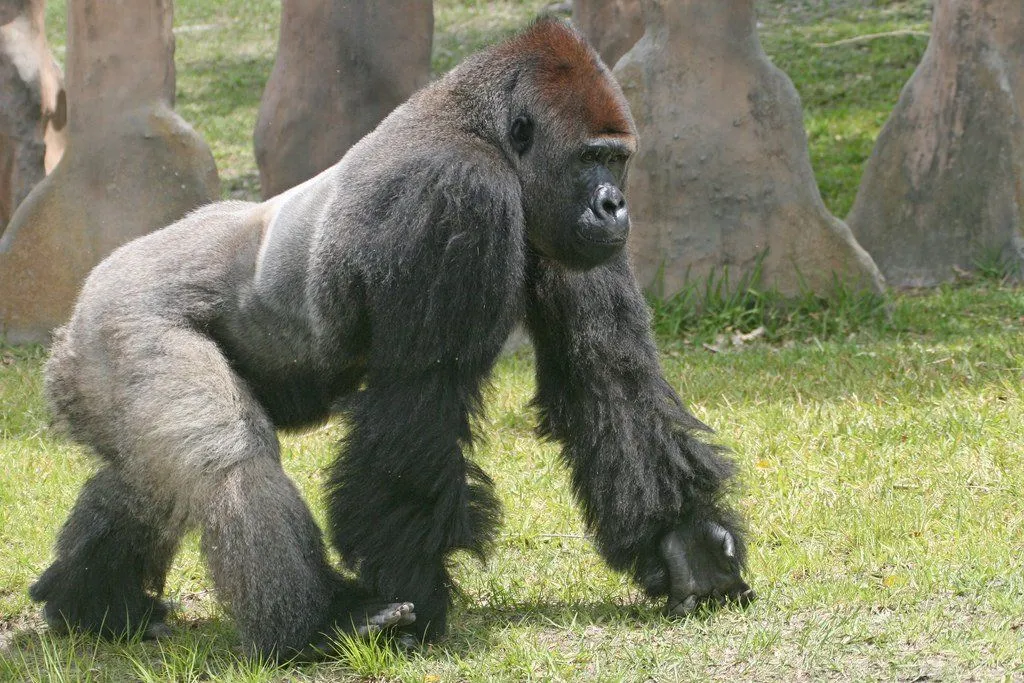
The hands of our ancestors who lived millions of years before us were much like those of present-day chimpanzees, boasting long fingers and broad palms, as well as small and weak thumbs. This length of finger and thumb related to knuckle-walking and climbing through the branches of trees. Their fingers were curved, and the tips lacked the broad bones (apical tufts) to buttress the highly sensitive, wide fatty pads of human fingertips. As a whole this design works well for hooking onto horizontal supports, such as tree branches, but makes it impossible to grip something securely for many tasks, like waving a stick. Moreover, this earlier hand arrangement provides little strength and precision to do tasks like squeezing or pinching.
Need To Make Better Tools
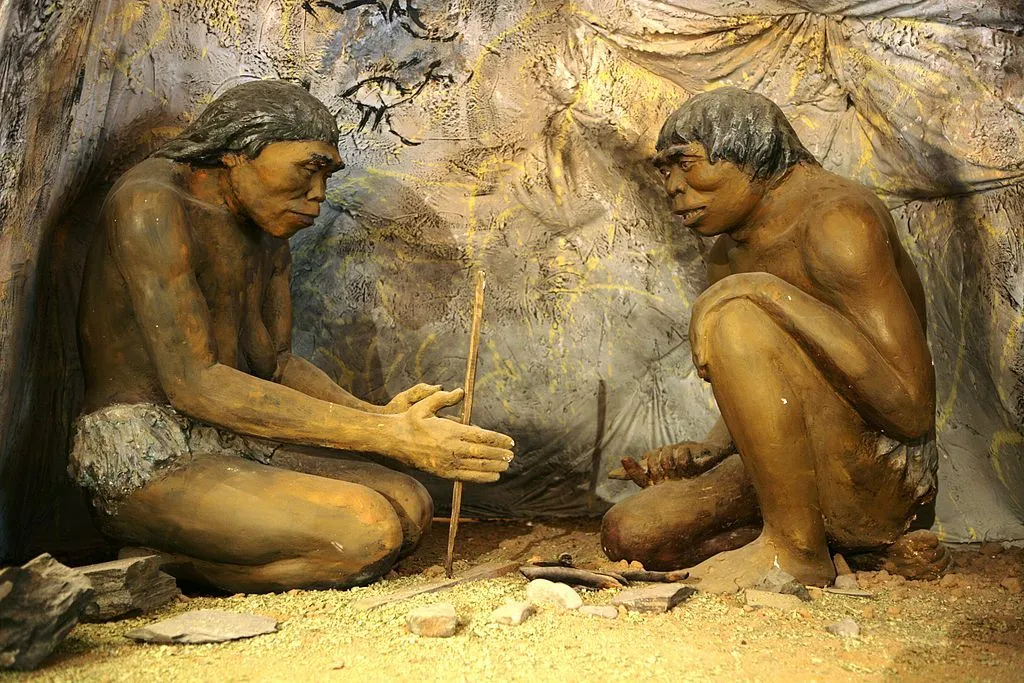
Different studies have proposed different theories as to why we have non-uniformly shaped fingers. One of the most popular theories states that a better grip was needed to make better tools, so those who adapted themselves to such a grip survived, while others perished. Around 3 million years ago, stone tools were used, which were refined over time by humankind. For instance, around 1.5 million years ago, more refined tools like axes and cleavers were produced by humans who had evolved fingers that gave them the advantage of making such tools for their survival. Over time, tools only became more refined, as the hand evolved to its modern state. It is incontrovertible that hand strength and dexterity are the main guiding force behind making better tools; it is thought that the advantages the latter provided led to the evolution of the former.
Precision Grip And Power Grip
Another similar theory reckons that our hands evolved to accurately throw and hold things. Human hands have short palms and short fingers with varying length. These proportions make it possible to grip things in two ways that other apes (mostly) cannot. One way is by using something called a precision grip, in which an object is held between the pads of the fingertips and the thumb. The best illustration of precision grip is how a pitcher holds a baseball. The second way is called a power grip, in which all the fingers and the thumb are wrapped around (like a fist) in order to grasp the object tightly. A man securely holding a heavy axe is a good example of a power grip.
These two grips were crucial to our ancestor’s characteristic tool-crafting skills. Many scientists reckon that the widespread use of tools by our ancestors was the driving force behind the modern hand’s proportions and non-uniformity.
To Form A Fist
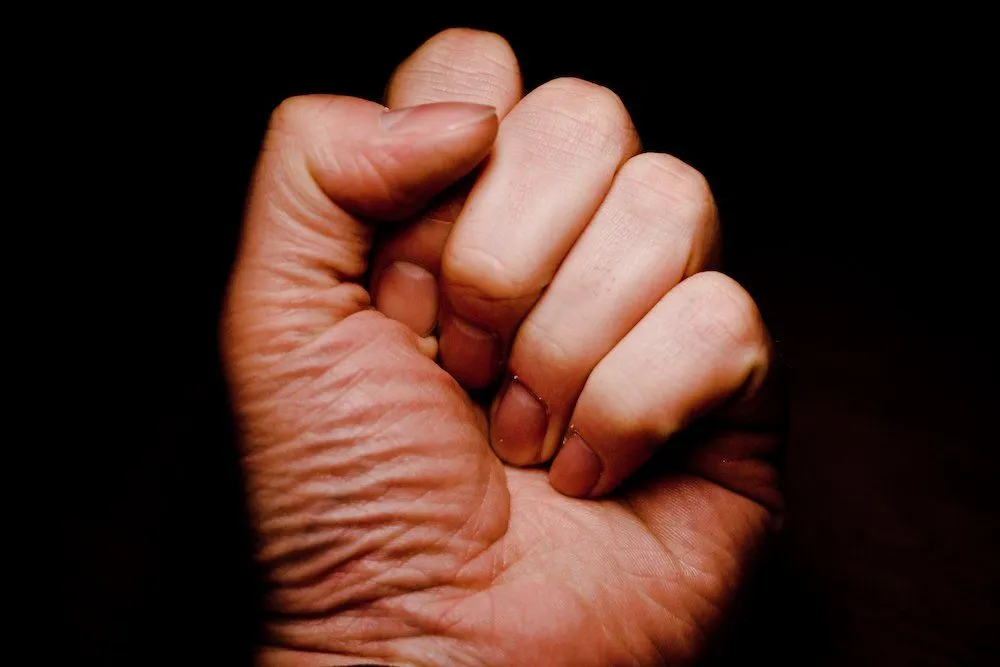
There is also a third theory basically suggesting that the shape of our hand is dictated by the most primary weapon we can wield, the fist. Two things are crucial when it comes to the fist. One is how the fingers curl back on themselves without leaving any empty space inside the fist (a product of the precise lengths of the component bones of each finger). The other is the buttressing role of the thumb, which further improves the stiffness of the overall fit. It’s impossible to make a fist like the human fist if a creature’s fingers are of equal length and size.
Why Do Your Fingers Seem To Line Up When You Curl Your Hand?
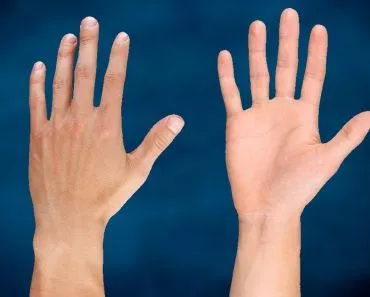
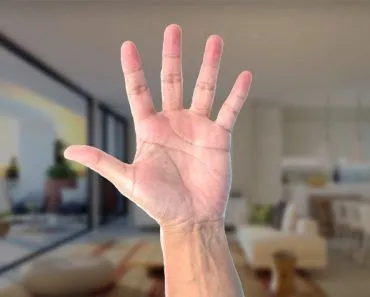
Lay your hand flat on a table and the unevenness is obvious: the middle finger juts out furthest, the index and ring fingers fall a little short, and the little finger barely reaches the ring finger’s top knuckle. Yet the moment you curl your fingers toward your palm, or close them around a coffee mug, that staggered line seems to disappear and the fingertips bunch together. So why does a hand that looks so lopsided when open behave so neatly when it closes?

The trick is that the lengths are not random; they are matched to the job. The knuckles where the fingers meet the palm (the metacarpophalangeal joints) do not sit on a straight line. They sit on a gentle arc, with the base of the middle finger set back furthest and the base of the little finger riding higher. The palm itself folds along two arches, one running across the knuckles and one running lengthwise, so the whole surface can cup like a shallow bowl. When you bend the fingers, the longer ones have further to travel and the shorter ones less, and because each one starts from a different point on that arc, their tips swing inward and converge toward a common region rather than fanning out.
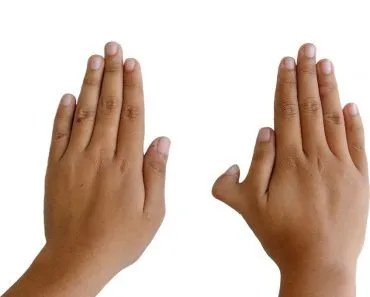
That convergence is what lets the hand wrap. A fist closes with the fingertips tucked snugly against the palm and almost no empty space inside, and a hand can mold itself around a ball, a railing or a tool handle so that the load is shared across all four fingers and the thumb. If every finger were the same length, the tips would stack up against one another long before the hand could close, and you would be left clutching with the very ends instead of the whole curved surface. The same geometry explains why an extra sixth finger can sometimes be an asset rather than a hindrance, since it simply adds another contact point to that wrapping curve. The uneven lengths, in other words, are exactly what make an even, all-over grip possible. It is worth noting that the fit is not perfect on every object, which is why a well-designed tool handle is often tapered, slightly thinner where the little finger wraps and thicker under the long middle finger, so that each fingertip can press home with similar force.
What Does The Length Of Your Fingers Say About You?
If you have ever been told that a longer ring finger means you are more competitive, or that comparing your index and ring fingers reveals something about your personality, you have run into the 2D:4D ratio, often called the digit ratio. It is simply the length of the index finger (the second digit, or 2D) divided by the length of the ring finger (the fourth digit, or 4D). On average, men tend to have a slightly lower ratio (a relatively longer ring finger) and women a slightly higher one, and researchers have long proposed that this difference is set before birth by the balance of hormones a fetus is exposed to in the womb.

Here is where it pays to be careful, because the popular version of this idea has run far ahead of the evidence. The digit ratio has been linked in the media to everything from athletic ability and aggression to sexual orientation, financial risk-taking and exam results. The trouble is that these claims rest on the assumption that 2D:4D is a reliable window onto prenatal testosterone, and that assumption has not held up well. A 2024 meta-analysis in the American Journal of Biological Anthropology pooled 54 studies and more than 8,000 people and found no consistent relationship between the digit ratio and prenatal, adult or stress-induced testosterone. Where personality and behavior links do turn up, the effects are typically tiny and inconsistent, and the apparent strength of the early reports has shrunk as larger studies replaced them. The honest summary is that your finger lengths are not a fortune-teller for your character or your career.
What the ratio may still be quietly tracking is development rather than destiny. A 2026 study in Early Human Development, led by John Manning at Swansea University, measured the fingers and head circumference of 225 newborns and found that, in boys only, a higher 2D:4D ratio (a marker of greater prenatal estrogen) went with a larger head, a rough proxy for brain size. That fits a broader 2025 finding in Communications Biology, which reported that across 95 primate species, those with relatively longer thumbs, a hallmark of precise grasping, also tended to have larger brains, hinting that dexterity and brain size evolved together. Both are early, modest results about populations and evolution, not about you personally, but they are a reminder that finger proportions are a genuine biological signal, just not the personality cheat-sheet they are often sold as.
So, to conclude, it’s likely that a combination of factors has led to the evolution of our hands and fingers over the course of millions of years into what they are today. Whether that is the need to make and use tools, form a stronger grip around objects, or defend ourselves more effectively, suffice to say that we’re lucky evolution has led to these magnificent and versatile body parts!
References (click to expand)
- Almécija, S., Smaers, J. B., & Jungers, W. L. (2015, July 14). The evolution of human and ape hand proportions. Nature Communications. Springer Science and Business Media LLC.
- Rolian, C., Lieberman, D. E., & Hallgrímsson, B. (2010, June). The Coevolution Of Human Hands And Feet. Evolution. Wiley.
- Morgan, M. H., & Carrier, D. R. (2013). Protective buttressing of the human fist and the evolution of hominin hands. Journal of Experimental Biology. The Company of Biologists.
- Sorokowski, P., & Kowal, M. (2024). Relationship between the 2D:4D and prenatal testosterone, adult level testosterone, and testosterone change: Meta-analysis of 54 studies. American Journal of Biological Anthropology. Wiley.
- Özener, B., et al. (2026). Digit ratio (2D:4D) and neonatal head circumference: Evidence for oestrogenization in human brain evolution? Early Human Development. Elsevier.
- Baker, J., et al. (2025). Human dexterity and brains evolved hand in hand. Communications Biology. Springer Nature.