Is it bad to fidget? Not really. Fidgeting is a self-regulating behavior that helps some people manage boredom, stress and restlessness. It can aid focus in certain cases (notably in children with ADHD), and the constant small movements burn roughly 100 to 800 extra calories a day. The benefits, however, vary a lot from person to person.
Imagine sitting in a lecture where not a single word of the orator is getting registered on your head, or listening to the ramblings of a friend who is super-excited about something which you find extremely mundane; what do you do?
If you fall in the category of ‘normal’ human beings, chances are that you start to snap your fingers, tap your feet on the floor or roll a pen in between your fingers or adjust your tie every now and then; in short, you start fidgeting.
Fidgeting
When people are nervous or impatient about something, they usually start to make small movements of the hands, legs or head. This act is called fidgeting. There are numerous times in a day when you can find yourself fidgeting; when you are waiting for the train at the station, when you are attending a boring lecture, and one that is fairly common with students is when you start rolling a pencil or a pen in your fingers. These are all acts of fidgeting.

Science Behind Fidgeting
Fidgeting is generally associated with a lack of interest. And there may be some validity in that, because you do tend to fidget more when you are bored by something than when you are fully engaged. But fidgeting is not some modern symptom of shrinking attention spans caused by screens and television. It is a near-universal human behavior that researchers have studied for decades, which strongly suggests there is something purposeful going on inside the brain rather than simple idleness.
Not So Bad

One leading idea is that fidgeting is a self-regulating trick the brain uses to keep itself at the right level of alertness. When you are bored, your nervous system is under-stimulated and your attention drifts; when you are anxious, it is over-stimulated and jittery. Small repetitive movements (tapping a foot, clicking a pen, jiggling a leg) feed in just enough extra sensory input to nudge your arousal back toward the sweet spot where you can concentrate. Think of your brain a bit like a CPU juggling too many tasks at once; fidgeting acts like a small background process that helps it stay on track.
So fidgeting, in some cases, can lead to better focus. Cheers to that!
Results Are Not The Same For Everyone
A number of studies have looked at how fidgeting plays out across genders and age groups, and the picture is not uniform. During stressful situations, men have been found to engage in roughly twice as many "displacement behaviors" (self-directed fidgets like picking, plucking or tapping at themselves) as women, and the men who fidgeted this way tended to report feeling less stressed afterward. There is no settled explanation for why the sexes differ, and the focus and stress-relief benefits seem to show up more reliably in some people than in others.
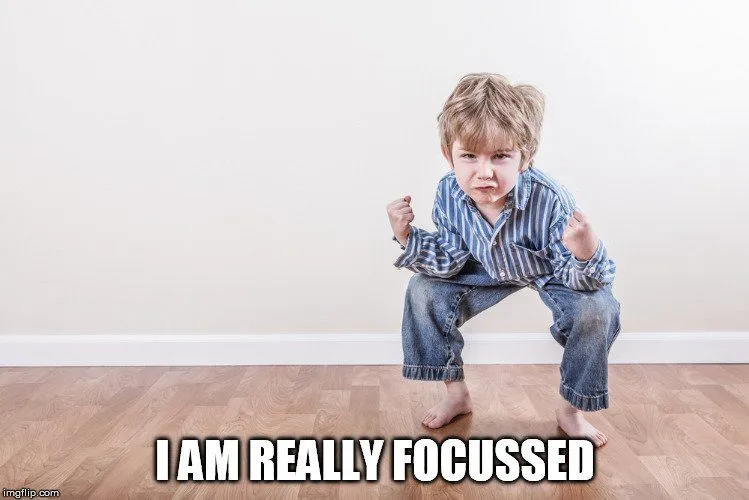
A 2015 study in the Journal of Abnormal Child Psychology tracked the gross motor activity of boys aged 8 to 12 while they worked through demanding memory tasks. Among the boys with ADHD, more squirming and movement went hand in hand with better performance on the verbal working-memory tests. For the typically developing boys, the opposite was true: extra movement actually dragged their scores down. In other words, for a child with ADHD, fidgeting may not be a distraction at all but a way to stay focused.
Calorie Burning
Fidgeting takes energy, and while it is modest compared to walking or jogging, it adds up over a full day. This restless, non-exercise movement is part of what scientists call NEAT (non-exercise activity thermogenesis), the calories you burn through everyday activity that is not deliberate exercise. Depending on the person, fidgeting can burn off anywhere from about 100 to 800 calories a day as heat. So if you are looking to expend a few extra calories, all that tapping and jiggling may quietly contribute.
Do Fidget Spinners Actually Help You Focus?
If natural fidgeting can help some people concentrate, surely a purpose-built fidget toy must work even better, right? That was the promise behind the fidget spinner craze of 2017, when the little three-pronged gadgets were sold as focus aids for restless kids. The research, unfortunately, tells a more sobering story. The key thing to understand is that intrinsic fidgeting (your own body squirming, tapping or jiggling) is not the same as twirling a toy. As Professor Julie Schweitzer of the UC Davis MIND Institute puts it, there is good evidence that fidgeting itself is associated with better attention, but whether a separate device can deliver that same effect is still an open question.

When researchers actually tested spinners in a classroom, the verdict was not kind. Paulo Graziano and colleagues handed fidget spinners to young children with ADHD during a structured behavioral program and tracked how they behaved, publishing the results in 2018 in the Journal of Attention Disorders. They found a negative association between using a spinner and how attentive the children actually were. As Graziano summed it up, the spinners seemed to distract the kids more than they helped. The reason fits the science neatly: when you spin a toy, you are swinging your hand to move an object, which pulls your eyes and attention onto the gadget; that is different from the low-key, background body fidgeting that quietly nudges your arousal back toward focus. So if a fidget tool genuinely helps you, the better ones tend to be the kind you can use without looking, rather than a spinning toy that hijacks your gaze.
Fidgeting Versus Stimming: What Is The Difference?
If you spend any time around discussions of ADHD or autism, you will run into the word stimming, and it is easy to assume it is just a fancier label for fidgeting. The two overlap, but they are not quite the same thing. "Stimming" is short for self-stimulatory behavior: repetitive movements or sounds such as rocking, hand-flapping, finger-flicking, humming or tapping. Crucially, this is not a behavior reserved for a small group. As the Cleveland Clinic notes, everyone stims to some degree (think nail-biting, hair-twirling, doodling or bouncing a leg); it is simply more frequent and more intense in autistic and ADHD people, where it is also more likely to be noticed.
The useful distinction is in why the movement is happening. Everyday fidgeting, as we have seen, often works as an arousal dial, topping up a bored, under-stimulated brain so it can stay on task. Stimming tends to serve a broader emotional and sensory job: calming an overwhelmed nervous system, dialing down anxiety, or expressing excitement and joy. Among autistic adults surveyed for the Cleveland Clinic, the reasons given for stimming included managing anxiety, coping with overstimulation and simply calming down, while a large majority also said they did it because they liked the way it felt. So the next time someone asks what it is called when a person always has to be doing something with their hands, the honest answer is that it could be ordinary fidgeting, or it could be stimming, and the difference lies less in the movement itself than in the need it quietly meets.
All said, fidgeting is usually done unconsciously; you won't even realize that you are shaking your leg a little bit until someone points it out. And although there is no ironclad proof that it sharpens focus for everyone, it clearly does for some people. But remember, if you find yourself fidgeting almost constantly throughout the day, it is worth mentioning to a doctor. After all, you don't want the innocuous twitching of your leg to turn out to be a sign of something else, do you?
References (click to expand)
- Hyperactivity in Attention-Deficit/Hyperactivity Disorder (ADHD): Impairing Deficit or Compensatory Behavior? Journal of Abnormal Child Psychology. PubMed (NIH)
- Non-Exercise Activity Thermogenesis in Human Energy Homeostasis. Endotext. NCBI Bookshelf
- The Surprising Science of Fidgeting. The Conversation
- 'Bad' Habits You Can Keep. Rush University Medical Center
- Always Fidgeting? Well, You Just Might Be Doing Yourself a World of Good. The Guardian
- Does Fidgeting Help People With ADHD Focus? UC Davis Health
- Do Fidget Spinners Help Kids Focus? BrainFacts.org (Society for Neuroscience)
- To Fidget or Not to Fidget: A Systematic Classroom Evaluation of Fidget Spinners Among Young Children With ADHD. Journal of Attention Disorders. PubMed (NIH)
- What Is Stimming? Cleveland Clinic
- Fidgeting. Wikipedia