Yes, all life on Earth (including humans) is carbon-based. Each carbon atom has four valence electrons, so it can form stable single, double, and triple bonds with itself and with many other elements, building long chains and rings. That makes carbon ideal for the huge, flexible molecules like DNA, proteins, and lipids that life depends on. About 18% of the human body by mass is carbon, second only to oxygen.
Speculation about the existence of extraterrestrial life has been a perennial occupant of humanity’s endless capacity for wonder. To see if there is anyone out there, we sent both Voyagers, not to study a particular star, but to leave our shores and explore other islands in the vast oceans of outer space. Astrophysicists have also wondered (if we do discover one) about the nature of such an alien civilization.
If we were to infer the biochemistry of any life form from what we have already encountered, which is well, us, we’d conclude that it would be based on carbon. Carbon, or as science fiction regularly depicts, carbon’s closest cousin, silicon. However, Carl Sagan called this parochial view Carbon chauvinism. He believed that we shouldn’t limit our imagination and ridiculed the assumption that alien life would resemble life on Earth.

Still, due to its sheer dominance on Earth, carbon remains our best guess. Given that, what makes carbon so special?
What Does “Carbon-Based Life” Actually Mean?
When scientists call something “carbon-based”, they don’t mean it is made only of carbon. They mean that carbon forms the structural skeleton, the backbone, of the large molecules the organism is built from. A carbon-based life form is one whose biochemistry runs on carbon-containing (organic) molecules: the proteins, nucleic acids, sugars, and fats that do the actual work of being alive.

The reason carbon gets to play backbone comes down to its outermost shell. Carbon has an atomic number of 6, with four electrons in its outer shell, which leaves that shell exactly half-filled. To complete it, a carbon atom forms four covalent bonds with neighboring atoms, the maximum that any of the common life-building elements can manage. You can see this in methane (CH4), where one carbon sits at the center of four hydrogen atoms. Because carbon can bond in so many directions and with so many different elements, it is ideally suited to serve as the basic structural component of life’s macromolecules. By contrast, an oxygen atom can bond to only two other atoms, which sharply limits the kinds of structures it can hold together. In short, “carbon-based” is shorthand for “built on a carbon backbone”.
Life Is Complex
Every life form, whether plant or animal, is the embodiment of complexity. The first self-replicating organism evolved more and more complex biological functions by incorporating more and more molecular complexity. Here, complexity refers to fostering millions of intricate chemical bonds and reactions that are imperative to sustain higher forms of life. A primitive life form, such as an amoeba, fosters far lesser molecular complexity than a higher mammal, such as a dog.
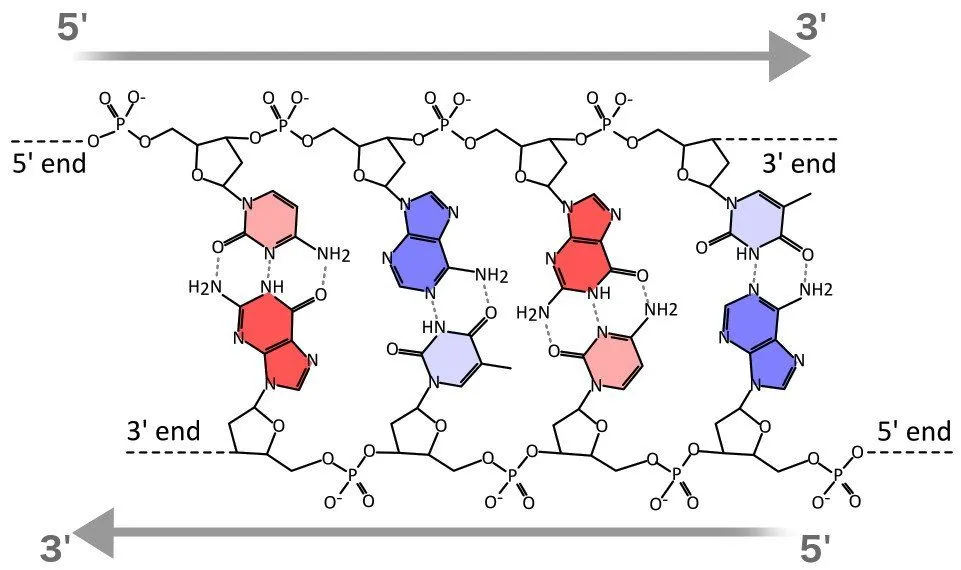
Molecular complexity enabled the synthesis of functions, such as breathing, excretion, digestion and most importantly, reproduction. None of this would have been possible without carbon. Without carbon, there would have been no DNA, proteins, lipids, sugar, fat, muscle tissue or anything else that makes up the stuff of life.
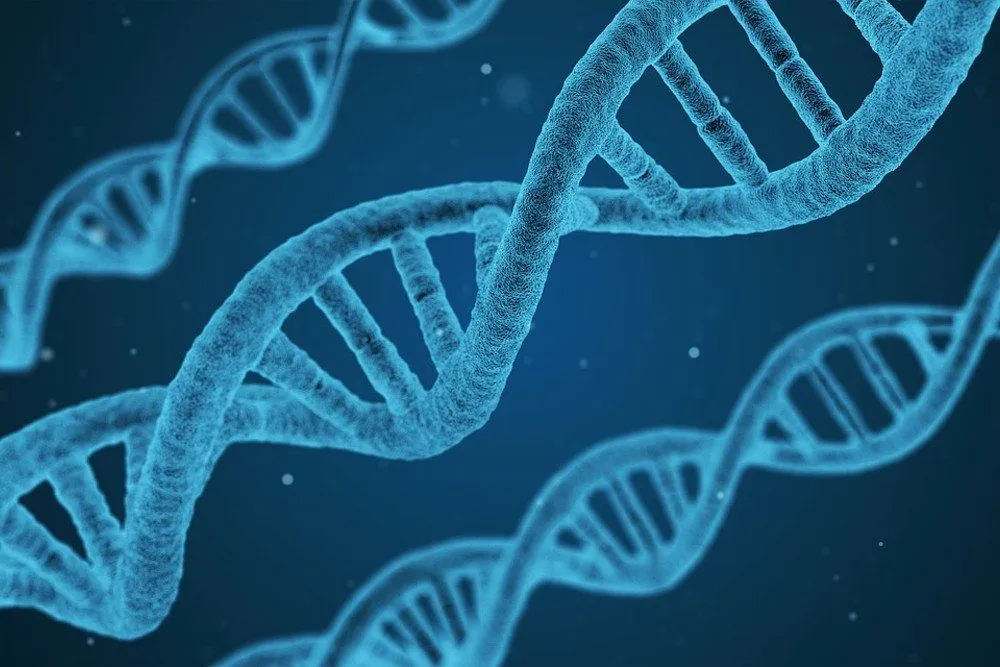
Considering the 118 elements on the periodic table, it’s striking that just six of them, often abbreviated as CHNOPS (carbon, hydrogen, nitrogen, oxygen, phosphorus, sulfur), make up roughly 99% of the mass of every known living thing. The most central of those is, of course, carbon, the subject of an entire branch of chemistry called organic chemistry. In the human body alone, carbon accounts for about 18.5% of body mass, second only to oxygen, which means that yes, humans are very much carbon-based life forms. It is carbon’s extraordinary thermodynamic and chemical properties that render it so superior to other elements for the job.
Are Humans Really Carbon-Based If We Breathe Oxygen?
Here is a fair question that trips a lot of people up: if oxygen is actually the most abundant element in the human body, and we spend every minute of our lives breathing oxygen, why are we called carbon-based and not oxygen-based? The answer is that “carbon-based” describes what we are built from, not what we breathe.

By mass, an average adult human body is about 65% oxygen, 18.5% carbon, 9.5% hydrogen and 2.6% nitrogen, with calcium, phosphorus and a long tail of trace elements making up the rest. So yes, oxygen wins the weigh-in. But most of that oxygen is locked up in water, which makes up roughly 60% of you, and water is structurally simple. It is carbon that links together into the long, intricate chains and rings that water never could: the DNA that stores your genetic code, the proteins that build and run your cells, the lipids in your membranes. Strip those carbon skeletons out and there is no recognizable “you” left, just a puddle of water and salts.
Counting atoms instead of weighing them tells the same story from a different angle: by sheer number, hydrogen is actually the most common atom in your body (around 62% of all atoms), because each small water molecule carries two of them. We are not called hydrogen-based either, for the same reason. The element that organizes everything else into living structure is carbon, which is why it, and not the more plentiful oxygen or hydrogen, gives life its name.
Carbon Amiability
A carbon atom has four valence electrons, allowing it to form four single bonds (methane), two double bonds (carbon dioxide) and a triple bond (acetylene, a welding fuel and a raw material for synthesizing plastic). The dominance of carbon, however, isn’t a result of its ability to form these complex bonds, but rather the ease and pliancy with which it forms them. In fact, all the elements residing in the column that carbon occupies in the periodic table possess four valence electrons, but the stability of the bonds they form is incomparable to carbon.
Even silicon, the element that resides right below carbon, forms countless molecules, but a double-bonded silicon molecule, unlike double-bonded carbon, is transient – its instability eventually forces it to part into single-bonded silicon atoms. Carbon molecules, such as hydrocarbons, one of the most crucial species of molecules to sustain life, are neither too frail to easily break down, nor too rigid to deter plasticity and adaptability. This allows enzymes to easily manipulate carbon molecules. Furthermore, reactions with silicon aren’t all that efficient; silicon dioxide is a huge molecule (sand), as compared to carbon dioxide, which comfortably exists as a gas.
Silicon-based life can’t survive on Earth anyway. Silicon can form long chains of its own (called silanes), reminiscent of hydrocarbons, but those chains are pyrophoric, meaning they ignite on contact with the oxygen in our atmosphere. That rules silanes out as a stable backbone for terrestrial life. Carbon-based life would not have survived either if organisms stored energy directly as hydrocarbons, since alkanes like petrol and kerosene are extremely flammable. Instead, carbon-based organisms store energy as oxygenated carbon compounds: sugars, lipids, and alcohols, which still rely on a carbon skeleton but have very different (much safer) chemistry from raw hydrocarbons.

All of these properties can be explained by a single statement: carbon is the smallest atom that possesses four valence electrons. Its size renders it the ideal friend to make. Bonds on one branch are unaffected by bonds on other branches. However, life would have been impossible to manufacture if nature lacked the raw materials itself. Carbon is abundant on Earth, so nature couldn’t have missed the opportunity. It leveraged its properties to build life right from scratch!
Where Did the Carbon in Living Things Come From?
If carbon is the raw material that life is built from, it is worth asking where that carbon came from in the first place. The answer reaches a long way past Earth. In the first moments after the Big Bang, the universe held essentially only hydrogen and helium; there was no carbon at all. Every carbon atom in your body, and in every other living thing, was manufactured later, inside stars.

Inside a star, nuclear fusion presses lighter nuclei together to make heavier ones. Once a star has burned through its hydrogen, its core grows hot enough, above roughly 100 million degrees Celsius, for three helium nuclei to fuse into a single carbon nucleus, in a reaction known as the triple-alpha process. Almost all of the carbon in the universe is forged this way. When those aging stars later shed their outer layers or detonate as supernovae, they fling that freshly made carbon, along with oxygen, nitrogen and other elements, out into space, where it eventually gathers into new stars, planets, and ultimately us.
As NASA puts it, the carbon, oxygen and other heavy elements in our bodies were forged in the cores of earlier generations of stars and scattered by their deaths. The carbon in your cells is, quite literally, recycled stardust, which is why astronomer Carl Sagan liked to say that we are “made of star stuff”. Carbon is also abundant on Earth, so once the planet had formed, nature had no shortage of this versatile element to work with.
References (click to expand)
- Cosmic Evolution - Future - CfA Harvard. The Center for Astrophysics | Harvard & Smithsonian
- Organic Molecules of Life - projects.ncsu.edu
- Questions and Answers about Life in the Universe. The University of Maryland, College Park
- Carbon-based life - Wikipedia. Wikipedia
- Carbon - The Chemical Basis for Life. Biology LibreTexts
- Composition of the human body - Wikipedia. Wikipedia
- Are we really made of star stuff? NASA Science
- On the Potential of Silicon as a Building Block for Life. Life (Basel), 2020. PMC, NCBI