Table of Contents (click to expand)
- What Are The Other Names For The Food Pipe And Windpipe?
- Where Is The Esophagus Located In The Body?
- Trachea vs. Esophagus: What Is The Difference?
- Pathways For Air And Food Intersect At The Pharynx
- The Epiglottis Prevents Food (Or Air) From Entering The Wrong Pipe
- Why Are The Windpipe And Food Pipe Located So Close To Each Other?
The esophagus and trachea sit side by side because of evolution: as the human larynx descended in the throat, it created a shared pharyngeal space that made the wide range of vowel sounds used in speech possible. The epiglottis closes off the airway during swallowing to keep food out of the trachea, though the trade-off is a higher choking risk than other mammals face.
The trachea and esophagus are two essential ‘pipes’ in the upper part of the human body. The trachea, also known as the windpipe, is a part of the respiratory system and leads to the lungs. In contrast, the esophagus, also known as the food pipe, is part of the digestive system and is located directly behind the trachea.
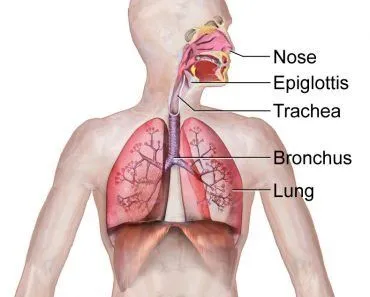
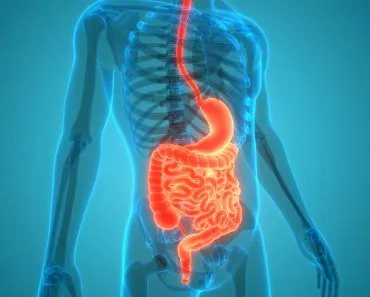
To better understand the context of this question, try recalling the diagrams of the human digestive and respiratory systems that you studied in high school, such as this one:
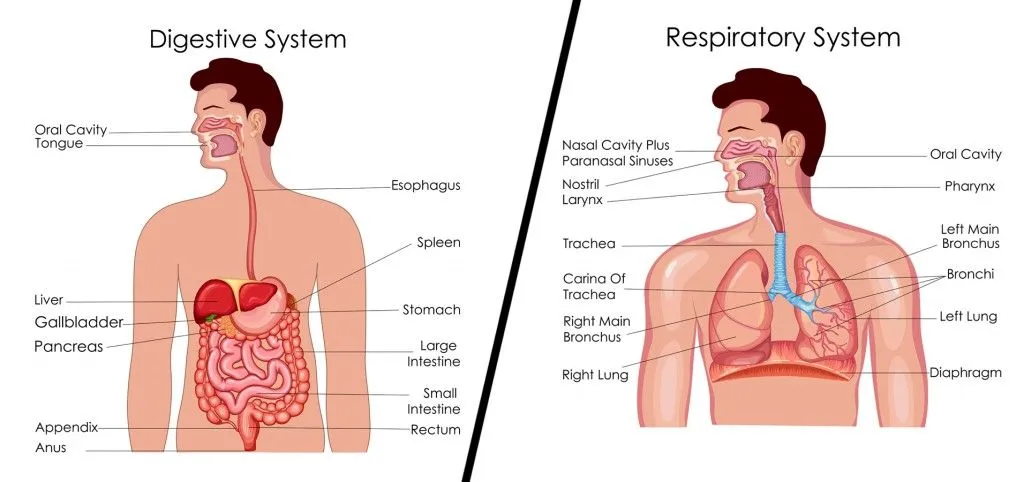
As you can clearly see in these two pictures, the food pipe and the windpipe are practically next to each other. If you take a moment to think about it, you might determine that this configuration is not ideal from a safety perspective.
You see, this positioning of the esophagus and the trachea opening is a bit risky because while swallowing food, the food can get into the wrong place, i.e., the trachea, and lead to disastrous consequences. Choking on food is a serious risk; approximately 5,000 people die from choking in the United States each year, making it the fourth leading cause of unintentional death. The elderly are most vulnerable, with those aged 74 and above accounting for over half of choking fatalities. Globally, choking on foreign objects causes an estimated 160,000 deaths per year. Wouldn’t it make more sense if evolution had separated our gullets from our tracheae and put a little more physical gap between them?
What Are The Other Names For The Food Pipe And Windpipe?
Before we go any further, let’s clear up the names, because these two tubes collect quite a few of them. The food pipe is more formally called the esophagus (spelled oesophagus in British, Australian and Canadian English), and in everyday speech it is also known as the gullet. The word itself is wonderfully literal: it comes from the Greek oisophagos, “gullet, passage for food,” built from roots meaning roughly “to carry” and “to eat.” In other words, the ancient Greeks named it the “food carrier,” which is exactly what it does.
The windpipe, meanwhile, is the everyday name for the trachea. The trachea belongs to the respiratory system and carries air, while the esophagus belongs to the digestive system and carries food and liquid. So if a quiz asks for “another name for the food pipe,” the answer is the esophagus (or gullet); and the windpipe is simply the trachea. Both tubes begin in a shared region at the back of the throat called the pharynx, which is where the famous design problem starts.
Where Is The Esophagus Located In The Body?
Picture a long, muscular tube running straight down the middle of your neck and chest. That is the esophagus. It starts at the lower part of the pharynx, at roughly the level of the sixth cervical vertebra in your neck, and runs down behind the trachea, in front of the spine, all the way to the stomach. In a fully grown adult it is about 25 to 33 cm (10 to 13 in) long.

Anatomists split it into three stretches: a short cervical portion in the neck, a long thoracic portion in the chest (which travels behind both the trachea and the heart), and a brief abdominal portion just after it passes through the diaphragm to reach the stomach. A ring of muscle guards each end. The upper esophageal sphincter sits at the top, near the windpipe, and the lower esophageal sphincter sits at the bottom, keeping stomach acid from washing back up. Food does not simply fall down the esophagus under gravity; rings of muscle squeeze in sequence and push it along in waves, a process called peristalsis. That is why an astronaut, or anyone hanging upside down, can still swallow.
Trachea vs. Esophagus: What Is The Difference?
Although they run side by side, the windpipe and the food pipe are built very differently, because they do very different jobs. The clearest difference is what holds them open. The trachea is reinforced by 16 to 20 C-shaped rings of tough hyaline cartilage stacked one above the other, which keep the airway permanently open so it never collapses while you breathe. The esophagus has no such rings; it is a soft, muscular tube that normally stays flattened shut and only opens to let a swallow pass through.

There is a neat detail where the two tubes touch. The C-shaped cartilages of the trachea are open at the back, and that gap is bridged by a band of smooth muscle, the trachealis, which sits flat against the front of the esophagus. The soft back wall of the windpipe is essentially what lets a bulky swallow bulge past behind it. Lower in the chest, the trachea ends by splitting (bifurcating) into the left and right bronchi, the two tubes that carry air into the lungs, while the esophagus continues straight on to the stomach. So the quick answer to “windpipe vs. food pipe”: the trachea is a stiff, cartilage-ringed air tube of the respiratory system, and the esophagus is a soft, muscular food tube of the digestive system, lying right behind it.
Pathways For Air And Food Intersect At The Pharynx
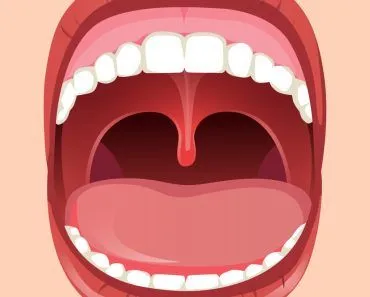
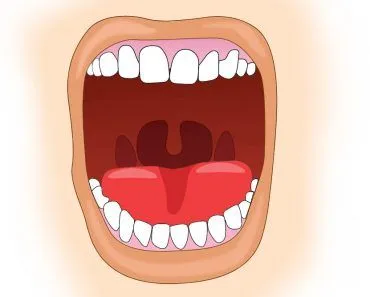
The pathways for food and air intersect in the pharynx. When one breathes through the nose or mouth, the incoming air always passes through the pharynx.
As you can imagine, swallowing is an important part of survival; basically, it helps us eat and drink. Simply put, without swallowing, we would not be alive. Since it is such an important process, it comes as no surprise that it involves complex neuromuscular activities that help push food down the esophagus.

When we swallow food, the pharynx becomes a passage for it. However, since the pharynx also acts as a passage for air, there must be a mechanism to ensure that the food ingested does not enter the trachea, where it could block the passage of air. Enter the epiglottis.
The Epiglottis Prevents Food (Or Air) From Entering The Wrong Pipe
A tiny flap called the epiglottis, composed of elastic cartilage and covered with a mucous membrane, is one of the key players that makes sure your ingested food does not enter the trachea. It is located at the entrance of the larynx and points dorsally. When you swallow, the epiglottis works as part of a coordinated system: your vocal cords close tightly, the larynx rises, and the epiglottis folds down to cover the airway entrance. Together, these mechanisms form a multi-layered defense against aspiration.
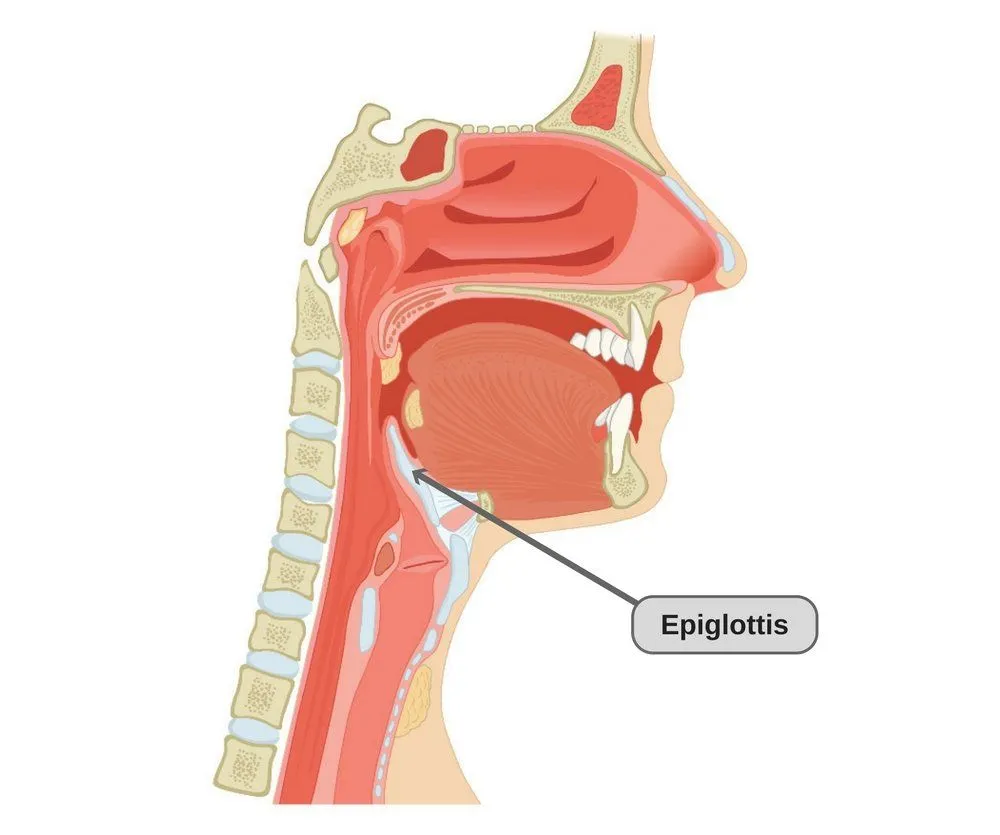
During swallowing, the soft palate rises to close off the nasal cavity (preventing food from going up the nose), while the epiglottis folds down to cover the entrance to the trachea (preventing food from entering the airway). When you breathe normally, the epiglottis stays open so that the incoming air can pass through the windpipe and into the lungs. However, when you swallow food or any liquid, it closes (thereby shutting off the windpipe for a brief moment) so that the ingested material only goes down the esophagus (and not the windpipe).
Why Are The Windpipe And Food Pipe Located So Close To Each Other?
The proximity of the windpipe to the food pipe seems risky. As such, if the mechanism of the epiglottis fails – which happens occasionally – swallowing food can be quite dangerous. This choking can even be fatal if the food ingested is large enough to block the passage of air.
From the outside, it seems that this problem would not exist if, during our evolution, the trachea had completely separated from the esophagus. Interestingly, however, the risks are offset by far more important advantages that this positioning offers.
First, the ability to produce discreet sounds with specific meanings – words – depends on the direction of the vocalizations coming from the mouth through the lips.
Other living things have windpipes that intersect the esophagus much farther away from the mouth. Although this reduces their risk of choking on food, it also means that the only sounds they can produce are yelps, barks, and growls. It is important to note that animals still couldn’t speak, even if they had the same anatomical structures to produce sounds as we do, but that’s a different story altogether…
More specifically, this positioning of the two ‘pipes’ results from natural selection and evolution that gave our primate ancestors the ability to communicate.
The specific evolutionary adaptation is called laryngeal descent. In human infants, the larynx sits high in the throat (similar to other mammals), allowing babies to breathe and swallow simultaneously, which is why infants can nurse without choking. As humans grow, the larynx descends to a lower position, creating a larger shared pharyngeal space. This descent enables the full range of vowel sounds needed for human speech, but it comes at a cost: adults can no longer breathe and swallow at the same time, creating the choking risk that all adult humans face.
In addition, the large cavities of the mouth and nose moisten and heat the air we breathe, making it easier for the lungs to absorb oxygen. Finally, when we feel too hot, we use the air we exhale to cool the body by blowing out hot steam from the inside of the mouth and nose.
In short, the current positioning of the trachea and esophagus may seem a little risky, but it also simultaneously helps us communicate and provides various other important health benefits. If someone does choke on food, the standard first aid response is the Heimlich maneuver (abdominal thrusts), a technique that uses quick upward pressure on the diaphragm to force air from the lungs and dislodge the obstruction. Knowing this technique can be lifesaving, given the narrow margin between the food pipe and windpipe that evolution has given us.
References (click to expand)
- Matsuo, K., & Palmer, J. B. (2009, May). Coordination of mastication, swallowing and breathing. Japanese Dental Science Review. Elsevier BV.
- What Is Dysphagia (Difficulty Swallowing)? | NIDCD. The National Institute on Deafness and Other Communication Disorders
- Epiglottitis - Harvard Health. Harvard University
- Olympus MIC-D: Brightfield Gallery - Epiglottis Elastic Cartilage. Florida State University
- Epiglottis: Function & Anatomy. Cleveland Clinic.
- Choking - StatPearls. NIH.
- Risk factors and prevention of choking. PMC (2024).
- Esophagus: Anatomy, Function & Conditions. Cleveland Clinic.
- Anatomy, Thorax, Esophagus - StatPearls. NCBI Bookshelf.
- Trachea (Windpipe): Location, Anatomy & Function. Cleveland Clinic.
- Anatomy, Thorax, Tracheobronchial Tree - StatPearls. NCBI Bookshelf.
- Esophagus (oesophagus) - Etymology, Origin & Meaning. Online Etymology Dictionary.