Table of Contents (click to expand)
Artificial flavors work by mimicking the aroma molecules of real foods. Flavorists combine carboxylic acids and alcohols to form esters such as butyl butyrate (pineapple) and methyl cinnamate (strawberry), drawn from a palette of around 2,500 FDA-approved compounds, that trick the brain into perceiving a familiar taste.
What are the absolute necessities that the fittest must avail to ensure survival? Food? Sleep? Water? Shelter? His beanbag? The next season of Game of Thrones? Food, along with sleep and shelter, is unquestionably important. However, what’s even more important is the taste… or flavor, of the food. People tend to use these two terms interchangeably, but the truth is that they are two (not entirely) different concepts.
While taste refers to one of the five recognizable words you learned in primary school – sweet, sour, salty, bitter and umami (perhaps not the last one), flavor refers to a more complex or secondary sense, which is a delicate mélange of taste, smell, texture and even temperature.
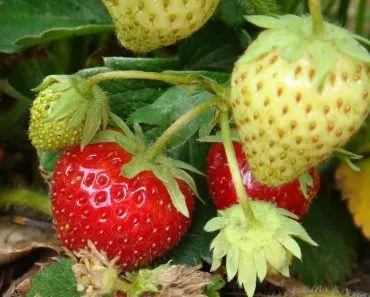
If you were to drink a glass of strawberry juice a century ago, chances are that the juice was organic and the strawberries real. Nowadays, if you were to scrutinize the labels, you would find that the juices aren’t authentic, but rather processed. In that process, manufacturers legally add flavors created in labs to replicate the same saccharine taste.
The process isn’t limited to just imitation; it also includes dyes that make the food a more vibrant, plush red and chemicals that enhance the smell to a more pleasant scent. These enhancements have the psychological effect of raising our pliant expectations – the juice or product tastes good even before it has been consumed. How and why do “flavorists” make these additions?
How Are Artificial Flavors Made?
If you look at the label on an item of food, you would observe that it’s adorned with either “natural” flavors or “artificial” flavors – or both! Despite the differences in their compositions, which we’ll cover in a minute, there is absolutely no difference in the flavors they generate. The function of both flavors is to replicate real flavors by tricking or deceiving the brain into thinking that it’s savoring a real fruit or a delicious pasta.

The brain is quite easy to con. A bot on Twitter, with its carefully curated behavior, can easily be perceived as an actual human being if it is cleverly programmed. Similarly, an innocuous glass of juice can be perceived as a squash of real fruit if it’s created with just the right chemicals. At the end of the day, to the brain, a flavor is just the result of soaking up certain chemicals; it doesn’t matter if they ooze out from a real fruit or are synthesized in a lab.
The chemicals don’t even have to be chewed; since 80% of taste is influenced by smell, most flavors simply modulate the scent of an item. The variety of smells is created by reacting acids that contain a double-bonded oxygen with a substance that possesses a dangling molecule of oxygen or hydrogen. This feature can be exploited to form countless combinations, formally known as esters, to produce a fruity, saccharine scent associated with flavors. In fact, esters are not necessities. Some flavorists prefer even smaller molecules, as they are more likely to evaporate and escape through crevices. And what gets more airborne is also more liable to be inhaled.
The combination of butyric acid and 1-butanol — butyl butyrate — gives off the sharp smell of pineapples, whereas the combination of cinnamic acid and methanol — methyl cinnamate — exudes the mouth-watering scent of strawberries. The industry has roughly 2,500 such flavoring compounds on FEMA’s GRAS list to play with, and skilled flavorists blend them into hundreds of distinct flavor profiles, each one a laborious choreography between chemists and chefs to conjure the perfect spell that can enchant your taste buds. The work is so superlative that one often cannot tell the difference between real smoked salmon and an artificial flavor of one.
Amongst the two types of flavors, “natural” flavors are called natural because they are created from natural sources, which are usually edible. Despite being labeled as “natural” in view of their bloodline, they are not always what you picture. Once extracted, the source compounds are processed with several other ingredients to generate the desirable flavor, odor, and hue. The notorious example you may have heard — vanilla flavoring made from beaver castoreum — is, in reality, exceedingly rare today, with U.S. food use of castoreum totaling well under 300 pounds a year. Yummy?

The second type is “artificial”, which as the name suggests, is created by completely artificial means. The sources of artificial flavors are often inedible, such as petroleum. Octyl acetate, one of the fruity esters present in orange peel (the bulk of orange aroma actually comes from limonene), can be synthesized in a lab and simply added to gums to create orange-flavored chewing gums. Not so yummy!
Why Do We Create Artificial Flavors?
Food loses a crucial volume of its authentic flavor after it is processed. Furthermore, when allowed to loiter on a shelf, the remaining flavors also deteriorate. This is where added flavors are valuable — we can restore the flavor content of an item by adding flavors externally.
Here, artificially synthesized flavors have an edge over naturally crafted flavors. Natural flavors require elements that must be cultivated in crops or are found in the trunks of secluded or rare trees. Artificial flavors entail no such hassle of cultivating crops, nurturing cattle, or transporting natural chemicals. They are created in a small laboratory or factory, and then distributed to clients.
Artificial flavors are favored for the same reason counterfeit watches are; they are equally effective, but much cheaper. Both natural and artificial flavors used in the U.S. have to clear the same FDA and FEMA GRAS safety reviews, so the popular intuition that "natural is automatically safer" does not really hold up. Who knew that the artificial flavor in your walnut brownie was sitting on the same chemistry shelf as the so-called natural one?