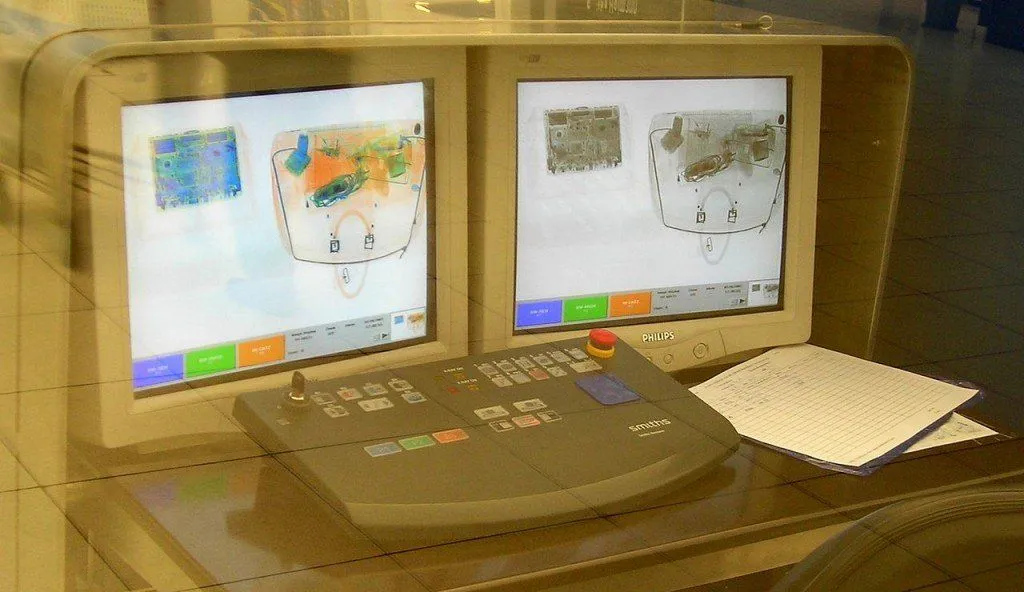
Airport security combines several technologies. Walk-through metal detectors use electromagnetic induction to find metallic objects. Dual-energy X-ray and (newer) CT scanners image inside luggage by material type, with orange showing organic items and blue showing metals. Millimeter-wave body scanners (which replaced backscatter X-ray scanners in US airports in 2013) check passengers, and ion mobility spectrometry sniffs swabs for explosive traces.
Given the current state of the world, there are physical checkpoints, baggage scanners and metal detectors almost everywhere. With that in mind, it doesn’t come as a surprise that at airports, some of the busiest hubs for transportation, security is getting tighter by the day.
The devices and machines used for airport security purposes use science from many different fields. These machines can be broadly categorized into a few categories:
Metal Detectors Using Electromagnetism:
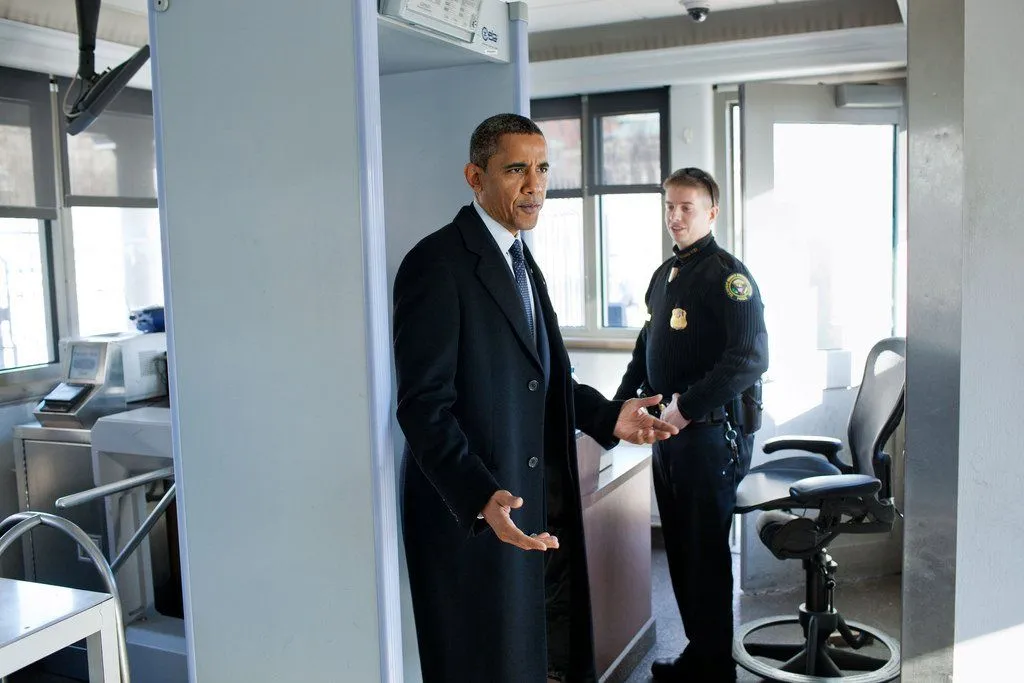
These are used in airports as one of the first and very basic levels of a security check, mainly to find weapons like daggers, guns, knives etc., all of which are made of metal. They are also used in places like malls and theaters.
A metal detector consists of an AC current generator and a coil. The alternating current that is produced induces a varying magnetic field in the coil. If a conducting metallic object is nearby, ‘eddy currents’ are produced in the object due to the varying magnetic field. Those eddy currents then produce a magnetic field of their own. Thus, the net magnetic field suddenly changes, a change that is detected by a device called a magnetometer. The magnetometer then sets off the alarm, so after a complicated back and forth between the electric and magnetic fields, the metal object is successfully detected.

Metal-screening devices may be hand-held, or walk-through in nature. A common worry is whether people with pacemakers or implantable cardioverter-defibrillators (ICDs) can safely pass through. According to current TSA and American Heart Association guidance, modern cardiac devices are generally safe in both walk-through metal detectors and millimeter-wave body scanners, as long as the passenger walks through at a normal pace without lingering and asks that handheld wands not be held directly over the device. A pat-down alternative is always available on request.
Scanners Using The Properties Of X-rays
Fun Fact: Superman once used his X-ray vision to determine the color of Lois’ underwear.

Additionally, X-rays have a wide variety of more useful applications.
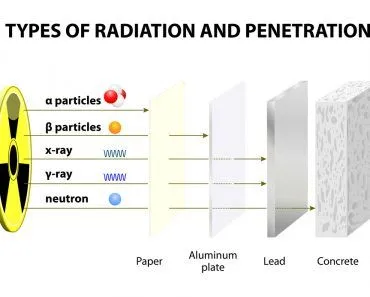
Since X-rays are short-wavelength, high-frequency, high-energy electromagnetic waves with significant penetrating power, they can pass through clothing, luggage walls, and soft tissue, while being absorbed more by denser materials like metal and bone. The amount of X-ray energy absorbed by different materials varies, so the intensity of the transmitted rays gives us insight into the material of the object. The reflected or ‘scattered’ waves also have a different intensity when reflected from different materials. Because of this, we have two types of scanners.
Measuring The Intensity After Transmission Through The Material.
Luggage scanners use this technology. Once the luggage is inside, one side of the scanner releases X-rays. These X-rays pass through the bag and some of the energy of the X-rays is absorbed by the various objects in the bag, whereas the empty spaces do not block the X-rays and the waves go through without any change in intensity. These waves then hit the first plate-like detector. Before hitting the second detector, the material between the two detectors blocks the low-energy waves, so that only the high-energy waves hit the second plate. The outputs of these plates are compared, which helps us know the materials of the various objects inside the bag.
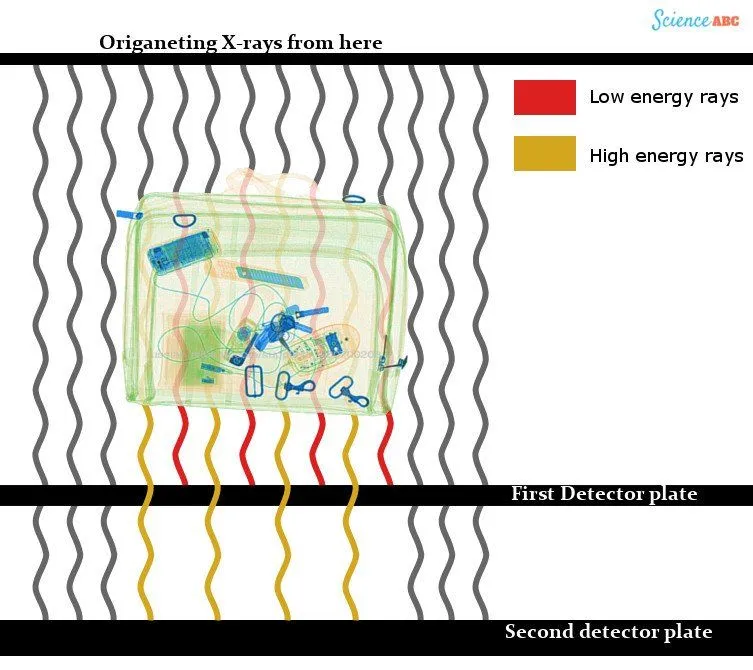
An image is then digitally constructed, describing not only the shapes but also the type of material inside the bag, encoded with a standard color scheme: orange for organic materials (food, paper, plastic, explosives, drugs), green for mixed/medium-density materials, and blue for metals and other inorganic materials. The color reflects the object’s effective atomic number, not simply how dense it is.
Measuring The Intensity After The Scattering Of The Waves After They Hit The Material
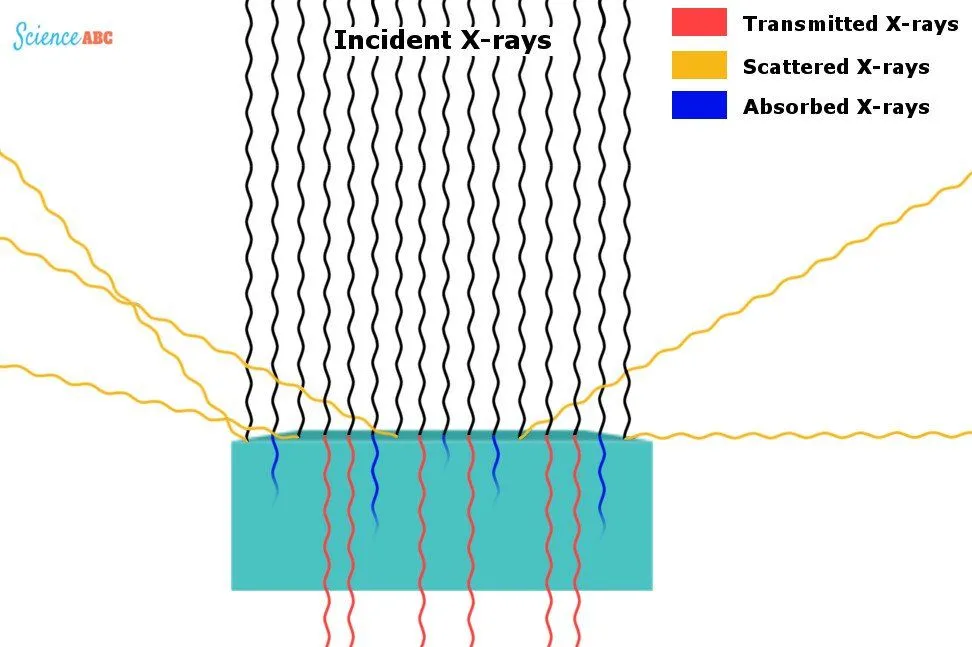
Apart from being transmitted through the material after their energy is absorbed, X-rays are also scattered from the surface. In this case, the intensity of the scattered waves is measured. This is less harmful, as the rays do not have to fully pass through the object, so machines using this technology are used as full-body scanners for humans. Similar to what is mentioned above, the intensity of the scattered light varies with the material. There are two further types of machines that use this property: those using backscatter X-ray technology and machines with millimeter wave technology.
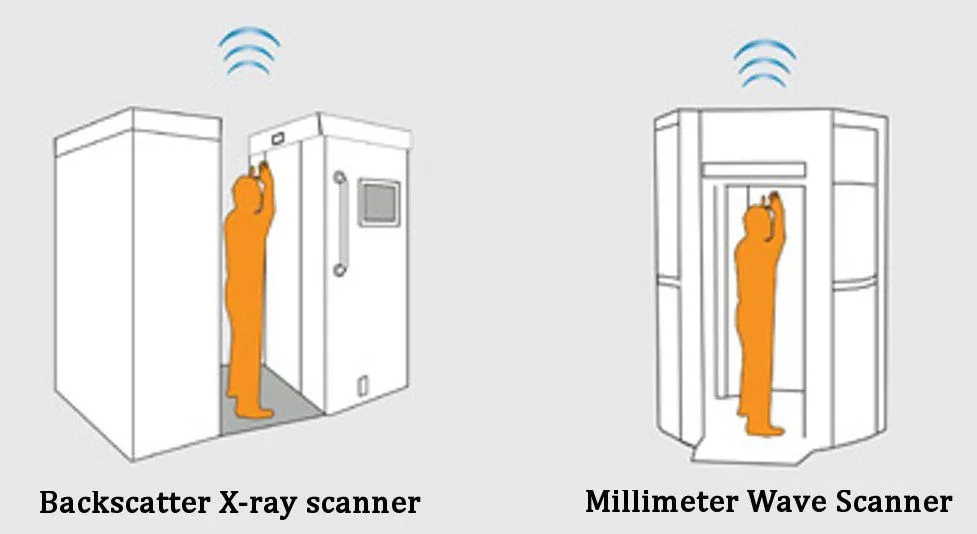
The major difference is the type of radiation: backscatter X-ray scanners use ionizing X-rays, while millimeter-wave scanners use non-ionizing radio waves at 70-80 GHz. The TSA actually removed all backscatter X-ray scanners from US airports by June 2013 after they failed to meet a Congressional privacy requirement for a generic-mannequin display, leaving non-ionizing millimeter-wave units (the boxy round booths you walk into and raise your hands in) as the current standard. Millimeter-wave scanners are also considered much safer, as they emit far less energy and produce only an abstract outline rather than a near-photographic image.
CT Scanners: The New Checkpoint Standard
The 2D X-ray baggage scanners described above are gradually being replaced at TSA checkpoints by computed tomography (CT) machines, the same general technology used for medical CT scans. Instead of a single transmitted X-ray image, a CT scanner rotates its source and detectors around the bag and reconstructs a full 3D model of its contents from many angles. Software can then automatically detect threat materials by shape and density and let security officers rotate, zoom and slice into the image on screen. TSA has now deployed CT scanners at more than 200 US airports as of 2024, and the practical upside for travelers is real: in CT lanes, you can leave laptops and 3-1-1 liquids inside your carry-on instead of fishing them out.
Machines Used To Detect Explosives And Illegal Drugs:
For the detection of explosives, a technology known as Ion Mobility Spectrometry is used. In this method, the particles of the sample in its gaseous phase are ionized and their ‘ion mobility’ is measured. Ion mobility is a ratio of the ion’s drift velocity to the electric field due to the ionic charge.
The method that uses the measurement of X-ray intensity after transmission through a sample can also be used to detect illegal drugs and explosives. In this case, there is a database of all acceptable colors, and if the output does not match any of these colors, the authorities are alerted.
Apart from using machines, dogs trained to detect certain scents are also used. One more unusual endeavor was the training of honeybees: Los Alamos’ Stealthy Insect Sensor Project and a UK spin-out called Inscentinel even built a prototype handheld bee-sniffer (the VASOR136, with 36 trained bees inside) capable of detecting explosives at parts-per-trillion levels. The technology never made it to operational airport use, but the very idea of a guard bee army is still pretty fascinating.
All in all, I think the changes in airport security screening over time, from physical frisking to X-ray baggage scanners, electromagnetic metal detectors and guard bee armies, are just another example of how wonderful the growth of science can be. It’s just like Winston Churchill once said, ‘To improve is to change; to be perfect is to change often.’

References (click to expand)
- Frequently Asked Questions on Cabinet X-ray Systems.
- RadTown - www3.epa.gov
- Security Analysis of a Full-Body Scanner - RadSec.
- Computed Tomography (CT) - Transportation Security Administration.
- Procedures for passengers with internal or external medical devices. TSA.
- TSA Removes X-Ray Body Scanners From Major Airports. ProPublica.