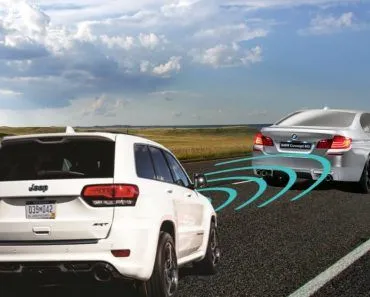
An automated highway system (AHS) embeds sensors and communication into the road itself so the infrastructure can coordinate vehicles, rather than leaving every decision to individual drivers. By exchanging data with cars in real time, it directs traffic for safer, smoother, and more efficient travel.
As Steve Jobs famously put it, the best ideas live at the intersection of technology and the liberal arts.
Technology is no longer an intangible, hard to grasp entity concocted in secretive labs; it is actively used to improve human life every day. One such concept for the future is the automated highway. At first, this might sound like the airport carousel that brings your luggage after a flight, but there is far more to it than that!
A Future Beyond Driverless Cars

Self-driving capabilities are built into many modern cars to some extent, and there is no denying that cars and drivers will share their driving duties in the future. However, if all cars were granted a mind of their own, the roads would be utterly chaotic. Just as the teacher in a classroom keeps children orderly, it would also be nice to have someone watch over traffic, telling all those “smart cars” what to do, as the police certainly can’t help!
Automated Highway Systems (AHS)
The idea of automated highways has been in the works for decades. Back in August 1997, the National Automated Highway System Consortium ran a now-famous demonstration on a stretch of I-15 near San Diego, sending platoons of cars cruising hands-free in tight formation while the vehicles talked to one another and to the road many times a second. The concept stems from the fact that vehicles operate in an ecosystem, not in isolation. However, it is impossible for a human driver to have full visibility and awareness of that entire ecosystem.

This highway ecosystem has several participants and variables, including fellow motorists using all types of vehicles, obstacles, road design and even stray animals. The ecosystem is further governed by various factors, which could be as simple as speed limits, or something as complex as the driver’s state of mind and individual skills.
The increased number of variables adds more complexity to the system. Implications of this are commonly faced in problems such as road rage, risky maneuvers, unplanned traffic jams, and accidents. Fortunately, AHS obliterates most of these governing factors by taking a bird’s eye view of this dynamic ecosystem. It uses this information to communicate with various vehicles on the road, directing them to the most efficient and safe ways to complete a given journey.
AHS Technology
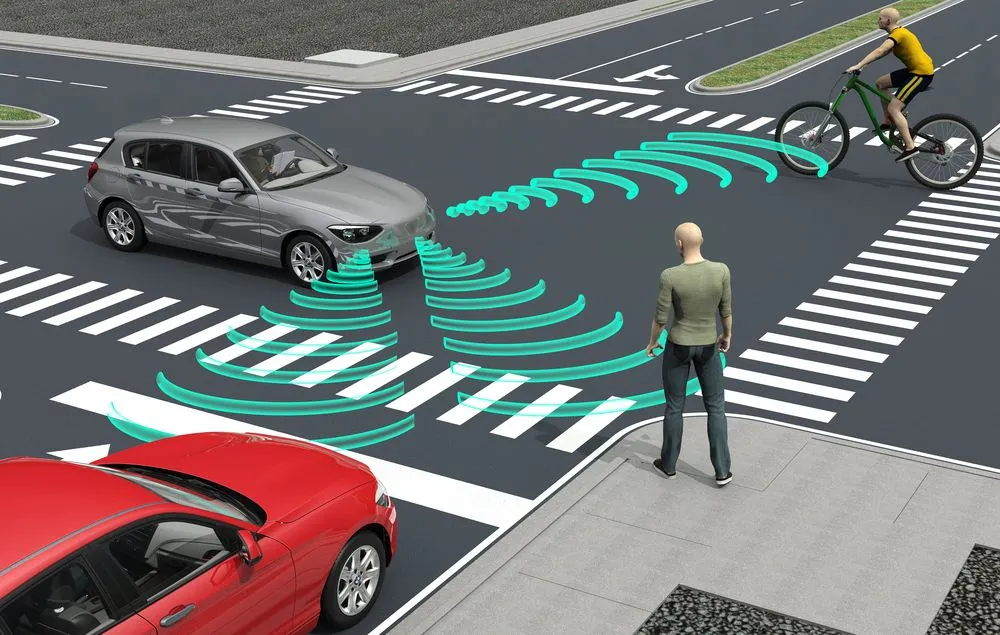
Most modern cars are built with many useful features that enable them to assist the driver and communicate with other vehicles on the road in some way. Some of these include lane departure assistance, adaptive cruise control, and even driver attention detection. AHS seeks to further their utility by adding sensors like CCTV, radar, obstacle sensing, lane tracking and positioning sensors to existing road networks. The most important part of AHS is the communication between the road intelligence and the onboard vehicular intelligence.
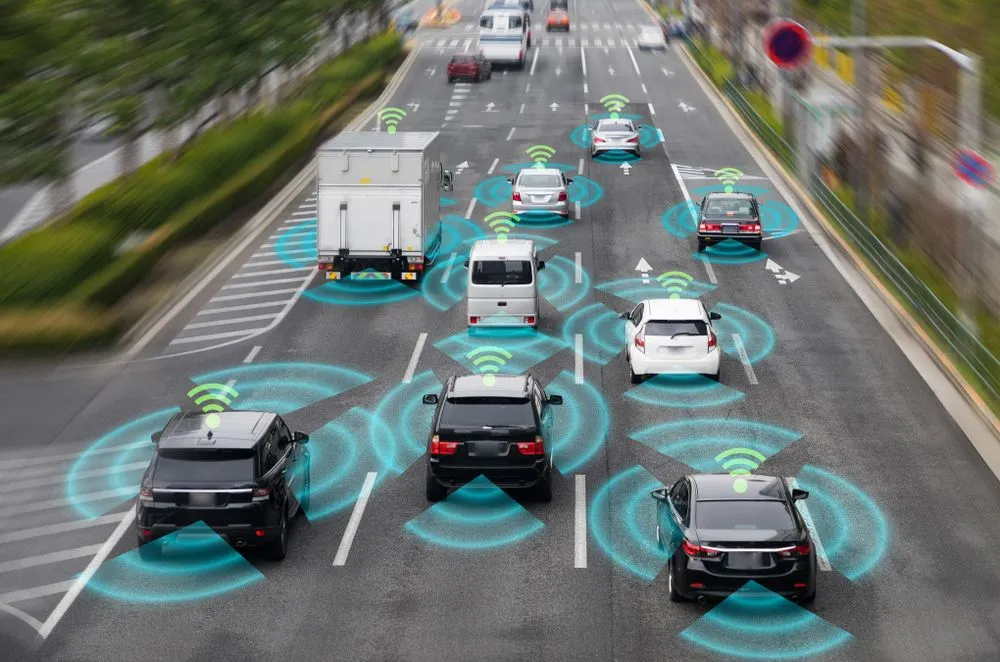
The technology is often described in five distinct concepts, ranging from fully autonomous (traditional driving, with no help from the road) to fully infrastructure-controlled (where the roadway directs every vehicle). Each concept differs from the next in how much control rests with the driver versus the infrastructure. That control is defined by four functions: keeping a vehicle in position, changing lanes, detecting obstacles and reacting to them, and managing the flow of traffic.
Autonomous Concept
Autonomous concept symbolizes traditional driving, wherein all decisions must be made by the driver and the vehicle intelligence. There is no assistance from AHS infrastructure.
Cooperative Concept
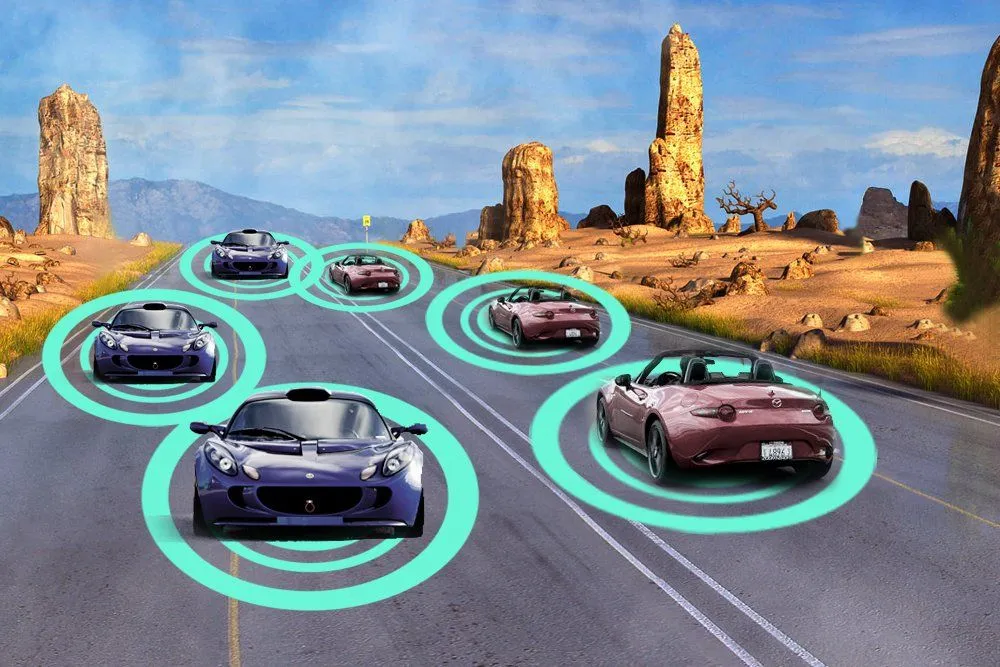
This is an iterated form of the autonomous concept where vehicles are capable of communicating with each other and negotiating driving maneuvers. The onboard intelligence systems in the vehicle can communicate amongst themselves and issue warnings. Ultimate control remains vested with the driver and there is no help from the AHS.
Infrastructure Supported Concept
This is the true differentiating stage where AHS begins to play a significant role. It usually involves fully automated vehicles driving in dedicated lanes. The AHS provides inputs to vehicles by classifying them in groups, and then assists them in coordinating. Lane changing is the only activity achieved by cooperative negotiation, albeit with inputs from the system.
Infrastructure Managed Concept
At this stage, the AHS system takes partial control of driving duties. Since it operates in the existing infrastructure, the AHS helps during entry and exit into dedicated lanes, as well as during emergencies. Activities such as lane changing and response to obstacles are also accomplished by the exchange of requests and commands between the vehicle and the AHS.
Infrastructure Controlled Concept
At this stage, the AHS takes full control of the entire driving ecosystem, under all driving conditions, constantly optimizing vehicle movement.
Benefits Of AHS
The most important benefit of AHS is that it can accommodate more vehicles on the road by allowing vehicles to travel closer to each other than they normally would. The presence of self-driving capabilities in the car enables it to react faster and smoother to panicked braking situations than any human response.
Rather than being a parallel infrastructure alongside traditional highways, AHS could be introduced to the existing infrastructure as dedicated lanes. Integration with GPS and navigation systems can help map traffic and plan alternative routes ahead.
At the same time, by delegating the driver-related factors to technology, hazardous outcomes like traffic jams, accidents and dangerous driving can be avoided. This will not only improve vehicular efficiency, but also human productivity, which is otherwise reduced due to frustrations arising from driving. Miscellaneous benefits include efficient driving even in inclement weather, and the availability of mobility for drivers of all skill levels.
Challenges Of AHS
Implementation and adaptation are the biggest challenges faced by AHS, as it heavily relies on artificial intelligence and machine learning algorithms to make decisions. Thus, it will only improve over time, as more and more self-driving-capable vehicles join automated road systems. To make this process less troublesome, today's automated vehicles are still built to hand control back to the driver whenever the situation calls for it.
Where AHS Stands Today
The full vision of a road that drives your car has not arrived, but its foundation, the wireless link between vehicles and the infrastructure, is being laid right now. The piece that makes AHS possible is what engineers call V2X (vehicle-to-everything) communication: cars exchanging messages with each other (V2V) and with roadside equipment such as traffic signals and sensors (V2I). In November 2024 the U.S. Federal Communications Commission finalized rules dedicating the 5.9 GHz band to a standard called Cellular Vehicle-to-Everything (C-V2X), with the older DSRC technology being phased out by the end of 2026. Automakers are expected to begin building C-V2X into 2026 and 2027 model-year vehicles, while many state transportation agencies are already installing roadside units to talk to them. It is a modest start compared to a fully controlled highway, but it is the same handshake between road and car that an automated highway system would one day depend on.
Is It Really An Airport Carousel Then?
Unless one is a stickler for exactitude, automated highways are like airport carousels in concept, although the roads don’t move physically. Instead, they leverage technology to guide you to where you belong, just as your bags are guided along the carousel before reaching you at the airport!
References (click to expand)
- An Assessment of Traffic Congestion and Its Effect on .... ijbssnet.com
- T Afrin. A Survey of Road Traffic Congestion Measures towards a .... MDPI
- The Automated Highway System: An Idea Whose Time Has .... The United States Department of Transportation
- an overview of automated highway systems (ahs) - eScholarship. escholarship.org
- National Automated Highway Systems Consortium. California PATH, UC Berkeley
- Use of the 5.850-5.925 GHz Band. Federal Register, U.S. FCC