Table of Contents (click to expand)
Dwarfism occurs in both humans and animals. However, in the case of animals, the occurrence is generally rare. However, a few researchers have recorded individual specimens where dwarfism has occurred through natural processes. On the other hand, selective dwarfism has been induced in certain species by humans, and the results of this are commonly seen across the world.
As you make your way through the world, you have probably noticed that some people are really short. They don’t fully grow to the heights that the majority of the population achieves. Such humans suffer from a condition known as dwarfism.
What Is Dwarfism?
Dwarfism is a medical condition caused by numerous genetic mutations. If you suffer from this condition, your adult height does not exceed 4 feet. In some cases, this terminology is also applied to those people who are 4’10” or shorter. A person who has dwarfism may have disproportionately short limbs compared to the rest of his/her body, or they may have a completely proportionate body, but they are smaller proportions than most. As such, in humans, it is easy to notice someone who has dwarfism simply by looking at the person.
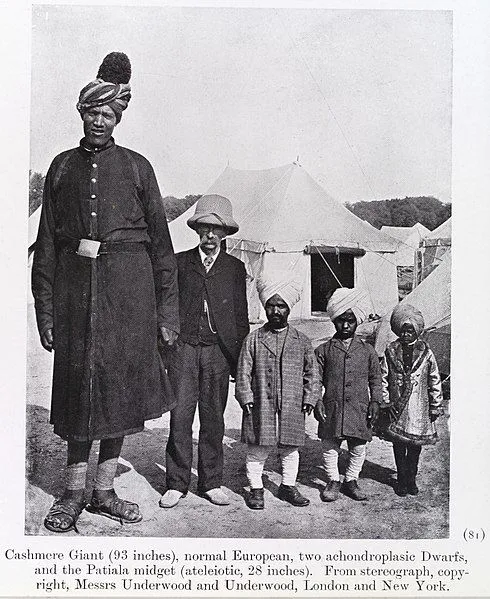
However, is dwarfism a condition that only humans experience, or do other species also suffer from it?
Let’s take a look!
Dwarfism as a result of genetic mutation in animals, particularly those found in the wild, is generally rare. However, dwarfism due to evolutionary processes, particularly insular dwarfism, is not uncommon in nature. To date, scientists have stumbled on only a few individuals in the wild that are true dwarfs.
Before taking a look at some examples, let’s dig into why insular dwarfism occurs in animals.
Insular Dwarfism
Insular dwarfism is a natural and evolutionary process that affects animals living on islands or in similarly isolated habitats, such as caves. This process leads to a reduction in the size of animals over many generations, particularly when resources are limited in controlled/isolated environments.

There are two main factors that promote dwarfism in insular environments. The first is due to a limitation of resources. When an animal is introduced into an isolated environment, such as an island, its ability to exploit resources is reduced. This may be because the environment has a poorer quality and quantity of resources than what is needed to sustain a population. As a result, animals may reduce their reproduction rates and shrink in size to cope with the inherent restriction of resources.
The second factor is likely due to the absence of predators or competition. When an animal in an insular ecosystem faces no danger from other beings, it no longer needs to have a large body size. Thus, dwarfism naturally occurs until the point/size is reached where the animal is able to balance what it consumes with the energy it uses.
Now, let’s take a look at some examples recorded by researchers.
Midget Or Dwarf: What’s The Difference?
Plenty of people searching for short animals type in the word “midget”, so it’s worth pausing on what that word actually means. “Midget” is an old and now outdated term that was once used for a person of very small stature whose body was perfectly in proportion. Today it’s widely regarded as offensive, and dwarfism (or simply “short stature”) is the accepted term for both proportionate and disproportionate forms. The same logic carries over to animals: there is no separate biological category of “midget” creature, only animals that are small all over or small in specific parts.
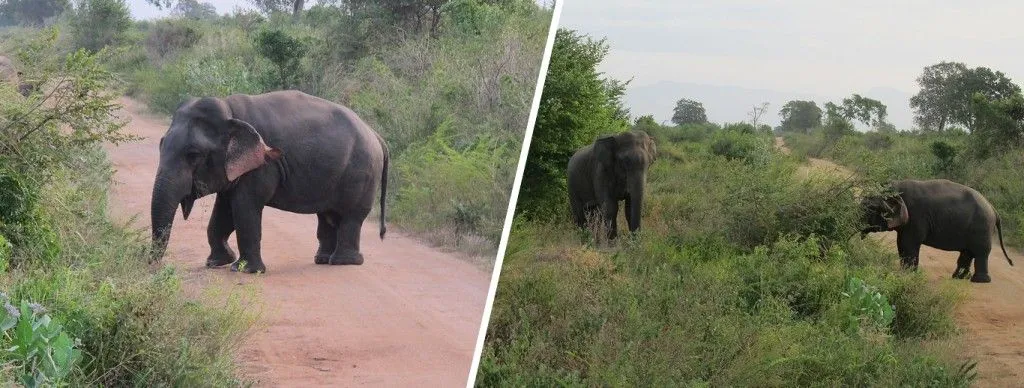
That distinction between proportionate and disproportionate dwarfism is the part worth remembering. In proportionate dwarfism, the trunk and limbs are scaled down together, so the body keeps its normal proportions while being smaller overall. In disproportionate dwarfism, specific parts (usually the limbs) are noticeably shorter than the rest, which is why a clinician compares sitting height to standing height rather than looking at height alone. The dwarf Asian elephant described below is a textbook case of the disproportionate form: a normal-sized body riding on short, stubby legs. The insular dwarfs covered earlier, by contrast, tend to shrink in proportion, ending up like scaled-down copies of their mainland ancestors.
Asian Elephant (Elephas maximus)
In 2013, researchers reported a dwarf Asian elephant in Sri Lanka's Udawalawe National Park. This individual was a mature male standing around 195 cm (about 6.4 feet) at the shoulder. Its upper body was normal in size with fully developed secondary male sexual characteristics. However, he had extremely short and stubby legs. Apart from his short legs, this individual showed no difference behaviorally or morphologically in comparison to other, normal-sized elephants in the reserve.
Cypriot Pygmy Hippopotamus (Hippopotamus Minor)
The Cypriot pygmy hippopotamus is an extinct hippopotamus species. It once inhabited the Cyprus islands (Mediterranean) during the Holocene era. The Cyprus dwarf hippopotamus became smaller in size as a result of insular dwarfism, which is also known to have caused dwarfism in elephants and the pygmy mammoth. As a result of this condition, the Cyprus dwarf hippo grew to only 2.5 feet and weighed around 200 kilograms.
Red Deer (Cervus elaphus)
A study in 1989 detailed dwarfism in red deer on Jersey Island in France. This study was based on the remains of 36 different specimens of red deer that were found near a cave on Jersey Island. These specimens were a dwarf form of red deer.
The researcher found that the body weight of the red deer was reduced to one-sixth of its original size within six thousand years during the last interglacial period. Upon further investigation, he found that the weight of the deer decreased from ~200 kgs in ancestral populations to ~36 kgs in the present populations on the island. Similarly, he also observed size reductions in teeth, antlers, and lower limbs.
It is likely that certain individuals from this species reduced in size as a result of limited resources and lowered predation pressure. Geographical isolation by higher sea levels may have also played a role in the reduction of size.
Sauropod Dinosaur (Magyarosaurus dacus)
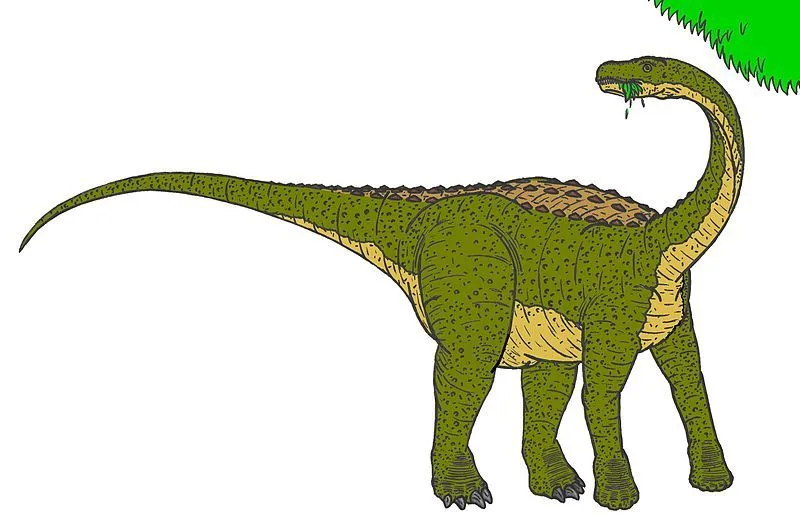
Sauropods (lizard-hipped dinosaurs) were the largest terrestrial tetrapod dinosaurs that walked the earth. However, among the many species of sauropods, researchers found one in particular, the Magyarosaurus, which suffered from dwarfism.
When comparing tissue samples with larger sauropod species, researchers found that the Magyarosaurus had a reduced growth rate, despite having standard basal metabolic rates that were typical of sauropods. The decrease in growth rates and body size in the Magyarosaurus suggests that even dinosaurs were not exempt from ecological processes that limited the growth of certain species.
Can Pet Dogs And Cats Get Dwarfism?
The wild examples above are driven by ecology, but dwarfism in our companion animals usually comes down to a single faulty gene, and it shows up as the same two flavors we just met. The proportionate version often traces back to the pituitary gland, the pea-sized structure at the base of the brain that releases growth hormone. In German Shepherd Dogs, an inherited fault in a gene called LHX3 leaves the pituitary unable to make enough growth hormone (along with thyroid-stimulating hormone and other signals), so affected puppies grow into miniature but neatly proportioned adults that often keep a soft, woolly puppy coat. The condition is recessive, meaning a pup must inherit a copy of the faulty gene from both parents, and it is now detectable with a DNA test.

Disproportionate dwarfism in pets, by contrast, comes from the bones and cartilage rather than a hormone. The short, curved legs of a Dachshund or a Munchkin cat are a mild, deliberately bred form of this, but more severe versions can appear unexpectedly. In Vizslas, for example, researchers traced a marked shortening and bowing of the leg bones to a recessive variant in a gene called PCYT1A. So the answer to “can my pet get dwarfism?” is yes, and zoologists have even documented it in fish and other groups. Whether it is harmless or a welfare concern depends entirely on which form it is and how severe.
Selective Dwarfism And Miniature Pets
Aside from the natural causes behind such phenomena, scientists have also selectively bred domestic animals with dwarf phenotypes, commonly known as “miniature pets.” Such alterations at the genetic level have created several unique dog, cattle and rabbit breeds, many of which are maintained as pets by humans.
Here are a few common examples:
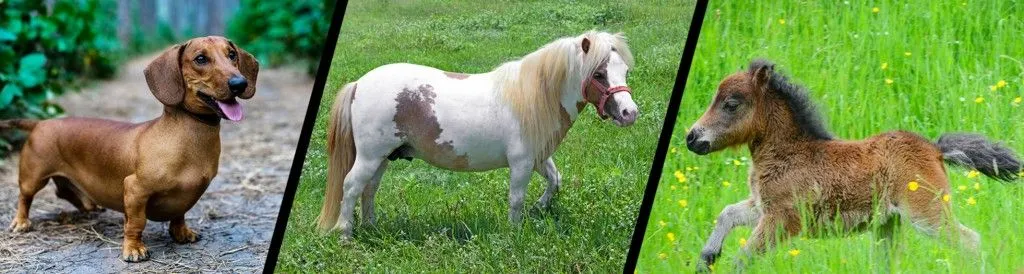
To conclude, yes, natural dwarfism does occur in both animals and humans. However, few cases have been observed to date, especially among wild animals. On the other hand, the selective dwarfism of animals for human pleasure is more common and also widely seen.
References (click to expand)
- R Wijesinha. Disproportionate Dwarfism in a Wild Asian Elephant. asesg.org
- Lister, A. M. (1989, November). Rapid dwarfing of red deer on Jersey in the Last Interglacial. Nature. Springer Science and Business Media LLC.
- Stein, K., Csiki, Z., Rogers, K. C., Weishampel, D. B., Redelstorff, R., Carballido, J. L., & Sander, P. M. (2010, April 30). Small body size and extreme cortical bone remodeling indicate phyletic dwarfism in Magyarosaurus dacus (Sauropoda: Titanosauria). Proceedings of the National Academy of Sciences. Proceedings of the National Academy of Sciences.
- Dwarfism. StatPearls. NCBI Bookshelf.
- Voorbij, A. M. W. Y., et al. (2011). A Contracted DNA Repeat in LHX3 Intron 5 Is Associated with Aberrant Splicing and Pituitary Dwarfism in German Shepherd Dogs. PLoS ONE.
- Ludwig-Peisker, O., et al. (2022). PCYT1A Missense Variant in Vizslas with Disproportionate Dwarfism. Genes (Basel).
- Wijesinha, R., et al. (2014). Morphometrics and behaviour of a wild Asian elephant exhibiting disproportionate dwarfism. BMC Research Notes.