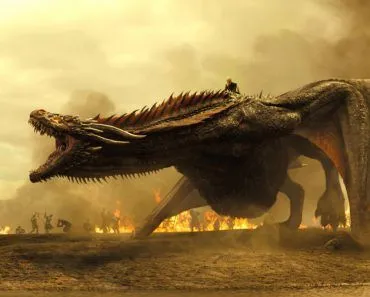
That would be almost impossible. First, humans would have to undergo some mutation that would give us wings. That mutation would be highly unlikely, considering our existing body physiology. Furthermore, flying isn’t of much evolutionary use to humans, so it is not a trait that would be selected for through natural selection.
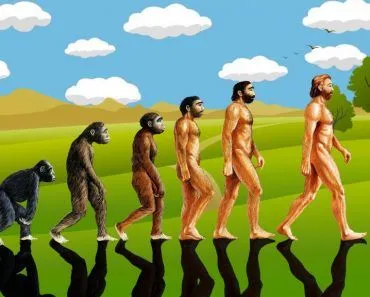
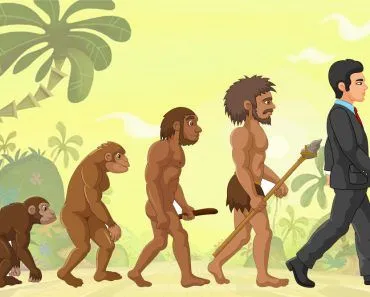
As children, while watching the X-men movies, it’s hard not to be fascinated by their powers. Moreover, the movie is set in such a way that makes you believe such a species-level shift could happen in real life. It made it seem that mutants could be the next step in the evolution of man. Personally, I have always been fascinated by Archangel, the broody character who could fly anywhere he wanted. This led to a question… could we ever actually grow wings? There are a thousand mutants we could evolve to be, but let’s look at Archangel for this particular thought experiment.
First, we have to eliminate the misconception that such large-scale mutations could occur in a single generation. Mutations and adaptations happen over hundreds of thousands, if not millions of years. Now, let’s look at the scientific principles that could make it possible.

How Do Mutations Occur?
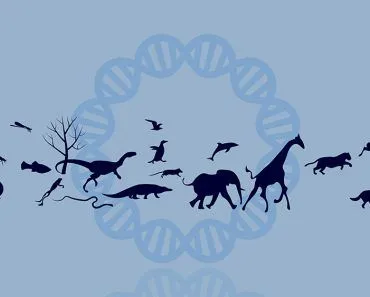
Before doing a deep dive, let’s establish some fundamentals. Firstly, a gene is an inheritable factor that gets passed from one generation to the next. A factor could be anything, like the color of your eyes or your blood type. These genes are expressed by DNA.
The total collection of genes that an individual has is known as its genotype. When that gene expresses itself, it is known as the phenotype.
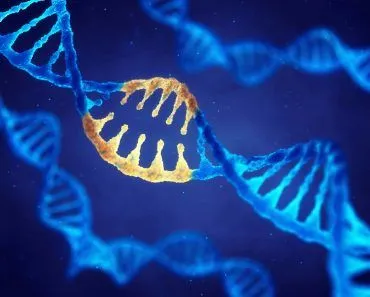
A mutation, then, is a change in the arrangement of DNA that causes a gene to express itself differently.
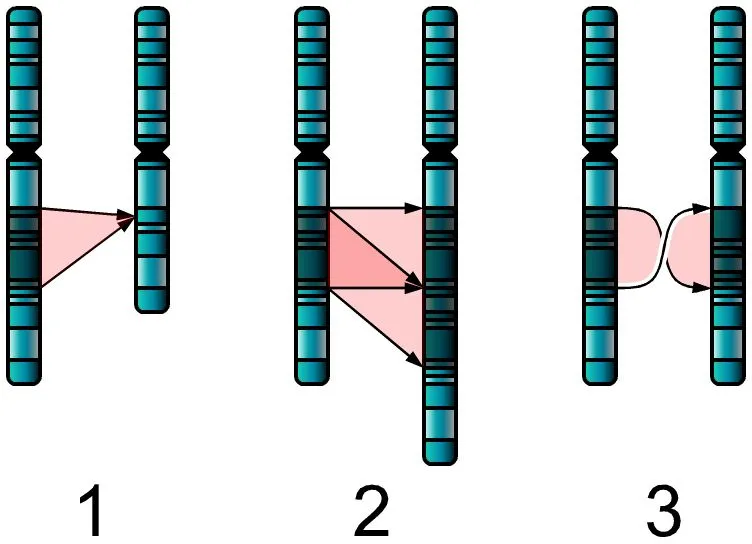
Humans have a low per-base-pair mutation rate (about 1.3 × 10⁻⁸ per base pair per generation), but with a genome of around 3 billion base pairs, that still works out to roughly 70 to 80 brand-new (de novo) point mutations in every child compared to their parents.
How Do Mutations Survive?
Even though these mutations occur, most of them never produce any visible effect. The vast majority land in non-coding stretches of DNA or are synonymous changes that don’t alter the resulting protein, so the organism carries on as if nothing happened. For a mutation to survive, it needs to have reproductive success. This means it must help the creature survive better than others of its kind. But how exactly would we know if an organism has an advantage? This brings us to natural selection.
Let’s use the example made famous by Charles Darwin: the Galapagos finches. Darwin collected a variety of small birds during his Beagle voyage, though it was the ornithologist John Gould who, back in London in 1837, recognized that they were actually 13 closely related finch species. Some had beaks suited for cracking open hard seeds, while others were better at picking insects out of bark. He observed many specializations that were identifiable by the unusual shapes of their beaks.
His idea stated that small changes happened every generation. If these changes helped a bird in a certain task, that bird would be fitter and more likely to pass on its genes to its offspring. Therefore, a mutation had to be helpful for it to survive to the next generation.
So, Could Humans Evolve Wings?
Apologies for the delay, but all of the above info needed to be explained before we could answer our original question. The bottom line is… No, we won’t grow wings. This is firstly because of what wings are (in chordates, at least). Wings are specially adapted forelimbs.
As you can see from the skeleton below, bird wings are the forelimbs, repurposed: the same humerus, radius and ulna other tetrapods have, just elongated and remodeled, with most of the fingers fused away. Not only this, but each and every adaptation along the way helped them survive better in their environment.
However, wouldn’t wings help us fly?
Yes, but it would cost us our hands, which help us with so many everyday activities that it wouldn’t make sense to lose our dexterity (from an evolutionary standpoint).

But what about wings like bats? Bats have wings with extended phalanges (finger bones) and membranes between the phalanges. Well, before we see if humans could develop bat-like wings, let’s see how bats got theirs in the first place. Bats evolved their wings from mammals that used to jump from tree to tree. Bats with membranes between their wings would glide for longer and could jump farther. Over time, this gliding adaptation, which proved advantageous, eventually led to them being able to fly.
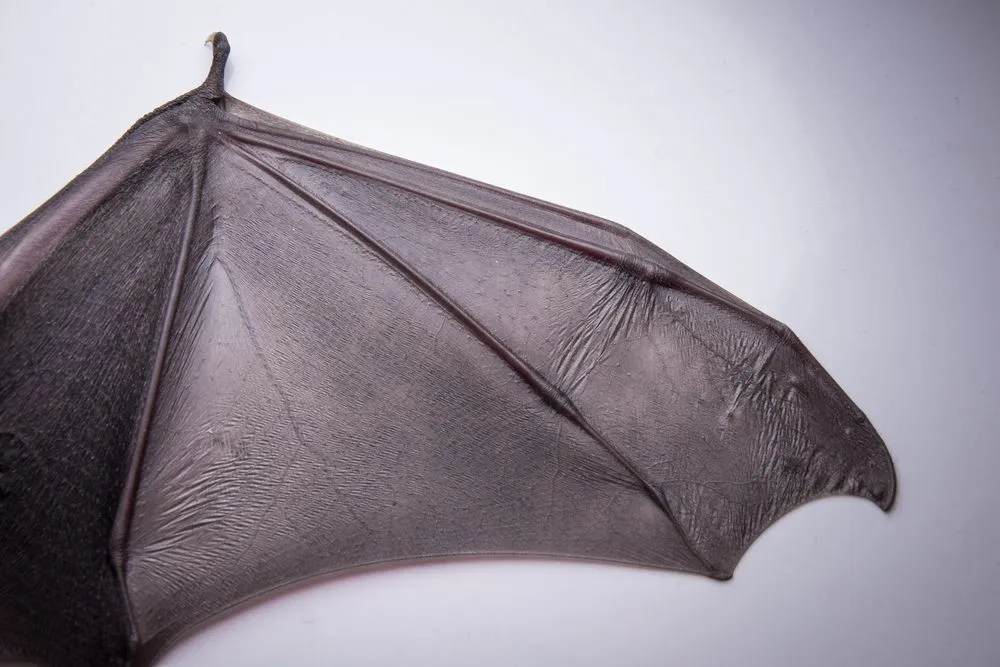
So then… why not us? Mainly because we don’t have any need for these adaptations. For a mutation to be selected, it needs to give the organism an edge in terms of survival. Since humans don’t need to jump from rooftop to rooftop, wings, no matter how cool, won’t help us survive any better.
And what about growing an extra pair of limbs? As explained, evolution is a step-by-step process that takes a very long time. These limbs would have to grow and provide an advantage to humans every step along the way, meaning it is very unlikely that humans will naturally grow wings.
Did Humans Ever Have Wings?
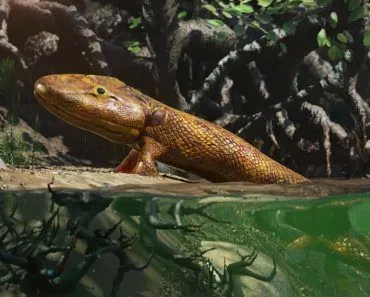
This is one of the most common follow-up questions, so let's settle it: no, our ancestors never had wings. Every land vertebrate, from frogs to elephants to us, is a tetrapod, built on a body plan of exactly four limbs that traces all the way back to the lobe-finned fishes that first hauled themselves onto land. We have two arms and two legs because that is what that ancient blueprint allows. A winged human would need a third pair of limbs sprouting from the back, and no backboned animal has ever had six limbs.

So where do wings come from? In vertebrates a wing is never a brand-new organ; it is a forelimb that has been heavily remodeled. Powered flight has evolved independently several times in the animal kingdom, in insects, in the extinct pterosaurs, in birds and in bats, but each time the flyer reworked limbs it already had. As the diagram shows, the wing of a pterosaur, a bat and a bird are all built from the same humerus, radius and ulna found in your own arm, just stretched and re-proportioned. None of those lineages is one of our ancestors, and primates simply went down a different evolutionary road, one that kept the grasping hand. We never lost our wings, because we never had them to begin with.
Why Couldn't a Winged Human Actually Fly?
Suppose evolution did, against all odds, hand us a pair of wings. Here is the uncomfortable physics: we would almost certainly still be stuck on the ground. The problem is a scaling rule sometimes called the square-cube law. As an animal gets bigger, its weight climbs with the cube of its length while the area of its wings grows only with the square, so heavy bodies end up with far too little wing area, and far too little flight muscle, to haul themselves up by flapping.

The numbers are brutal. The heaviest birds that can still take off under their own power, such as the kori bustard, weigh only about 11 to 19 kg (24 to 42 lb), and even they are reluctant flyers that would rather run. Biologists put the practical ceiling for muscle-powered flapping flight at roughly 10 to 15 kg. An adult human, at 60 to 80 kg (130 to 175 lb), sits several times beyond that limit. (The same weight penalty is part of why some birds have lost flight entirely.) Even the largest flyers that ever lived did not flap their way aloft: Argentavis, with a 7 m wingspan and a mass around 70 kg, and the seabird Pelagornis sandersi, whose wings spanned some 6.4 m, were gliders that rode thermals and updrafts like giant kites. The only way a person has ever flown on muscle alone is inside a human-powered aircraft like the Gossamer Albatross or MIT's Daedalus, and those needed ultralight wings nearly 30 m across, pedalled by an elite athlete pouring out around 200 to 300 watts just to inch forward.
Could We Engineer Wings Into Our DNA?
If nature won't grant us wings, could we splice them in ourselves? Plenty of people search for exactly this, picturing a single stretch of DNA that spells out "wing." Unfortunately, that switch does not exist. A limb is not stored as a tidy blueprint; it is grown by a choreography of signals in the early embryo. A small swelling of tissue, the limb bud, is coaxed outward by a strip of cells called the apical ectodermal ridge, which drives growth from shoulder to fingertip, while a second region, the zone of polarizing activity, releases a protein called Sonic hedgehog that sets out the thumb-to-little-finger axis. Other genes, such as Tbx5, tell a bud to become a forelimb rather than a leg.

Crucially, this whole system is wired to produce just two pairs of limbs, in fixed positions, very early in development. To add a working wing you would not flip one gene; you would have to conjure an entirely new limb field in the right spot, then supply it with its own bones, flight muscles, blood vessels and nerves, plus the brain wiring to control it mid-air. And because a vertebrate wing is only a modified arm in the first place, "gene editing wings onto a person" really amounts to rebuilding the arm from scratch. We know many of the genes that sculpt a limb, but there is no DNA shortcut that grows a brand-new, flight-ready pair of wings.
Why Do So Many Cultures Picture Winged Humans?
If wings are biologically off the table, why can't we stop drawing them on ourselves? Search for "humans with wings" and you'll find the idea everywhere, and it runs far older than any biology lesson. The ancient Greeks gave wings to Nike, the goddess of victory, immortalized in the Louvre's Winged Victory of Samothrace, and to the swift messenger god Hermes. The cautionary myth of Daedalus and Icarus, who escaped on wings of wax and feathers until Icarus soared too close to the sun, is essentially humanity's oldest aviation safety briefing.

The motif reaches far beyond Greece. Angels appear with feathered wings across Jewish, Christian and Islamic art, while Hindu and Buddhist tradition has Garuda, the mighty bird-man who serves as the mount of the god Vishnu. Across all of them, wings tend to mean the same things: speed, victory, divine messengers, and above all the freedom to rise above the earth. That is the real reason the winged human refuses to die. We may never grow feathers, but the longing they stand for is exactly what pushed us to invent the glider, the airplane and the rocket. We didn't evolve wings. We built them instead.
Conclusion
Does this mean that humans will never have cool mutations? Of course not! Just look around… we already do! Humans who live near the equator have darker skin to help protect them from harsh UV rays. Skin cancer is one cost of being lightly pigmented near the tropics, but the bigger evolutionary driver appears to be folate: UV rays break down folate (vitamin B9) in the blood, and folate deficiency in pregnancy causes neural tube defects, which is a powerful selection pressure (the Jablonski-Chaplin hypothesis). On the other hand, humans living far from the equator have lighter skin, so that they get enough sun to synthesize vitamin D.
It has been observed that some populations living at higher altitudes have evolved to handle thin air. Andean highlanders have higher hemoglobin concentrations in their blood, which lets them carry more oxygen from each breath. Tibetans took a different route: they carry variants of the EPAS1 gene that keep hemoglobin near sea-level values while increasing blood flow and nitric oxide signaling, getting oxygen to tissues more efficiently rather than by packing more into the blood.
Now, we may not be able to control objects with our minds or fly above skyscrapers, but humans have many impressive adaptations. Many mutations have happened over time that have allowed humans to fit into a certain environment. Basically, if you’re looking for a mutant, you don’t have to look far, considering that we all have special mutations to help us survive!
References (click to expand)
- (Jr.) C. P. H., Keen S. L., Eisenhour D. J., Larson A.,& I'Anson H. (2019). Integrated Principles of Zoology. McGraw-Hill Education
- Fragata, I., Blanckaert, A., Dias Louro, M. A., Liberles, D. A., & Bank, C. (2019, January). Evolution in the light of fitness landscape theory. Trends in Ecology & Evolution. Elsevier BV.
- Mcghee, G. R. (2006). The Geometry of Evolution: Adaptive Landscapes and Theoretical Morphospaces. Cambridge University Press
- Fleming, T. H., Dávalos, L. M.,& A. R. M. M. (2020). Phyllostomid Bats: A Unique Mammalian Radiation. University of Chicago Press
- Gassmann, M., Mairbäurl, H., Livshits, L., Seide, S., Hackbusch, M., Malczyk, M., … Muckenthaler, M. U. (2019, June 30). The increase in hemoglobin concentration with altitude varies among human populations. Annals of the New York Academy of Sciences. Wiley.
- Brenner, M., & Hearing, V. J. (2007, November 16). The Protective Role of Melanin Against UV Damage in Human Skin†. Photochemistry and Photobiology. Wiley.
- Evolution of the muscular system in tetrapod limbs. Zoological Letters. NCBI/PMC.
- The evolution of flight in bats: a novel hypothesis (2020). Mammal Review. Wiley.
- Kori bustard. Smithsonian's National Zoo & Conservation Biology Institute.
- What is the world's heaviest flying bird? Discover Wildlife (BBC Wildlife).
- The aerodynamics of Argentavis, the world's largest flying bird from the Miocene of Argentina (2007). PNAS.
- Flight performance of the largest volant bird (2014). PNAS.
- Gossamer Albatross. NASA.
- Thirty years since the longest human-powered flight in history. Fédération Aéronautique Internationale (FAI).
- Limb Development. In: FGF Signalling in Vertebrate Development. NCBI Bookshelf.
- Sonic Hedgehog Signaling in Limb Development. Frontiers in Cell and Developmental Biology. NCBI/PMC.
- Nike. Encyclopaedia Britannica.
- Winged Victory of Samothrace. Encyclopaedia Britannica.
- Daedalus. Encyclopaedia Britannica.
- Garuda. Encyclopaedia Britannica.