Table of Contents (click to expand)
Fish don’t mind swallowing water, since they pass it over their gills to breathe and strain out food with comb-like gill rakers. Sea turtles suck in prey, pin it between the tongue and the roof of the mouth, then squeeze the seawater back out through gaps near the nostrils before swallowing.
Turtles have been gliding through the Earth’s waters since long before humans were around to use these big brains of ours. These ancient and rather strange creatures are diverse; some live on land, others live a fully underwater lifestyle, while some turtles like to have the best of both worlds, surviving both on land and in water. However, these reptiles (not everything that lives in the water is a fish) face a problem that us land-dwelling folk don’t – how to eat without swallowing seawater?
Eating can’t be an easy thing underwater. Open your mouth to catch a tasty fish, and water rushes in. Thankfully, evolutionary phenomena pretty much ensure that organisms are well-adapted to live in their respective habitats and ecological niches. As such, all aquatic animals have some mechanism that allows them to feed without ingesting large amounts of water.
How Do Fish Eat Underwater?
Before we discuss how turtles go about eating without filling up with water, let’s talk about fish and how they manage to deal with water feeding.
For fish, those animals with gills, water is as good as air is for us. Just as we never have to think about swallowing air when we eat, fish are perfectly adapted to life in the water.
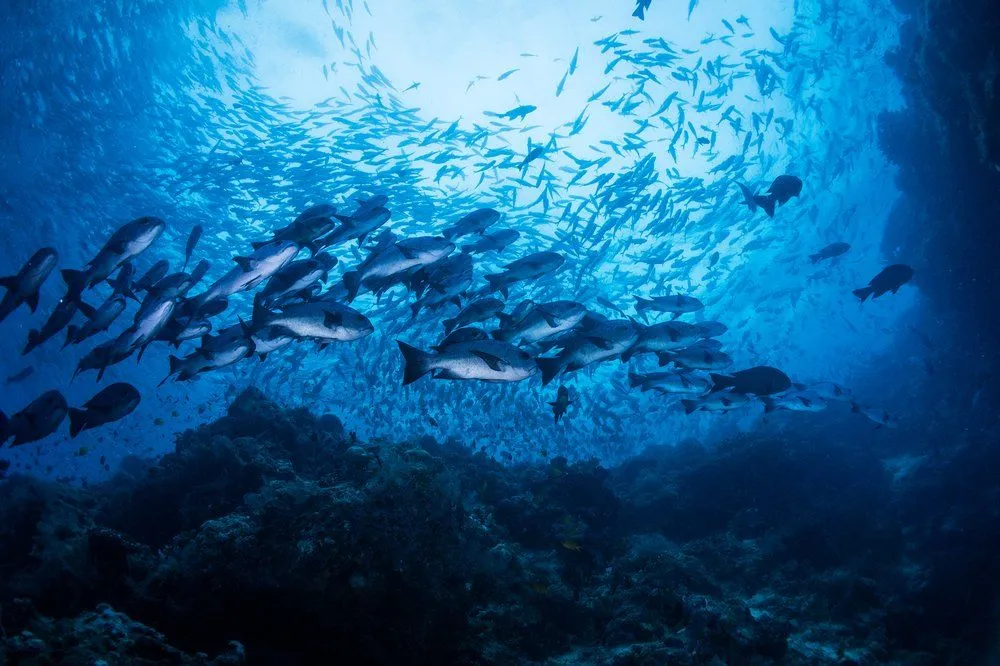
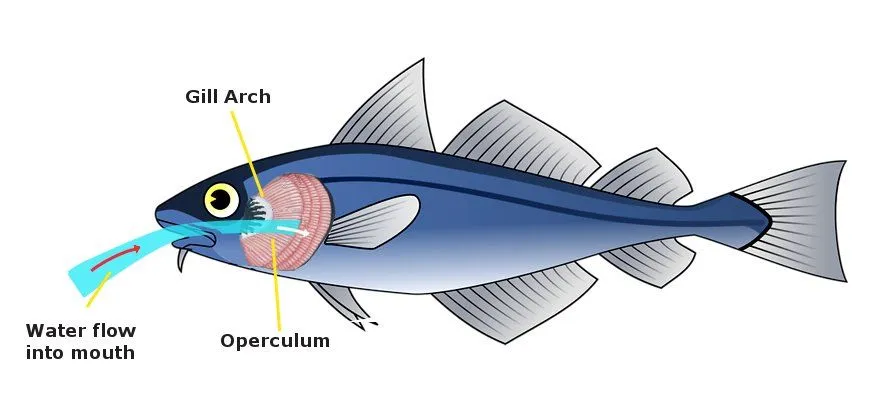
Unlike animals with lungs, fish get their breathing and feeding done from a single opening. A fish opens its mouth, letting water inside. This oxygen-rich water is funneled toward the gills, the organ that allows fish to breathe. This oxygen-rich water passes over the gills, where capillaries with oxygen-deprived blood take in the oxygen from the water, which is then expelled from the gill flap.
In front of the gills are bony structures called gill rakers. These structures are like combs that filter the water for food like microscopic plankton or larger prey. This food is then shunted towards the esophagus, where the digestive process begins.
But Do Fish Even Have Teeth?
Watch a fish swallow a meal and an obvious question pops up: where are its teeth, and how does it eat without them? The honest answer is that most fish do have teeth, just not always where you would think to look. What they generally don’t do is chew the way we do.

Many bony fish carry two sets of jaws. The oral jaws at the front of the mouth grab and hold prey, while a second set tucked deep in the throat, the pharyngeal jaws, comes lined with its own pharyngeal teeth. Most fish capture food by suction, snapping the mouth open so that water (and dinner) rushes in, and then swallow the prey more or less whole. The pharyngeal teeth back in the throat do the real processing, working the food and ratcheting it down toward the stomach. In other words, the “chewing” happens in the throat, not at the lips.
The shape of those throat teeth depends entirely on the menu. Experiments with Midas cichlids found that fish raised on hard, shelled snails grew more robust, molar-like crushing jaws, while others fed soft food kept slimmer, more delicate ones. The diet itself, through how hard the fish had to crunch, sculpted the bone.
The strangest version of all belongs to the moray eel. Hunting from cramped reef burrows, morays can’t generate the powerful suction most fish use to draw prey inward, so they evolved a workaround straight out of a horror film. A 2007 study in Nature by Rita Mehta and Peter Wainwright showed that a moray first bites down with its oral jaws, then launches its pharyngeal jaws forward out of the throat and into the mouth, where they seize the struggling prey and haul it back down the gullet. It is the only known alternative to the water-powered “suck and swallow” that other bony fish rely on.
And the genuinely toothless fish? Those are the filter feeders, which barely use teeth at all and instead strain plankton from the water with the comb-like gill rakers we met earlier.
Just Spit It Out
There are seven marine or sea turtle species – the Loggerhead turtle, Kemp’s Ridley turtle, Olive Ridley turtle, Leatherback turtle, Green turtle, Hawksbill turtle, and the Flatback sea turtle. They spend their lives roaming the wild waters of the world, munching on algae, sea sponges, sea cucumbers and a lot of jellyfish. Although they sleep and eat in the water, they need to surface from the water to breathe in air. With their oxygen replenished, they dive back down with the oxygen stored in their lungs. When the sea turtles venture out to eat, they restrict the entry of water into the trachea, similar to how we do when we eat or drink.
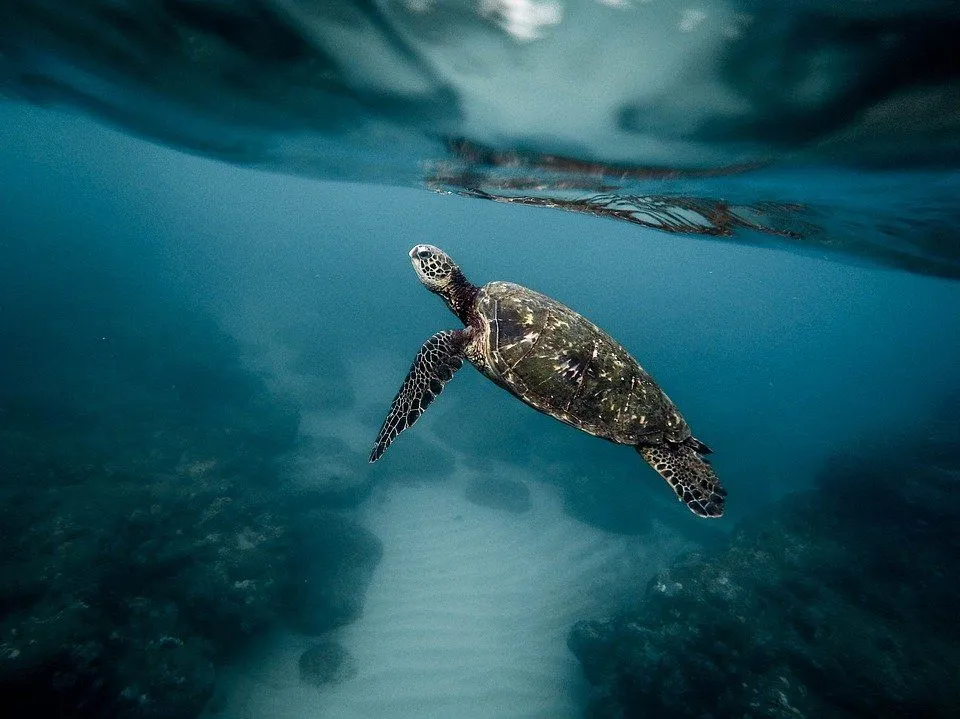
A sea turtle’s skull is well adapted to eating underwater without swallowing too much water. To eat, turtles rapidly extend their head and neck and literally suck the food and water into their mouth, somewhat like slurping noodles. The suction created also serves to keep prey inside the mouth. It does this by expanding the back of the throat, called the oropharyngeal cavity, as well as lowering the bottom of the throat by depressing a bone called the hyoid.
Once the food is within the mouth, the turtle expels the water they took in. They do this through two processes. The turtle will raise its tongue, immobilizing the prey between the tongue and the roof of its mouth. At the same time, it will compress its mouth, expelling the water through a slight gap between its mouth and nostrils. Scientists have observed that after turtles take in their prey, they release a jet of water from their nostrils and from these small gaps in their mouth.
All the water isn’t expelled, likely because the turtle requires that water for swallowing. Multiple investigations have noted that some turtles can’t swallow their food while on land, indicating that water plays a crucial role in this process.
One of the other possible reasons for this might be the salivary glands. Land animals have multiple types of salivary glands in our mouths, while those in turtles are reduced, or they only have one. This indicates that the gland might only function to release digestive enzymes, but doesn’t provide enough water lubrication to enable swallowing food from the mouth.
To finally swallow, the turtle expands the back of its throat again to draw the prey deeper inside, and the food, now called the “bolus,” heads down the esophagus.
Lining that esophagus are long, keratinized conical projections called papillae, all angled toward the stomach to prevent the bolus from sliding back into the mouth. The result looks like a very bizarre tube studded with large inward-facing spikes.
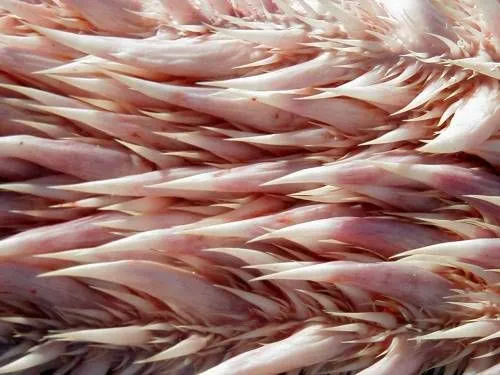
These esophageal papillae also prevent the turtle from ingesting too much salty seawater. As the bolus (and with it, some water) moves down the esophagus, the papillae serve as a kind of filter, squeezing out the leftover water. The turtle can then expel the water, but the food doesn’t escape due to the inward-facing papillae.
Why Get Rid Of The Water?
Sea turtles spend their entire lives in salty ocean water, so taking in a mouthful of it with every bite is unavoidable. That seawater has a far higher concentration of ions than the turtle’s own cells, and through osmosis, that excess salt would pull water out of the cells and disturb the delicate balance needed for proteins and DNA to function. Trimming the water at the mouth and esophagus keeps that salt load down.
So do sea turtles drink seawater? They do, and they don’t depend on finding freshwater to survive. Their kidneys can’t shed that much salt on their own, so sea turtles evolved a pair of large salt glands, also called lachrymal glands, tucked behind each eye. These glands pull excess salt from the blood and excrete it as a brine that can be twice as salty as the ocean. That briny discharge runs out of the eyes, which is exactly why a nesting sea turtle looks like it is “crying.” The tears aren’t emotion; they’re the turtle’s desalination system at work. Turtles also top up their water budget with the moisture locked inside the food they eat.
Life is magnificent. Look at any corner of the world and you will see that life has adjusted itself with the strangest and most mind-boggling adaptations.
In his book ‘The World Without Us’, the award-winning journalist Alan Weisman talks about what life would be like without humans. He writes “Let’s face it: who would’ve predicted the existence of turtles? Who would ever have imagined that an organism would essentially turn itself inside out, pulling its shoulder girdle inside its ribs to form a carapace? If turtles didn’t exist, no vertebrate biologist would’ve suggested that anything would do that: he’d have been laughed out of town. The only real prediction you can make is that life will go on. And that it will be interesting.”
References (click to expand)
- (1998) Kinematics of Aquatic and Terrestrial Prey Capture in .... The University of Washington
- Meet the Seven Sea Turtle Species | Smithsonian Ocean. The Smithsonian Institution
- Bels, V. L., Davenport, J., & Renous, S. (1995, July). Drinking and water expulsion in the diamondback turtle Malaclemys terrapin. Journal of Zoology. Wiley.
- Secretory capacity of the lachrymal salt gland of hatchling sea turtles, Chelonia mydas. Journal of Comparative Physiology B. Springer.
- Spotila, J. R.,& Santidrián T. P. (2015). The Leatherback Turtle: Biology and Conservation. Johns Hopkins University Press
- Lintner, M., Weissenbacher, A., & Heiss, E. (2012, September 28). The Oropharyngeal Morphology in the Semiaquatic Giant Asian Pond Turtle, Heosemys grandis, and Its Evolutionary Implications. (A. R. Evans, Ed.), PLoS ONE. Public Library of Science (PLoS).
- Perry S. F.,& Tufts B. L. (1998). Fish Respiration. Academic Press
- Mehta, R. S., & Wainwright, P. C. (2007). Raptorial jaws in the throat help moray eels swallow large prey. Nature. Nature Publishing Group.
- Muschick, M., Barluenga, M., Salzburger, W., & Meyer, A. (2011). Adaptive phenotypic plasticity in the Midas cichlid fish pharyngeal jaw and its relevance in adaptive radiation. BMC Evolutionary Biology. Springer Nature.
- Camp, A. L., & Van Wassenbergh, S. (2025). A mechanical perspective on suction feeding in fishes. Journal of Experimental Biology. The Company of Biologists.