Table of Contents (click to expand)
Yes, fish, whales and most aquatic animals urinate. Their urine and the ammonia they release feed a key nutrient cycle that nourishes phytoplankton and coral reefs. But despite viral claims, pee is only a vanishingly tiny fraction of the ocean, nowhere near 40 percent.
If you’ve ever spent an afternoon gazing at your fish tank, or perhaps taken a gulp of ocean water while out for a coastal swim, you may have wondered how much of that water is actually composed of urine. Yes, it’s quite the unpleasant question to ask, but with tens of billions of individual creatures in our planet’s oceans, one has to wonder about where all the waste goes!
Well, in terms of the initial question of this article, aquatic animals DO urinate, and in fact, those waste products are an essential part of the global marine ecosystem!
And before you spit out that mouthful of seawater, the viral claim that the ocean is “40% pee” is a myth. The ocean holds roughly 1.3 billion cubic kilometers (about 321 million cubic miles) of water, so even the millions of gallons of urine released every day are a literal drop in an unimaginably large bucket. Pee is a vanishingly small fraction of seawater. What matters isn’t the volume, but the nutrients it carries, so let’s dive into why.
Everybody Pees
Although this isn’t a subject that most people would consider “polite” around the dinner table, there is no denying that everything pees! The ability to excrete waste is, at every level of complexity in nature, is essential to the normal functioning of an organism. However, the way in which creatures expel their waste may differ between species, and things get even more interesting underwater. First of all, it is more difficult to tell when and from where a creature is urinating when it is surrounded by liquid water!
However, researchers have done extensive studies on this exact subject because we know how rich in nutrients our own urine is! It’s only natural to assume that the urine from marine animals would similarly release certain nutrients, minerals and amino acids into the water. As it turns out, the urine from marine creatures forms a key part of the nutrient cycle in our oceans. Whether you are talking about hundreds of gallons per day being expelled from whales, or a few drops of ammonia being squeezed from the gills of a tiny tropical fish, the process of urination is a key element of thriving ecosystems.
 Let’s use an example to understand this a bit better. A blue whale, for example, the largest animal to ever exist on Earth, can weight up to 200 tons and in any given day, will expel between 200 and 300 gallons of urine. Their primary source of food, krill, often exist more than 300 feet down. When blue whales are feeding, they are usually doing so at great depths, but when they digest their food and urinate, they do so closer to the surface. In this way, many different whale species function as a nutrient “conveyor belt” from great depths up to the surface area, redistributing nutrients from their food into the higher regions of the ocean.
Furthermore, due to the long migratory patterns of whales, often across barren stretches of ocean, their massive urine deposits work like fertilizer. Phytoplankton are the microscopic foundation for all life in the ocean, and the nitrogen- and phosphorous-rich urine from whales and other large migratory marine animals is an ideal food source for these tiny creatures. Without even knowing it, the millions of gallons of whale urine expelled into the ocean every day help to keep the entire cycle of oceanic life rolling along!
Tiny Tinkles
When you think about massive humpback whales and sea lions urinating in the ocean, it seems like it might also account for more than a “drop” in the proverbial bucket of the ocean, but what about all those smaller fish? How could their tiny bodies and their small level of urine make a difference in the vast expanse of the ocean?
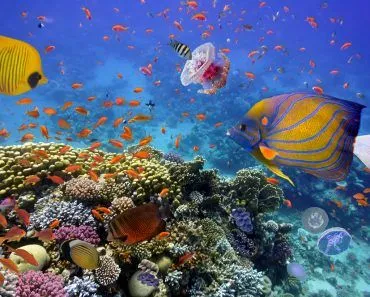
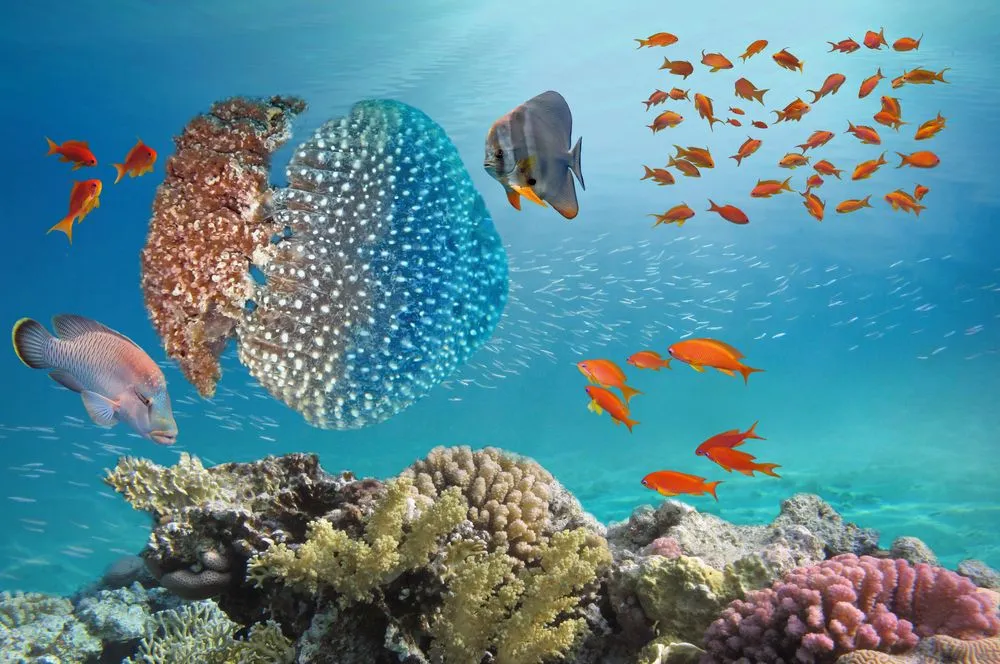
Well, fish urine may not be as effective as an oceanic fertilizer being spread for thousands of miles, but in their own tiny neighborhoods, fish and their waste products can have an impact! When it comes to coral reefs and other coastal ecosystems, nutrients are not always in rich supply, but they do have booming and diverse populations. When the hundreds of species of fish urinate near coral reefs, the nutrients in their urine is almost immediately snatched up by the coral and its inhabitants. Again, nitrogen and phosphorous, as well as various amino acids and other minerals, can help a coral reef to thrive and grow, and these are found in measurable amounts in fish urine.
 That being said, not all fish are created equal, so not all fish have as much of an effect. Saltwater fish actually produce only small amounts of very concentrated urine. Because the sea around them is saltier than their blood, they constantly lose water to their surroundings and have to drink seawater to compensate, so they simply can’t afford to flush out a lot of liquid. Instead, most of their nitrogen waste leaves as ammonia diffusing straight out through their gills. Freshwater fish face the opposite problem: water keeps seeping into them, so they have a urinary pore through which they pump out copious, dilute urine to bail it back out. This water may carry amino acids, urea, and other organic compounds, such as creatinine and creatine. Either way, that waste is a feast for a reef. Research published in Nature Communications found that fish excretion can supply the bulk of the nitrogen and phosphorus on a coral reef, and that heavily fished reefs, stripped of their big-bodied fish, had nearly 50% less of this fish-derived nutrient capacity than healthy ones.
Trouble In The World’s Toilet
Although it’s a good thing that marine animals use the ocean as their toilet, humanity’s treatment of the oceans as a toilet (and a trash can) is anything but good. Human waste arrives in the wrong quantities and concentrations, which can actually damage ecosystems rather than nourish them. Furthermore, the effects of pollution, dumping, climate change and overfishing mean that the oceans’ populations are dropping at an alarming rate. According to the WWF Living Blue Planet Report, the monitored populations of marine vertebrates fell by roughly half between 1970 and 2012, with some commercially fished species crashing even harder. Fewer animals means less of that life-giving urine being pumped into the oceans, too.
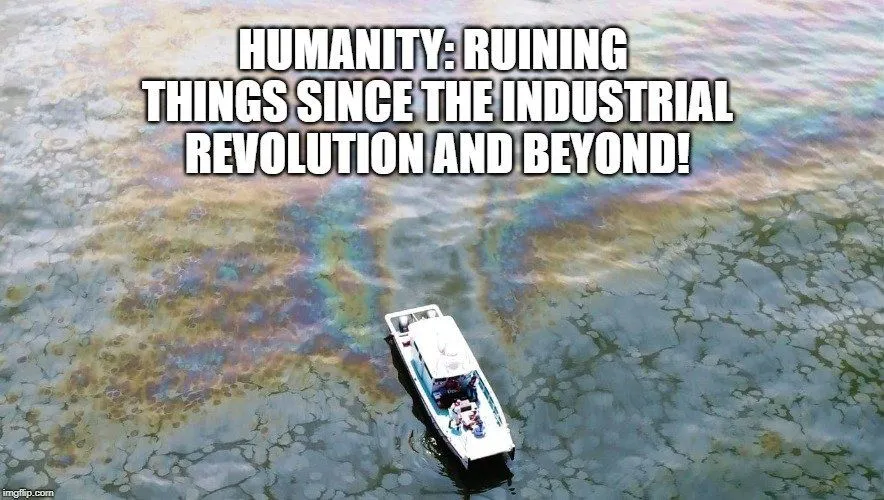
Without a strong foundation for life in the oceans, helped along by the presence of marine urine, it will be a harder and slower process to recover from climatic or manmade disasters. We are already seeing the widespread bleaching of coral reefs across the world, and as fish populations dwindle, those coral reefs will take longer to repopulate and recover, if they ever do. You may have never given any thought to the critical role of #1 in the future of our oceans, but it’s a real problem, yet another offshoot of humanity’s current ecological crisis.
References (click to expand)
- How Much of the Ocean is Whale Pee (and Worse)?. Live Science
- The special ingredient for ocean health? Animal pee, and lots .... Oceana, inc.
- Allgeier, J. E., et al. (2016). Fishing down nutrients on coral reefs. Nature Communications.
- Arrigo, K. R. (2004, September 14). Marine microorganisms and global nutrient cycles. Nature. Springer Science and Business Media LLC.
- Nixon, S. W. (1981). Remineralization and Nutrient Cycling in Coastal Marine Ecosystems. Estuaries and Nutrients. Humana Press.
- Ocean’s wildlife populations down by half. WWF Living Blue Planet Report (2015), via ScienceDaily.