Fish scales come in five main types: placoid (the tooth-like denticles on sharks, rays, and skates), cosmoid (found in fossil lobe-finned fish and, in modified form, on coelacanths), ganoid (the diamond-shaped armor of gars, bichirs, sturgeons, and paddlefishes), cycloid (the smooth, overlapping discs on salmon, carp, and bowfin), and ctenoid (the comb-edged scales of perch, flounder, and sunfish).
What comes to your mind when you read the word “fish”? From freshly caught trout to nicely smoked salmon, a wide variety of excellent seafood may be high on your list. However, what if we told you that the type of scales also varies from fish to fish? Yes, that part of fish anatomy that usually ends up in the garbage before cooking comes in a number of diverse patterns and styles. What are those types and how do they vary? Let’s find out!
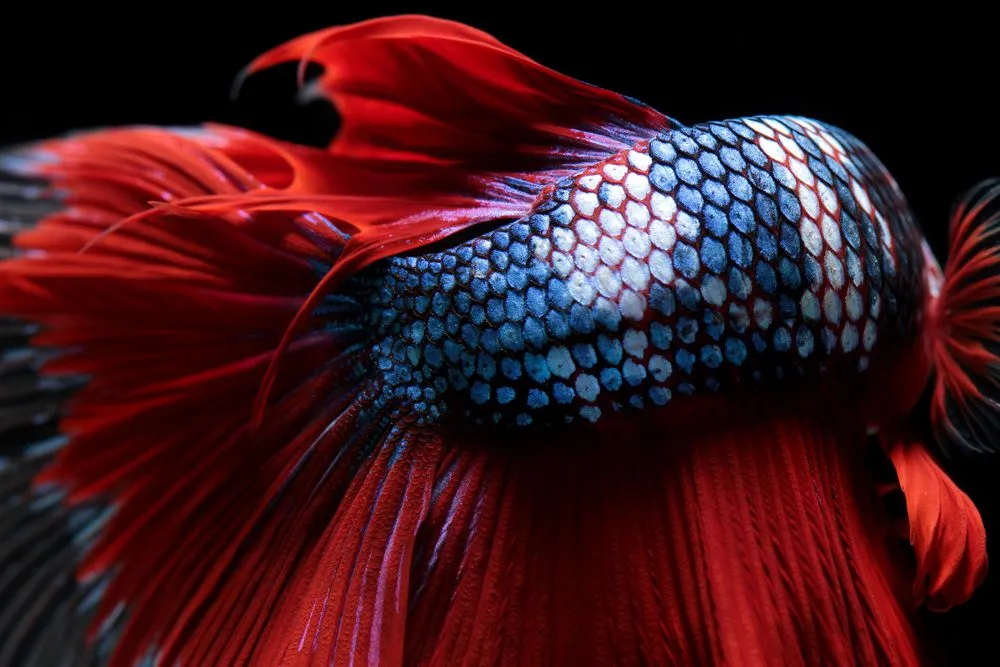
The scales on fish form the exoskeleton of the creature, which makes sense, given that the word “exoskeleton” means a skeleton lying on the exterior. There are many types of fish scales, including placoid, ganoid, cycloid, cosmoid, and ctenoid. Fish scales are small, thin plates of bone that form in the dermis, the deeper layer of the skin. They either fit tightly on the body of the animal, and can also overlap in some cases. They typically overlap like shingles on a roof, with their free margins directed toward the tail. This effectively helps them minimize the friction of water and aids in swimming.
What Are Cosmoid Scales?
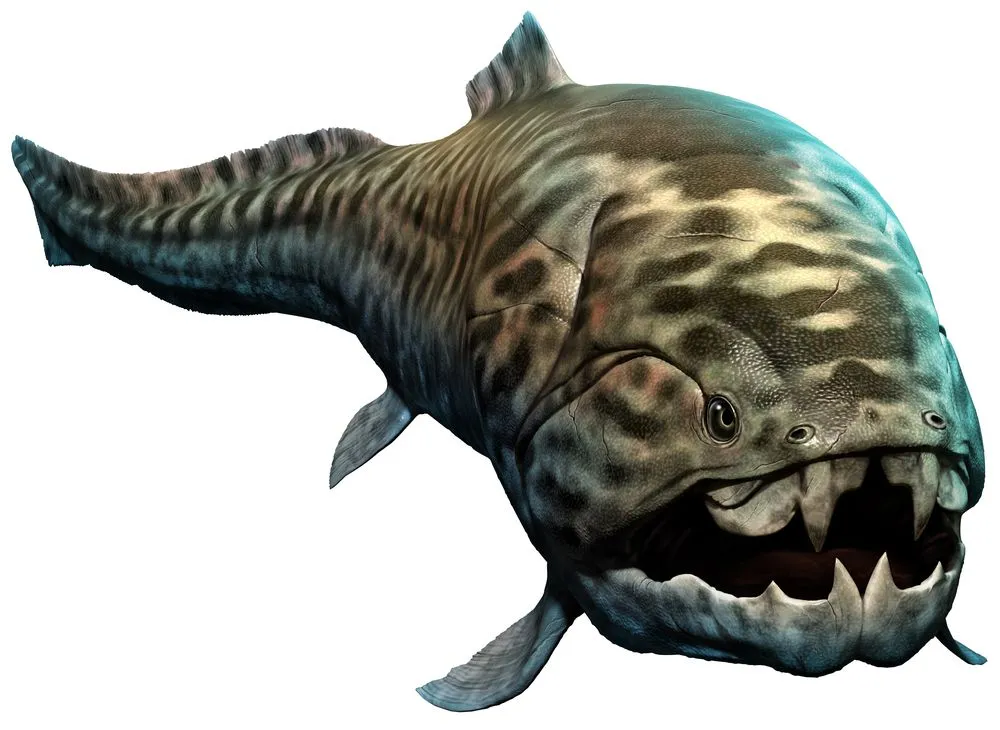
Cosmoid scales are not found (or very rarely found) on fish in the world today, because these types of scales were a characteristic feature of ancient lobe-finned fishes that have long since gone extinct. A modified, thinner version of these scales (lacking the cosmine layer found in fossil forms) is still carried by the two living species of coelacanth: Latimeria chalumnae off East Africa and Latimeria menadoensis off Indonesia.
Cosmoid scales were also found on the bodies of lobe-finned fishes and lungfishes. Each cosmoid scale is built in layers: two basal layers of bone, a layer of dentine-like tissue called cosmine, and a hard, enamel-like outer coat called vitrodentine.
What Are Placoid Scales?
Did you know that sharks, rays, and skates have one thing in common? Their placoid scales! These types of scales are a characteristic feature of cartilaginous fish and are very common in this category. If you were to view a fish with placoid scales, you would be able to observe that they’re closely set together on the skin. This often gives the surface of these fish a sandpaper-like quality.

However, if you place a placoid scale under a microscope, you would be amazed by the detail of its structure. Under the microscope, a placoid scale looks like a little hook. Each scale consists of a spine pointed in the backwards direction. This spine shoots out of a basal plate that is somewhat rhomboidal in shape. The spine is capped with vitrodentine (also called enameloid), an extremely hard, highly mineralized tissue chemically similar to the enamel on a human tooth. In other words, when you stroke a shark, you’re running your hand over millions of tiny, tooth-like denticles.
What Are Ganoid Scales?
Ganoid scales look like little rhomboids. These diamond-shaped plates fit side by side on the skin of a fish. The entire arrangement looks like tiles on the fish skin, providing it with bony armor. These scales rarely overlap, and instead interlock like floor tiles through tiny peg-and-socket joints, which makes the armor stiff but extremely tough. Ganoid scales are a hallmark of several lineages of primitive ray-finned fishes: bichirs (Polypteridae, the so-called dinosaur eels), gars (Lepisosteidae, including the alligator gar pictured below), and the chondrosteans, which include sturgeons (Acipenseridae) and paddlefishes (Polyodontidae). Sturgeons technically retain a cartilaginous skeleton as adults, but gars and bichirs are bony fishes, so ganoid scales are not exclusive to cartilage-skeletoned groups.
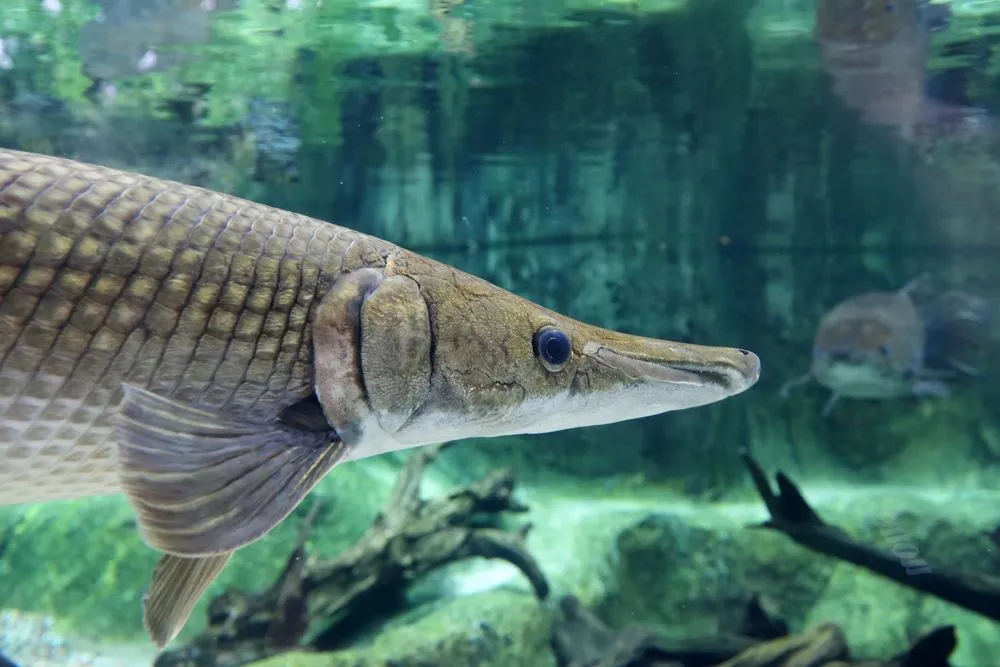
The presence of these scales is actually why some of these fish are referred to as ganoid fishes. One fascinating thing to note is that the ganoid scales have varying layers in their composition. In dinosaur eels, for example, these scales are composed of three layers. On the other hand, in gars such as the alligator gar, the scales have only two layers: a glassy outer coat of ganoine over a bony base.
What Are Cycloid Scales?
As the name suggests, cycloid scales are somewhat circular in appearance, in addition to being thin and translucent. The center of these scales is thicker, and you can observe several concentric lines of growth. Another interesting fact about these lines of growth is that they can reveal the age of the fish. Each year of life leaves behind a distinct growth zone called an annulus, usually marked at the end of the winter’s growth. Count the annuli, and you have a good estimate of how many years the fish has lived.
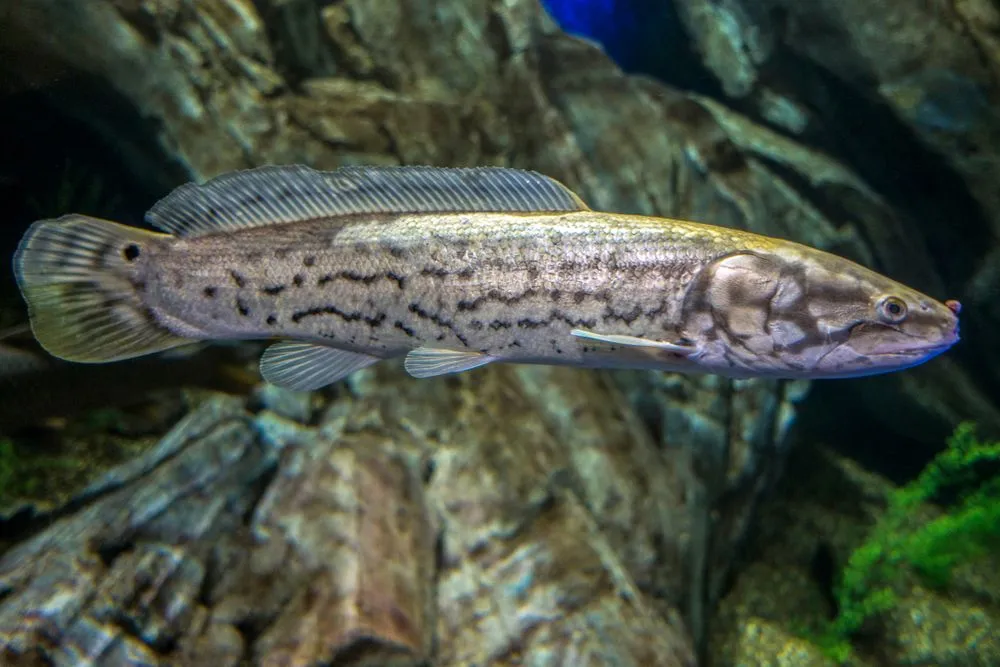
If you were to observe these scales on the body of fish, they would look like they’re embedded in the outer layer of the skin in a regular and overlapping fashion. The thin upper layer of these scales is made of bone, while the lower layer is composed of connective tissue. Cycloid scales cover the body of bowfin, cod, carp, and certain lungfish.
What Are Ctenoid Scales?
The word ctenoid comes from the Greek word for “comb.” As such, ctenoid scales have specific comb-like projections at the back. In form, structure and arrangement, they are very similar to cycloid scales. However, the exposed rear edge of each ctenoid scale carries a row of small, comb-like teeth called ctenii, which give these fish a rougher feel. Ctenoid scales cover the bodies of flounder and sunfish.
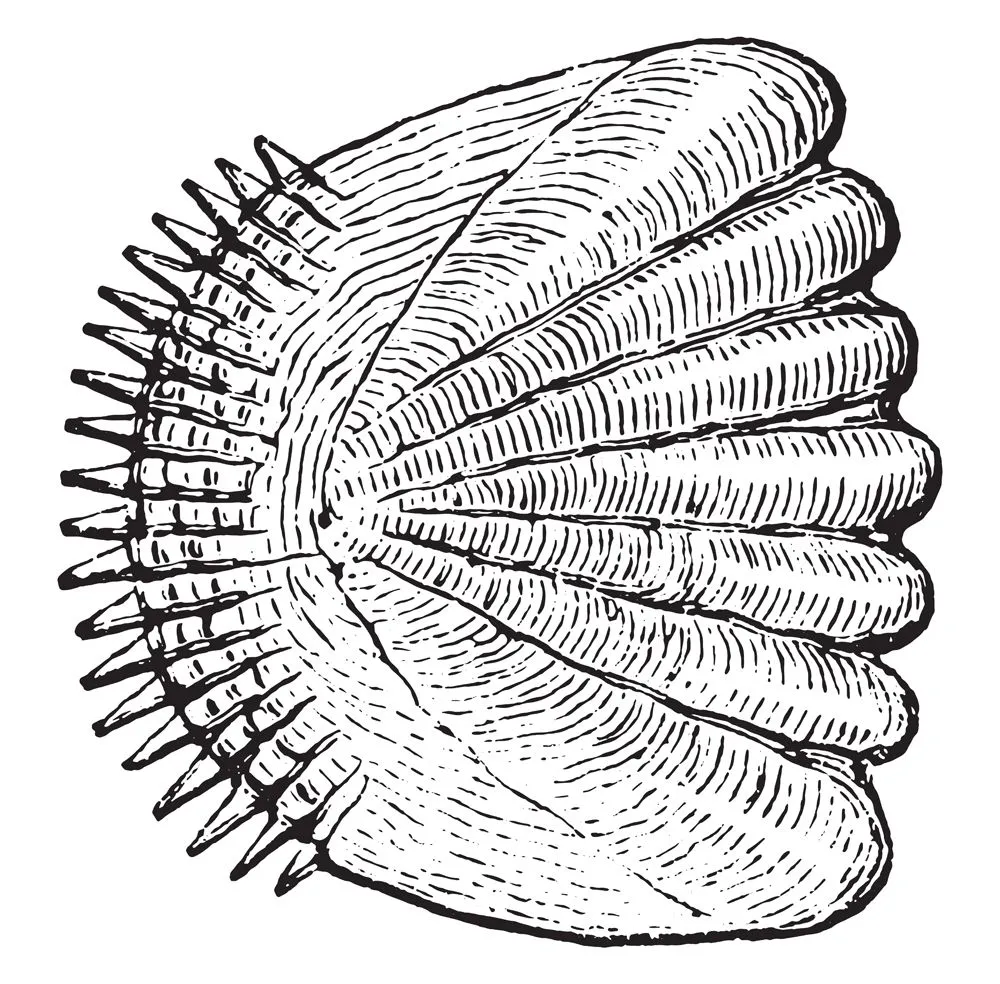
What Are Fish Scales Made Of, and What Do They Do?
Have you ever wondered what exactly you are scraping off a fish before it goes into the pan? Believe it or not, it is bone. The horny scales of snakes and lizards grow from the outer layer of the skin, but fish scales are formed of bone in the deeper layer of the skin, known as the dermis.

Take the thin, overlapping scales found on most bony fish (the cycloid and ctenoid types, which scientists group together as elasmoid scales). Each one is a natural composite of two ingredients: sheets of type I collagen, a tough, fibrous protein, and crystals of hydroxyapatite, the same calcium phosphate mineral found in our own bones and teeth. The mineral is concentrated in the outer layers, where it helps the scale resist puncture. Deeper down, the collagen fibers are stacked in layers that alternate direction, with the fibers in one layer running roughly at right angles to those in the next, much like the sheets in a piece of plywood. These scales are also only partly on display, as each one sits partially embedded in the skin.
So what does all this armor actually do? The most obvious job is protection, both from predators and from the environment. Because these scales overlap like roof shingles, they also bend with the body, giving such fish greater flexibility than fish armored with cosmoid or ganoid scales. Scales even play a part in the sense of touch. Research on zebrafish shows that scales help organize the nerve endings in the skin and regulate the density of touch-sensitive Merkel cells.
In sharks, the tooth-like placoid scales also help with swimming. In a 2012 study, Harvard biologists Johannes Oeffner and George Lauder attached pieces of mako shark skin to a robotic flapping device. Flexible skin samples swam an average of 12.3% faster than the same samples after the denticles had been sanded off, suggesting that the denticles may both cut drag and add thrust. Tellingly, a Speedo “shark skin” swimsuit fabric tested alongside them showed no consistent boost in speed.
Do All Fish Have Scales?
Given how much work scales do, you might assume that every fish has them. Not quite! Several groups of fish get by with no scales at all:
- Lampreys and hagfishes: These slimy, eel-like jawless fish completely lack scales or armor.
- Catfish: Many catfish, such as the channel catfish pictured below, have completely naked skin. The catfish lineage lost its scales during evolution, and a 2016 study of the channel catfish genome traced that loss to missing genes for mineralization proteins called secretory calcium-binding phosphoproteins. Some catfish species later went back to wearing armor, in the form of bony plates.
- Clingfishes: Every member of the clingfish family (Gobiesocidae) is scaleless, relying on a thick layer of mucus for protection.
- Chimaeras: These mostly bottom-dwelling relatives of sharks and rays have soft bodies with no scales.

Other fish have scales that are easy to miss. Freshwater eels, for instance, carry tiny scales embedded in their skin. Salmon definitely have scales, and fisheries biologists in Alaska use the annuli on Chinook salmon scales to estimate how old each fish is.
Then there are seahorses, which took a completely different route. Instead of scales, a seahorse has flesh-covered bony plates. In the lined seahorse, for instance, the skin is stretched tightly over a bony armor arranged as a series of rings.
Can One Fish Have More Than One Type of Scale?
Yes, and flatfish such as flounders and soles are the classic example. A flatfish lies on one side on the seafloor, with both eyes on the upward-facing, darker “eyed side,” while the lighter “blind side” rests against the bottom. Some species of flatfish have ctenoid scales on the eyed side of the body and cycloid scales on the blind side. In other species, the split falls between the sexes instead, with males carrying ctenoid scales and females carrying cycloid ones.

Placoid scales show that a single scale type can also take on very different jobs on the same animal. The stinging tail spine of a stingray, for example, is a modified placoid scale, similar to the scales found on the rest of its skin. In many species, this barb is even shed seasonally.
Conclusion:
Scales not only form the exoskeleton of different fish, but also help in classification. Moreover, apart from these types, the other body parts of some fish represent slight modifications of these scales. For example, the stinging spine of a stingray is a modified placoid scale, and true teeth are thought to have evolved from placoid scales in the first place. Therefore, even though these scales end up in the dustbin before almost every culinary experience, they are biologically critical and fascinating to study!
References (click to expand)
- Scale | zoology. Encyclopaedia Britannica.
- Ganoid scales. The Australian Museum.
- Placoid scales. The Australian Museum.
- Scale Characteristics. Palaeontologia Electronica
- scales - Fishionary - American Fisheries Society. The American Fisheries Society
- Fish scales. The Australian Museum.
- Cycloid and Ctenoid Scales. The Australian Museum.
- Cosmoid scales. The Australian Museum.
- Elasmoid fish scales as a natural fibre composite: microscopic heterogeneities in structure, mineral distribution, and mechanical properties. Interface Focus (2024). PMC.
- Aman, A. J., & Parichy, D. M. Anatomy, development and regeneration of zebrafish elasmoid scales. Developmental Biology (2024). PMC.
- Hydroxyapatite. PubChem, National Library of Medicine.
- Oeffner, J., & Lauder, G. V. The hydrodynamic function of shark skin and two biomimetic applications. Journal of Experimental Biology (2012). PubMed.
- Amazing skin gives sharks a push. ScienceDaily (2012).
- Microstructural and geometric influences in the protective scales of Atractosteus spatula. Journal of the Royal Society Interface (2016). PubMed.
- Fish Groups. Florida Museum of Natural History.
- Lined Seahorse. Florida Museum of Natural History.
- Chinook Salmon Scale-based Age Estimation: Glossary. Alaska Department of Fish and Game.
- Flatfish. Washington Department of Fish & Wildlife.
- Stingray Behavior and Biology. Shark Lab, California State University Long Beach.
- Fish scale. Wikipedia.
- The channel catfish genome sequence provides insights into the evolution of scale formation in teleosts. Nature Communications (2016). PMC.
- Seahorses. National Geographic.