Table of Contents (click to expand)
Yes, male seahorses give birth. The female deposits her eggs into a pouch on the male's belly, where they are fertilized and develop. After about two to four weeks, the male's pouch contracts and expels the fully formed young. Seahorses, pipefish, and sea dragons (the family Syngnathidae) are the only animals in which the male becomes pregnant.
Martin Luther King Jr. was telling the truth when he said, “We may not have come from the same ships, but we’re on the same boat now.” The entire domain of life on Earth is not uniform. There are animals big and small, ones who live in water and others that live on land, brightly colored creatures and some who change their stripes from time to time. However, what is the universal goal of every species? No matter the size or behavior of an organism, every species exists for survival, so their fundamental goal is perpetuation.
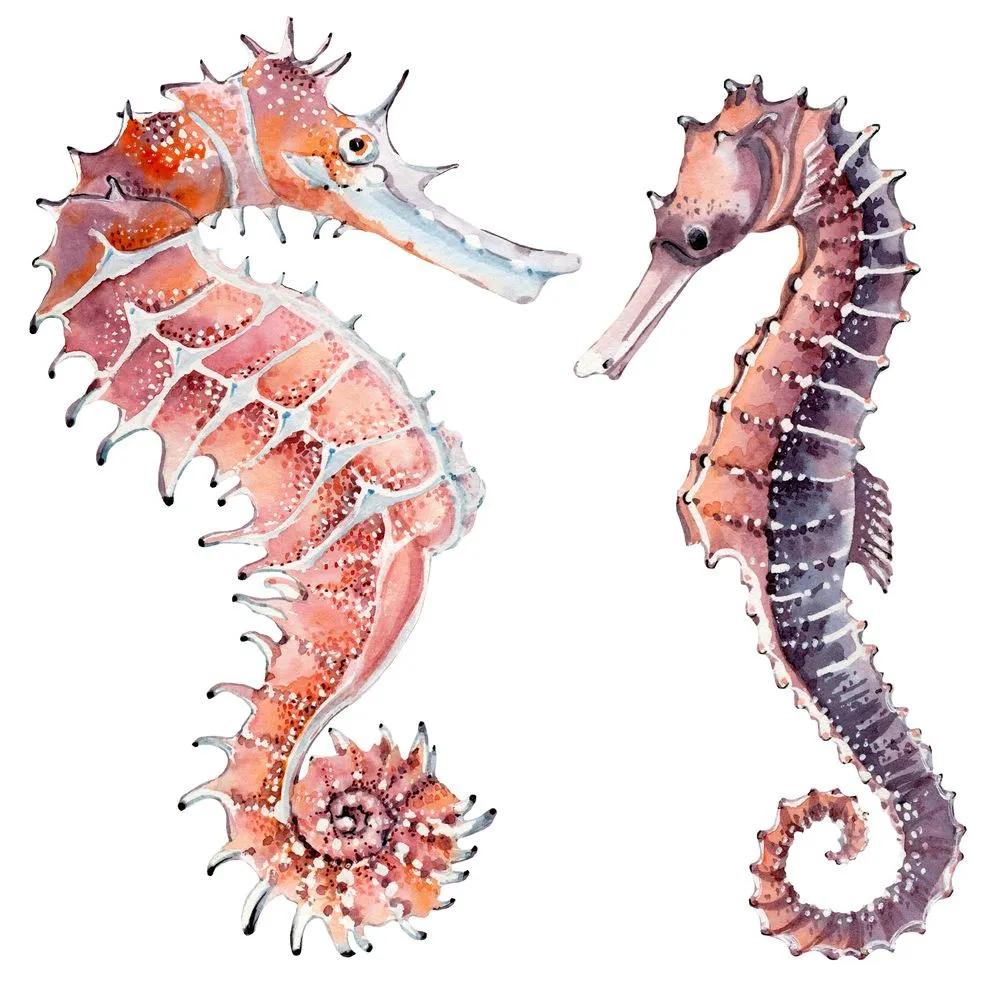
In order to survive, the vast majority of species give birth to young ones, such that their ‘type’ continues to inhabit the planet. Almost everywhere in the animal kingdom, it is the female who carries and delivers the young. Female animals, after fertilization, nurture their offspring to life, but there’s a small group of creatures in which it is actually the male who does this job. The most famous of them lives in a marine habitat and is known around the world for its unique appearance, the seahorse!
What Are Seahorses?
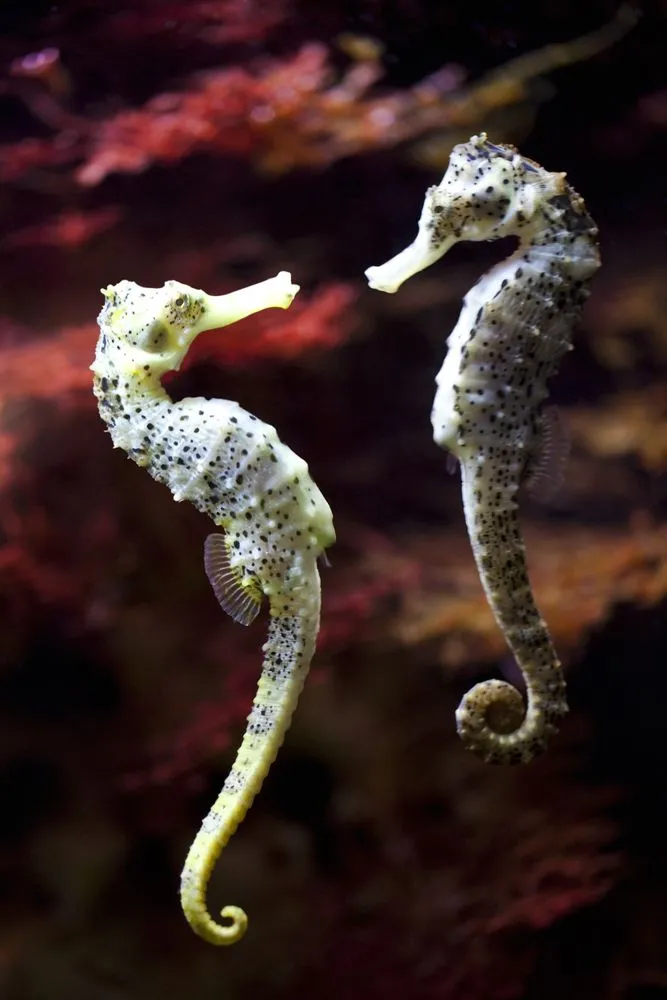
Seahorses are basically the unicorns of the marine environment, mystical and enigmatic. This animal has the head of a horse and the tail of a serpent, but interestingly enough, this fusion organism is actually a fish. It is classified under Actinopterygii, a category that consists of bony fishes. The genus of Seahorses is Hippocampus, and they are more broadly grouped in the Syngnathidae family. The organisms found in this family have a fused jaw, a feature that is clearly visible in seahorses.
Another fascinating thing about seahorses is that their entire body is composed of bony armor. The bony rings are clearly visible near the prehensile tail, which is where the body of a sea horse terminates. A prehensile tail is a characteristic feature of a variety of mammals, including monkeys and lemurs. The curled tail helps these animals perch on the branches of trees and move with more dexterity. Similarly, the prehensile tail of the seahorse helps it to cling to seaweed. This is actually a camouflaging mechanism, as some seahorses change color and end up looking like seagrass itself!
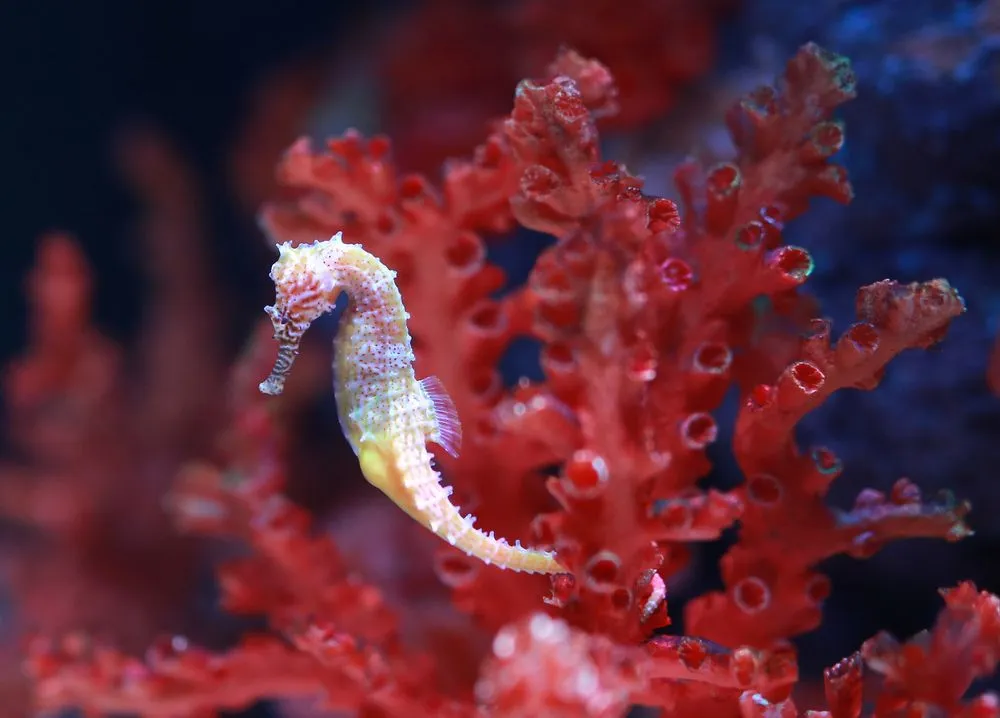
Even though sea horses are actually fish, their mechanism of swimming is much different than most of the other fishes we usually observe. Seahorses are considered to be weak swimmers, and instead rely on camouflaging to protect themselves from predation. This is because, unlike the other fish who swim horizontally, seahorses swim upright. This unusual posture exposes them to water resistance and slows their speed, which can usually be avoided in streamlined, horizontally swimming fish.
What Are The Different Types Of Reproduction?
Before we dive into the reproductive process followed by seahorses, let’s take a look at how reproduction generally takes place. There are two ways in which a young one is born, a binary that divides animals into oviparous and viviparous. Oviparous organisms lay eggs that hatch into offspring, while viviparous organisms give live birth to their descendants. Thus, once the male individuals become sexually mature, they acquire the potential to fertilize the female.
In the case of viviparous organisms, such as humans, the sperm from the male fuses into the ovum of the female. This fusion takes place in the female reproductive system. Thus, the fusion of the two cells results in fertilization, and the newly formed cell is called a zygote. The zygote undergoes development, and after nine months, rigorous contractions take place in the uterus. This results in the expulsion of the fully developed baby outside the body of the female.
In the case of oviparous organisms, fertilization results in the formation of eggs. The initial process is somewhat similar to viviparous animals, but after fertilization, the cell might instead develop a shell in specialized organs of the females. The female then releases these eggs and often watches over them until they hatch. However, in some animals, such as frogs, the fertilization takes place outside the body of the female in a water body where she had previously released her eggs.
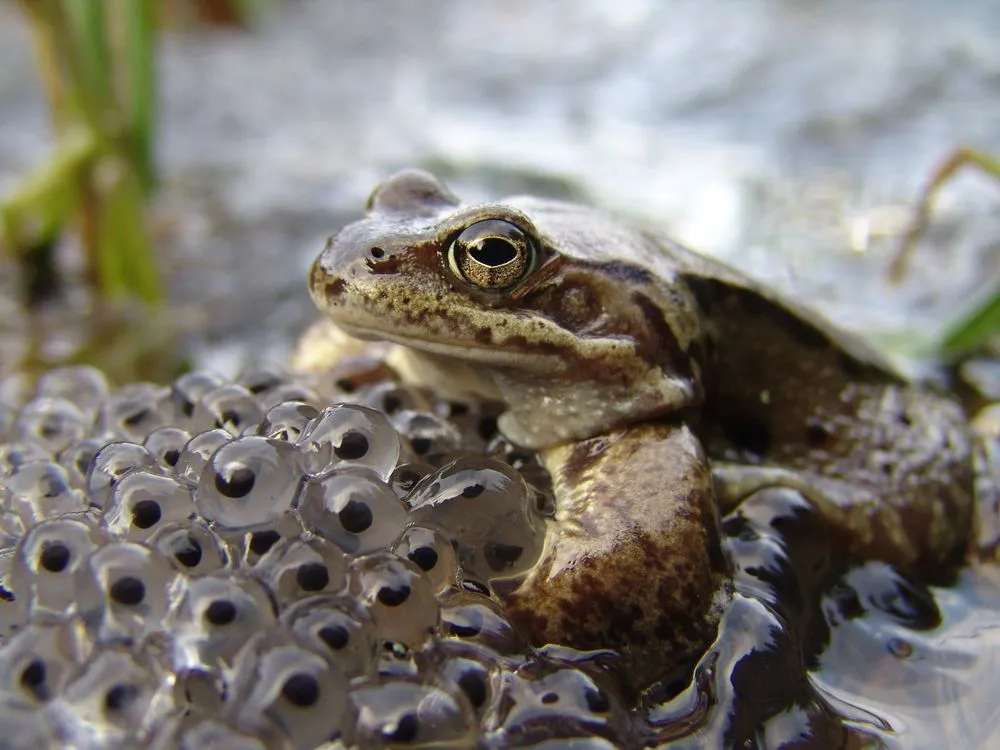
Additionally, we can also classify the above example into internal and external fertilization. Because the fusion of the sperm and the ovum in humans takes place inside the body of the female, it’s called internal fertilization. In the case of frogs, fertilization is external, as it takes place outside the body.
Seahorse Reproduction: How Do Seahorses Reproduce?
A fascinating thing about seahorses is that the sperm producer is also the individual that gets pregnant. As incredible as it sounds, the development of embryo seahorses actually takes place in the belly of the males!
This often leads people to ask whether seahorses are asexual, or whether they somehow change sex. Neither is true. Seahorses reproduce sexually, with separate males and females, and an individual keeps the same sex for life. What flips is the parenting role, not the biology: the female still makes the eggs, and the male still makes the sperm. He simply happens to be the one who carries the pregnancy. Males do not lay eggs either, the female does, and she hands them over for the male to fertilize and brood.
Seahorse Birth
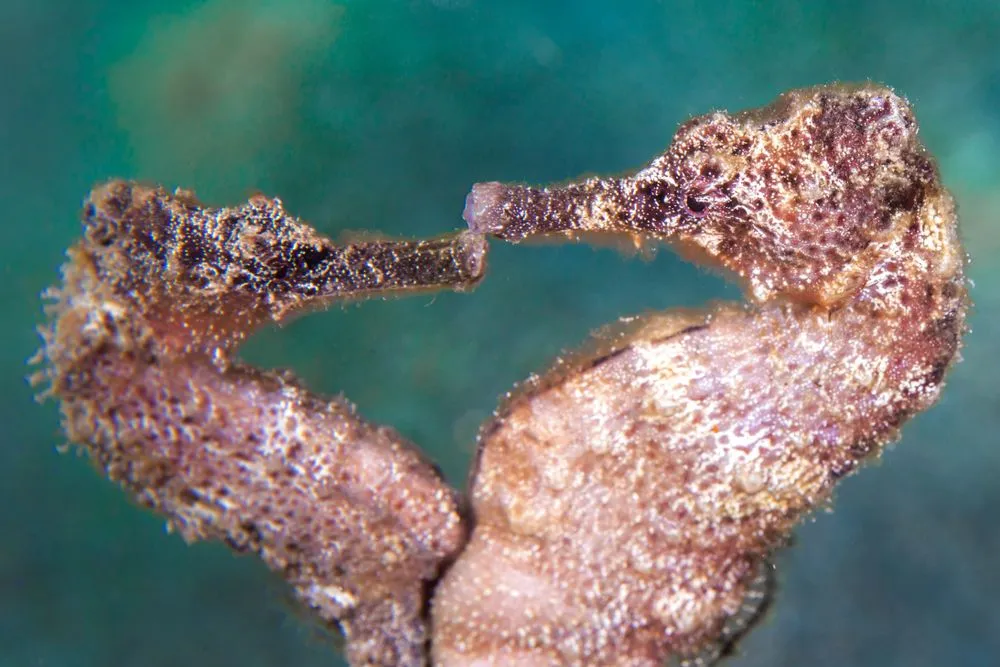
The courtship dance between seahorses can last for as long as eight hours, after which the female will deposit her eggs (sometimes well over a thousand of them) in the male’s pouch. Far from being a mere flap of skin, this pouch is a remarkable organ. Once the eggs are inside, the male fertilizes them by releasing his sperm, and the developing embryos embed themselves in the pouch wall. There, a dense network of blood vessels supplies them with oxygen and nutrients while carrying away waste, and the father fine-tunes the salinity of the pouch fluid to match the open sea. In other words, the pouch works much like a mammalian placenta, gradually preparing the young for life at sea before they ever leave it.
After they’re fully developed, usually around two to four weeks later, the male undergoes muscular contractions, similar to those that occur in the uterus of a female. This results in the ejection of the babies outside the body of the male. A single brood can range from a few dozen to over a thousand young. These baby seahorses are then referred to as fry. The father survives the ordeal (he does not die from giving birth) and, during the breeding season, is often ready to receive a new batch of eggs within hours or days.
Conclusion