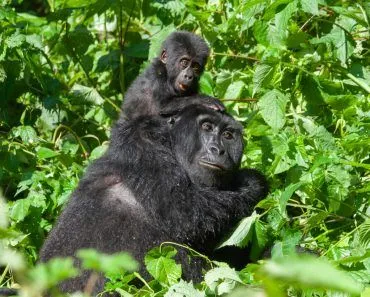
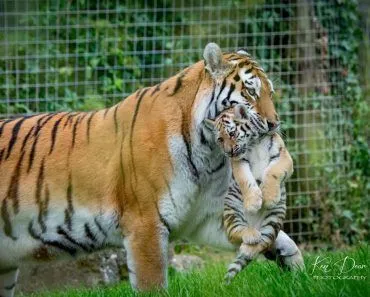
Animals help each other mainly through two mechanisms. Kin selection favors aiding relatives, who share your genes, so helping them still passes those genes on. Reciprocal altruism favors helping unrelated individuals who are likely to return the favor later, as vampire bats do when they share blood meals.
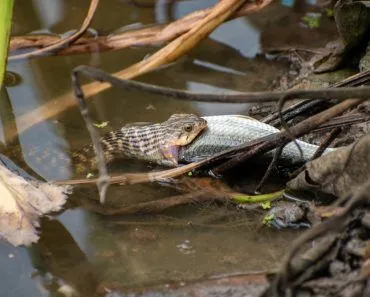
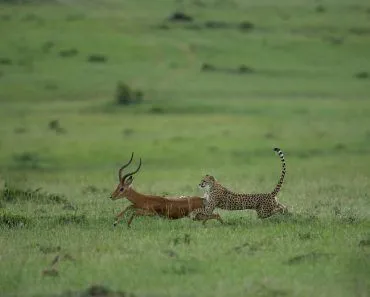
When we think of wild animals, we are led to believe that it’s a dog-eat-dog world out there. Literally. Examples of snake-eating snakes, such as the king cobra (its genus name, “Ophiophagus,” translates from Greek as “snake eater”), or videos of lionesses chasing down a mother zebra while it defends its calf, spring to mind. A predominance towards violence is an understandable assumption. We generally think of wild animals as prey or predator species. A rat is eaten by a snake, which is then eaten by an eagle. We relate individuals to levels of a food chain, that is, animal A is eaten by another animal B.
In reality, however, ecological levels of interactions aren’t so fixed. In fact, some animals aren’t solely driven by the drive to survive.
What Is Altruism?
Altruism can be defined as the tendency of an individual animal to put the interests of another individual or group ahead of its own. It can be measured in terms of costs and remittances. This is because altruistic actions often work against an animal’s own self-interests.
Let’s consider the example of vampire bats, a particular type of bat found in the Americas. Their range extends from Mexico in the north down to Uruguay and Chile in the south. Aptly named, these bats have a diet based on, you guessed it, blood. If you were creeped out already, prepare yourself, it gets worse!
These bats are well known to regurgitate blood and share it or donate it to other members of their group!
They do this to provide other members, who have been less successful in their hunt, with food.
Similarly, several species of migratory birds usually make long journeys while flying in a particular V formation (Skein formation). The separated feathers at the tip of each wing of the bird create tiny vortices. This phenomenon is known as a “wingtip vortex”. Each bird, except for the bird at the tip of the V (the leader), gains a bit of lift from the vortex created by the bird in front of it. The lead bird actually suffers the most, as it burns through the most energy in this formation, and gains nothing in return.
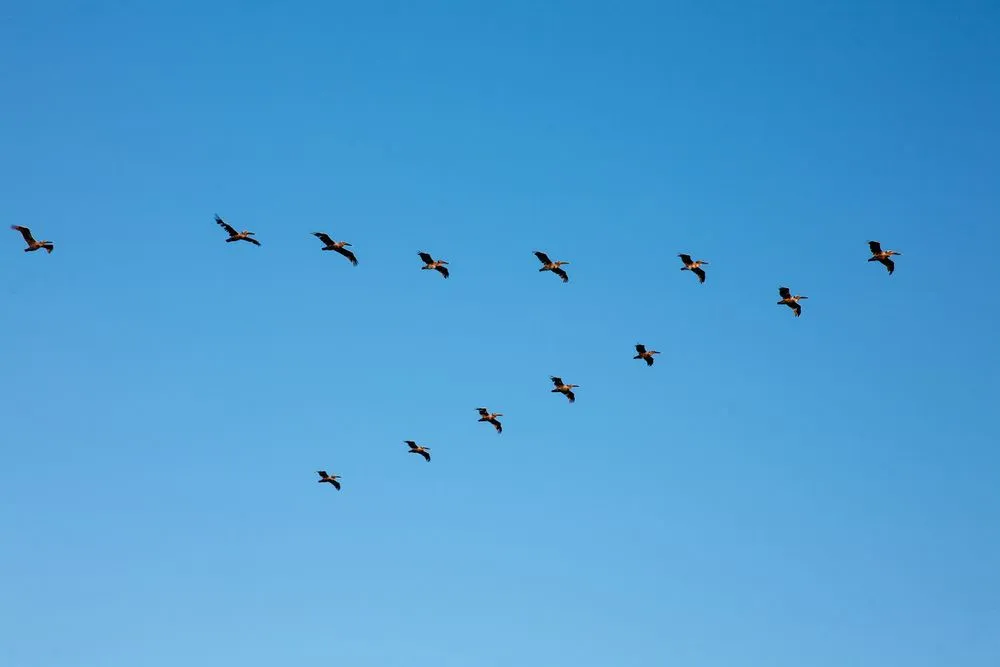
In both these cases (the vampire bat that donates blood and the lead bird that loses more energy), the organism acts counter-productively to its own self-interest. Why do these animals continue to behave in this way?
Why Does Altruism Trouble Scientists So Much?
Many scientists have been stupefied by the evidence of altruism in nature. Darwin, in particular, did not seem to have an answer for it. In fact, he found it counter-productive to his core concept of evolution!
According to Darwin, natural selection should drive animals to behave in ways that would increase their own chances of betterment or survival. It shouldn’t drive them to further another individual’s chances. Yet, just the opposite can be observed all over the world.
Think of a herd of impalas grazing on the savannah plains. When a member of the herd is alerted to the presence of a predator, it sounds an alarm that lets the other members of the herd run away.
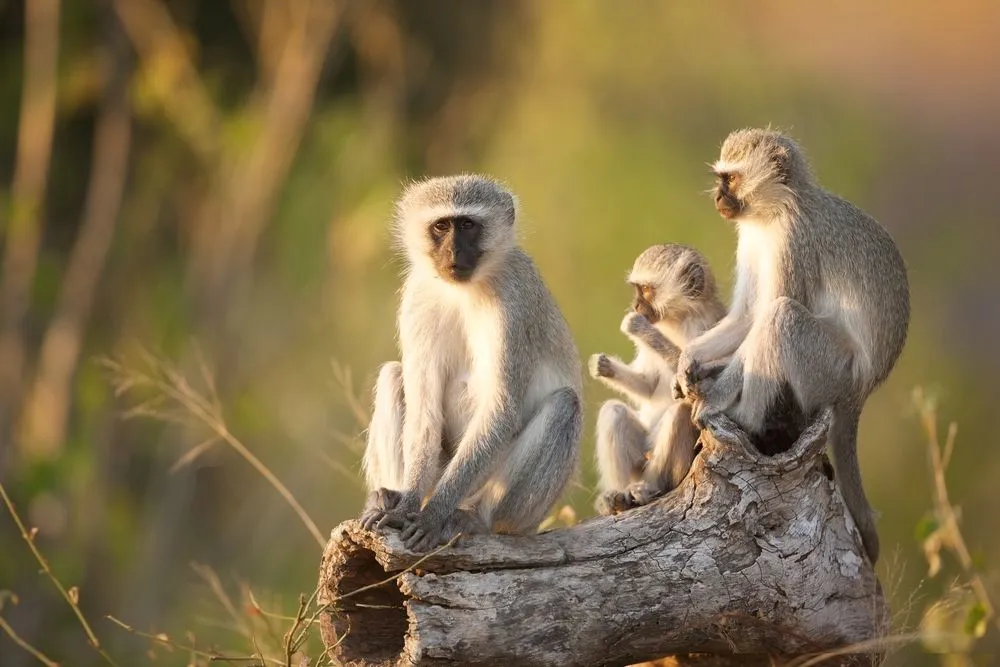
Say the impala that first observed and noticed the presence of the predator silently slipped away. It would have all but ensured its own survival. Instead, the impala sounds the alarm and actively positions itself in harm’s way to allow other members of the herd to have a better chance of running away. What does it gain from this interaction or engagement with the group?
That’s not the only question we have to answer. If, according to natural selection, individuals who escape, survive, and produce offspring are favored, then why do individuals with alarm-sounding behavior even arise, and why haven’t such individuals been eliminated?
To answer these questions, we have to look at altruism from the gene’s point of view rather than the individual’s. When we do, two ideas explain most of the helping we see in nature: kin selection and reciprocal altruism. A third and far more contested idea, group selection, is the one Darwin himself reached for.
Kin Selection: Helping Your Relatives
Here’s the trick that dissolves most of the paradox: natural selection doesn’t really care about you. It cares about your genes. And your relatives carry copies of those same genes. A full sibling shares about half of your genes, a niece or nephew about a quarter. So if you help close kin survive and reproduce, copies of your genes get passed on even if you never reproduce yourself. This is called kin selection, and it was put on a firm footing by the biologist W.D. Hamilton in the 1960s.
Hamilton boiled it down to a tidy inequality now known as Hamilton’s rule: altruism is favored when rb > c. Here c is the cost to the helper, b is the benefit to the one being helped, and r is how closely the two are related. In plain terms, it pays to sacrifice for relatives when the payoff to them, discounted by relatedness, outweighs what you give up. The total of your own reproduction plus the reproduction you enable in relatives is called your inclusive fitness.
Suddenly the impala’s alarm call makes sense. Herds are often made up of relatives, so an animal that shouts a warning may be saving siblings, cousins, and offspring that carry its genes. The same logic explains the sterile worker bees that spend their whole lives raising a queen’s young: by helping their mother reproduce, they propagate the family genes far more effectively than they could on their own.
Reciprocal Altruism: I’ll Scratch Your Back
Kin selection explains helping among relatives, but what about animals that help complete strangers? For that, biologist Robert Trivers proposed reciprocal altruism in 1971. The idea is simple: I help you today, you help me tomorrow, and over many encounters both of us come out ahead. It works only when animals live in stable groups, recognize one another, and can remember (and punish) those who take help but never give it back.
The blood-sharing vampire bats are the textbook case. When researchers Gerald Carter and Gerald Wilkinson studied them closely, they found that a bat is most likely to donate blood to the roost-mates who have fed it in the past, and the bats even share with unrelated individuals, not just kin. A hungry bat is buying insurance: a wide circle of past favors means more potential donors the night its own hunt fails. That’s reciprocity, not pure selflessness.
What Is Group Selection?
There is a third explanation, and it’s the one that has caused the most trouble: group selection. Let’s use an example to understand what it entails.
Consider a herd of impalas on the savannah who all have altruistic tendencies towards one another. No single animal in the herd values his or her own life more than they value the herd. In essence, it’s a “one for all, all for one” mentality that the group seems to have adopted. Each individual behaves in the best interests of the herd.
Compare this group of altruistic impalas with a group of selfish impalas. On a group level, the argument goes, the group composed of altruistic impalas will have a selection advantage over a group of selfish impalas. The individual cost of helping is supposedly outweighed by the benefit to the group, which would allow altruistic traits to be selected for in later generations. It’s an intuitive story, and as we’ll see, it’s also the weakest of the three.
Conclusion
Darwin attempted to reconcile his views on altruism and evolution by coming up with group selection. He first debated over the issue in his book The Descent Of Man. In his book, he specifically made observations based on the altruistic tendencies that men display. He had the following to say about self-sacrifice among men:
“He who was ready to sacrifice his life, as many a savage has been, rather than betray his comrades, would often leave no offspring to inherit his noble nature.”
He noticed that those who have a tendency to self-sacrifice themselves do not sire or leave behind any offspring that carry on their “noble nature”. On an individualistic level, this is disadvantageous. However, on a group level, he had the following to say:
“A tribe including many members who… were always ready to aid one another, and to sacrifice themselves for the common good, would be victorious over most other tribes; and this would be natural selection.”
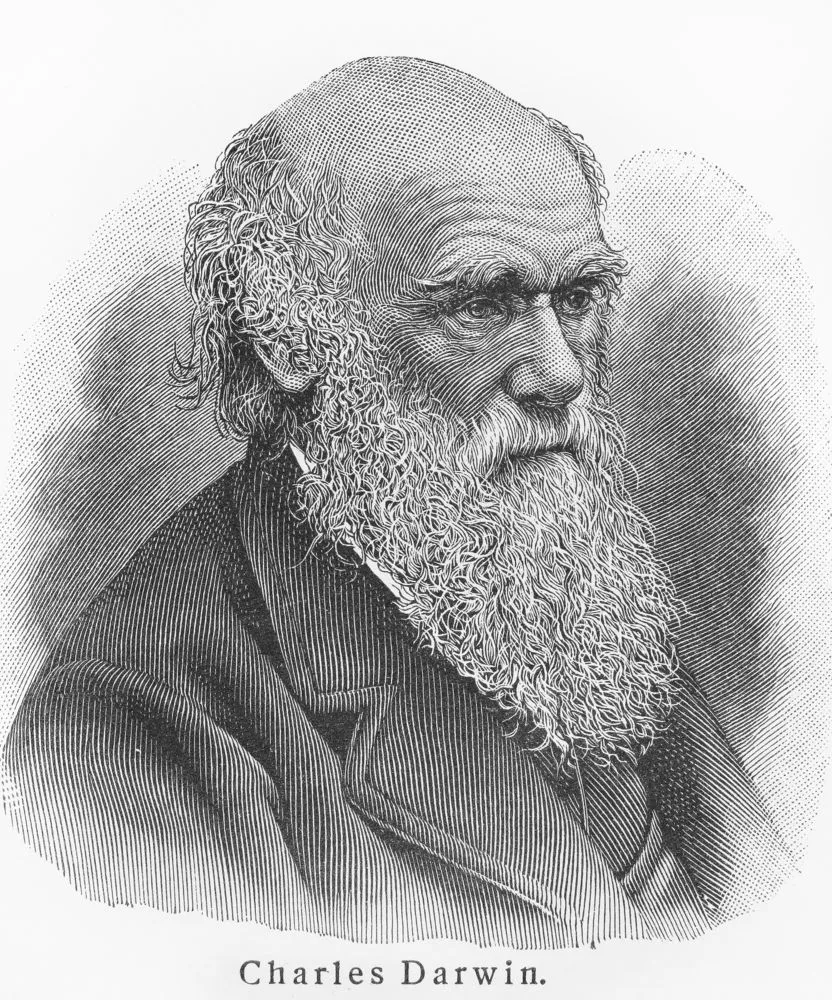
However, group selection remains a contentious argument among evolutionary biologists. This is because of an issue dubbed the ‘subversion from within’ problem. This problem posits that even one “selfish” mutant or individual within an overall altruistic group would reap the rewards produced by altruists without ever contributing to the group. Essentially, they are freeloaders who would eventually produce enough offspring that would display similarly selfish tendencies to the point that selfish individuals would prevail or outlast the altruistic ones.
Because of the subversion problem, most evolutionary biologists today regard simple group selection as a weak explanation, and they lean instead on kin selection and reciprocal altruism to account for animal helping. Darwin may never have fully reconciled biological altruism with his own evolutionary views, but those who came after him filled in the gaps. W.D. Hamilton gave us kin selection, and Robert Trivers gave us reciprocal altruism. Is much of what looks like selflessness actually selfish at the level of the gene? Is some of it really mutualism or cooperation, where both parties gain at once? Debate still rages over the finer points, but the broad answer is no longer the mystery it was in Darwin’s day.
However, in the meantime, most of us can take some solace (and perhaps guidance) in the fact that even in the seemingly dog-eat-dog world of wild animals, some animals do take time out of their day to help their comrades.
References (click to expand)
- (2003) Biological Altruism - Stanford Encyclopedia of Philosophy. The Stanford Encyclopedia of Philosophy
- Carter, G. G., & Wilkinson, G. S. (2013, February 22). Food sharing in vampire bats: reciprocal help predicts donations more than relatedness or harassment. Proceedings of the Royal Society B: Biological Sciences. The Royal Society.
- (2007) Inclusive Fitness Theory from Darwin to Hamilton - PMC - NCBI. National Center for Biotechnology Information
- Kin selection | Altruism, Evolution & Behaviour. Encyclopaedia Britannica.
- Reciprocal altruism | Definition, Examples & Facts. Encyclopaedia Britannica.