To kill a virus, one must break its outer shell. Vaccines prime the immune system to recognize and neutralize a virus. Mechanically shaking viruses with a laser can also inactivate them. UV light, rhodium-based compounds, and anti-viral drugs are additional ways to kill viruses.
Oh no! Do you have the flu—again? This illness seems to keep returning, no matter what medication we may take. Why is that? As a child, I was given a number of vaccinations, and yet, I repeatedly caught the flu year after year. This leads us to an obvious question… what makes viruses such tough fighters?
Viruses – The Undead Microorganisms
Perhaps you didn’t know this, but outside a host organism, virus particles (called virions) are essentially inert. They don’t eat, breathe, or replicate on their own.
As soon as they enter a living host, however, they come alive (the debate about whether a virus is alive or not is a whole other issue). Moving from a completely dormant state to full activity takes a frighteningly short amount of time, and they rapidly hijack our machinery and use it to make more little viruses, soon leaving the cells dead.
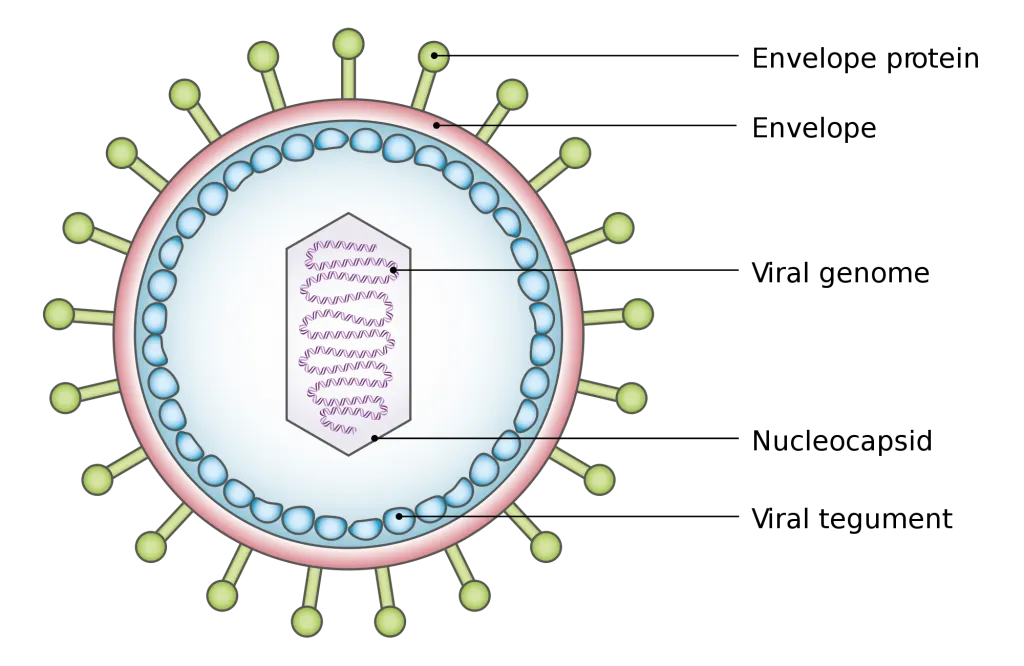
Viruses aren’t your typical living being. They are somewhere between being alive and being a particle of dust with some DNA or RNA in it. Thus, “killing” them poses a bit of a conundrum.
For the sake of this article, we will consider a virus killed if A) its structure is entirely destroyed or B) if it can no longer replicate, even if its structure is completely intact.
With that designation out of the way, let’s find out how viruses are killed.
Vaccines Help The Immune System Kill Viruses
Viruses are very tricky things to handle. They create disease by using the host’s cellular machinery to reproduce. To eliminate them from the body, one has to kill the virus without harming the healthy cells around it.
Remember those vaccinations I mentioned earlier? They are a key line of defense to help our bodies ward off viral invasions. These vaccinations act as reminders for our bodies, in case we become exposed to the same virus again. Our immune systems destroy the virus by secreting chemicals that kill virus-infected cells, thereby preventing the virus from multiplying, and/or secreting antibodies that put a death signal on the virus so that immune cells, such as the macrophages, can come and kill it.
For example, two doses of the MMR vaccine give about 97% protection and lifelong measles immunity for most people, so if your body ever encounters the measles virus again, it’s ready.
However, if these vaccinations are so effective, why don’t they work for all viruses?
Viruses and the ways they infect a cell are very diverse. Some viruses are easier to kill than others, either because they lack a strong defense against our immune system or because we managed to develop a strong enough vaccine to stimulate the immune system. However, many viruses are tricky because they are able to evade our vaccines.
Creating New Vaccines When A Virus Mutates
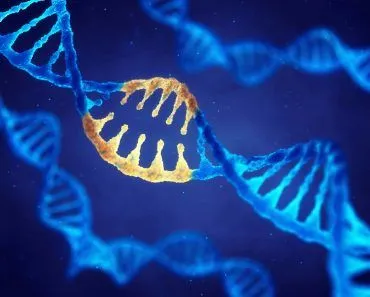
One way that viruses become difficult to kill is through mutation. The host of different viruses that cause the flu, for example, mutate rapidly. Their genetic material and their protein coats will soon be different enough to hoodwink the immune system.
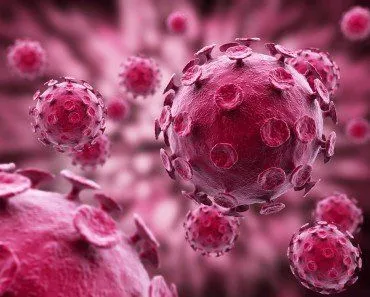
Take a look at the protein surface in the picture above. These protein surfaces continuously change when a virus mutates, and when this happens, our bodies can’t remember if they’ve fought with this particular virus or not. Therefore, the vaccine that worked so well last year won’t work the next time around.
Every year, scientists must create a new vaccine for newly identified strains of flu viruses.
The human immunodeficiency virus (HIV), which causes the disease AIDS, has long resisted vaccine designers. The virus infects immune cells, our defenders against disease. With our immune system out of commission from the virus, it becomes difficult to find a vaccine to fight itself. And then, once the HIV virus starts to replicate, it’s difficult to distinguish a healthy cell from an infected one. How do you expect to kill something like that? Encouragingly, 2025 mRNA-based germline-targeting trials produced the first proof-of-concept for eliciting precursors of broadly neutralizing HIV antibodies, the most promising step in decades.
HIV is one extreme case of the viral world, but it reveals just how complicated it is to deal with viruses. Scientists have been searching for an answer to this same questions for many years. There have been numerous experiments and theories concerning the best way to handle viral infections, but not a single solution that works every time.
This issue even involves nanotechnology, which seems to be all the rage this century! Vaccine developers are now using nanoparticles to specifically target viruses. In 2020, a paper published in Science Immunology looked at the immune response to a nanoparticle vaccine against respiratory syncytial virus (RSV). That research has since paid off: the FDA approved the first RSV vaccines for older adults (GSK’s Arexvy and Pfizer’s Abrysvo) in 2023, followed by Moderna’s mRNA-based mRESVIA in 2024.
The same mRNA technology delivered the world’s most famous example of viral suppression: the Pfizer-BioNTech and Moderna COVID-19 vaccines. Instead of injecting a piece of the virus, mRNA vaccines hand our cells a temporary recipe to build the viral spike protein themselves, training the immune system to recognize and neutralize the real thing. Katalin Karikó and Drew Weissman were awarded the 2023 Nobel Prize in Physiology or Medicine for the discoveries that made it possible.
Mechanical Shaking Of Viruses Helps In Killing Viruses
One such experiment involves the mechanical shaking of viruses using resonating frequencies with the help of a laser. The capsid (or envelope) acts as a shell for the virus. If the shell gets damaged, the virus becomes inactivated. Basically, it’s like pushing a child on a swing, but it’s rather difficult to estimate how much push is required to get the virus shaking. This method work great in labs studying the viruses, but it isn’t feasible as a viable medical therapy… yet.
UV Light And Rhodium-Based Compounds Kill Viruses
There have also been numerous experiments on irradiating viruses with UV light. This is harmful, as UV rays mutate proteins and DNA, causing damage to the healthy host cells. Researchers are also experimenting with microwaves to destroy viruses, an approach known as structure-resonant energy transfer. Studies between 2022 and 2025 have reported promising lab results against SARS-CoV-2, though the method is not yet a practical clinical therapy.
In the mid-2000s, chemists like Claudia Turro and colleagues developed photoactivated rhodium complexes that damage the DNA of tumor cells when exposed to light at a specific frequency, with later work exploring antiviral applications. The technique was praised as a possible alternative to chemotherapy, since it can be aimed at infected or cancerous cells without harming healthy ones nearby.
Anti-Viral Drugs Kill Viruses
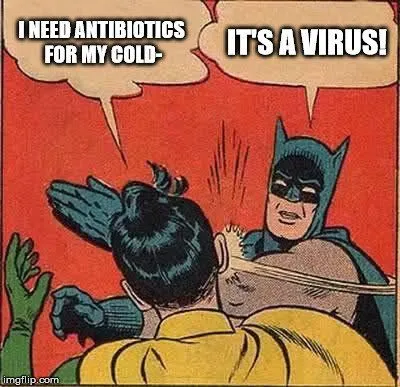
Drugs have also been used as a form of protection against these viral assaults: anti-virals. The problem is that drugs are less effective for viruses than they are for bacteria. Have you ever wondered why you don’t take antibiotics when you have a cold? Quite simply, because they don’t work on viruses!
Fortunately, some anti-viral drugs have been developed that disrupt the life cycle of a virus: some stop the virus’ genetic material from being duplicated within the host cells, while others simply prevent the virus from attaching itself to the host.
So, keep calm, fight on, and if you aren’t vaccinated yet, go and get your body protected from the countless viral invaders that threaten it every day!
References (click to expand)
- Influenza Antiviral Drugs | CDC. The Centers for Disease Control and Prevention
- Immune responses to viruses | British Society for Immunology - www.immunology.org
- Kaminskyy, V., & Zhivotovsky, B. (2010, May). To kill or be killed: how viruses interact with the cell death machinery. Journal of Internal Medicine. Wiley.
- Tsen, K. T., Tsen, S.-W. D., Chang, C.-L., Hung, C.-F., Wu, T.-C., & Kiang, J. G. (2007, July 13). Inactivation of viruses with a very low power visible femtosecond laser. Journal of Physics: Condensed Matter. IOP Publishing.
- Swanson, K. A., Rainho-Tomko, J. N., Williams, Z. P., Lanza, L., Peredelchuk, M., Kishko, M., … Nabel, G. J. (2020, May 19). A respiratory syncytial virus (RSV) F protein nanoparticle vaccine focuses antibody responses to a conserved neutralization domain. Science Immunology. American Association for the Advancement of Science (AAAS).