Table of Contents (click to expand)
When we look at distant objects in the night sky, we are looking at them in the past, because their light takes time to reach us. The farthest back we can possibly see is the cosmic microwave background (CMB), released about 380,000 years after the Big Bang. In a universe that is roughly 13.8 billion years old, that corresponds to looking back nearly 13.8 billion years.
When we look into the night sky, we can see various types of astronomical objects. They range from planets, moons and stars to nebulae, star clusters, and nearby galaxies. With better and more sophisticated telescopes, we can also see more distant and compact objects, such as faraway galaxies, galaxy clusters, and neutron stars.
It should not surprise you that these objects are very far away!
Distances And Time
Einstein’s theory of relativity implies that when we look at distant objects, we see their historical versions, because light (and consequently information) takes time to reach us due to its limited speed. Thus, as we observe more distant objects, we are actually peering further back in time.
For example, light from the Sun takes about 8 minutes and 20 seconds to reach us. Thus, on Earth, we see a roughly 8-minute-old version of the Sun, rather than the Sun in its present and immediate state. If the Sun were to suddenly explode (hypothetically, of course), we would only find out after more than eight minutes had passed.
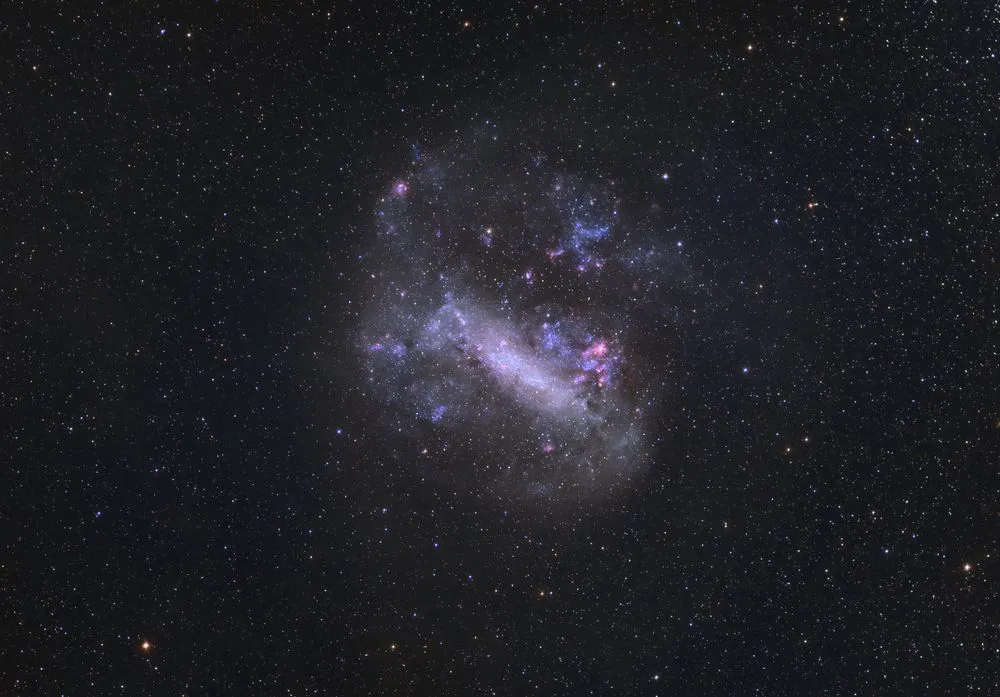
Similarly, the light from the Large Magellanic Cloud (LMC) takes about 163,000 years to reach Earth. Thus, the Large Magellanic Cloud we are currently observing is around 163,000 years old. In this case, the light takes a much longer time to reach Earth (since it is very far away, compared to the Sun). Hence, we presently see a much older version of the LMC than we do of the Sun.
This is true for all objects out in the universe. Moreover, when the distance measurement is in the units of light-years, that figure is also the time taken by the light from that object to reach us. For example, the distance to the brightest star in the night sky, Sirius, is around 8.6 light-years. This means that, right now, any light emitted from there will take 8.6 years to reach us.
It is important to note that this time taken for light to reach us that we get from the light-years units, is an instantaneous figure. The space between the Earth and these distant objects is also continuously expanding. Thus, over time, light from these objects will need even more time to reach us, as the distance between Earth and these objects keeps increasing. This becomes relevant when we talk about things like the most distant objects we have ever observed.
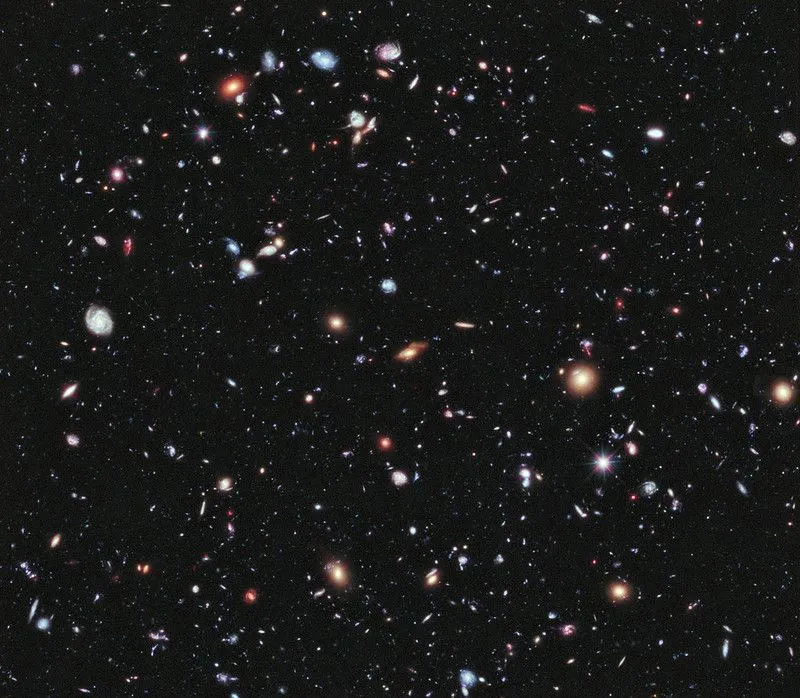
For example, the most distant individual star we have ever observed is designated WHL0137-LS, also called Earendel. It sits at a present-day (comoving) distance of around 28 billion light-years from us. That said, the light we now see from this star actually left it about 12.9 billion years ago, just 900 million years after the Big Bang (redshift z ≈ 6, refined by JWST spectroscopy to z ≈ 5.93). A 2025 follow-up study using JWST has even raised the possibility that Earendel may be an unresolved globular star cluster rather than a single star, though it remains the most distant stellar light source we have detected.
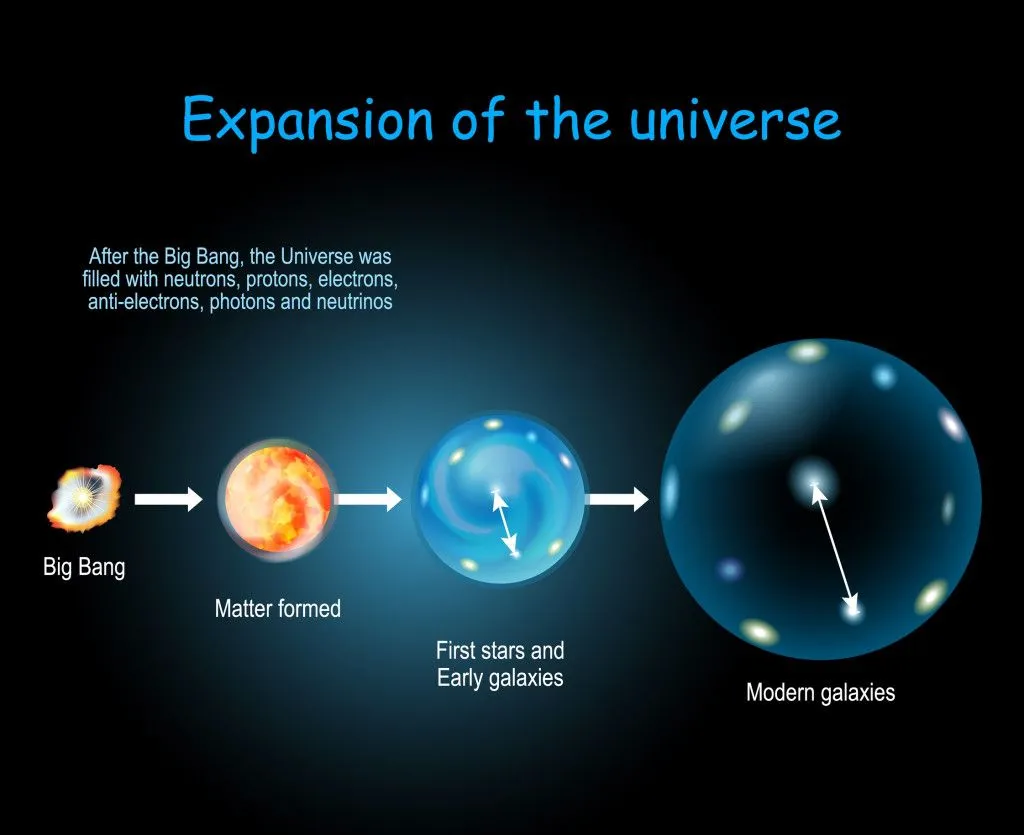
This discrepancy occurs due to the expansion of the universe. Furthermore, the light that is leaving Earendel at this very instant would take 28 billion years to reach us. Another effect of the universe’s expansion is that the light from the very farthest objects still would not have reached us yet. If the expansion rate is fast enough, it might never reach Earth. However, this article will focus on what is within the observable universe.
So, how far back in time can we see? The present estimates, from the Planck mission’s measurements of the cosmic microwave background, indicate that the universe is around 13.8 billion years old. Can we see light that has been traveling for that long?
It turns out that there is a limit to this. We cannot see light formed at the instant of the Big Bang, nor during the immediate period after it. Simply speaking, this boundary means that we cannot directly see how the Big Bang looked, or how the universe appeared in the moments that followed.
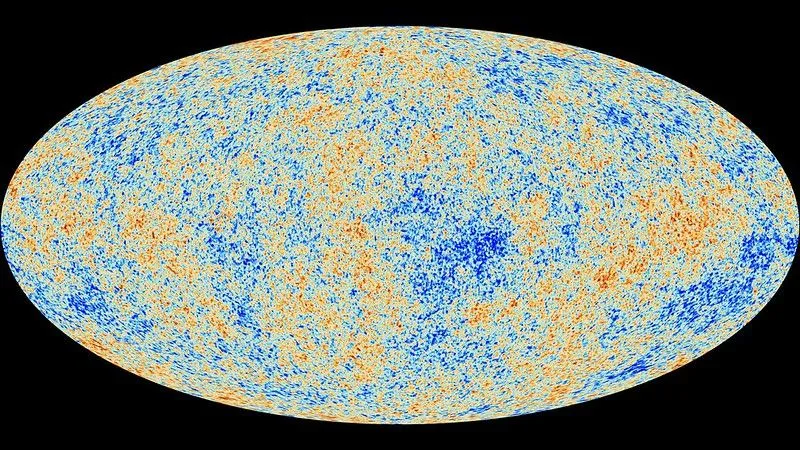
The most ancient event we can directly observe is the creation of the cosmic microwave background radiation (CMBR). It took place approximately 380,000 years after the Big Bang. So, to answer the original question: how far back into the past can we see in the night sky? The answer is the age of the universe minus those first 380,000 years. From our current estimates, that gives a “visibility” limit of nearly 13.8 billion years back in time (the 380,000-year shortfall is negligible at this scale).
Epoch Of Recombination
The creation of the CMBR occurred during a period that scientists call the epoch of recombination. Before this epoch, the universe had such a high temperature that matter only existed as plasma, consisting of ionized atoms and free electrons.
The light (or photons) that existed before the recombination epoch carried information about the very early universe, and probably even the Big Bang itself! However, the ionized plasma would have scattered these photons very effectively. The photons would bounce from one charged particle to the next, keeping them trapped and altering their properties. As a result, these photons are not available for us to see, since they were unable to travel freely back then.
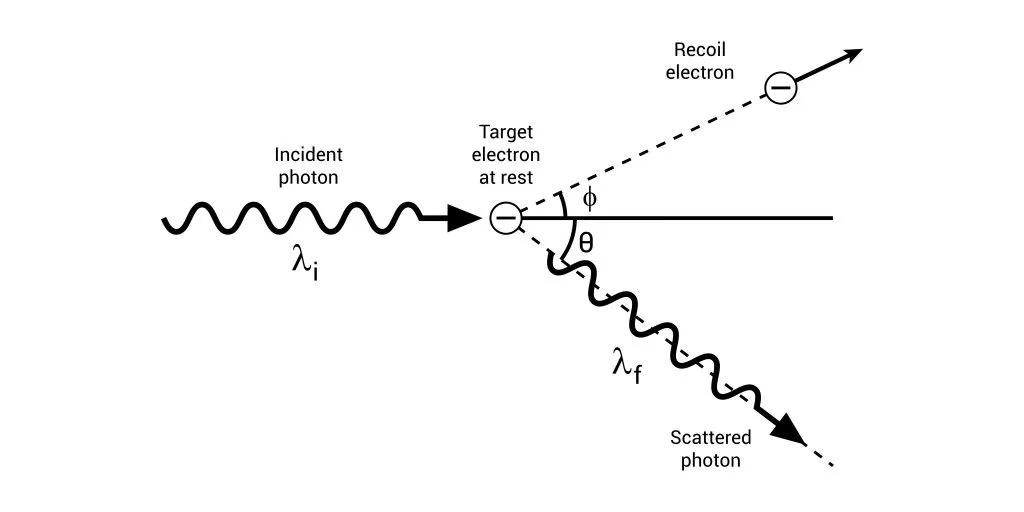
During the epoch of recombination, the universe cooled to about 3,000 K (around 2,700 °C, or 4,900 °F). At this temperature, protons and electrons combined (hence the term ‘recombination’) to form the first neutral hydrogen atoms.
The photons present at that time would not have been scattered by the newly-formed atoms, and were thus allowed to travel freely for the first time. These photons are what we see as the CMBR. Hence, CMBR is the relic of the radiation left from the Big Bang. We see it in microwave wavelengths, since the universe’s expansion over time would stretch its wavelength to longer values. It also gains the prestigious distinction as the oldest thing we can see in the universe.
The Dark Age
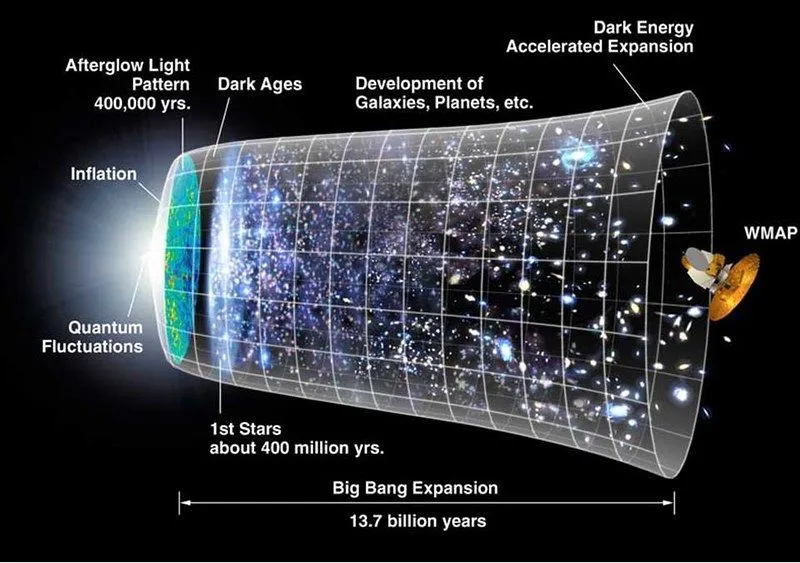
Even though we have observed the CMBR, not much is known about the universe after that point. What followed the CMBR is what scientists refer to as the Dark Age. Once the wavelength of the CMBR shifted towards the infrared section of the spectrum, the universe would have appeared dark to the human eye. Not much is known about the universe during this stage, as the production of new photons did not happen. Only after the formation of the first stars would new photons begin forming again.
In summary, this is the current information we have about the early universe. This knowledge has enabled us to develop theories and cosmological models that explain how the universe became what it is today. However, with telescopes like JWST, which can discover more distant stars and galaxies, we might be able to learn about the aftermath of the epoch of re-ionization. The CMBR, however, will remain the oldest observable feature of our incredible universe!
References (click to expand)
- Epoch Of Recombination | COSMOS. Centre for Astrophysics and Supercomputing
- Large Magellanic Cloud. NASA
- Welch, B., Coe, D., Zackrisson, E., Mink, S. E. de ., Ravindranath, S., Anderson, J., … Vikaeus, A. (2022, November 1). JWST Imaging of Earendel, the Extremely Magnified Star at Redshift z = 6.2. The Astrophysical Journal Letters. American Astronomical Society.
- Hubble Telescope Spots the Most Distant Star Ever .... Smithsonian Institution
- Then vs. Now: The Age of the Universe. NASA Goddard / Imagine the Universe!
- ESA - Planck and the cosmic microwave background. esa.int
- J Miralda-Escude. (2003) [astro-ph/0307396] The Dark Age of the Universe. arXiv
- Welch, B., Coe, D., Diego, J. M., Zitrin, A., Zackrisson, E., Dimauro, P., … Broadhurst, T. (2022, March 30). A highly magnified star at redshift 6.2. Nature. Springer Science and Business Media LLC.