Almost none. Nearly every star you can see with the naked eye lies within a few hundred to a few thousand light-years, while stars live for millions to billions of years. So their light reaches us far faster than they age, and far less than 1% of the stars we see are actually dead.
“It shows you exactly how a star is formed, nothing else can be so pretty. A cluster of vapor, the cream of the milky way, a sort of celestial cheese, churned into light.”
– Benjamin Disraeli
Stargazing is a beloved and consistent experience. Stars are very much mortal, just like humans, but we live on a far shorter time scale. They are born, they live for a specific amount of time, and ultimately they die. All of this has induced a modern and succinct anecdote that goes something like this:
When gazing at the sparkling stars in the night sky, you’re actually looking into the past. There is a possibility that the stars you are watching might have already died.
Are The Stars Really Long Gone?
Well, this shouldn’t be too hard to understand. If you go beyond our Solar System, the distances to the stars are measured in light-years. Thus, it’s correct that when you look at the stars, you are perceiving them as they once were.
Light is famously known to be the fastest thing traveling in the universe, moving along at a lively pace of 300,000 kilometers per second (186,000 miles per second), yet it takes years for light to cross even relatively “small” distances in space.
Scientists have calculated that it takes approximately 8 minutes and 20 seconds for light to reach Earth’s surface from the Sun.
Similarly, it takes light significantly more than 8 minutes to reach Earth from the nearest known stars, the Alpha Centauri triple-star system (three stars bound together by gravity).
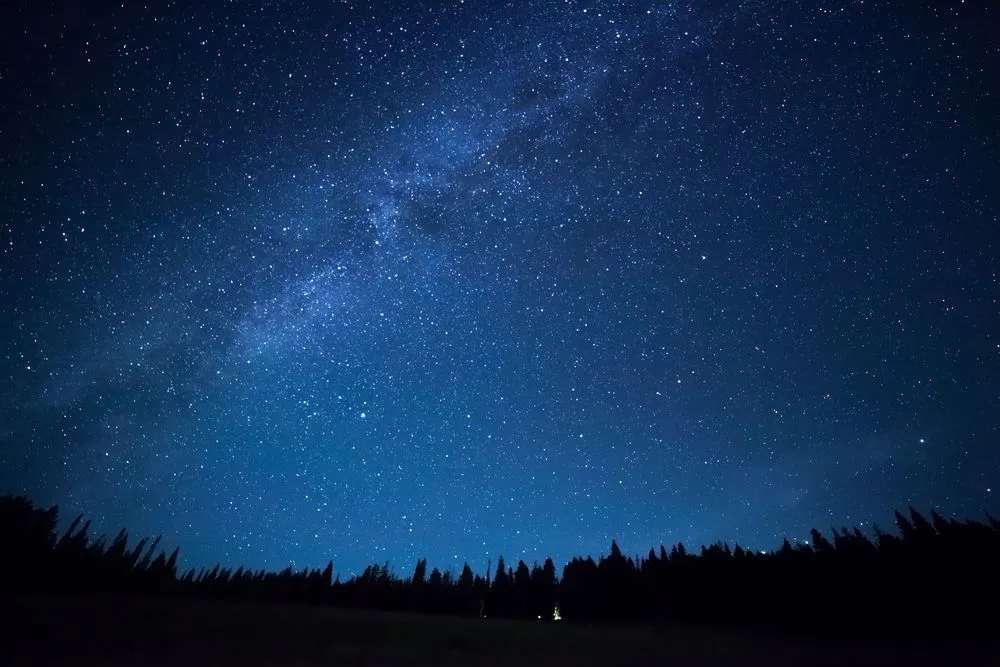
There are a total of about 9,000 stars across the whole sky (both hemispheres) that the naked human eye can discern under ideal conditions (no light pollution, full sky viewing, complete darkness, etc.), with only a few thousand of those visible from any one spot at a time. Every single one of these stars resides in our own galaxy, the Milky Way. None of them are millions of light-years away; in fact, the majority are within 1,000 light-years of us.
As the distance from Earth increases, the stars tend to dim quickly. Deneb (approximately 2,600 light-years away) and Eta Carinae (around 7,500 light-years away) are among the dozen or so luminous stars that remain visible from such great distances. Being so massive, they burn through their core fuel quickly and live only a few million years rather than billions. Eta Carinae in particular is so unstable that astronomers expect it to explode as a supernova in the astronomically near future (anywhere from sometime soon to within the next several hundred thousand years).
A Stellar Death
A ‘stellar death’ is a rare occurrence, as a star must undergo various important phases on the path towards its eventual demise.
In particular, it has to:
- swell into a red giant and burn through the helium in its core,
- fuse and burn through the core’s carbon,
- fuse oxygen and other heavier elements until iron, nickel and cobalt are produced by silicon,
- finally fade away when the fusible core material exhausts, resulting in a supernova explosion.
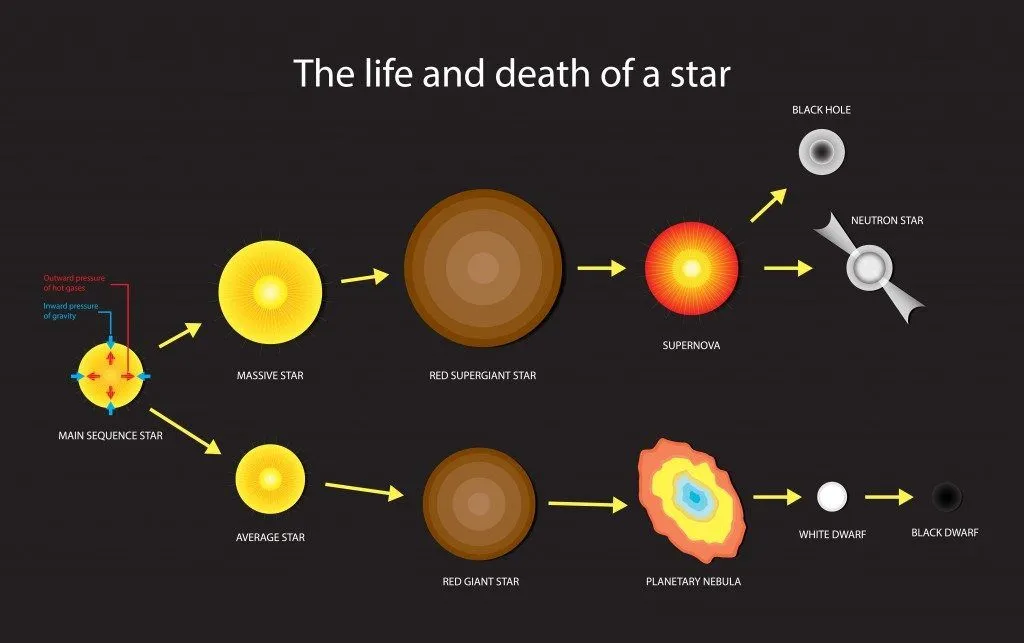
Only about one in a hundred stars actually dies suddenly in a supernova; the rest gently blow away their outer layers and contract down into white dwarfs, which then cool for an almost unimaginably long time. A white dwarf takes trillions of years to fade out completely, far longer than the current age of the universe.
How Many Stars That We See Are Already Dead?
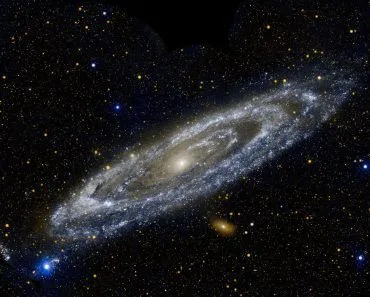
Light is just another cosmic machine. The most distant object visible to the unaided eye is the Andromeda Galaxy, which is about 2.5 million light-years away. When the earliest version of our species on Earth was just establishing its fragile foothold, the light that reaches us today had just left the Andromeda Galaxy, a whopping 2.5 million years ago. Large telescopes allow you to look into the past, meaning that you are seeing the Andromeda Galaxy as it was before the existence of modern human beings.
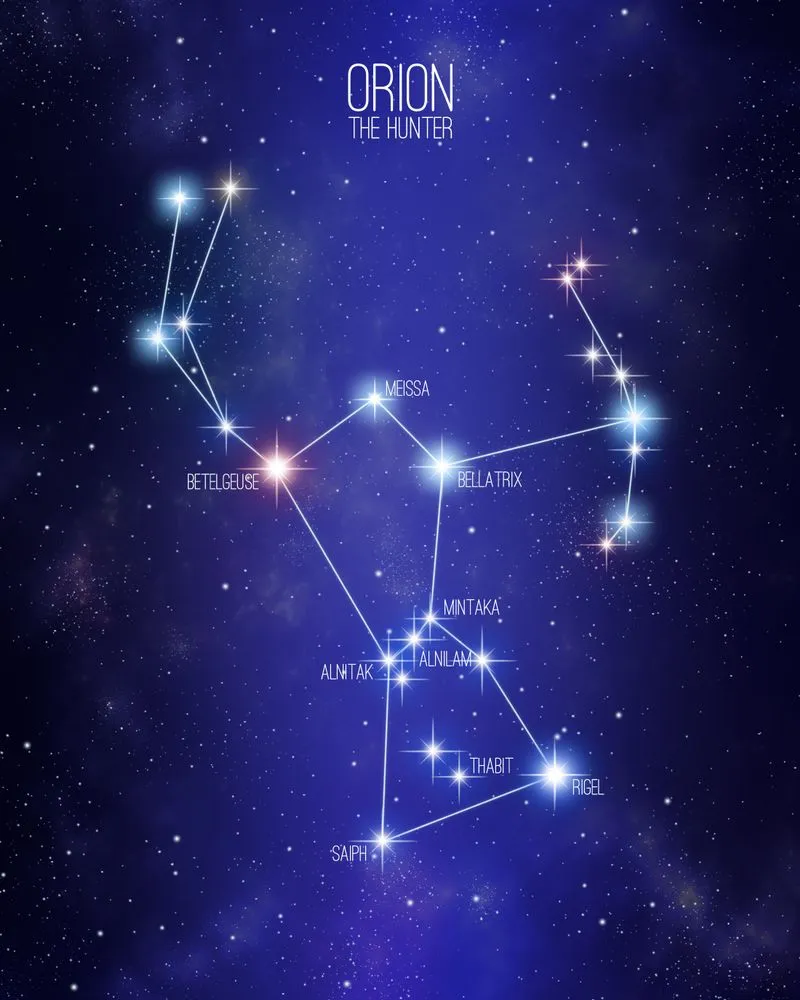
If a bright star, such as Betelgeuse in the Orion constellation, explodes (and it will one day), we wouldn’t know about it for centuries. In fact, it may have already exploded and we simply haven’t seen it yet!
The most recent supernova confirmed in our own galaxy by naked-eye observers appeared more than 400 years ago, in 1604. Known as Kepler’s Star or Kepler’s Nova, it was bright enough to be seen in daylight for weeks. Since then, the Milky Way has surely produced more supernovae whose light is still on its way to us, hidden behind the dust and distance of the galaxy.
So how does that translate into the odds for the stars you can actually see? Astronomers estimate that, among naked-eye stars, only about one dies every 10,000 years or so. With a few thousand such stars in view at any time, that works out to far less than 1% being already dead, in other words, very nearly none. A star that could be on the verge of going supernova and still be visible to the unaided eye would sit a few thousand light-years away, and only a couple of dozen such candidates exist across the whole sky. And what about newly forming stars? Remember, it takes tens of millions of years for a protostar to become a bona fide main-sequence star, so the night sky changes very slowly indeed.
What Are Some Dead Stars We Can Actually Name?
When astronomers say a star is “dead,” they really mean it has stopped fusing fuel in its core and collapsed into a stellar remnant. Depending on how heavy the original star was, that leftover is one of three things: a white dwarf, a neutron star, or, for the heaviest stars, a black hole. So “dead star” isn’t really a name in itself, but there are several famous remnants we can point to by name.

The closest one belongs to the brightest star in our night sky. Sirius, in the constellation Canis Major, is actually a pair: the dazzling Sirius A and a tiny, faint companion called Sirius B. Sirius B is a white dwarf, the burnt-out core of a star that died long ago, and it is the brightest and nearest white dwarf known, lying about 8.6 light-years away. German astronomer Friedrich Bessel first inferred its presence in 1844 from the way Sirius wobbled across the sky, and the American telescope-maker Alvan Graham Clark finally glimpsed it in 1862. The two stars circle each other roughly every 50 years, and you need a good telescope to split the faint “Pup,” as it is nicknamed, from its blindingly bright partner.
For a denser corpse, look toward Taurus and the Crab Pulsar. It is the rapidly spinning neutron star sitting at the heart of the Crab Nebula (Messier 1), roughly 6,500 light-years away. The whole nebula is the wreckage of supernova SN 1054, the same “guest star” that Chinese astronomers recorded shining in broad daylight for nearly a month in the year 1054. The neutron star left behind spins about 30 times every second, sweeping beams of radiation past Earth like a cosmic lighthouse.
History books hold a couple more by name. Tycho’s Star (SN 1572, in Cassiopeia) and Kepler’s Star (SN 1604, in Ophiuchus) were brilliant “new stars” that Renaissance astronomers carefully charted. Both were really dying stars tearing themselves apart, and today only their faint, expanding supernova remnants remain. Kepler’s Star of 1604 is still the most recent supernova in our own galaxy confirmed by naked-eye observers.
Conclusion
It is simply incorrect to think that all, or even a lot, of the stars in the night sky are already dead. Light travels very fast, so it is unlikely for any of them to have died while their light was still in transit towards us. Smaller stars live far longer than larger ones, and they’re the ones quietly filling our sky. The odds of any given star you can see being a dead one are tiny, though not quite zero. So when you look up at the night sky, you can relax: the vast, vast majority of the stars you see are still very much alive.
References (click to expand)
- Everything you wanted to know about stars. National Geographic
- Heger, A., Fryer, C. L., Woosley, S. E., Langer, N., & Hartmann, D. H. (2003, July). How Massive Single Stars End Their Life. The Astrophysical Journal. American Astronomical Society.
- Scientists discover supernova that outshines all others. The Royal Astronomical Society
- Opik, E. J., “Stellar Associations and Supernovae”, Irish Astronomical Journal , vol. 2, p. 219, 1953. - Astrophysics Data System
- Stellar Evolution - AAVSO. The American Association of Variable Star Observers
- Supernova 1987A - AAVSO. The American Association of Variable Star Observers
- Have any stars visible to human eyes already died? Big Think (Ethan Siegel)
- Bond, H. E., et al. (2017). The Sirius System and its Astrophysical Puzzles. The Astrophysical Journal.
- Friedrich Bessel: Discoverer of White Dwarf Sirius B. American Museum of Natural History.
- Messier 1 (The Crab Nebula). NASA Science.
- Tycho’s Supernova Remnant (SN 1572). Chandra X-ray Observatory, Harvard.
- 420 Years Ago: Astronomer Johannes Kepler Observes a Supernova. NASA.