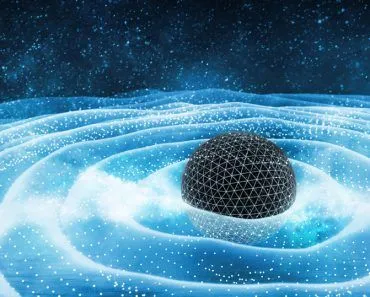
The weak nuclear force is one of the four fundamental forces. It governs radioactive beta decay and, by converting a proton into a neutron, triggers the very first step of fusion that makes the Sun shine. Though far weaker than the strong and electromagnetic forces, it is still vastly stronger than gravity.
One of the strongest forces of nature, literally called the “strong force”, holds matter together by making sure that the protons and neutrons packed inside an atomic nucleus don’t fly apart from each other. At first glance, the strong and weak forces might seem like polar opposites, with their effects barely perceptible on the macroscopic scale. However, it is at the atomic level that their influence is undeniable.
The strong force maintains the cohesion of atomic nuclei, a phenomenon of immense significance in our universe.
Yet, in the intricate realm of particles and forces, the influence of weak force cannot be ignored. This force has an extremely short range, even shorter than the size of a nucleon, and its effect diminishes quickly as distance increases.
[sciabcvideos]
What Is The ‘Weak Force’?
The weak force is one of the four fundamental forces of nature. It is responsible for the radioactive decay observed in radioactive elements, where a neutron decays into a proton, electron and an antineutrino. This is called beta decay.
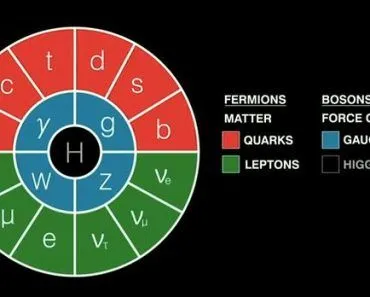
This process involves the conversion of a down quark into an up quark, a shift that is mediated by bosons. Quarks and bosons are fundamental particles that play crucial roles in the behavior of matter and forces in the Universe. Quarks are the building blocks of protons and neutrons, which compose the nucleus. Bosons basically carry the fundamental forces. The weak force has three carriers, the W+, W- and Z bosons, but it is the charged W bosons that drive beta decay, because only they can change a particle's electric charge and turn one type of quark into another.
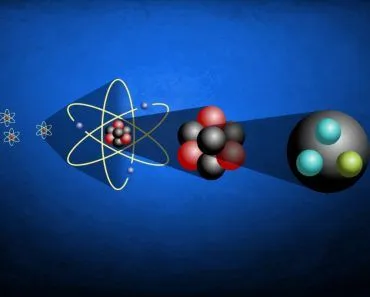
Basically, the weak force affects the building blocks of matter, the quarks that make up protons and neutrons. The balance between the number of protons and neutrons is essential in a nucleus.
Such reactions are happening continuously in the Sun and other stars; in fact, this is what makes them shine.
The weak force, in addition to its role in beta decay, is also involved in a process called electron capture. That’s where the nucleus of an atom grabs one of its own orbiting electrons, and the captured electron combines with a proton to make a neutron, releasing a neutrino in the process. Even though this action is mediated by a W boson – one of the particles that carry the weak force – it neatly demonstrates how matter particles and these force carriers interact.
Here’s a fun way to think about it: Imagine the atom as a city, with the nucleus as mayor, and the electron as a roaming tourist. If the mayor (nucleus) ‘captures’ the tourist (electron), it can change one of its local residents (proton) into a different kind of resident (neutron). The process by which the mayor interacts with the tourist and residents is facilitated by ‘buses’ (bosons).
Astrophysical Insights
Extreme temperatures and pressures prevail in the cores of stars. These intense conditions push positively charged protons close enough together that, with a helping hand from quantum tunneling, they can fuse despite their mutual repulsion. The strong force then binds the resulting nucleus together, but, as we’ll see, it is the weak force that quietly fires the starting gun.
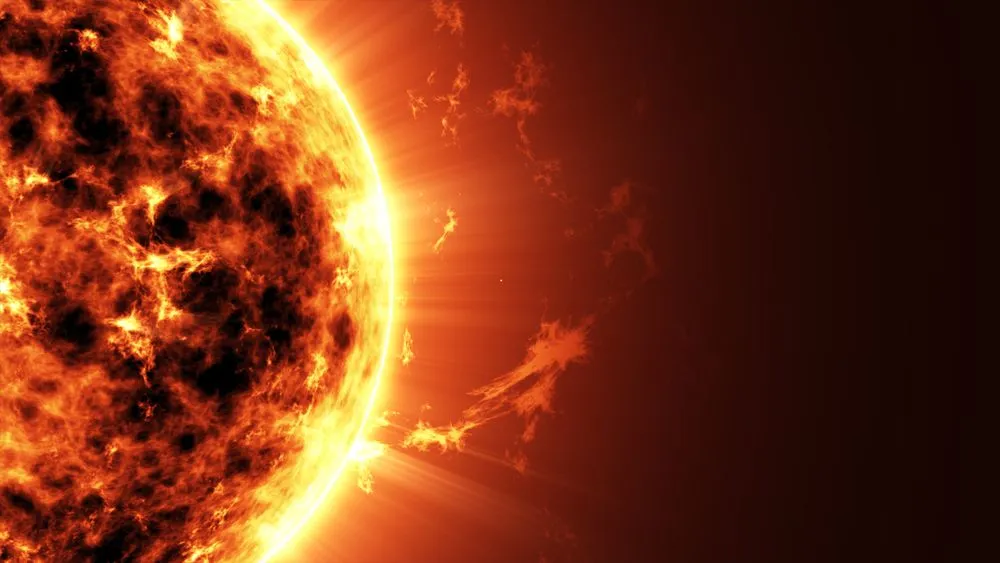
These reactions contribute to stellar nucleosynthesis, the formation of elements heavier than hydrogen and helium.
The reaction responsible for producing energy in stars like the Sun is called the proton-proton (p-p) chain. Across the full chain, four protons are effectively converted into a single helium nucleus, releasing energy in the form of heat and light. The very first step is where the weak force earns its keep: two protons fuse, and one of them is converted into a neutron by emitting a positron and a neutrino. This forms deuterium (a heavy hydrogen nucleus). Because this proton-to-neutron conversion can only happen through the weak interaction, it is extraordinarily slow, which is exactly why the Sun burns its fuel steadily over billions of years rather than all at once. Those neutrinos, the “ghostly particles” born of the weak force, then stream straight out of the Sun, barely interacting with anything on the way.
These particles provide important insights into the internal processes of celestial bodies. As these subatomic particles do not interact with the surrounding matter, they are extremely valuable for gaining information about the inner workings of the Sun.
How Is The Weak Force Actually Studied?
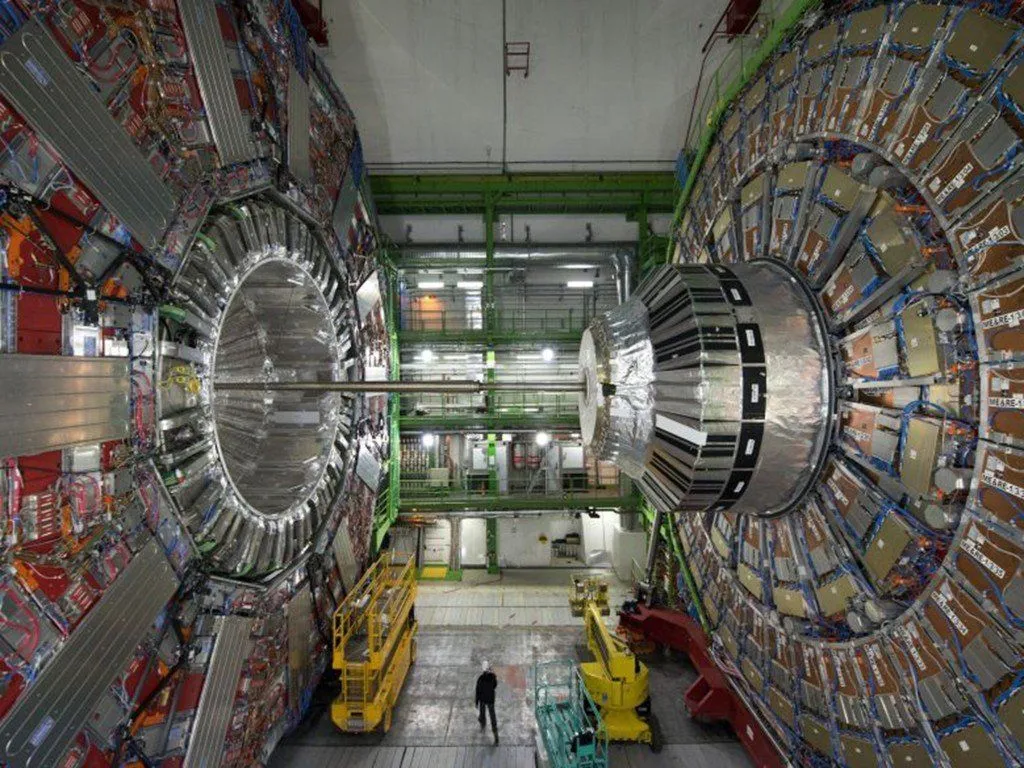
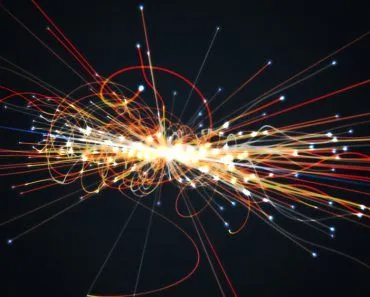
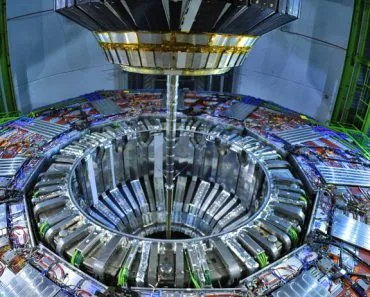
Technological advancement plays a major role in acquiring information about the weak force. Studying the weak force requires sophisticated tools and experiments. The Large Hadron Collider (LHC) at CERN is one such instrument, allowing scientists to recreate conditions similar to those present just after the Big Bang. By colliding particles at high speeds, researchers can study the particles produced and gain insights into the fundamental forces at play, including the weak force.
The discovery of the Higgs boson within the LHC was a milestone in understanding the weak force’s role. This particle, associated with the mechanism by which particles gain mass, provided further evidence for the electroweak theory, which unifies the weak force with electromagnetism at high energies.
Unification Of Weak And Electromagnetic Forces
One of the most remarkable achievements in the realm of particle physics is the unification of the weak force and electromagnetism into a single theoretical framework, the electroweak theory. The electroweak theory introduces the concept of spontaneous symmetry breaking, explaining how the W and Z bosons acquire mass, while the photon stays massless, all while still preserving the fundamental symmetries of the weak force and electromagnetism.
Summing Up
In conclusion, it is the weak-force conversion of a proton into a neutron that essentially fires the starting gun on the nuclear fusion happening in the cores of stars.
While the weak nuclear force may not possess the presence of the strong force, its significance cannot be overlooked. From its role in beta decay and neutrino production to its influence on nucleosynthesis in stars, the weak force plays a pivotal role in shaping the cosmos.
As our understanding deepens and technology advances, we continue to peel back the layers of this subtle yet essential force, uncovering the mechanisms that govern the universe on its smallest scales. The weak force may not command the spotlight for quantum lovers, but its contributions are of extreme importance to all the branches of physics.
References (click to expand)
- Fabbri, L. (2011, July 1). From the Torsion Tensor for Spinors to the Weak Forces for Leptons. International Journal of Theoretical Physics. Springer Science and Business Media LLC.
- Forces | Universe.
- Fundamental Forces.
- Howe, A. R., Grohs, E., & Adams, F. C. (2018, September 20). Nuclear processes in other universes: Varying the strength of the weak force. Physical Review D. American Physical Society (APS).
- Proton-proton cycle. Encyclopaedia Britannica.
- Understanding How the Sun Shines: From Triton Decay to Proton-Proton Fusion. U.S. Department of Energy, Office of Nuclear Physics.