Table of Contents (click to expand)
Green tea is green because the freshly plucked leaves are heated (steamed or pan-fired) within hours of picking, which deactivates the oxidizing enzymes polyphenol oxidase and peroxidase. With those enzymes shut off, the leaf's chlorophyll stays intact instead of breaking down, so both the dried leaves and the brewed cup keep a green color.
Tea is the second most popular beverage in the world, after water. It is also one of the oldest drinks that human cultures continue to enjoy.
Tea is believed to have been discovered in ancient China (legend dates it to around 2737 BCE, under Emperor Shennong), where it was consumed as both a beverage and a medicine. Although green tea has been used in eastern Asia for thousands of years, it has gained renewed popularity worldwide in recent decades thanks to its (perceived) health benefits.
Black tea still dominates global consumption, but its share has been shrinking as green tea has grown. By recent FAO and industry estimates, black tea accounts for roughly 60–65% of all tea produced, while green tea now makes up about 33–35% (driven largely by Chinese output). Oolong tea and white tea make up most of the small remainder.
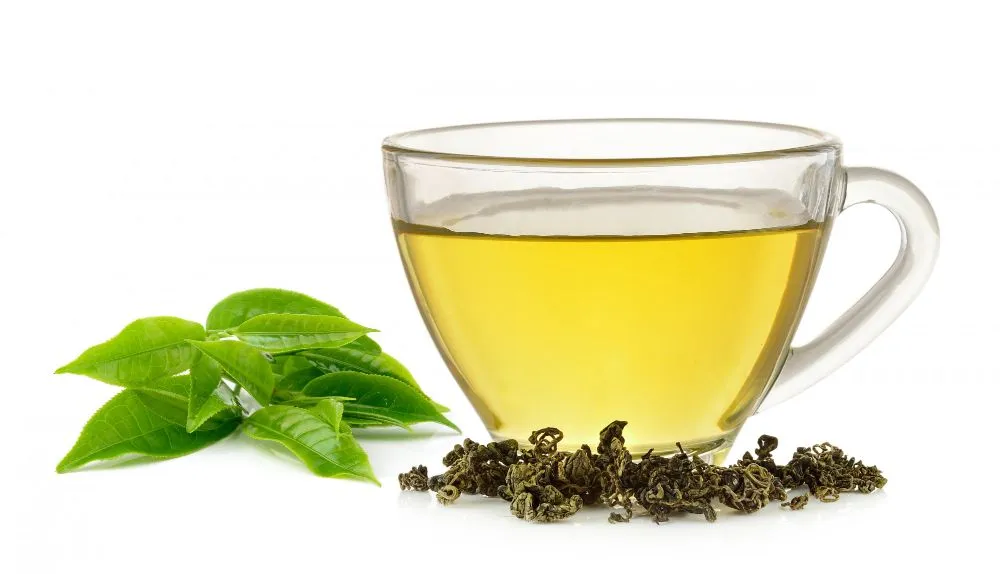
If you’ve ever brewed a cup of green tea, you may have noticed that unlike black tea, which has black leaves and a dark-colored brew, green tea leaves are somewhat dark green in color, while the color of the brew ranges from pale green to pale yellow. Green tea also has a leafy ‘herbaceous’ flavor.
Why do green tea leaves retain some of their green color, while black tea does not?
How Are Green Tea Leaves Processed?
Green tea is a beverage made by brewing green tea leaves in hot water. Tea leaves are obtained from the tea plant, Camellia sinensis. Leaves of that same plant are also used to make black tea.
Camellia sinensis has two subtypes: the assamica type, which has larger-sized plants with larger leaves; and the sinensis type, which has smaller leaves and smaller plants. Traditionally, the sinensis type was used for making green tea, but nowadays, both types are used.
The difference between the colors of black and green tea come from how they’re processed.
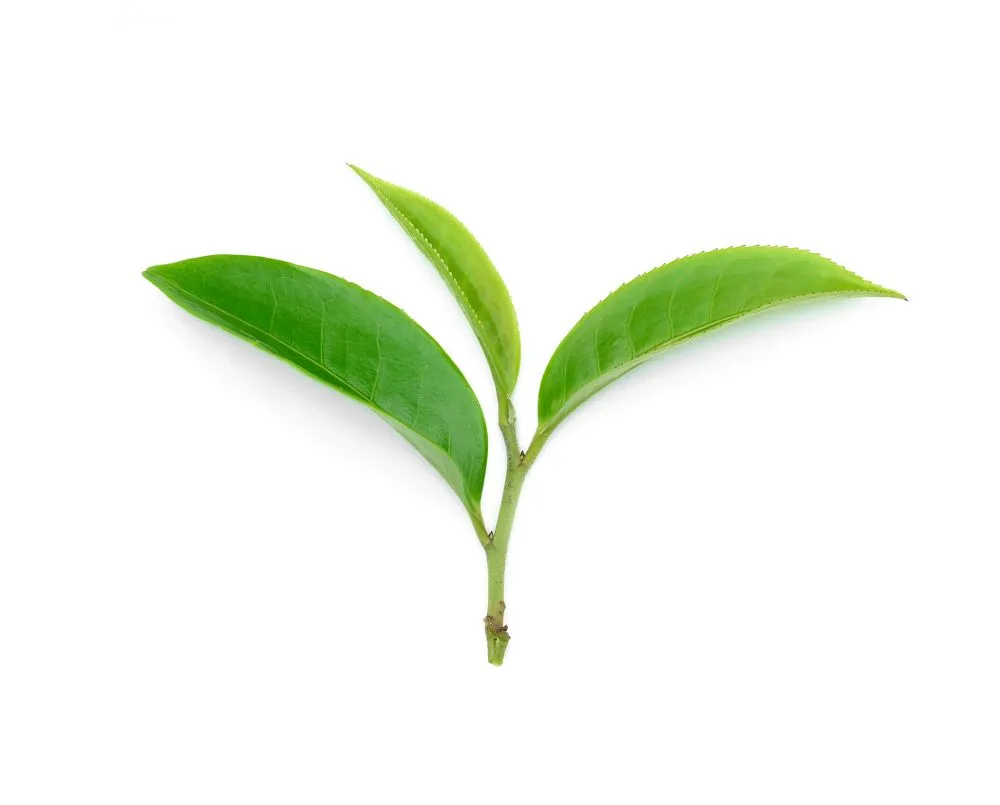
The fresh leaves plucked from the plants are processed with heat or steam. Usually, only the bud and the top two leaves are used.
Processing the leaves with heat soon after plucking inactivates enzymes in the leaves that cause oxidation. An absence of oxidation is what retains the green color in the leaves, and also gives a greenish color to the brew. The brew is usually astringent and bitter due to the catechin content of the tea. If the catechin content is lost during leaf processing, then green tea will lose its flavor.
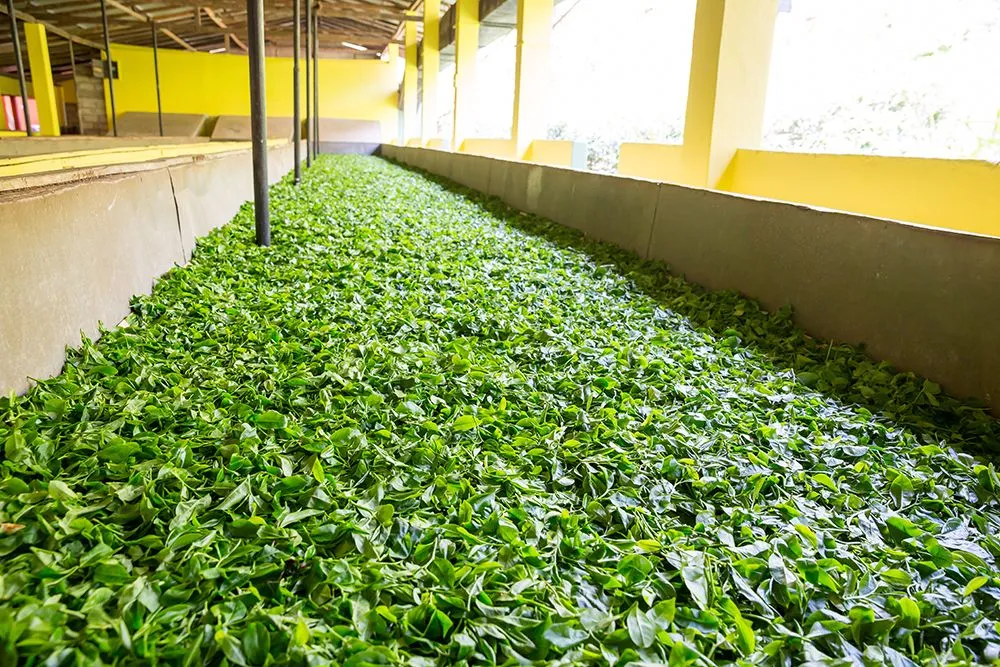
For Japanese Sencha, the leaves are briefly steamed at around 100 °C (212 °F) for 30 to 90 seconds. For Chinese-style green teas, the leaves are instead pan-fired or wok-roasted at much higher surface temperatures (often 150–250 °C, or 300–480 °F) for several minutes. Either way, the goal is the same: rapidly raise the leaf temperature enough to denature the oxidizing enzymes. The leaves are then rolled to release juices from the cells, bidirectionally for Japanese teas and unidirectionally for Chinese ones.
The catechin (polyphenol) content of green tea does not change much because the leaves are not fermented. However, if the temperature used for pan frying is too high, the resultant catechin content may be lower.
The leaves are then dried to obtain crisp green tea leaves for brewing tea.
In contrast, black tea leaves undergo multiple levels of treatment, such as withering and fermentation, which lead to oxidation of the leaves. The oxidizing enzymes (e.g., polyphenol oxidase and peroxidase) change the color of the leaves to black. These enzymes break down the leaf tissue pigment chlorophyll (which makes the leaves green), so the leaves lose color.
The basic difference between the four types of tea is the degree of fermentation, which in turn affects their phytochemical content. Green tea is non-fermented, while white tea, oolong tea, and black tea are lightly fermented, semi-fermented, and completely fermented, respectively.
The degree of oxidation determines the concentration of antioxidant compounds present in black tea.
Green tea is a rich source of antioxidant compounds, particularly catechins, which make up the bulk of its flavonoids. The most abundant catechin in green tea is epigallocatechin-3-gallate (EGCG), and most of the health research on green tea centers on it. Smaller amounts of flavonols (quercetin, kaempferol) and methylxanthines like theobromine and theophylline are present as well. The caffeine content in green tea is also lower than that in coffee or black tea: an 8 oz (240 mL) cup of green tea typically delivers about 20–45 mg of caffeine, compared with 40–70 mg for black tea and 95–165 mg for brewed coffee.
You Can Make Green Tea From Fresh Leaves At Home
You can even process green tea at home.
Microwave freshly harvested young tea shoots for about 2 minutes, followed by airing them out on a muslin cloth for 3 minutes to remove the moisture that will form on the surface. Next, wrap the leaves in muslin and roll them with light pressure for a couple minutes so the leaf and stem extracts start exuding.
Next, separate the shoots from each other by taking apart the muslin ball. The shoots are pan fried for 1.5 minutes on low heat until they dry. Then spread the shoots on a muslin cloth to cool them down, once again wrapped like a ball and rolled so the shoot extract starts exuding. Pan fry them for another 5-6 minutes until the leaves are dehydrated. Repeat this rolling and frying a few more times until the leaves become crispy.
Green Tea Is Good For Your Health… Or Is It?
Green tea has been used for medicinal applications in eastern Asia, mainly China and Japan, since ancient times. Today it is used in alternative medicine as a supplement to promote mental alertness, treat gastrointestinal problems and headaches, and to aid in weight loss.
However, scientific evidence to support these effects is lacking or limited.
There is, however, an FDA-approved topical ointment derived from green tea, sinecatechins (brand name Veregen), used to treat external genital and perianal warts. Approved in 2006, it was the first botanical drug to clear the FDA's full review pathway. There are multiple research reports that have studied the effects of drinking green tea on cancer, heart health, weight loss, and mental alertness, but there is still no clear consensus on its therapeutic efficacy.
References (click to expand)
- Green Tea | NCCIH.
- Filippini, T. et al. Green tea (Camellia sinensis) for the prevention of cancer. Cochrane Database of Systematic Reviews.
- Wong, M., Sirisena, S., & Ng, K. (2022, April 2). Phytochemical profile of differently processed tea: A review. Journal of Food Science. Wiley.
- Sato, D., Ikeda, N., & Kinoshita, T. (2007). Home Processing Black and Green Tea (Camellia sinensis).
- Tea | Markets and Trade | Food and Agriculture Organization of the United Nations.
- Musial, C., Kuban-Jankowska, A., & Gorska-Ponikowska, M. (2020). Beneficial Properties of Green Tea Catechins. International Journal of Molecular Sciences.
- Veregen® (sinecatechins) Ointment, 15% (FDA prescribing information).