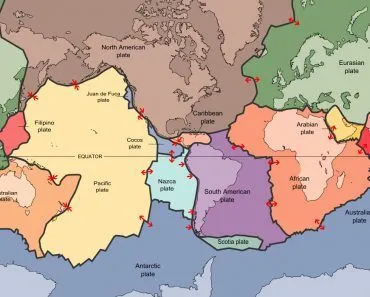
The Atlantic Ocean widens ~2.5 cm per year due to seafloor spreading at the Mid-Atlantic Ridge, while the Pacific shrinks as its plate subducts beneath surrounding plates.
Everything around us is changing all the time, and while it may be at a slower pace than we’re accustomed to, it’s still happening right before our eyes!
Take the size of our oceans, for example. Did you know that the Pacific Ocean is gradually shrinking, while the Atlantic Ocean is expanding?
It’s true! But why is this happening, you might wonder?
The answer lies in the fascinating science of plate tectonics.
Where Are the Atlantic and Pacific Oceans?
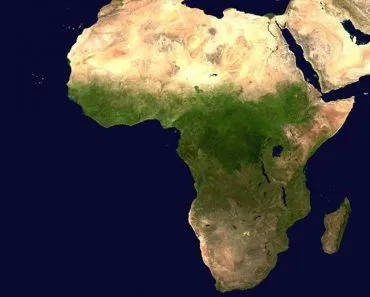
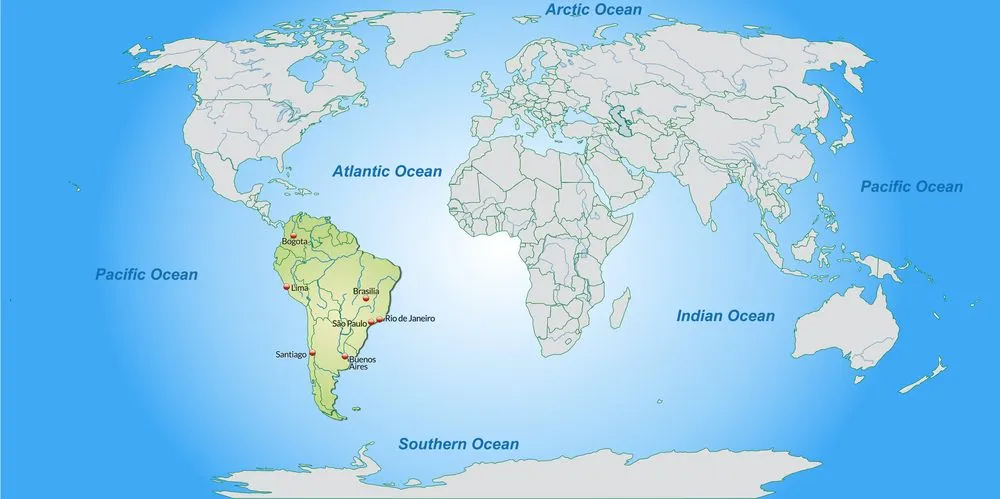
Before we get into why these oceans are changing size, it helps to picture where they actually sit on the globe. The Atlantic Ocean fills the long, S-shaped basin between the Americas to the west and Europe and Africa to the east. The equator splits it into the North and South Atlantic, and it connects to the Arctic Ocean in the far north and merges into the Indian and Southern Oceans down south.

The Pacific Ocean sprawls across the other side of the world. It reaches from Asia and Australia in the west to the Americas in the east, which is why it borders more countries than any other ocean. The two giants actually meet at the bottom of the map, in the stormy Drake Passage between Cape Horn (the southern tip of South America) and Antarctica.
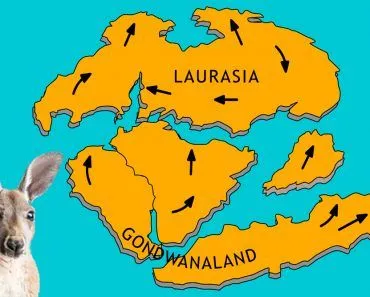
Here is a neat detail that explains the Atlantic’s distinctive shape: its eastern and western coastlines roughly mirror each other, almost like puzzle pieces that were once locked together. That snug fit was one of the earliest clues that pointed scientists toward continental drift, and it leads straight into the plate tectonics behind everything that follows.
A Bit About Plate Tectonics
Before diving into the reasons for the shifting sizes of the Atlantic and Pacific Oceans, let’s review the fundamentals of plate tectonics.
The lithosphere is the Earth’s solid outer layer. It consists of the Earth’s crust and the uppermost portion of the mantle; it is divided into large and small plates. These plates move on the asthenosphere, a plastic-like part of the mantle. Convective currents in the mantle are the reason for this plate movement.
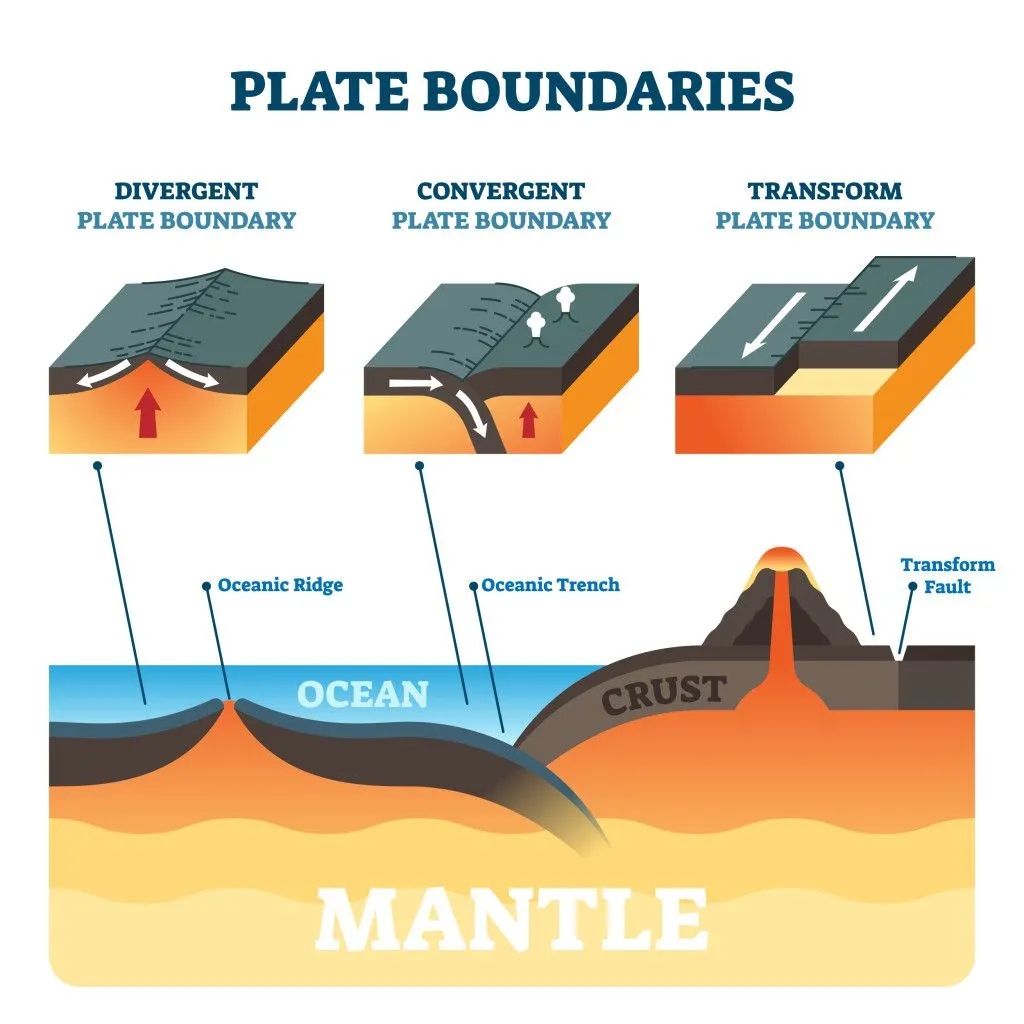
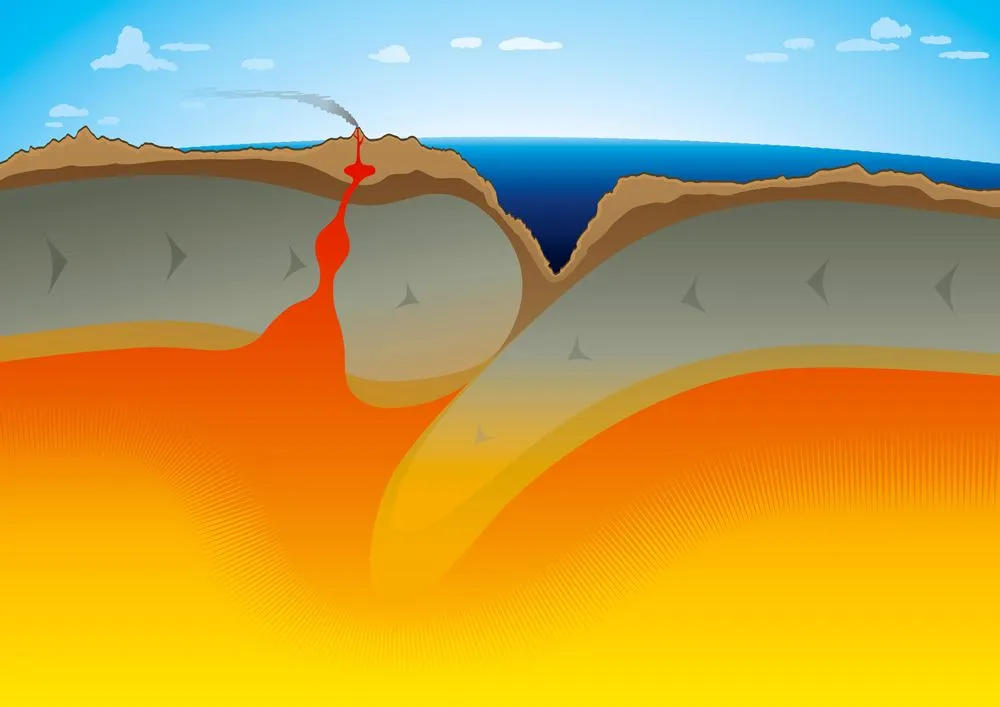
Divergent, convergent, and transform are the three types of plate boundaries. Two plates move apart at divergent boundaries, forming new crust and spreading the ocean floor. Two plates move towards each other at convergent boundaries, and one plate may slide beneath the other, forming a subduction zone. At transform boundaries, two plates slide past each other in parallel directions.
The Atlantic Ocean Is Widening
The Atlantic Ocean on our planet is a natural wonder! Consider a vast body of water that accommodates more than 20% of the Earth’s surface. That’s right, the Atlantic Ocean is the world’s second-largest ocean, covering an incredible 106.5 million square kilometers.
As we previously stated, however, this figure is changing.
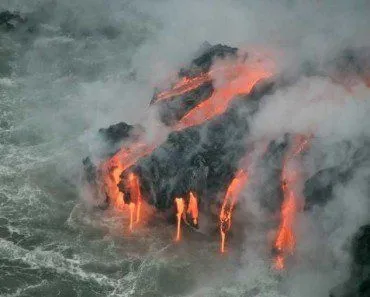
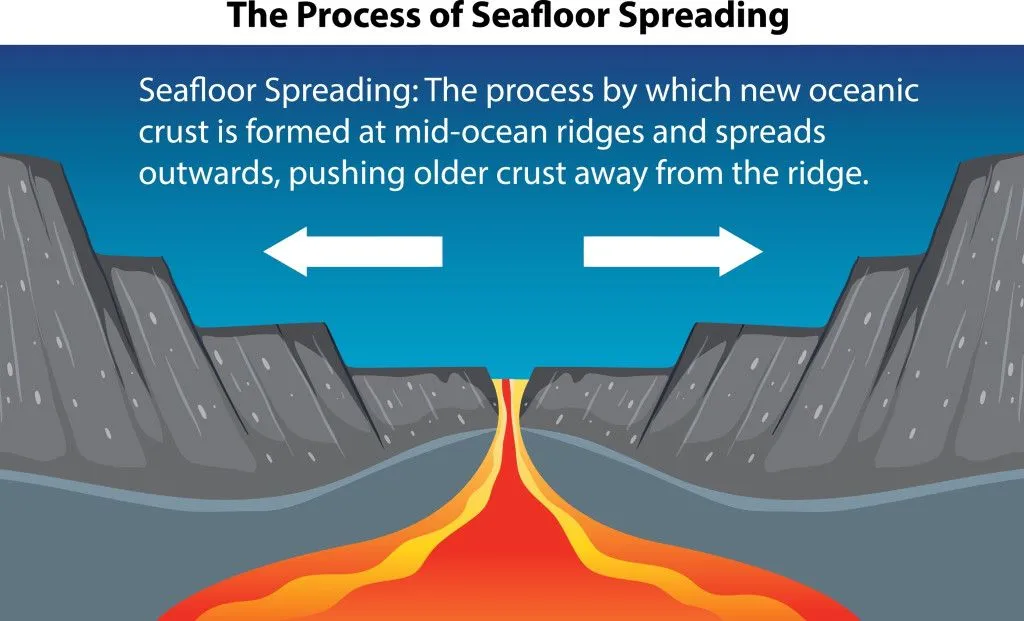
So why does the Atlantic Ocean continue to grow? The mid-Atlantic ridge is a long chain of undersea mountains that separates tectonic plates on either side of the Atlantic: the North American plate from the Eurasian plate in the north, and the South American plate from the African plate in the south. This movement causes magma from the Earth’s mantle to rise to the surface, resulting in the formation of new crust. This is known as seafloor spreading.
Consider a conveyor belt in a factory to better understand seafloor spreading. On the belt, the plates are like two pieces of fabric moving in opposite directions. The molten rock from the mantle is analogous to the material being added to the belt between the two fabric pieces.
New fabric is added to the belt as it moves, and the two pieces move further apart. A rift valley is formed when the plates move away from each other. The valley is filled with water, resulting in the formation of a new oceanic basin.
The Pacific Ocean Is Shrinking
The Pacific Ocean is the world’s largest ocean, occupying approximately 63.8 million square miles (about 165 million square kilometers). That’s roughly 30% of the total surface area of Earth, and close to 46% of its water surface!
To put this in context, consider the Pacific Ocean as a massive swimming pool. Now, think about trying to fill that pool with all the water in all the world’s rivers, lakes, and streams. That pool would take over 500 years to fill, assuming no evaporation or leaks!
Despite its massive size, the Pacific Ocean is actually shrinking. This is due to the Pacific plate, the Earth’s largest tectonic plate, being pushed beneath other plates in a process known as subduction. The Pacific plate shrinks as it moves deeper into the Earth’s mantle, causing the ocean above it to contract. It’s like removing pieces from a puzzle to make it smaller and more compact.
You can imagine a sandwich press to better understand subduction. The two plates are analogous to two slices of bread, and the subduction zone is analogous to the filling. The two slices of bread come together as the sandwich press heats up, and the filling is pushed out. At a subduction zone, the same thing happens, but instead of filling, magma rises to the surface and forms volcanoes.
Which Ocean Is Bigger, the Pacific or the Atlantic?
This is one of the most common questions readers ask, and the answer is not close: the Pacific is far bigger. It spreads across roughly 165 million square kilometers (about 63 million square miles), making it the largest ocean on the planet by a wide margin. The Atlantic comes in second, covering somewhere between 85 and 106 million square kilometers depending on how its bordering seas are counted. In round numbers, the Pacific holds nearly twice as much water as the Atlantic.
The Pacific wins on depth, too. It averages about 4,000 meters (13,000 feet) deep, and it contains the Mariana Trench, whose floor lies nearly 10,900 meters (about 35,800 feet) down, the deepest known point anywhere on Earth. The Atlantic is shallower, averaging around 3,600 meters (11,900 feet), with its deepest spot, the Puerto Rico Trench, reaching about 8,400 meters (27,500 feet).
Here is the part that ties back to our main story: these figures are not fixed. Every year the Atlantic grows a little and the Pacific shrinks a little, so the gap between them is slowly closing. But at a few centimeters a year, you would be waiting tens of millions of years before the scoreboard ever changed.
What Happens If the Atlantic Keeps Widening?
If the Atlantic gains a couple of centimeters every year, will it simply keep growing forever? Almost certainly not. Geologists describe a long-term pattern called the Wilson cycle, named after Canadian scientist J. Tuzo Wilson, in which an ocean basin opens up through seafloor spreading, reaches a maximum size, and then slowly closes again as subduction zones swallow its floor. A full cycle plays out over hundreds of millions of years.

The Atlantic is still in its growing phase, with very few subduction zones to consume crust. But the first hints of a turnaround may already be here: small subduction systems are active near the Lesser Antilles in the Caribbean and along the Scotia Arc near Antarctica. If zones like these spread along the Atlantic’s margins, the ocean could one day stop widening and start to close.
Should that happen, the Americas would drift back toward Europe and Africa and eventually collide with them, fusing the continents into a brand-new supercontinent. Geologist Christopher Scotese sketched out one such scenario, named Pangaea Proxima (sometimes called Pangaea Ultima), which could assemble roughly 250 million years from now. It is not the only possibility. Rival models such as Novopangaea instead close the Pacific, while Amasia gathers the continents near the North Pole. All of them are educated guesses, but they share one lesson: today’s map is just a single frame in a very slow film.
Conclusion
The movement of tectonic plates is what causes the size of our oceans to slowly change. The Atlantic Ocean is expanding due to the formation of new oceanic crust at the mid-Atlantic ridge, while the Pacific Ocean is contracting due to the subduction of the Pacific plate beneath surrounding plates. These geological processes are ongoing and have been shaping the world as we know it for millions of years.
So, the next time you look at a world map, remember that it is only a snapshot of a constantly changing and dynamic planet. The oceans are more than just vast bodies of water; they are the result of tectonic plate interactions that continue to shape the foundation of our world. It’s like a never-ending dance in which the movements of one plate affect the others, resulting in a breathtaking and ever-changing planetary masterpiece.
References (click to expand)
- The Science of Earthquakes | U.S. Geological Survey.
- Garfunkel, Z. (1975). Growth, shrinking, and long‐term evolution of plates and their implications for the flow pattern in the mantle. Journal of Geophysical Research, 80(32), 4425-4432.
- Giráldez, A. (2021). “The Last Link of an Emergent Global Economy: The Manila Galleon”. Palgrave Studies in Comparative Global History. Springer International Publishing.
- How big is the Atlantic Ocean?.
- (PDF) Emerging Challenges Threatening the Atlantic and ....
- How big is the Pacific Ocean? NOAA Ocean Exploration.
- Atlantic Ocean. Encyclopaedia Britannica.
- Understanding plate motions. This Dynamic Earth, U.S. Geological Survey.
- Fifty years of the Wilson Cycle concept in plate tectonics: an overview. Geological Society, London, Special Publications.
- Pangaea Proxima. Wikipedia.