Yes, in symbolic form. A circle's area is exactly πr², a precise, finite value. Pi is irrational, meaning its decimal expansion never ends, so any decimal answer is only an approximation. But pi has a finite value, not an infinite one, and even NASA needs just 15 digits of it for the most demanding calculations.
Grade school has instilled one thing upon most of us: the area of a circle is pi times the radius squared. Simply substitute the radius and there you have it, the area of a circle right at your fingertips. Although this seems like a piece of cake, there’s one thing that we’re forgetting. Pi has an endless expression, so no matter how many digits of pi we consider when calculating the area of a circle, it can never truly be exact. This legendary irrational number contains more decimal places than stars in the universe, so no amount of numbers seems sufficient if you’re chasing down 100% accuracy.
Pi Is Irrational, Not Inaccurate
Pi is a non-terminating and non-recurring irrational number. When we say that pi is infinite, we intend to say that pi has an infinite expression, not an infinite value. Pi is a real number that exists, but since it has an expansion that never ends, its decimal representation becomes tricky. We say all this because we want to stress the fact that pi has an infinite expression, but a finite value. It is not inaccurate, it’s simply irrational.
The more digits of pi that you consider, the more precise the answer you will get. This does not suggest that using pi makes an answer inaccurate; on the contrary, it being endless only gives us an answer that is more precise.
That being said, we can’t solely blame the continual expansion of pi for not being able to give us an exact answer. Inaccuracy is everywhere.
Why Does Pi Go On Forever?
So why does pi refuse to end in the first place? It helps to remember what pi actually is. Pi is simply the ratio of a circle's circumference to its diameter, and that ratio stays the same for every circle you could ever draw, whether it is the size of a coin or the size of a galaxy. Double the diameter and the circumference doubles too, so the ratio stays locked at roughly 3.14159.

The endless decimals come down to a single property: pi is irrational, which means it cannot be written as one whole number divided by another. The Swiss mathematician Johann Heinrich Lambert was the first to prove this, back in 1768, using a clever result about the tangent function. Because pi is irrational, its decimal expansion never terminates and never settles into a permanently repeating block of digits. That is quite different from a fraction like 1/3, whose decimals also run on forever but simply repeat as 0.333… . Pi has no such pattern to fall back on.
Just over a century later, in 1882, the German mathematician Ferdinand von Lindemann proved something even stronger: pi is transcendental, meaning it is not the solution to any polynomial equation with whole-number coefficients. This is the very reason the ancient puzzle of “squaring the circle” (building a square with exactly the same area as a given circle using only a compass and straightedge) turns out to be impossible. So pi does not go on forever because we simply have not calculated far enough. It goes on forever because mathematics has proven that it must.
Nothing Is Ever Precise
We can never know anything with complete precision. Length, mass, volume and other quantities can only be known to a certain level of precision. Even when measuring the radius of a circle, the radius being measured has limited precision. Hence, while calculating a circle’s area, this uncertainty comes into play and the answer has some amount of error. Nothing can ever be devoid of errors. There is some error in everything, so that’s the way we deal with things. We can never be 100% sure of our results.
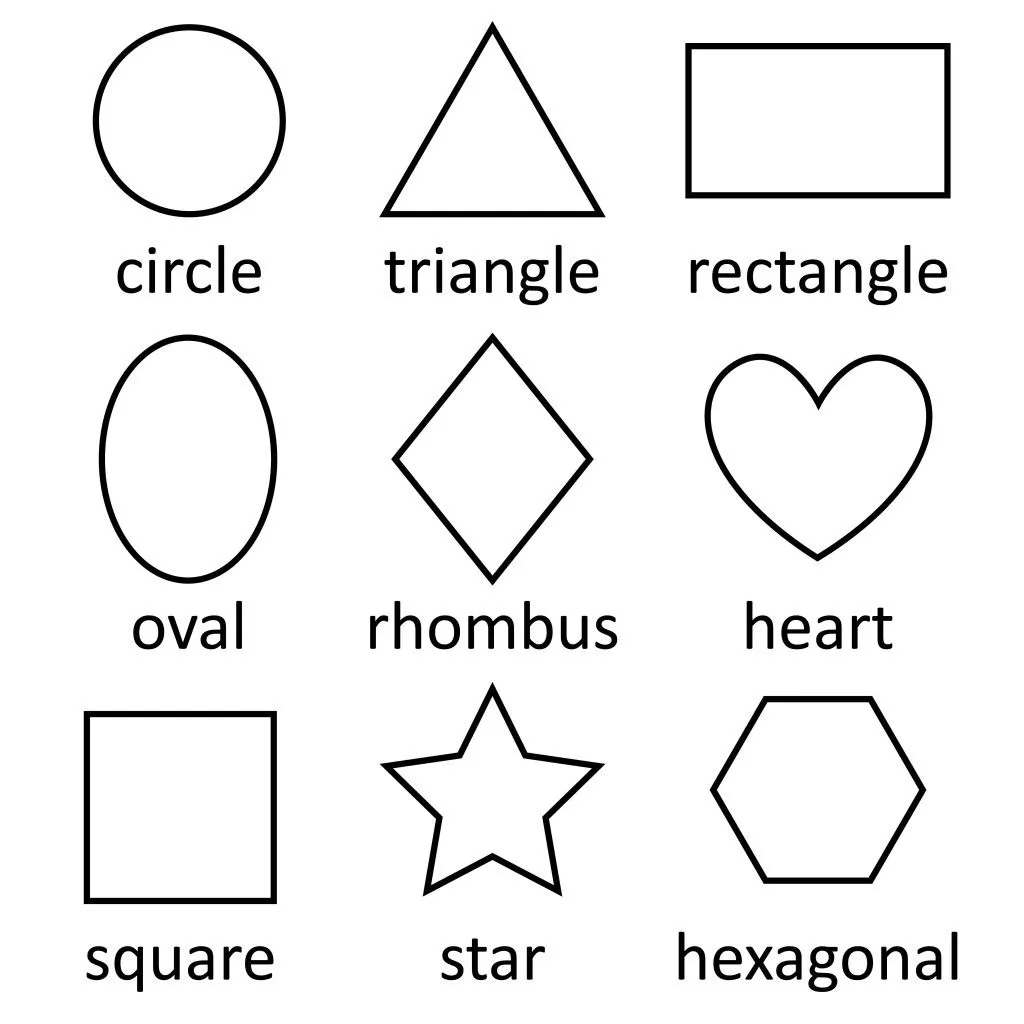
Hence, not only is it impossible to ever determine the exact value of the area of a circle, but it is equally impossible to measure any area with 100% accuracy. The area of regular polygons, such as squares and rectangles, involves the measurement of the length of their sides, which is not immune from inaccuracy.
Additionally, what do we mean by exact? Exact, as in something with zero error, or exact meaning something with more precision? The latter. We can never eliminate errors entirely, so an exact value might refer to something more precise, or something less erroneous.
The plausible solution to reduce inaccuracy while determining the area of a circle is to think of getting a rational number as an answer. Will that help the situation in any way?
Does Having A Rational Number As The Area Give Us A Precise Answer?
First of all, how do we get a rational number as the area when it is a function of an irrational number? Always remember that the product of two rational numbers is always rational, whereas the product of two irrational numbers may or may not be rational.
The area of a circle is pi times radius squared. Here, we take the value of radius such that we get a rational number as the answer.
Let r= √(x/yπ) where x,y ∈ℤ
Hence, the area = π×[√(x/yπ)]²
Area= x/y, where x,y ∈ℤ
Therefore, it seems that having the radius be irrational here gives us an area that is exact and rational. Having said that, what may escape our notice is that both the radius and pi are irrational in this case, which brings us back to square one. While we wanted a rational answer, we ignored the fact that we used irrational quantities to reach that rational answer. Imagine having to measure the radius with a value equal to 1/√π. Sounds like a bit of a nightmare.
Besides, rational numbers can also be non-terminating. Thus, having a rational number might still not be of use unless it has a finite decimal expansion!
This further validates the preceding discussion, that nothing can ever be completely free of errors!
Does Changing The Number Of Degrees In A Circle Affect Pi?
Here is a question that trips a lot of people up: if we decided that a full circle had, say, 400 divisions instead of 360, would pi change? The answer is no, and the reason is worth savouring. Pi has nothing to do with degrees at all. It is purely the ratio of two lengths, the circumference and the diameter, and lengths do not care how we choose to carve up angles.

The 360 degrees we use is just a human convention (our own article on why a full circle is 360 degrees digs into where that odd number came from). You could split a circle into 400 gradians, or into 2π radians, or into a thousand slices of your own invention, and the circumference would still be pi times the diameter every single time.
Changing the number of degrees only changes how we label an angle, not the shape of the circle or the lengths involved. If anything, it works the other way around: the radian is tied to pi, since one full turn of a circle equals 2π radians. Pi is the more fundamental quantity here, sitting quietly underneath whichever angle system we happen to prefer.
Is A Circle’s Circumference Always Irrational?
We have talked a lot about area, but the same puzzle turns up with a circle’s circumference, which is pi times the diameter. Suppose you draw a circle with a tidy, rational diameter, say exactly 10 cm. Since pi is irrational, multiplying it by a rational number always gives an irrational result, so that circumference (about 31.4159 cm) never resolves into a clean, finite decimal. For any circle you could actually mark out with a ruler, the circumference will indeed be irrational.

But “always” is too strong a word. The circumference is only forced to be irrational when the diameter is rational. Play the same trick we used earlier with the area: choose a diameter of 1/π and the circumference becomes π × (1/π) = 1, a perfectly rational number. Of course, marking off a length of 1/π centimetres is a nightmare in practice, which loops us right back to the heart of this article. Whether you look at area or circumference, a perfectly exact and tidy answer is either impossible or wildly impractical, and a small dose of error is simply part of the deal.
A Final Word
We have come to the conclusion that we can never fully nullify errors. What we can do is try to reduce them. In many cases, the errors produced are so insignificant that we don’t need to break our heads thinking about them. NASA’s Jet Propulsion Laboratory makes the point beautifully: for its highest-accuracy calculations, including interplanetary navigation, it uses pi rounded to just 15 decimal places (3.141592653589793). Take a circle with a 40-billion-mile (64-billion-km) diameter, roughly the span you’d need to loop around Voyager 1, the most distant spacecraft we’ve ever launched, and calculate its circumference using that 15-place value. How far off would you be? By a little more than half an inch (about 1.5 cm).
Try to imagine a circle 40 billion miles across, and only getting the measurement wrong by half an inch! Push it even further: to work out the circumference of a circle the size of the visible universe (a radius of around 46 billion light-years) to an accuracy equal to the diameter of a single hydrogen atom, you would still need only about 37 decimal places of pi. Beyond that, the extra digits buy you nothing you could ever measure.
For calculating the area of a circle with a radius of 2 cm in grade school, setting pi equal to 3.14 is more than enough! Even so, this article will help you show off your newfound knowledge to friends, and more importantly, help you understand that nothing can ever be completely accurate!