Table of Contents (click to expand)
Cell theory has three parts: all living things are made of one or more cells, the cell is the basic unit of life, and all cells arise from pre-existing cells. It was proposed by Matthias Schleiden (1838) and Theodor Schwann (1839), and completed by Rudolf Virchow in 1858. Robert Hooke first named the cell back in 1665.
Have you ever looked at a cell under a microscope and wondered how such a small and simple object could possibly be the basis of all life on this planet (and perhaps many more)? If you have, you must have also wondered how these tiny packets of life were discovered and early scientists, with their simple and primitive tools, were able to tell us so much about the structure and function of these units.
To begin with, this advancement in knowledge was not the work of a singular researcher, but rather hundreds of scholars who contributed to something that we now call the “Cell Theory”. Basically, this explained to the world what we, as living organisms, are made of. This theory was followed by many more revelations about the complexity of life on Earth that changed the entire scenario of bio-science and every other scientific industry. Given its clear importance, let’s try to understand what our predecessors had to say and why.
What Is Cell Theory?
Cell theory is the most fundamental principle in biology, one stating that all living organisms are composed of similar primary units called cells. It is a universally accepted theory about the organization and structure of all organisms. Modern research and molecular biology, with their advanced tools and technology, have added many tenets to the cell theory, but it remains the dominant theory of biology.
The Cell Theory is to Biology as the Atomic Theory is to Physics. The concept was first formally articulated by Matthias Schleiden in 1838 and Theodor Schwann in 1839 and has since remained the firm foundation of modern biology. Though it was introduced as a theory in the late 1830s, its roots date back to the 17th century, when a scientist named Robert Hooke first observed and named the cell.
How Was The First Cell Discovered?
The story behind the formulation of cell theory is perhaps as interesting as the theory itself. It all started with the microscope. A pair of Dutch spectacle-makers, Zacharias Janssen and his father Hans, are usually credited with stacking lenses together to build one of the first compound microscopes around the 1590s. Over the next few decades, this new toy spread among curious naturalists across Europe, and two men in particular changed everything with it. The first was an Englishman named Robert Hooke.
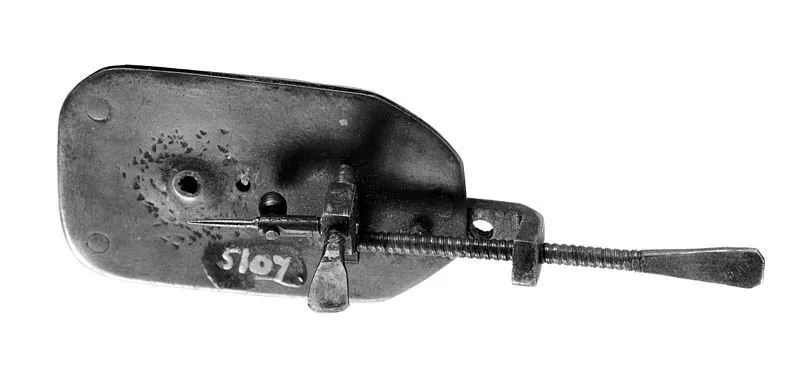
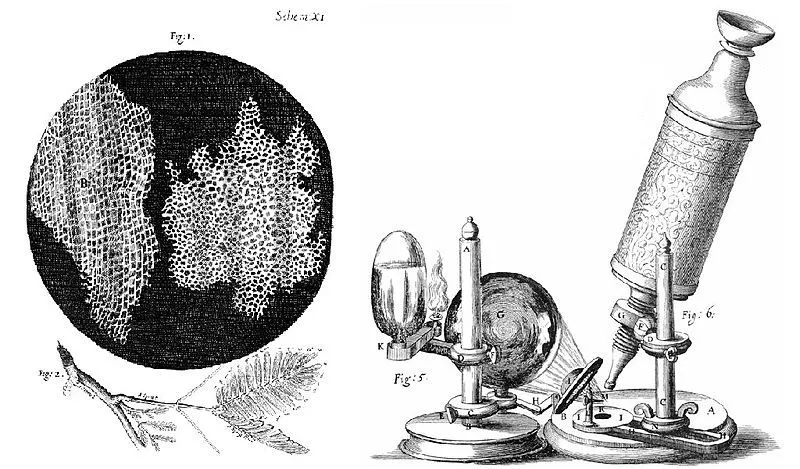
In 1665, in his book Micrographia, Hooke described what he saw when he examined thin cork slices under a microscope. The empty compartments in the dead plant tissue reminded him of the little rooms, or ‘cells’, where monks lived in a monastery, so that is what he called them. He was actually looking at empty cell walls rather than living matter, but the name stuck. A few years later, a Dutch draper named Anton van Leeuwenhoek built his own remarkably powerful single-lens microscopes and used them to study practically everything around him, including scrapings from his own teeth. In the process, he became the first person to see living bacteria and other single-celled life, which he called animalcules because they looked like little animals to him. He reported his findings to the Royal Society in London, where Hooke himself helped confirm them. In this manner, the foundation of cell theory was laid. The scientists who came later, including Schleiden and Schwann, added a few more things, thus formulating the three parts of cell theory.
1. All Living Organisms Are Composed Of Cells
The first postulate of cell theory states something that we all find pretty obvious today: all living organisms are made of cells. However, if you look back a few hundred years ago, researchers had a hard time explaining this simple concept to the general public. Early cell theory just mentioned the presence of small microscopic building blocks that were the foundation of all living organisms; these looked like small cells, but this explanation did not mention any of the cell organelles, such as nucleus or mitochondria. In fact, organelles weren’t discovered until much later.
2. The Cell Is The Most Basic Unit Of Life
This one is perhaps the most misinterpreted postulate. Organelles like the nucleus, ribosomes and many more are present inside the cell; they are smaller in size, but vital for the existence of life. If that’s the case, shouldn’t they be the basic unit of life? Well, that’s not the point that this postulate is trying to make. What it is trying to state is that the cell is the smallest unit able to sustain life on its own. Unicellular organisms provide the perfect practical example of this point. A single cell can carry out every process a living thing needs to survive, while an isolated organelle cannot live independently outside the cell.
3. All Cells Arise From Pre-existing Cells
This is the part our ancestors got wrong at first. Schleiden and Schwann (two of the major contributors to cell theory) believed that new cells form much the way crystals grow, by a kind of “free-cell formation” tied to the old idea of spontaneous generation. That belief was overturned by Robert Remak and Rudolf Virchow in the 1850s. Virchow summed up the correction in 1858 with the famous line ‘Omnis cellula e cellula’, Latin for every cell arises from a pre-existing cell, and in no other way. This is the third part of modern cell theory.
What Is The Modern Cell Theory?
The three classical parts above were all worked out before anyone knew about DNA, enzymes or how a cell actually powers itself. As biochemistry and molecular biology matured through the 20th century, scientists folded those discoveries into what is usually called the modern cell theory (and sometimes the unified cell theory). It keeps Schleiden, Schwann and Virchow’s original three statements and adds a few more that reflect what we can now see going on inside the cell.

The most commonly listed additions are three:
- Cells carry hereditary information. Every cell contains DNA, which is copied and passed on to its daughter cells during cell division. This is how genetic instructions are handed from one generation of cells to the next.
- All cells share a similar chemical make-up. Within closely related species, cells are broadly the same in their chemistry, built from the same families of molecules, including nucleic acids, proteins, lipids and carbohydrates.
- Energy flow happens within cells. The reactions of metabolism, the capture and release of energy through processes such as cellular respiration and photosynthesis, all take place inside cells.
Some textbooks add a fourth point, that the activity of a whole organism depends on the combined activity of its individual cells. None of these newer tenets replace the original theory; they simply describe the cell in the molecular detail that those 19th-century pioneers could never have observed.
Are There Any Exceptions To Cell Theory?
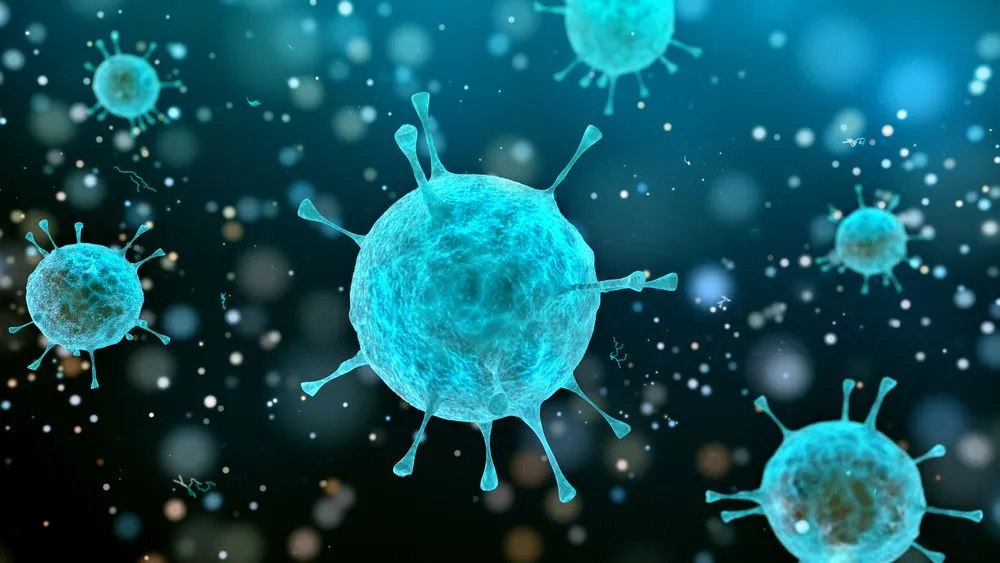
Viruses are the classic exception to cell theory. A virus is not made of cells at all, which already breaks the first two parts of the theory. It is essentially a packet of genetic material wrapped in protein, and although it carries the instructions for making copies of itself, it cannot reproduce on its own. It can only replicate by hijacking the machinery of a living host cell, so it does not arise from a pre-existing cell by division. That breaks the third part too.
The very first cells are another wrinkle. The earliest prokaryotic cells could not have come from pre-existing cells, because there were none yet. They are thought to have assembled from simple chemicals on the early Earth through a process called abiogenesis, the details of which are still debated. Mitochondria and chloroplasts are an interesting case too: although they sit inside the cell, they carry their own genetic material and divide on their own, a clue that they were once free-living bacteria taken in by a larger cell long ago.
References (click to expand)
- http://web.archive.org/web/20201105231819/http://fig.cox.miami.edu/~cmallery/150/unity/cell.text.htm
- 4.1: Cell Theory - Biology LibreTexts.
- Cell theory. Encyclopaedia Britannica.
- 5.2: Discovery of Cells and Cell Theory - Biology LibreTexts.
- Cell theory. Wikipedia.
- Cell Theory. National Geographic Education.