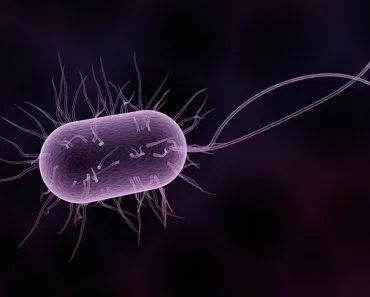
Yes. When starved, many bacteria eat each other, scavenging the remains of dead cells (necromass recycling), and some species actively kill siblings for their nutrients. This cannibalism is so effective that lab studies suggest starved bacteria could survive without fresh food for up to 100,000 years.
Imagine one day, a plane you’re on crash lands on a deserted island like in the show LOST, and there was no food to be found. Would you eat your fellow passengers in order to survive?
It turns out that bacteria would. In fact, they’d even eat their own relatives, according to a study published in the Proceedings of the National Academy of Sciences.
Bacteria Can Survive For A Thousand Days Without Food
In this study, bacteria were picked up from the soil and grown in a flask with saline for 1,000 days. They were deprived of all food sources, but even after more than 2.5 years, they were found to still be alive!
So how is that possible? All living organisms, after all, need food to survive. As it turns out, bacteria aren’t very sentimental and will eat the remains of their dead friends and family in order to survive.
I guess they do what they have to do to live. I’m not saying that bacteria broke all their loyalties and ate their fellow mates alive. The stronger bacteria simply ate the remains of the weaker ones that starved and died, an opportunistic version of ‘survival of the fittest’.
Whether the stronger bacteria killed the weaker ones is unknown. Perhaps bacterial murders are a thing we just haven’t discovered yet? What we do know is that bacteria have the tools to murder, such as enzymes that can punch holes in bacterial cell walls. When bacteria use these murderous tools to kill other bacteria, it’s called allolysis.
Some bacteria turn cannibalism into a full-blown survival ritual. When the soil bacterium Myxococcus xanthus runs out of food, tens of thousands of cells swarm together and pile into towering mounds called fruiting bodies. Inside, only about one in ten cells becomes a tough spore. The rest sacrifice themselves, breaking open so that their dying bodies feed the lucky few that get to survive as spores.
There are also some bacteria, for example, Bdellovibrio bacteriovorus, that are capable of eating other bacteria alive, but that’s a story for another time.
So… is that all they did to survive? Would dead bacteria remains be enough to sustain the hungry bacteria for years, decades or even centuries?
Bacteria Have Energy-preserving Mechanisms
When we fall sick or come home exhausted after a long day at work, we often become lazy and non-energetic. We don’t feel like doing anything else except curling up in bed.
Well, bacteria sort of feel the same way. They become so hungry and low on energy that they pause or slow down all their other biological processes. It’s the equivalent of feeling lethargic, similar to how a bear hibernates in winter. This way, their energy requirements fall, which allows them to preserve whatever little energy they have left.

Bacillus, a bacterial species involved in the study, were found to have the best longevity. These bacteria have the ability to turn into endospores. This is a common survival tool used by Bacillus species every time they experience extended periods of stress. This special power is why they have the most impressive longevity.
Spores are small single-celled organisms carrying the genetic information of their species so that they can later turn into new individuals.
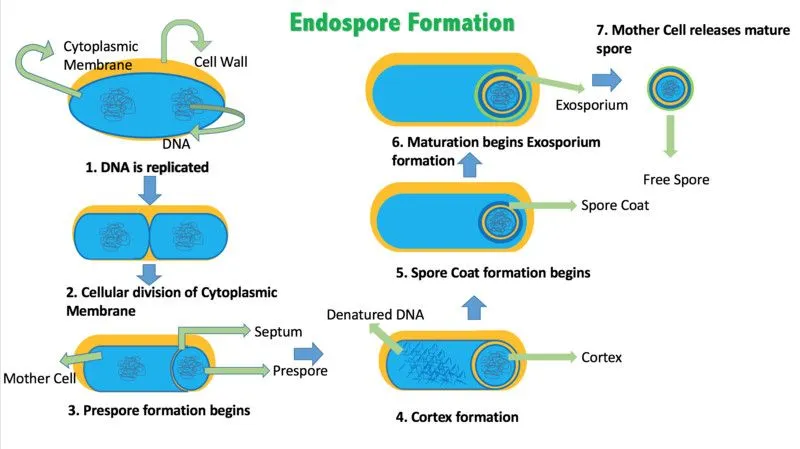
So, what the Bacillus bacteria does is make a copy of their DNA, place it in a spore coated with protective proteins, making it capable of waiting out the harsh journey. These spores stay asleep or ‘dormant’ until the environment becomes more favorable for survival.
In this case, had some food sources ever made its way into the flask in which the bacteria were growing, these spores would break open and new bacterial cells would start to grow.
However, not all bacterial species have this spore-forming trait. Other kinds of bacteria would eventually die off sooner and wouldn’t survive as long. Forming a spore also takes time and energy, so Bacillus subtilis doesn’t rush into it. When food first runs low, some cells turn into cannibals: they secrete two toxins, sporulation delaying protein (SDP) and sporulation killing factor (SKF), that punch holes in their own siblings and spill their contents. The cannibals feed on the released nutrients, buying enough time to put off sporulation in case conditions improve. Only when that fails do they commit to becoming spores.
How Long Could Bacteria Survive Without Food?
Unfortunately, the study was only carried out for 1,000 days, but the brains behind the study, based on mathematical analysis, posit that the bacteria in the study could live roughly 100,000 years without food!
This number was calculated by looking at the growth rate and growth dynamics of the starving bacteria.
However, realistically speaking, it would be very difficult to scientifically prove this, considering that the lead scientists would be long dead before they could determine whether the hypothesis was true!
A Final Word
Apart from starvation, bacteria can survive through some very tough scenarios. From the extremely harsh environments of scorching deserts to ice-covered continents, bacteria scrape through each and every time. In fact, a year back, a few Japanese scientists revived bacteria from the ocean that had been dormant for over 100 million years!
Even from sediments picked up from the deepest and darkest parts of the ocean, bacteria have been found, even though there is little to no energy supply available. Somehow, they manage to come through it on top!
This is what piques the interest of scientists the most. How do they do it? Understanding that would give us a better understanding of evolution and perhaps even how life truly formed on this big blue planet of ours.
The scientists behind the starving bacteria study believe that understanding the dynamics of bacterial survival is crucial to understanding the history of life on this planet. It could explain how life managed to survive billions of years ago when Earth was far from a hospitable place.
With this information, new ways to target antibiotic-resistant bacteria could be developed, and we could find ways to fight and treat more aggressive diseases. This would all become easier once we understand their weak spots.
To answer the main question at hand, YES, bacteria can become cannibals if they starve, but they seem to eat the remains of the dead. Don’t worry, they don’t become zombies that crave the flesh of the living!
References (click to expand)
- McKenney, P. T., Driks, A., & Eichenberger, P. (2012, December 3). The Bacillus subtilis endospore: assembly and functions of the multilayered coat. Nature Reviews Microbiology. Springer Science and Business Media LLC.
- Shoemaker, W. R., Jones, S. E., Muscarella, M. E., Behringer, M. G., Lehmkuhl, B. K., & Lennon, J. T. (2021, August 12). Microbial population dynamics and evolutionary outcomes under extreme energy limitation. Proceedings of the National Academy of Sciences. Proceedings of the National Academy of Sciences.
- Prozorov, A. A., & Danilenko, V. N. (2011, February). Allolysis in bacteria. Microbiology. Pleiades Publishing Ltd.
- González-Pastor, J. E., Hobbs, E. C., & Losick, R. (2003, July 25). Cannibalism by Sporulating Bacteria. Science. American Association for the Advancement of Science (AAAS).
- Munoz-Dorado, J., et al. (2016). Myxobacteria: Moving, Killing, Feeding, and Surviving Together. Frontiers in Microbiology.